

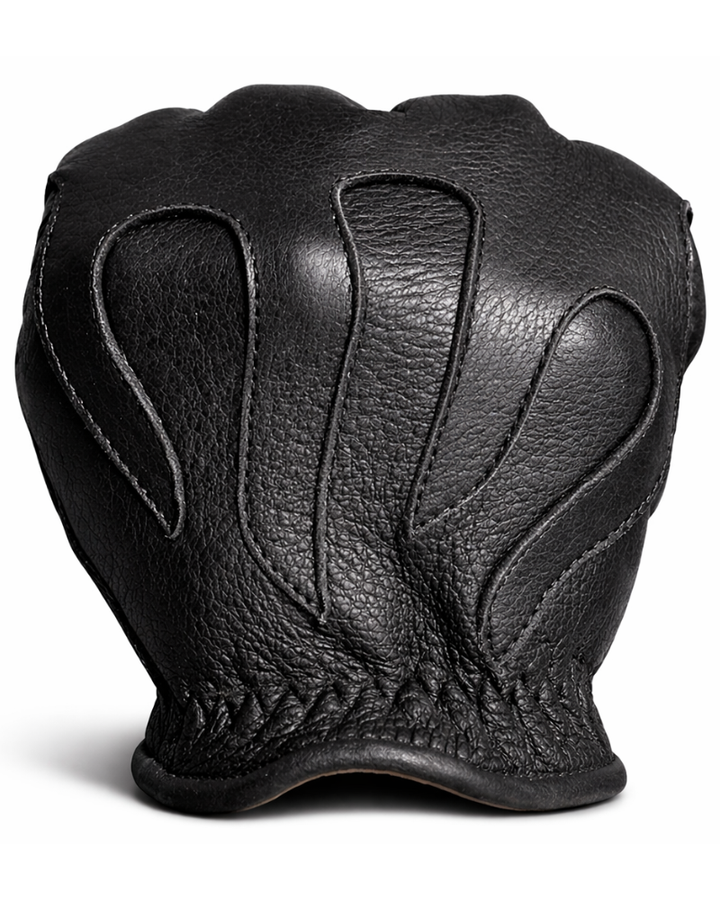


Legendary USA deerskin gloves are the most practical choice for fall riding because the leather stays soft when the air turns cold, breathes better than cowhide, and handles the 30-degree temperature swing between a 6 a.m. start and a 3 p.m. ride home. Legendary USA grades its glove line by exactly that swing: thirteen three-season deerskin models, one cold-weather fleece-lined pair, and insulated deerskin mittens for winter. Legendary USA cuts its deerskin gloves from American whitetail hide, and the same qualities that make deerskin comfortable in July are what make it work in October. This guide covers lining, cuff length, fit, and which pair matches your fall riding.
Top Picks, Shop Direct
| Product | What it is | From |
|---|---|---|
| Fingerless Deerskin Gloves | Legendary USA. Rated 4.92 from 126 customer reviews. | $67.50 |
| Classic Deerskin Gauntlets | Legendary USA. Rated 4.88 from 112 customer reviews. | $140.00 |
| Gold Short Wrist Cuff Deerskin Gloves | Legendary USA. Rated 4.91 from 108 customer reviews. | $100.00 |
| Classic Short Wrist Touchscreen Deerskin Gloves | Legendary USA. Rated 4.9 from 106 customer reviews. | $105.00 |
Prices shown are current at time of writing. Orders over $150 ship free.
Why Deerskin Works When the Temperature Drops

Leather stiffens as it gets cold. That is not a marketing problem, it is a fiber problem. Cowhide has a tight, dense fiber structure that firms up noticeably below about 50 degrees, which is why a cowhide glove that felt fine in August can feel like a catcher's mitt on a cold October morning.
Deerskin has a looser, more open fiber structure. It carries natural stretch and it keeps that stretch in cold air. On a fall ride that means your hand still closes around the grip without the glove fighting back, and you keep feel on the front brake lever and clutch when your fingers are already less sensitive from the cold.
Deerskin also breathes. Fall riding is deceptive that way. Riders size up their gloves for warmth in the morning and end up with sweaty hands by early afternoon, and damp hands get cold faster once the sun drops. A breathable hide manages that better than a sealed, heavily insulated glove.
The honest tradeoff: deerskin is soft, not armored. It is abrasion-resistant leather, but it is not hard-shell protection and Legendary USA does not sell it as such. If your priority is impact protection over feel, deerskin is not the category you want.
Lined or Unlined: Match the Glove to Your Actual Mornings
The single biggest fall glove decision is lining, and most riders get it wrong by buying for the coldest day of the season instead of the average one.
Unlined deerskin covers roughly 50 to 75 degrees for most riders. It gives you the most direct grip feel, packs down small enough to stuff in a jacket pocket, and dries fast. The ILL DOZER perforated outseam deerskin gloves sit at the warm end of that range, with perforation that keeps working on an unseasonably hot afternoon. Outseam construction puts the seam allowance on the outside of the glove, so there is no ridge of stitching pressing into your fingers against the grip.
Fleece-lined deerskin takes over below about 50 degrees. The fleece-lined deerskin gloves are the pair most Legendary USA customers reach for once fall mornings start showing frost on the seat. Understand what lining costs you: warmth comes with bulk, and a fleece-lined glove in your usual size will feel tighter than an unlined one. Some riders go up a half size in lined gloves. Some prefer the snug fit. Try the grip test before deciding.
There is a middle option worth knowing about. The aramid-lined touchscreen deerskin gloves add an aramid lining and a touchscreen thumb and index finger. The aramid layer adds a thin second skin without the loft of fleece, and the touchscreen panels mean you are not pulling a glove off at every gas stop to check a route.
Cuff Length: Short-Wrist or Gauntlet
Cold hands in fall are usually a wind problem, not an insulation problem. Air pushes up the gap between a short glove cuff and a jacket sleeve, runs up your forearm, and pulls heat off the whole hand. You can be wearing a warm glove and still have cold fingers because that channel is open.
Short-wrist gloves are faster on and off, tuck cleanly under a jacket cuff, and stay comfortable when the afternoon warms up. They are the right default for September and early October riding in most of the country.
Gauntlets extend over the jacket sleeve and close that gap. The Classic American whitetail deerskin gauntlets are built for exactly the ride where the temperature reads 48 and the wind chill at 65 mph reads a lot lower. The tradeoff is real: gauntlets are slower to put on, they can bunch under a tight jacket sleeve, and they are overkill on a mild day.
If you only buy one pair for fall, buy the short-wrist. If you ride into November, add the gauntlet.
Getting the Fit Right
Fit matters more in fall than in summer because a poorly fitted glove creates cold spots. Loose leather at the fingertips leaves an air pocket that never warms up. Tight leather across the palm restricts circulation and does the same thing from the other direction.
Do the fit check in a riding grip, not with your hand flat. Close your fist as if it were wrapped around a grip. The leather across the back of the hand should take up slack, not go drum-tight. Your fingertips should reach the end of each finger and touch lightly. If you can pinch a quarter inch of empty leather past your fingertip, size down.
Deerskin relaxes into your hand over the first two to three weeks of regular riding. It molds rather than stretching out, which is why buying a size up "to break in" is a mistake with this leather. Start snug. If you want a full walkthrough of measuring, our guide on how to size motorcycle gloves covers hand measurement and the common sizing errors.
Building a Two-Pair Fall Rotation
Most riders who ride through fall end up with two pairs rather than one compromise pair. A common setup:
- Warm-side pair: unlined or perforated deerskin, short-wrist, for 55 degrees and up.
- Cold-side pair: fleece-lined deerskin or a deerskin gauntlet, for mornings and evenings under 55.
Two pairs also means each pair gets a chance to dry between rides, which matters more in fall than summer. Leather that never fully dries breaks down faster and starts to smell. You can see the full range in the Made in USA motorcycle gloves collection.
For the wind chill math behind these temperature bands, the National Weather Service publishes a cold wind chill chart.
Frequently Asked Questions
- Are deerskin motorcycle gloves good for fall riding?
- Deerskin motorcycle gloves are well suited to fall riding because the leather stays soft and flexible when air temperatures drop, while stiffer hides like cowhide firm up in the cold. Fall riding usually means a cold start and a warm afternoon, and deerskin handles that swing without fighting your grip. Legendary USA cuts its deerskin gloves from American whitetail hide. For most fall days an unlined deerskin glove is enough, and a fleece-lined pair covers mornings below roughly 50 degrees.
- What is the difference between deerskin and goatskin motorcycle gloves?
- Deerskin is the softer of the two. It has a loose fiber structure that gives it stretch and a broken-in feel from the first ride, and it stays supple in cold weather. Goatskin is denser and more abrasion resistant, with a slightly slicker hand feel and less give over time. Riders who want maximum comfort and grip feel choose deerskin. Riders who want a tougher, longer-wearing outer skin often choose goatskin. Both are used in Legendary USA gloves.
- Should I buy lined or unlined deerskin gloves for fall?
- Buy unlined if most of your fall riding happens between 50 and 75 degrees. Unlined deerskin breathes, packs small, and gives you the most direct feel on the grips and levers. Buy fleece-lined if you regularly start rides in the 35 to 50 degree range or ride after dark into fall evenings. Fleece lining adds real warmth but also adds bulk, so a lined glove will feel snugger than an unlined glove in the same size.
- How should motorcycle gloves fit?
- A motorcycle glove should be snug across the palm with no loose leather bunching under your grip, and the fingertips should touch the end of the fingers without pressing hard. Close your hand into a riding grip while trying them on. If the leather pulls tight across the knuckles or lifts the cuff off your wrist, the glove is too small. Deerskin will relax and mold to your hand over the first few weeks, so a new pair should feel close, not roomy.
- Do deerskin gloves stretch out over time?
- Deerskin relaxes and takes the shape of your hand rather than stretching out of shape. The fiber structure that makes deerskin soft also lets it conform, so a glove that starts snug across the palm settles into a personal fit within two to three weeks of regular riding. It will not keep growing indefinitely. Buy for a close fit rather than sizing up, because a deerskin glove that starts loose will end up sloppy on the grips.
- Are gauntlet gloves better than short-wrist gloves for fall?
- Gauntlets are better once cold air starts pushing up your jacket sleeve, usually below 55 degrees or at highway speeds. The extended cuff seals the wrist gap and blocks the wind channel that makes hands cold even when the glove itself is warm. Short-wrist gloves are easier to pull on and off, layer better under a jacket cuff, and stay more comfortable on warm fall afternoons. Many riders carry both through October.
- How do I care for deerskin motorcycle gloves in fall?
- Let wet gloves air dry at room temperature away from heaters, radiators, and direct sun, because heat drives oil out of the hide and leaves it stiff. Wipe off road grime with a barely damp cloth. Condition deerskin lightly a couple of times per season with a leather conditioner made for garment leather, not a heavy boot grease. Over-conditioning softens deerskin past the point where it holds shape, so use less than you think you need.
The Short Version
Fall riding rewards gloves that stay flexible in cold air and breathe when the afternoon warms up, and deerskin does both better than the stiffer hides. Start with an unlined or perforated short-wrist pair for the shoulder of the season, add fleece lining or a gauntlet cuff once mornings drop under 50, and fit both pairs snug because deerskin molds rather than stretches. If you are still deciding between hides, our comparison of goatskin motorcycle gloves covers the other side of the choice.