

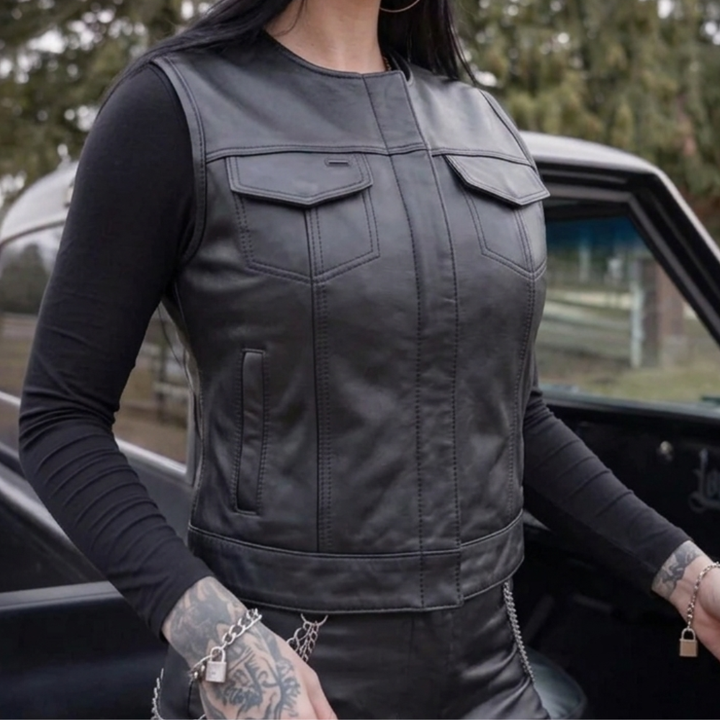


A denim motorcycle vest for fall works best as a mid-weight layer: heavier than a summer mesh vest, lighter than a full leather vest, and easy to wear over a flannel or a hoodie. Legendary USA cuts its Revolution denim vest from 13.5 oz pre-rinsed North Carolina cotton denim, and sews it in the USA. This guide covers what denim does well in fall, where leather is the better call, how to size a denim vest for layers, and how to put patches on it.
What a Denim Vest Does Well in Fall

A denim vest earns its place on days between 50 and 65°F, when a jacket is too much and a bare T-shirt is not enough. It breathes, it does not trap heat the way a full leather vest can, and it holds a flannel or hoodie snug against your torso. That makes it a practical fall layer for cruiser riders who want the club-vest look without the weight.
The second job is as a patch canvas. Denim takes thread easily, so a rider can sew on club patches, rockers, and flags with a home sewing machine and a heavy needle. Legendary USA built the Revolution to be a vest riders customize, and that is its best reason to exist.
Denim is not a cold-weather material, and it is not protective gear. Cotton denim lets wind pass through and soaks up rain, so it will not hold off a 40°F highway run. Think of it as a layer and a patch canvas, not a shell.
Denim vs Leather Vest for Fall Riding
The honest comparison comes down to temperature and use. If your fall rides stay above 50°F and you want to wear patches, denim is the easier choice. If you ride at sunrise, on the highway, or into the 40s, a leather vest does more for you because leather blocks wind and denim does not.
| Factor | Denim vest | Leather vest |
|---|---|---|
| Weight | Lighter, easier to wear all day | Heavier, more structure |
| Wind blocking | Low, cotton weave passes air | High, hide blocks wind |
| Wet weather | Absorbs water, dries slowly | Sheds light moisture, needs care after soaking |
| Sewing patches | Home sewing machine works | Heavy-duty machine or a pro |
| Best fall temperatures | About 50°F and above with layers | Cooler mornings and highway speeds |
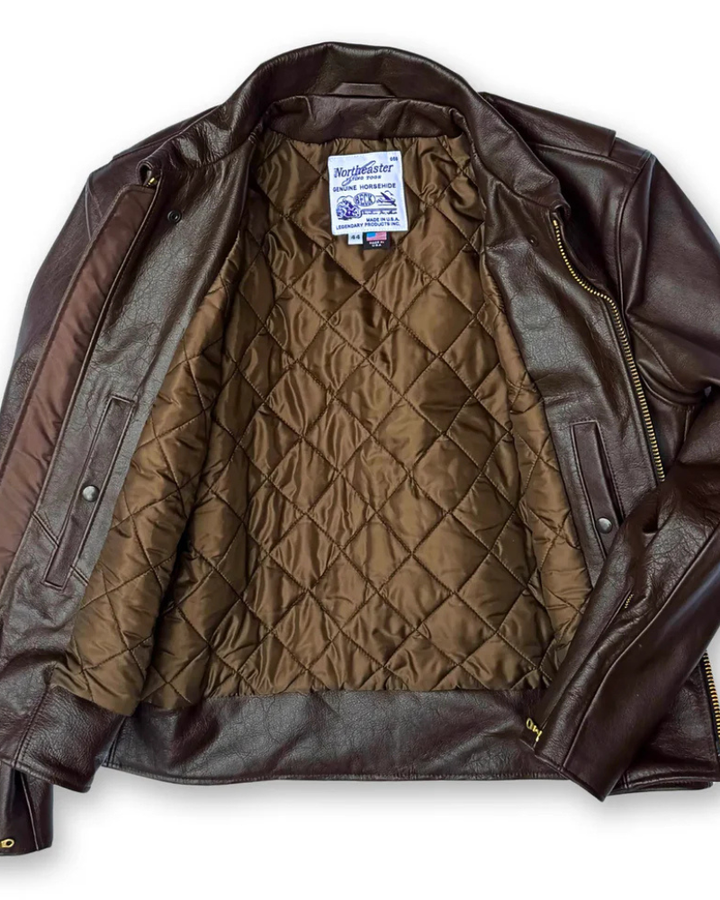
If you want the leather option, our winter motorcycle vest guide covers horsehide and cowhide and how to layer them for cold rides. Plenty of riders keep a denim vest for September and early October, then move to leather as the mornings get cold.
The Revolution and Ole Blue: What Is Actually in the Vest
The Legendary Revolution black denim vest and the Ole Blue blue denim vest share one pattern. Both are cut from 13.5 oz pre-rinsed North Carolina cotton denim, with double stitched accents and a stand-up mandarin collar. Both are unlined and made in the USA.
The pocket layout is built for riding. Each vest has twin front chest pockets with snap closures, two front handwarmer pockets, and two interior pouch pockets. The inside pockets hold a wallet or phone, and riders also use them as concealed carry pockets.
Black or blue is a style call. Black reads as the classic club look and hides road grime. Blue gives you the traditional denim jacket color and shows light-colored patches in a different way. Pick the one that fits the patches you plan to sew on.
The cut follows our Reaper-style leather vests, which is why it reads as a club vest and not a fashion denim vest. If you are comparing styles beyond denim, we break down the full range in our leather club vest styles compared post.
How to Size a Denim Vest for Fall Layers
Denim does not stretch the way a broken-in leather vest eventually can, so size it for the layers you will actually wear. If you plan to ride in a flannel or a light hoodie, measure your chest with that layer on and compare it to the size chart on the product page. A vest that closes comfortably over a T-shirt can bind across the chest and armholes once you add a hoodie.
Check three things when you try one on. The front should close without pulling at the snaps. The armholes should not pinch when you reach for the bars. The hem should sit at your belt line, not ride up when you lean forward on the bike.
If you wear a bulky layer only on the coldest rides, size for your normal layer and swap to leather when it gets cold. Forcing a denim vest over a thick hoodie stresses the stitching at the armholes. Our guide to lacing a motorcycle vest covers adjustment on laced styles.
Putting Patches on a Denim Vest
Denim makes patch work easy. Lay the vest flat, pin each patch in place, and check the layout while wearing the vest before you sew anything. A patch that looks centered on a table can sit crooked once the vest is on your shoulders.
Use a denim or heavy-duty needle and a strong polyester thread. Sew slowly through the seams, and avoid stitching across pockets or snaps. If a patch is large, stitch the outer edge first and work toward the center.
Keep your pockets in mind when you plan the layout. Chest patches should sit clear of the snap flaps, and the back panel stays the biggest patch area. If you want a vest built around a clean back, take a look at the full Men's Made in USA motorcycle vests collection.
Who Should Pick Something Else
If most of your fall riding happens below 45°F, skip denim and go straight to a leather vest or a jacket. Denim will feel cold on a highway run. If you ride in rain often, denim will soak through, and you want a layer that sheds water better.
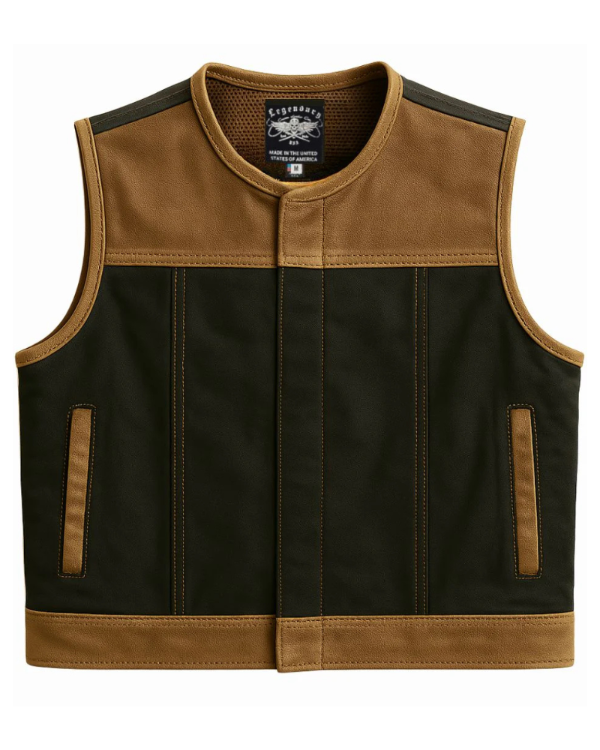
If you want a lighter vest for warm days, the Black Jack Cordura vest is a lighter hybrid with a water-resistant Cordura shell and leather trim. It is a better fit for warm days than for cold ones, so treat it as a different tool than a denim vest.
Bottom Line
A denim vest is the right fall layer if your rides stay mild and you want patches on a vest you can sew yourself. The Revolution and Ole Blue give you North Carolina denim, a club-vest cut, and four outside pockets plus two inside, all made in the USA. When the mornings turn cold, move to leather and keep the denim for the warm afternoons.
For a look at how wind speed changes how cold it feels, the National Weather Service publishes a cold wind chill chart.
Frequently Asked Questions
- Is a denim motorcycle vest warm enough for fall riding?
- A denim vest adds a layer of cotton over your torso, but it is not an insulator. Cotton denim lets wind through and holds water, so it works for mild fall days when you layer a flannel or hoodie under it. Once temperatures drop toward the 40s, riders move to leather or add a windproof outer layer. Treat the vest as one piece of a layering system, not the whole system.
- Can you sew patches on a denim motorcycle vest with a home sewing machine?
- Yes. Denim is far easier to patch than thick leather. The Legendary Revolution and Ole Blue vests are cut from 13.5 oz pre-rinsed North Carolina cotton denim, and Legendary USA notes that a standard home sewing machine can handle patch work on them. Use a denim or heavy-duty needle, a polyester thread, and pin the patch flat before you stitch.
- What is the difference between a denim vest and a leather motorcycle vest?
- A denim vest is lighter, cheaper to customize, and breathes better. A leather vest blocks more wind, resists abrasion better, and is the stronger choice for cold mornings and highway speeds. Denim is easier to sew on, while leather usually needs a professional or a heavy-duty machine. Many riders own both and switch by season and temperature.
- How should a denim vest fit if I wear layers under it?
- Size for the thickest layer you plan to wear, usually a flannel or a light hoodie, then check that the vest still closes across your chest without pulling at the armholes. A denim vest has no stretch, so a fit that works over a bare T-shirt can bind over a hoodie. Check the size chart on the product page and measure your chest over the layers you plan to wear.
- Does Legendary USA make its denim vests in the USA?
- Yes. The Legendary Revolution black denim vest and the Ole Blue blue denim vest are made in the USA from North Carolina cotton denim. Both vests are unlined, so they work best as a layering piece rather than a cold-weather shell.
- Are the interior pockets on the Revolution vest big enough for a wallet?
- The Revolution and Ole Blue vests each have two interior pouch pockets, which riders use for wallets, phones, or other small gear. They are also used as concealed carry pockets. If you carry a firearm, follow your state and local laws and check the pocket size against your own holster or pistol before you buy.