

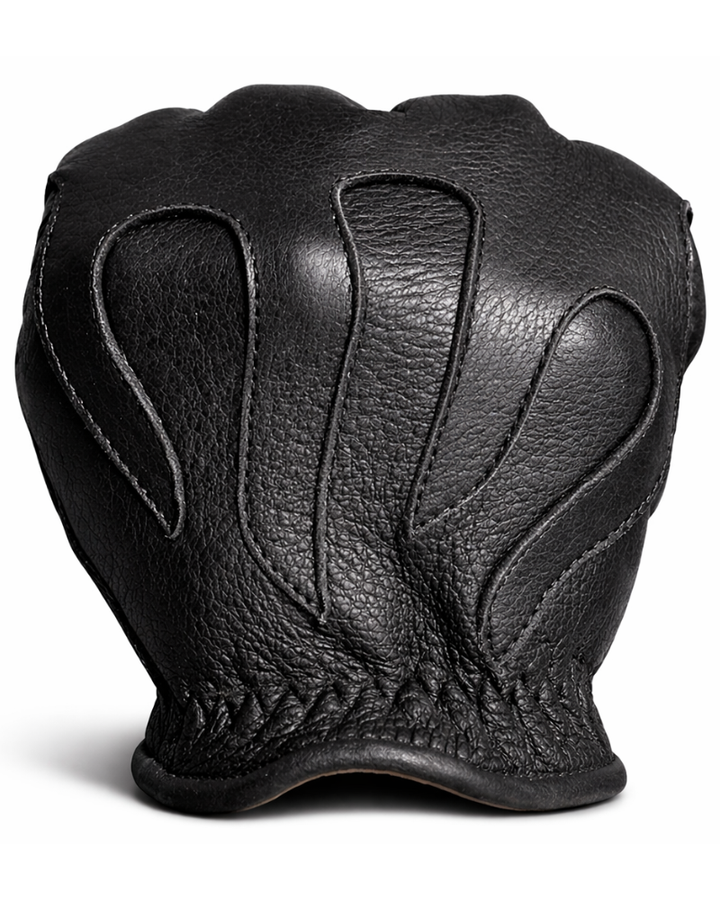


Fleece-lined deerskin motorcycle gloves are the warmer choice and aramid-lined deerskin gloves are the tougher one. The Legendary USA Fleece-Lined Deerskin Gloves carry a 3M Thinsulate 40-gram fleece lining built for riding in the 30 to 50 degree range, while the Aramid Touchscreen Deerskin Gloves carry a thin aramid fiber liner that adds cut and abrasion resistance at the palm without adding warmth. If your riding season runs into November mornings, buy the fleece. If you ride year-round in a milder climate and want more hide between your hand and the road, buy the aramid. Both are hand-cut from American Whitetail deerskin and sewn in the USA by Legendary USA.
What a lining changes in a deerskin glove

An unlined deerskin glove is one layer of hide against your skin, and that is the whole reason riders love it: deerskin is soft, it conforms to the hand within a few weeks, and it transmits throttle and brake feel better than any heavier hide. A lining sits between the deerskin shell and your hand, so every lining takes away a little of that direct feel and gives something back in exchange. The question is what you want in exchange.
Fleece gives back warmth. Aramid gives back cut and abrasion resistance. Neither lining changes the outer shell, which is the same American Whitetail deerskin Legendary USA uses across its glove line, a hide that weighs roughly half of cowhide at equivalent thickness and stays pliable after it gets wet without conditioning. The deerskin does the same job in both gloves; the lining decides what kind of ride the glove is for.
Fleece-lined deerskin: built for cold miles
The Fleece-Lined Deerskin Gloves pair the deerskin shell with a 3M Thinsulate 40-gram fleece lining. Forty grams is the lightweight end of the Thinsulate range, which is deliberate. It is warm enough for fall and mild winter riding, roughly 30 to 50 degrees on the bike, and thin enough that the glove still fits under a jacket cuff and still lets you feel the clutch lever. Legendary USA chose that weight because a heavier lining in a short-wrist glove turns it into a mitten with fingers, and riders stop wearing gloves they cannot shift in.
The fleece adds a small amount of bulk inside the glove, so the fit is snugger than the unlined version at the same size. Order your normal size for a direct fit; size up half a size only if you plan to run a thin liner underneath on the coldest days. The fleece also holds water longer than bare deerskin, so a fleece-lined glove that gets soaked needs a full day at room temperature to dry.
What the fleece does not do is make the glove a winter gauntlet. It is a short-wrist glove with an elasticized cuff, which means the wrist gap is on you to close with a jacket sleeve. Below 30 degrees, or on a long highway run in the 30s, the deerskin insulated mittens from the same line, with a 100-gram Thinsulate lining, are the warmer answer.
Aramid-lined deerskin: built for abrasion and cut resistance
The Aramid Touchscreen Deerskin Gloves pair the same deerskin shell with an aramid fiber liner. Aramid is the family of synthetic fibers used in cut-resistant industrial gloves, and in this glove it sits between the hide and the hand. In a slide, the deerskin takes the first contact and the aramid layer underneath resists cutting and tearing in a way deerskin alone does not. Legendary USA built it for riders who want more between their palm and the pavement without moving up to a heavy cowhide gauntlet.
The aramid liner is thin. It adds almost no bulk, which is why the glove keeps the direct throttle feel of an unlined deerskin glove and why the touchscreen fingertips still work. It also adds almost no warmth. Aramid is not an insulator in this weight, so the glove rides like an unlined deerskin glove in cold weather: comfortable into the 50s, cool in the 40s, and cold on the highway below that.
It is worth being plain about what this glove is and is not. The aramid liner improves abrasion and cut resistance at the contact surface. It is not armor, there is no knuckle protection, and Legendary USA does not make any CE rating claim for this glove or any other glove in the line. It is a leather riding glove with a tougher interior layer, nothing more and nothing less.
Fleece vs aramid: the direct comparison
These two gloves share a cut, a cuff, a hide and a sewing room. They differ on exactly the points below.
| Feature | Fleece-Lined Deerskin Gloves | Aramid Touchscreen Deerskin Gloves |
|---|---|---|
| Outer shell | American Whitetail deerskin | American Whitetail deerskin |
| Lining | 3M Thinsulate 40-gram fleece | Aramid fiber liner |
| What the lining adds | Warmth | Cut and abrasion resistance |
| Riding range | About 30 to 50 degrees | About 45 degrees and up |
| Touchscreen fingertips | No | Yes |
| Bulk inside the glove | Light, noticeable | Minimal |
| Throttle feel | Good, slightly muted | Nearly unlined |
| Drying time when soaked | About a day | A few hours |
| Cuff | Short wrist, elastic | Short wrist, elastic |
The riding range is the deciding row for most riders. A fleece-lined glove above 55 degrees is a sweaty glove, and an aramid-lined glove below 40 degrees on the highway is a cold one. As a rule of thumb, a rider in the Northeast, upper Midwest or mountain West gets October through April out of the fleece version, and a rider in the South or on the coasts gets most of the year out of the aramid version.
Which one to buy for your riding
Buy the Fleece-Lined Deerskin Gloves if cold hands are the problem you are solving. That means commuters who ride before sunrise in October, touring riders crossing the mountains in shoulder season, and anyone who keeps riding into December in a climate that gets there. The fleece version is also the easier glove to live with at a stoplight in 35-degree weather, because it is warm the moment you put it on rather than after ten minutes of body heat.
Buy the Aramid Touchscreen Deerskin Gloves if abrasion resistance and feel are what matter and cold is an occasional problem rather than a daily one. That is most riders in the Sun Belt, most riders who do their cold-weather riding with heated grips, and anyone who wants one glove that works from spring through fall. The touchscreen fingertips are a real daily convenience for riders who navigate on a phone.
Plenty of Legendary USA customers own both, and that is not a sales pitch so much as a description of how a two-glove rotation works: aramid for the warm months and the warm part of the day, fleece for the cold months and the cold start. If you can only buy one and you ride where it freezes, buy the fleece first. A glove that is too warm in May is an inconvenience; a glove that is too cold in November ends the ride.
Fit, break-in and sizing for lined deerskin
Both gloves run true to size against the Legendary USA glove chart, but the fleece version feels snugger out of the box because the lining takes up room. Deerskin breaks in faster than any other riding leather, and both gloves will conform to your hand within two to three weeks of regular riding. The motorcycle glove fit guide covers how to measure, and the guide to sizing gloves for thick liners covers when to size up.
Neither glove is a winter gauntlet, and riders who want the extended cuff should look at the Classic Deerskin Gauntlets, which are unlined, and then decide whether to add a thin liner glove underneath. The full Made in USA motorcycle gloves collection lays the whole line side by side.
For the wind chill math behind the temperature bands above, the National Weather Service publishes a cold wind chill chart.
Frequently asked questions
- Are fleece-lined deerskin motorcycle gloves warm enough for winter?
- They are warm enough for fall and mild winter riding, roughly 30 to 50 degrees, which is the range the 3M Thinsulate 40-gram lining in the Legendary USA Fleece-Lined Deerskin Gloves is built for. Below 30 degrees, or on long highway runs in the low 30s, a short-wrist fleece glove runs out of insulation and the wrist gap lets cold in. For that riding, deerskin insulated mittens with a heavier 100-gram lining, or a gauntlet with a liner, are the better choice.
- What does an aramid lining do in a motorcycle glove?
- An aramid lining adds cut and abrasion resistance between the leather shell and your hand. Aramid fibers are the same family used in cut-resistant industrial gloves, and in the Legendary USA Aramid Touchscreen Deerskin Gloves the liner sits under the deerskin palm so that in a slide the hide takes first contact and the aramid resists tearing underneath. It adds almost no bulk and almost no warmth. It is not armor and carries no CE rating.
- Which is better for cold weather, fleece-lined or aramid-lined gloves?
- Fleece-lined gloves are better for cold weather. The fleece lining is an insulator; the aramid liner is not. An aramid-lined deerskin glove rides like an unlined deerskin glove in the cold, comfortable into the 50s and cold on the highway below 40. A fleece-lined deerskin glove stays comfortable down to about 30 degrees. If cold hands are the problem you are solving, buy the fleece version.
- Do lined deerskin gloves fit tighter than unlined ones?
- A fleece-lined deerskin glove fits noticeably snugger than the unlined version at the same size because the fleece takes up room inside the glove. Order your normal size for a direct fit, and size up half a size only if you plan to wear a thin liner underneath. An aramid-lined glove fits almost exactly like an unlined glove because the liner is very thin. Deerskin in both cases breaks in within two to three weeks of riding.
- Can I use touchscreen gloves in the cold?
- Yes, but the touchscreen fingertips on the Aramid Touchscreen Deerskin Gloves do not add warmth, so the glove is only as warm as an unlined deerskin glove. The Fleece-Lined Deerskin Gloves do not have touchscreen fingertips. If you need both warmth and touchscreen use, a thin touchscreen liner glove under an unlined deerskin gauntlet is the usual workaround, though it costs some throttle feel.
- Are deerskin motorcycle gloves good for cold and wet fall riding?
- Deerskin is one of the better riding leathers for wet fall conditions because it stays pliable when wet and dries back soft without conditioning, which cowhide and goatskin do not reliably do. It is not waterproof, and a soaked glove is a cold glove until it dries. A fleece-lined deerskin glove holds water in the lining and takes about a day to dry at room temperature, so riders who commute in fall rain often keep a second pair.
The choice between fleece-lined and aramid-lined deerskin gloves comes down to one question: is the problem cold, or is the problem abrasion? Fleece solves cold. Aramid solves abrasion. Both gloves are cut from the same American Whitetail deerskin in the same Legendary USA sewing room, so whichever you pick, you get the hide that made the decision worth having.