

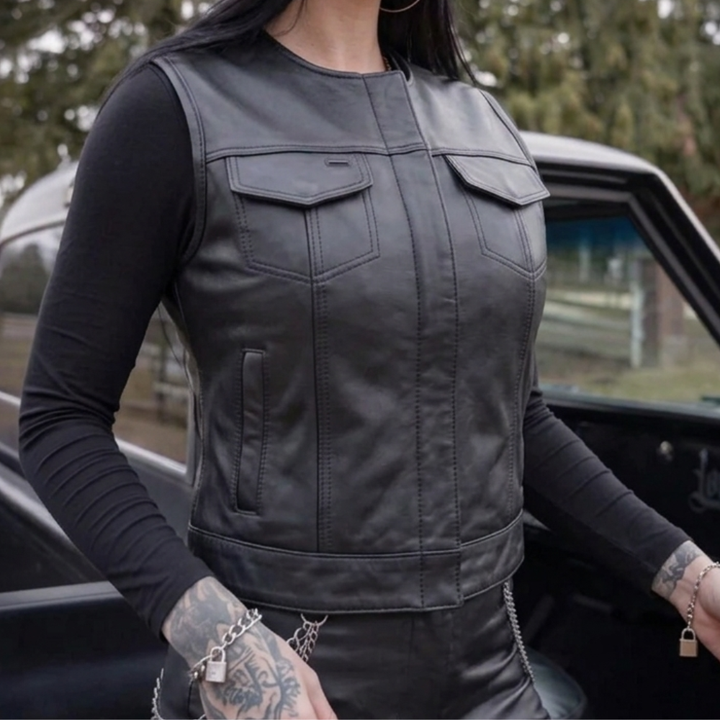


Layer under a motorcycle vest with three thin layers instead of two thick ones: a flat base layer against the skin, a thin fleece or wool mid layer, then the vest on the outside. The rule that matters most is that every layer under a vest must be smooth. A vest is cut close to the body and has no sleeves to absorb extra fabric, so anything loose gathers at the armholes and rides up your back at speed.
Here is how to build a stack that works from a 45-degree morning through a 75-degree afternoon without stopping to reorganize your gear.
Start With the Base Layer

Your base layer sits against the skin and its job is moisture, not warmth. Merino wool or a synthetic base layer moves sweat off your skin and keeps insulating even when damp. Cotton does the opposite — it soaks up sweat, holds it, and turns cold the second you stop moving.
Fit it close. This is the layer that determines whether the rest of the stack lies flat. A snug long-sleeve base layer disappears under everything else. A loose one becomes the wrinkle you feel across your lower back for sixty miles.
Choose a Thin Mid Layer, Not a Thick One
This is where most riders go wrong. The instinct on a cold morning is to reach for a hooded sweatshirt, and a hooded sweatshirt is the worst thing to put under a fitted vest. It is bulky in the wrong places, the hood bunches at the collar, and the sleeves are too loose to sit flat.
A thin fleece pullover or a wool overshirt insulates more per inch of thickness and lies flat under the vest. If you need more warmth, add a second thin layer rather than one thick one. Two thin layers trap more air than one bulky one, and trapped air is what keeps you warm.
Keep the shoulders in mind. A stack that restricts shoulder movement is a safety problem before it is a comfort problem. If you cannot reach the bars comfortably with your arms extended, the stack is too thick.
Put the Wind Layer Under the Vest, Not Over It
If you need wind blocking beyond what the vest provides, a light wind shirt or shell goes under the vest, not over it. This keeps the vest and its patches on the outside where they belong, and it puts the wind barrier closer to your insulation where it works better.
A leather vest already blocks a substantial amount of wind across your chest and back. What it does not cover is your arms and the sides of your torso under the armholes. That is exactly where a thin wind shirt earns its place.
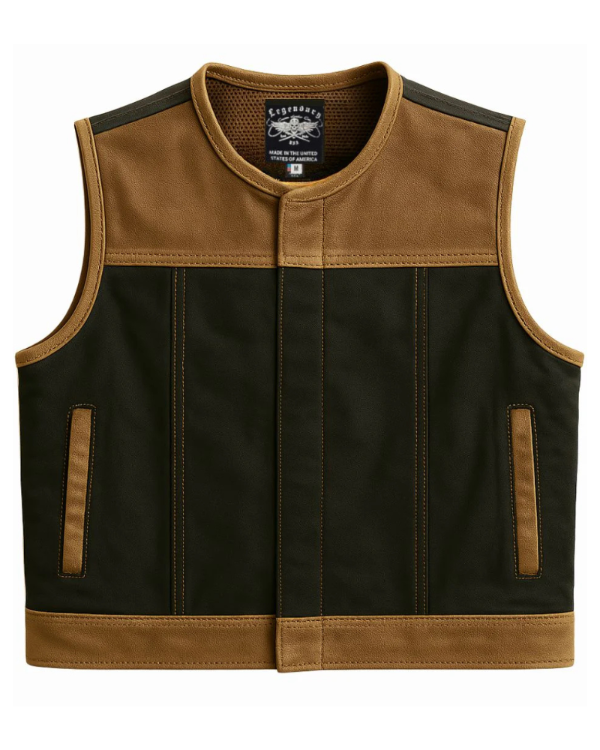
Denim vests breathe more than leather, which is useful when the afternoon warms up. Legendary USA's Revolution denim motorcycle vest gives you more give across the back when you are layered up underneath, which is why a lot of riders switch to denim during layering season. If you want something lighter still, the Black Jack lightweight Cordura vest is built for warm days when the vest is doing more for patch real estate than for warmth.
Size the Vest for the Layers You Actually Wear
Size the vest to the heaviest stack you realistically ride in — not to your bare chest, and not to a winter parka you wear twice a year. For most riders that means trying the vest on over a long-sleeve shirt and a thin fleece. Sized that way, it still sits right over a t-shirt in July. Sized to a bare torso, it will not close in October.
Check three things with your layers on: the front snaps close without straining, the armholes do not dig in when you reach forward to the bars, and the back panel lies flat in the riding position rather than standing up straight. Our guide to denim motorcycle vests covers what to look for in the construction itself.
Leather vs. Denim for Layering
The comparison worth making, plainly:
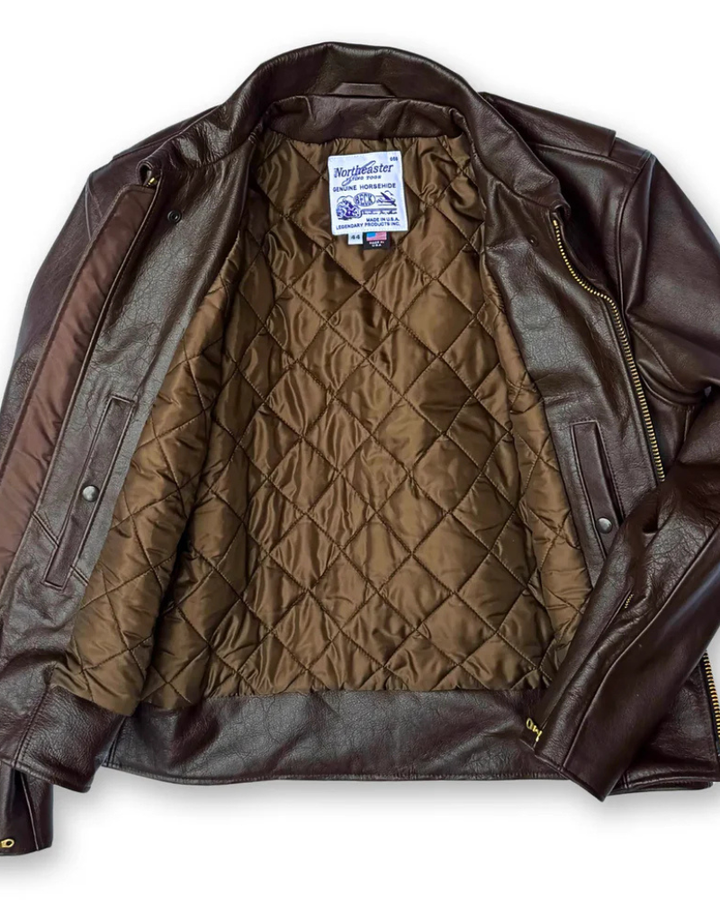
Leather vests block wind better and hold their shape over years of use. Leather has almost no stretch, so the fit over a fleece is unforgiving — if it is tight, it stays tight. Leather is the better choice if you layer lightly and want maximum wind blocking.
Denim vests have more give and move with a bulky mid layer instead of fighting it. Denim breathes more, which is an advantage on a day that warms up 30 degrees and a disadvantage on a cold highway run. Denim is the better choice if you layer heavily or if your temperature swings a lot day to day.
Neither one is armor, and neither should be treated as protective gear. A vest is a wind layer, a patch platform, and a piece of American riding tradition. It is not impact protection.
Keeping Patches Flat When You Layer
Patches sit on the outside of the vest, but what you wear underneath changes how they look. A bulky, uneven mid layer pushes the vest panels out of shape and a large back patch will visibly wrinkle across the middle. A flat stack underneath keeps the back panel taut, and a wrinkled patch reads as a poorly fitted vest even when the vest itself is fine.
Vests with a one-piece back panel handle this better than paneled backs, since there are no seams to break the surface. Browse the full range of Made in USA motorcycle vests to compare back panel construction.
For the wind chill math behind these temperature bands, the National Weather Service publishes a cold wind chill chart.
Frequently Asked Questions
- How do I layer under a motorcycle vest?
- Layer under a motorcycle vest with a flat base layer against the skin, a thin insulating mid layer, and the vest on the outside. Keep each layer smooth and close-fitting so nothing bunches at the armholes or under the front panels. Bulky sweatshirts fight a vest that was sized to your body, so choose a thin fleece or wool mid layer instead. If you need wind protection, put a light shell under the vest rather than over it so your patches stay visible.
- Should I size up a motorcycle vest for layering?
- Size a motorcycle vest to the heaviest layer you realistically ride in, not to your bare torso and not to your bulkiest winter coat. For most riders that means fitting the vest over a long-sleeve shirt and a thin fleece. A vest sized that way still looks right worn over a t-shirt in summer. A vest sized for a heavy hoodie will hang loose and flap at highway speed the other ten months of the year.
- What should I wear under a leather motorcycle vest in cold weather?
- In cold weather, wear a merino wool or synthetic base layer against the skin, a thin fleece or wool mid layer over that, and a wind-blocking shirt or light shell before the vest. Avoid cotton as a base layer because it holds sweat and stays cold once damp. Keep the total stack thin enough that your arms still move freely, since a vest leaves the arms exposed and restricted shoulder movement is worse than slightly less insulation.
- Why does my shirt bunch up under my motorcycle vest?
- Shirts bunch under a vest for two reasons: the shirt is too loose, or the vest is too tight over that layer. Loose fabric has nowhere to go once the vest closes, so it gathers at the armholes and across the lower back. Fix it by choosing a trimmer mid layer rather than sizing the vest up, and by tucking or securing the base layer before you snap the vest. Leather-bound armholes also help, since a bound edge slides over fabric instead of catching it.
- Is a denim vest or a leather vest better for layering?
- Denim vests layer more easily because denim has more give than leather and moves with a bulky mid layer instead of resisting it. Leather vests block wind noticeably better and hold their shape over years of wear, but leather has little stretch, so the fit over a fleece is less forgiving. Riders who layer heavily in the fall often pick denim for flexibility. Riders who want maximum wind blocking over a thin layer pick leather.
The Bottom Line
Layering under a vest comes down to keeping every layer thin and flat. Three thin layers beat two thick ones for warmth, and they beat them by a wide margin for comfort. Size the vest to the stack you actually ride in, put the wind layer underneath so your patches stay on the outside, and skip the hooded sweatshirt. Do that and one vest carries you from a 45-degree morning to a 75-degree afternoon without a single roadside adjustment.