



Unlined leather motorcycle gloves give you maximum bar feel and the coolest ride; lined motorcycle gloves trade some of that feel for warmth or an extra internal layer. That is the whole decision in one sentence. Which side you land on comes down to when you ride, how far you ride, and how many pairs of gloves you are willing to own.
Legendary USA builds both in the USA from full-grain leather — unlined deerskin and goatskin gloves for warm-weather feel, fleece-lined deerskin for cold mornings, and aramid-lined deerskin for riders who want an extra layer inside the glove. This guide walks through how each construction actually behaves on the road so you can buy once and buy right.
Top Picks, Shop Direct
| Product | What it is | From |
|---|---|---|
| Bad Billy Black Goatskin Gloves | Legendary USA. Rated 4.93 from 129 customer reviews. | $75.00 |
| Fingerless Deerskin Gloves | Legendary USA. Rated 4.92 from 126 customer reviews. | $67.50 |
| Classic Deerskin Gauntlets | Legendary USA. Rated 4.88 from 112 customer reviews. | $140.00 |
| Gold Short Wrist Cuff Deerskin Gloves | Legendary USA. Rated 4.91 from 108 customer reviews. | $100.00 |
Prices shown are current at time of writing. Orders over $150 ship free.
What a Lining Changes in a Motorcycle Glove

A lining is a second material layer sewn inside the leather shell. It changes four things: warmth, interior volume, break-in, and feel at the grips.
Warmth is the obvious one. Air trapped in a fleece lining is what keeps a hand warm at 45 degrees on the highway. Interior volume is the one buyers forget: a lining takes up space, so a lined glove fits snugger than the identical unlined glove in the same size. Break-in slows slightly because the lining sits between your hand and the hide. And feel — the feedback you get from the throttle and levers — is always sharpest with a single layer of leather and nothing else.
None of this makes one construction better. It makes each one right for a different ride.
Unlined Leather Gloves: Feel First
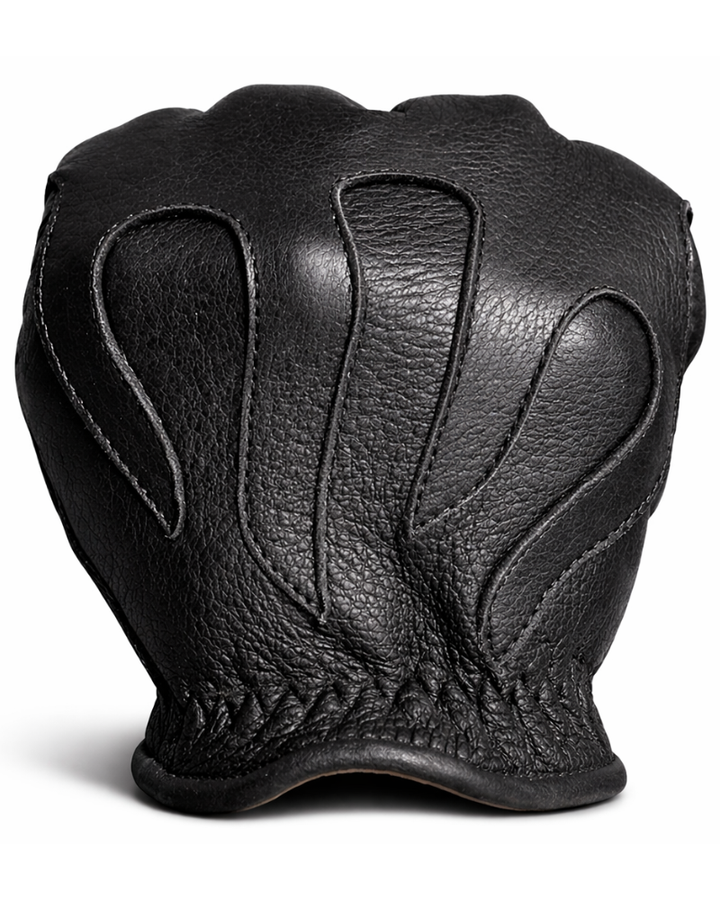
An unlined glove is leather and stitching, nothing else between your skin and the hide. That is why riders who care about throttle feel default to unlined deerskin or goatskin. Deerskin is soft off the shelf, molds to the hand within two to three weeks of regular riding, and stays comfortable through all-day rides. Goatskin runs a bit tougher and more abrasion-resistant for its weight, with a slightly firmer feel — the Bad Billy black goatskin short-wrist gloves are the workhorse example. If you want the deeper comparison between the two hides, read our goatskin motorcycle glove guide.
For hot weather, unlined is the only sensible construction, and airflow features matter more than anything: the ILL Dozer perforated deerskin gloves combine an unlined perforated palm-and-back build with outseam construction, which keeps seams off your palm and air moving across the hand.
The honest tradeoff: unlined gloves have no insulation. Below about 50 degrees at highway speed, your hands will tell you about it.
Fleece-Lined Gloves: Warmth for Cold Mornings
Fleece-lined gloves exist for one reason — riding when unlined leather is not enough. The fleece-lined deerskin short-wrist gloves pair a soft deerskin shell with a fleece interior that traps warm air around the hand. For fall riding, cold morning commutes, and shoulder-season miles, that lining is the difference between riding comfortably and cutting the ride short.
The tradeoffs are real and worth stating plainly. Fleece fits snugger than unlined leather in the same size. It slightly mutes bar feel. And it is the wrong glove for summer — fleece in July means sweat-soaked leather, which shortens the life of the glove. Fleece-lined gloves are also not heated gloves; in genuinely freezing wind they delay cold hands rather than eliminate them.
Aramid-Lined Gloves: An Extra Layer, Not Extra Warmth
Aramid is the heat- and abrasion-resistant fiber family that includes Kevlar, and an aramid lining puts a layer of it inside the glove without turning the glove into a winter glove. The aramid-lined deerskin touchscreen gloves are the clearest example of the modern version of this build: deerskin shell, aramid interior, and touchscreen-capable fingertips so you can run navigation at a stop without pulling a glove off.
Buyers often assume a lining means warmth. Aramid does not work that way — it adds an internal layer while the glove still rides like a lightweight leather glove, which is exactly why it works year-round. It is the right pick for the rider who wants more than a single layer of hide but does not want a hot hand in August.
Lined vs Unlined: Which Should You Buy?
Match the construction to the riding, not the other way around.
Ride mostly May through September? Buy unlined first — perforated or ventilated deerskin if your summers run hot. Commute in cold mornings or ride deep into fall? The fleece-lined deerskin pair earns its keep. Want an added internal layer with modern convenience? Aramid-lined with touchscreen fingertips. Ride year-round? The real answer is two pairs: unlined for warm months, fleece-lined for cold ones. Leather also lasts longer when pairs get rest days between sweaty rides.
Whichever construction you choose, fit decides whether you love the glove. Lined gloves should feel snug but never numbing on day one. Our motorcycle glove sizing guide covers how to measure, and the full USA-made motorcycle glove collection shows every lining option side by side.
Frequently Asked Questions
- Are unlined leather motorcycle gloves better than lined gloves?
- Neither is better overall — they serve different conditions. Unlined leather gloves give you the most direct bar feel and the coolest ride, which makes them the right choice for warm-weather riding. Lined gloves trade some of that feel for insulation or an extra internal layer. Most riders who log real miles across seasons end up owning at least one unlined pair and one lined pair rather than trying to make a single glove do everything.
- What is the warmest lining for motorcycle gloves?
- Fleece is the warmth lining in the Legendary USA lineup. A fleece-lined deerskin glove traps warm air against the hand and takes the edge off cold mornings and shoulder-season rides. Fleece is not a heated glove and it will not keep hands comfortable indefinitely in freezing wind, but for rides in the 40s and 50s it is the practical choice. Expect a fleece-lined glove to fit snugger than the same glove unlined.
- What does an aramid lining do in a motorcycle glove?
- An aramid lining adds a layer of heat- and abrasion-resistant fiber inside the glove without adding meaningful warmth. Aramid is the fiber family that includes Kevlar. In a riding glove, it sits between your hand and the leather as an additional internal layer, while the glove still wears like a lightweight leather glove. It is a year-round lining rather than a cold-weather lining.
- Do lined motorcycle gloves fit tighter than unlined gloves?
- Yes. Any lining takes up interior volume, so a lined glove in your usual size will feel snugger than an unlined glove in that same size. Fleece takes up the most room, and a thin aramid lining takes up less. Leather also relaxes as it breaks in, so a lined glove that feels snug but not painful on day one usually settles into a proper fit. If a lined glove cuts off circulation when you make a fist, size up.
- Can you wear fleece-lined gloves in summer?
- You can, but you will not want to. Fleece holds heat against the hand, and in summer temperatures that means sweat-soaked leather by the end of a ride. Repeated sweat soakings shorten the life of any leather glove. In hot weather, an unlined perforated or ventilated deerskin glove keeps air moving across the hand and is the better tool for the job. Save the fleece-lined pair for cold mornings and fall riding.
- Do unlined deerskin gloves break in faster than lined gloves?
- Generally, yes. With an unlined glove, your hand works directly against the leather, so the hide molds to your grip quickly — unlined deerskin typically breaks in within two to three weeks of regular riding. A lining sits between your hand and the hide, so the shaping process takes somewhat longer. Either way, break-in comes from riding in the gloves, not from soaking or artificial shortcuts.
The Bottom Line
Lined versus unlined is not a quality question — it is a conditions question. Unlined deerskin and goatskin gloves win on feel and hot-weather comfort. Fleece-lined deerskin wins when the temperature drops. Aramid-lined builds add an internal layer without adding heat. Legendary USA cuts and sews every one of them in the USA from full-grain hides, so whichever construction fits your riding, the leather underneath is the same honest quality. Buy for the season you actually ride in, and if you ride in all of them, buy two pairs — your hands and your leather will both last longer.