



Seven construction details separate a motorcycle glove that lasts a decade from one that lasts a season: seam placement, thumb pattern, leather choice, lining, cuff length, ventilation, and touchscreen capability. None of them show up in a product photo, and all of them show up a thousand miles in. Here is what each one does and how to check it before you buy.
1. Outseam vs. Inseam Stitching

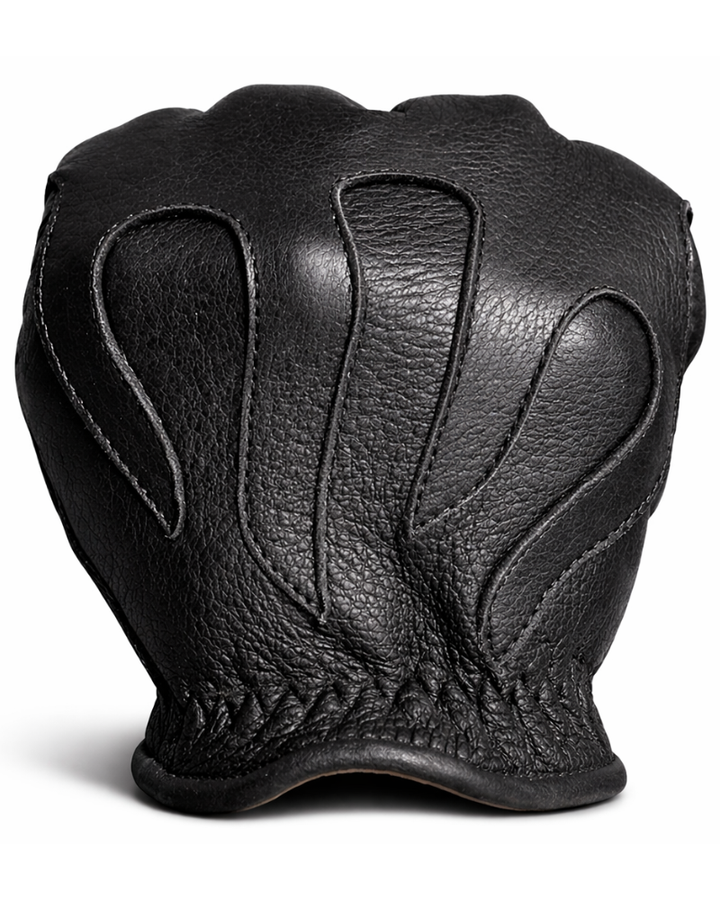
Seam placement is the single biggest comfort decision in a glove. Outseam construction puts the stitching on the outside, leaving smooth leather against your palm and fingers; inseam construction hides the seam inside, where the ridge presses between your hand and the grip for every mile. Legendary USA builds gloves like the ILL Dozer outseam deerskin gloves with outseam construction for exactly this reason. Not sure which you are looking at? Our guide on how to tell outseam from inseam gloves shows the difference in seconds.
2. The Keystone Thumb
Look at your thumb when your hand is relaxed: it sits curved and angled, not straight. A keystone thumb is cut as a separate curved piece and set in at that natural angle, so closing your hand on the grip takes no effort from the glove. A flat-cut thumb — standard on budget gloves — sits straight and creases against you all day. The keystone pattern costs more leather and more sewing time, which is why it survives mostly in traditional American glovemaking.
3. The Leather Itself
Deerskin vs. goatskin is the classic American glove leather comparison, and the honest answer is that each wins at something. Full-grain American deerskin is soft off the shelf, breaks in within weeks, and comes back supple after rain and sweat — the comfort leather. Goatskin has a tighter grain and more abrasion resistance for its weight — the durability leather, and the reason gloves like the Bad Billy goatskin short-wrists hold up to hard daily use. Read the full breakdown in our guide to what every rider should know about goatskin gloves.
4. Linings: Unlined, Fleece, and Aramid
Unlined leather gives maximum grip feel and summer comfort. Fleece lining turns the same glove into cold-weather gear, trading bulk for warmth. Aramid lining — the fiber family used in cut-resistant workwear — adds an abrasion-resistant layer inside the glove without much heat penalty, the approach behind the deerskin aramid-lined touchscreen gloves. A lining decision is really a season decision: most riders who log year-round miles end up owning an unlined pair and a lined pair rather than compromising with one.
5. Cuff Length: Short-Wrist vs. Gauntlet
Short-wrist gloves end at the wrist — fast on, fast off, cooler in traffic. Gauntlets extend over the jacket sleeve and seal the gap where wind and rain get in, which is why they own the highway and the shoulder seasons. Whitetail deerskin gauntlets are the traditional expression of the pattern, essentially unchanged for decades because the job has not changed. Neither cuff is the right answer for everyone; the split follows where and when you ride.
6. Ventilation and Perforation
Perforated leather is punched with small holes that pass moving air at speed, and on a July afternoon it is the difference between damp hands and dry ones. The trade-off is built in: holes in the leather mean less wind protection on a cold morning. Ventilated and perforated deerskin models exist precisely as hot-weather tools — buy them for summer, not as a single do-everything glove.
7. Touchscreen Capability
Touchscreen-compatible fingertips let you run navigation and music without pulling a glove off at every stop — on thumb and index finger, where you actually tap. Done right, the capability is built into the leather treatment rather than a plastic pad sewn over the fingertip, so grip feel stays consistent. If you navigate by phone, it is worth having; if your bike has no screen and your phone stays in a pocket, skip it and spend the money on leather quality.
How to Use This List
No single glove maxes out all seven details, because several trade against each other — perforation against warmth, linings against grip feel, gauntlet coverage against summer heat. Pick the two or three that match your riding, then check seams, thumb, and leather on every candidate, because those three matter for everyone. Sizing comes last and matters most of all: get it right with our motorcycle glove fit guide, then compare every construction combination in the USA-made motorcycle gloves collection.
Frequently Asked Questions
- What is the difference between outseam and inseam motorcycle gloves?
- Outseam gloves are stitched with the seam on the outside of the glove, leaving the inside smooth against your skin. Inseam gloves are sewn inside out, so the seam ridge sits inside the glove, against your fingers and palm. On a motorcycle, outseam construction wins for long rides because there is no seam ridge between your hand and the grip — less pressure, less hot-spotting, less fatigue.
- What is a keystone thumb on a motorcycle glove?
- A keystone thumb is a thumb cut as a separate, curved piece and set into the glove at an angle, following the thumb's natural resting position. A flat-cut thumb sits straight and fights you every time you wrap the grip. The keystone pattern takes more leather and more sewing time, which is why it appears on traditional American-made gloves and rarely on budget imports.
- Is deerskin or goatskin better for motorcycle gloves?
- Neither is better across the board. Deerskin is softer, breaks in faster, and stays supple after getting wet, which makes it the comfort choice for long days and daily riding. Goatskin is tougher for its weight, with a tighter grain that resists abrasion, which makes it the harder-wearing choice. Riders who want break-in comfort pick deerskin; riders who want maximum durability per ounce pick goatskin.
- Are lined or unlined motorcycle gloves better?
- It depends on the season and what you want the lining to do. Unlined leather gives the most direct grip feel and runs coolest in summer. Fleece linings add real warmth for cold-weather riding but add bulk, so many riders size accordingly. Aramid linings add a layer of abrasion-resistant fiber inside the glove without much warmth penalty. Many riders end up with two pairs: unlined for summer, lined for the cold months.
- Should I buy gauntlet or short-wrist motorcycle gloves?
- Short-wrist gloves end at the wrist, pull on and off fast, and run cooler — the practical choice for around-town and hot-weather riding. Gauntlet gloves extend over the jacket cuff, sealing out wind, rain, and cold air, which makes them the pick for highway miles, touring, and shoulder-season weather. Riders who do both kinds of riding usually own both.
- Do perforated motorcycle gloves actually keep your hands cooler?
- Yes. Perforation — small punched holes across the leather — lets moving air reach your skin at speed, and the difference on a 90-degree day is immediate. The trade-off is honest: perforated leather is leather with holes in it, so it gives up some wind protection and warmth. That makes perforated gloves a summer tool, not a year-round glove.
The Details Are the Glove
A motorcycle glove is a small object with a lot of decisions sewn into it. Seam placement and thumb pattern decide how it feels at mile 300. Leather and lining decide which months it works. Cuff, ventilation, and touchscreen decide how it fits your actual riding. Legendary USA has built gloves around these seven details since 2001 — check them on any glove, ours included, and the good ones identify themselves.