

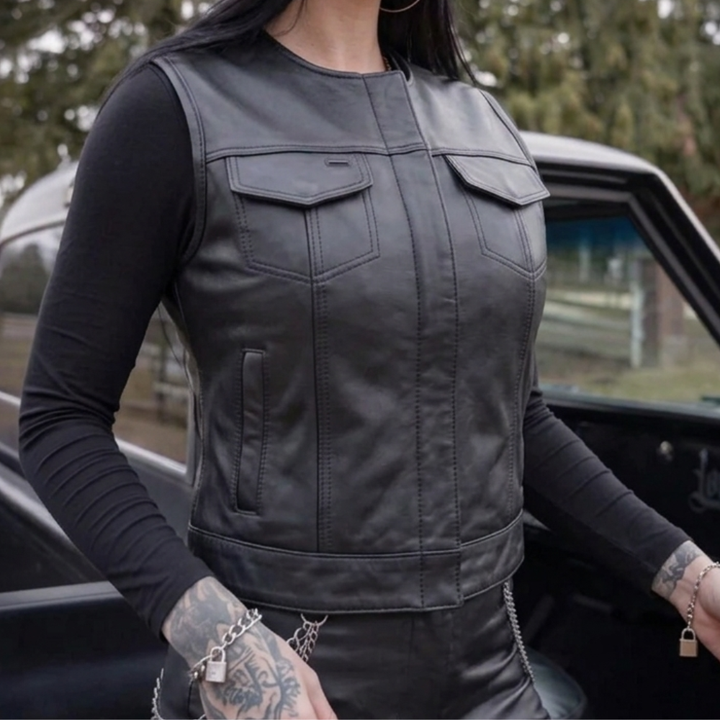


The one-piece back panel — a vest back cut from a single sheet of cowhide with no center seam — became the standard for American club vests because the back of a club vest is a display surface, and patches need flat, unbroken leather to sit right. It is one of those construction details that looks like nothing and changes everything. Here is where it came from and why it still defines a proper club vest.
The Back of a Vest Became the Front of the Story

American riders started cutting the sleeves off surplus jackets and wearing club insignia on their backs in the years after World War II, when returning veterans formed the first wave of American motorcycle clubs. The back panel was where a club said who it was: top rocker, center patch, bottom rocker. From that point on, the back of the vest stopped being just material and became the most important real estate on the garment.
That created a construction problem. Most garment backs were seamed — two panels joined down the center, sometimes with a yoke across the shoulders — because seaming lets a maker cut around flaws in the hide and waste less leather. But a center seam runs directly through where a center patch sits. Heavy embroidered patches sewn across a seam pucker, lump, and wear unevenly. The fix was to cut the back from one piece.
What One Piece of Leather Actually Costs
A one-piece back is a quiet statement about the hide. To cut a full back panel from a single section, that section has to be clean — free of scars, brand marks, insect damage, and thin spots. A cutter gets far fewer flawless full-back sections per hide than pieced-back sections, so the one-piece back burns more leather per vest. Budget import vests piece their backs together because it is cheaper. American makers who build for the club market kept cutting one-piece backs because their customers put patches on them and could see the difference immediately.
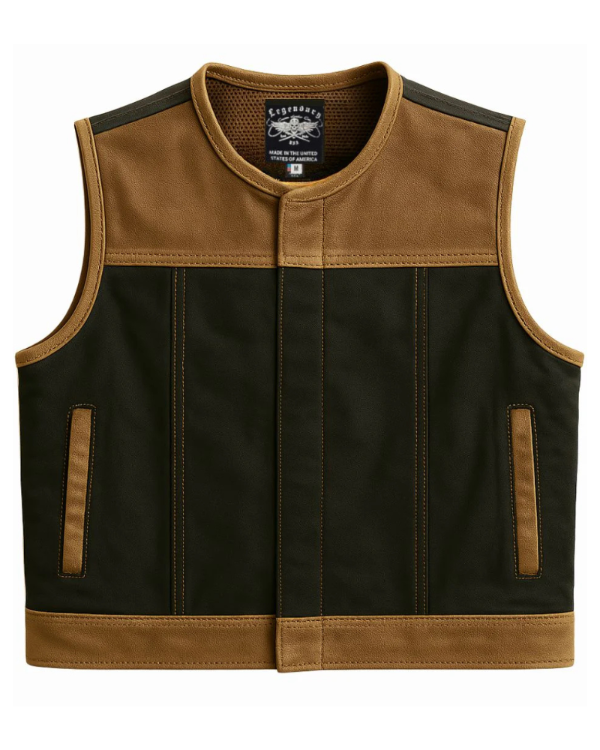
The same logic shows up elsewhere on a proper club vest: closures that keep the front panels clean, and armholes finished to take years of shoulder movement. It is a garment designed around what riders actually do to it. Legendary USA's Club Style side-lace vest carries that tradition in top-grain cowhide, and the full range of club cuts is in our USA-made motorcycle vests collection.
One-Piece vs. Split-Back: The Honest Comparison
A split or pieced back is not a scandal — it is a cost decision. A pieced back uses the hide more efficiently, keeps the price down, and for a rider who never sews a patch on, it works fine. The one-piece back earns its cost in two specific ways: it gives a patch set a flat, continuous foundation, and it removes the back seam as a stress point that can open up over years of leaning into the riding position. If the vest is going to carry colors, the one-piece back is the right construction. If it is a plain vest worn for wind and storage, the seam matters less.
For riders building a patch vest today, panel layout is the first thing to check — our roundup of patch-friendly motorcycle vests compares which cuts take a full patch set best.
Why the Detail Survived
Plenty of mid-century garment details died out when cheaper methods arrived. The one-piece back survived because the people buying club vests inspect them. A rider handing a vest to a patch sewer finds out within a week whether the back is one piece. That feedback loop — makers selling to riders who look — kept the standard alive in American shops long after mass-market manufacturing moved on. It is the same reason details like heavier-weight cowhide and real snap hardware persist in the club vest world: the customer can tell.
Frequently Asked Questions
- What is a one-piece back panel on a motorcycle vest?
- A one-piece back panel is a vest back cut from a single sheet of leather with no center seam or horizontal joins. The entire back of the vest is one continuous surface. This matters to club riders because a back patch set — top rocker, center patch, bottom rocker — sews onto flat, unbroken leather without a seam pushing any element out of line. It also removes the back seam as a failure point.
- Why do club vests need a one-piece back?
- Because the back of a club vest is a display surface. Club colors, veteran patches, memorial patches, and flags all mount on the back panel, and a center seam runs straight through where the center patch sits. Sewing heavy patches across a seam creates lumps, puckering, and uneven wear. A one-piece back gives the patch set a flat foundation, which is why the design became the standard for club-style vests.
- Does a one-piece back panel make a vest stronger?
- It removes one common failure point. Seams are where garments come apart under stress, and a seamed back adds stitching that carries load every time the rider leans forward on the bike. A single panel of medium-weight cowhide has no back seam to open up. The tradeoff is honest: one-piece backs require larger, cleaner sections of hide, which costs the maker more and is part of why well-built club vests are not cheap.
- Are one-piece back vests harder to make?
- Yes. Cutting a full back panel from one hide requires a large section of leather free of scars, brands, and thin spots, so the cutter gets fewer usable panels per hide. Split or pieced backs let a maker work around flaws and waste less material, which is why budget vests use them. The one-piece back is a deliberate choice to spend more hide on a better vest.
- How do I know if a vest has a true one-piece back?
- Open the vest and look at the inside of the back panel, then run your hand across the outside. A true one-piece back has no vertical center seam and no horizontal joins between the shoulders and the hem — one continuous surface of leather. Some vests hide a pieced back under a liner, so check the exterior surface in good light. Product listings for club-cut vests will usually state the back construction outright.
The Bottom Line
The one-piece back panel is club vest heritage in its purest form: a construction choice made because riders put their identity on the back of the garment, kept alive because the people who buy club vests can see and feel the difference. If your vest is going to carry patches, insist on it. It is a single sheet of American cowhide doing a job no seam ever could.