

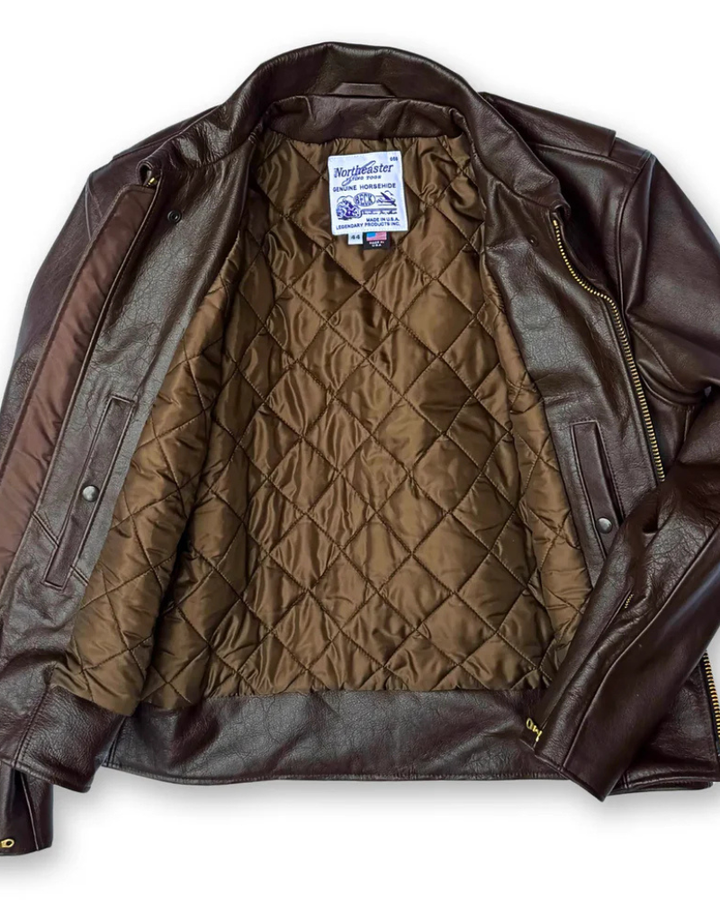
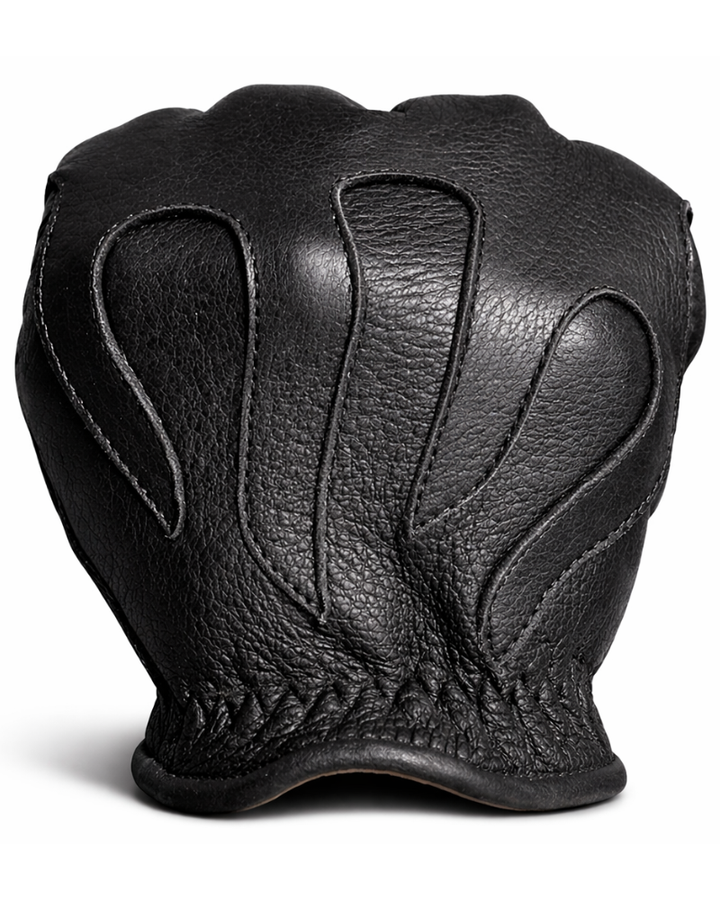




Deerskin is the oldest working leather in North America, and it earned that position before anyone thought to put it on a motorcycle. It was the hide the continent traded in, the hide that built a New York town into the glove capital of the country, and the hide that nearly disappeared along with the animal. This is where it came from and why riders still reach for it.
Legendary USA has cut gloves from American whitetail deerskin for twenty five years. The reasons are practical, but the history behind the material is worth knowing, and parts of it are stranger than the marketing version.
The Hide That Was Money

Before cotton and before cattle, the colonial South ran on deer hide. Native hunters of the Catawba, Cherokee, Creek, Choctaw and Chickasaw nations did the hunting and the dressing, traders packed the skins into barrels at Charleston, and the barrels went to England to feed a young garment industry.
The numbers were not small. In 1747 the deerskins exported from South Carolina were worth over 57,000 pounds sterling. By the 1740s the deerskin trade ranked second in the colony's exports, behind only rice.
You have probably heard that this is where the dollar got its nickname, that a "buck" was once a buckskin. The trade evidence is real: a Continental Army receipt from 1779 records a debt of "seven bucks and one doe," and a 1788 account values a ransom of one hundred buckskins at 260 dollars in silver. But the first recorded use of "buck" to actually mean a dollar comes from a Sacramento newspaper in 1856, roughly seventy years later. The connection is widely accepted and it may well be right. It has never been proven, and we are not going to tell you it has.
Brain Tanning, and What the Smoke Actually Does
The traditional North American method for dressing a deer hide used the animal's own brain. That sounds like folklore. It is chemistry.
Brains are rich in lipids, and worked into a scraped hide they behave as a lubricant, coating the collagen fibers and holding them apart so the skin dries soft instead of drying hard. The Alaska Department of Fish and Game, which still publishes a working guide to the process, describes it as nature's own solution for penetrating and expanding the microfibers of a skin and holding them open.
Then comes the part most people skip over, and it is the important part.
A brain-dressed hide that has never been smoked will go stiff the first time it gets soaked and dries. The fibers stick back together. Smoking over a wood fire is what makes the softness permanent. As the American Institute for Conservation puts it, the leather must be smoked to make the tannage permanent, or it will harden on drying as the fibers re-stick. Smoke penetrates the fibers the brain lipids separated and seals them open, and it darkens the hide as it goes, with different woods giving different colors.
So the celebrated property of buckskin, that you can soak it through and it still dries soft, is not really a property of deer hide at all. It is a property of a hide that was dressed and then smoked. That distinction gets lost constantly, including in a fair amount of leather marketing.
Gloversville: The Town Built on Deer Hide
In 1809 an English leather dresser named Tallamadge Edwards, by then in reduced circumstances, moved from Massachusetts to Johnstown, New York. Local men hired him to teach them his trade. That is the founding moment of the American glove industry, and Fulton County has never really been famous for anything else since.
The trade started almost by accident. The county history published in 1878 records that local tinsmiths took deerskins in barter, noting that a skin would generally fetch a medium sized tin basin, and that the hides were "sometimes rather a burden, for they were not used for much else than jackets and breeches." The current Fulton County Historian tells the same story. The county had the three things the work needed: skins, water, and hemlock bark for tanning.
By 1859 the capital invested in the county's glove trade ran between half a million and a million dollars. By the turn of the century the Fulton County Center for Regional Growth puts the county's share at 57 percent of every glove manufactured in the United States. You will see much larger figures quoted, up to 90 percent of the world's gloves, but those trace back to no census or trade statistic we could find, so we will stay with the conservative number and the name attached to it. The town took the trade seriously enough that Gloversville High School added glove manufacturing courses in 1912.
Here is the detail that reframes the whole story. That same 1878 county history reports about a million pounds of deer skins arriving in the New York market each year, at an average of three pounds a skin, and says the United States produced only about a quarter of it. The rest came from Mexico, Central America and South America. The American glove capital, at its height, was working mostly imported deer hide.
The Herd That Nearly Went
The reason is not complicated. America had very nearly hunted the whitetail out.
Oklahoma's state wildlife department keeps a published timeline that reads like a warning. By 1900, market and subsistence hunting had eliminated nearly all deer from the state. By 1917 the entire statewide population was estimated at 500 animals. In 1922 deer hunting was banned outright. Restoration began in 1943 by trapping and transplanting 22 deer. By 1990 the state held an estimated 250,000.
Multiply that pattern across the country and you get the modern picture. The National Deer Association's 2025 report counts roughly 6.07 million deer harvested in the 2023 to 2024 season across the United States, taken by more than 8.3 million hunters.
Which means American deerskin today is a byproduct, and by law it has to be. State regulations generally forbid selling the meat from a game animal while expressly permitting the sale of the hide. North Carolina's rules are typical: raw hides from lawfully taken whitetail may be sold, edible portions may not. Hides move from hunters and processors to buyers who salt and grade them. One Minnesota operation alone buys 30,000 to 40,000 whitetail hides a year, paying five dollars for a yearling and up to fifteen for a large unblemished hide.
The Minnesota Deer Hunters Association has run a Hides for Habitat program since 1985, collecting over a million donated hides and turning them into nearly 5.9 million dollars for habitat work. The hide that once emptied the woods now helps pay to keep them full.
Deerskin in Service
Deerskin did not stay a frontier material. It went to work, and some of that work is catalogued.
The Smithsonian's National Air and Space Museum holds a pair of United States Army Air Forces Type B-3A flying gloves, gauntlet cut, with the USAAF insignia in white on the back. The materials field on the record reads: deerskin. A second pair in the collection, the summer Type B-3A issued later by the Air Force, is catalogued as deerskin chamois.
The military wrote deerskin into specification too. MIL-DTL-32092, dated 2001 and still current, covers chrome tanned cattlehide, deerskin and horsehide as materials. It is a leather specification rather than a glove specification, and we have found no US military spec for a glove made specifically of deerskin, but the material is named alongside the two toughest hides in the catalogue.
The most telling endorsement is a modern safety standard. ASTM F696 governs the leather protector gloves worn over rubber insulating gloves by electrical linemen, the ones that stand between a worker and a high voltage conductor. The permitted leathers are grain cowhide, buffed grain cowhide, grain deerskin, grain pigskin, grain horsehide and grain goatskin. Deerskin is on the short list of leathers a standards body will accept for that job.
What Deerskin Does for a Rider, Honestly
Glovemakers have prized deerskin for two centuries for its softness, its give, and the way it takes the shape of a hand and keeps it. Riders who wear it describe a glove that feels broken in early and stays that way.
What we are not going to do is hand you a technical comparison we cannot support. You will read, on plenty of sites including some that sell gloves, that modern deerskin stays supple after a soaking where cowhide goes stiff. We went looking for a published measurement behind that claim and did not find one. Modern deerskin and modern cowhide work gloves are both chrome tanned, so the tannage is not the difference. Any real gap would come from fiber structure and finishing, which is plausible and unmeasured, at least in anything we could reach.
The documented wet-and-dries-soft property belongs to smoked brain-tanned buckskin, which is a different material with a different history. It is a good story and it is true. It is just not a claim about a chrome tanned glove.
What holds up: deerskin has been chosen by glovemakers, by the Army Air Forces, and by the standards body that certifies lineman's protectors. That is a two hundred year working record, and it is a better argument than a spec sheet.
Deerskin at Legendary USA
Our deerskin comes from American whitetail, and the gloves are cut and sewn in the United States.
- Classic Deerskin Gauntlets, from $140.00, the long cuff that seals the wrist against wind
- Haymakers Super Welted Deerskin Gloves, $130.00, welted seams standing proud of the hand
- Fleece-Lined Deerskin Gloves, $115.00, for the cold end of the year
- ILL DOZER Outseam Gloves, $135.00, perforated and outseam built
The full range is in the deerskin glove collection. If you want the rest of the material story, we have written the same kind of history for horsehide, goatskin and bison, and for the keystone thumb that Gloversville made standard.
For the mechanism behind brain tanning and smoking, the Alaska Department of Fish and Game publishes a practical guide to tanning big game skins at home, written by a member of its Division of Subsistence.
Frequently Asked Questions
Why is deerskin used for gloves?
Deerskin is soft, pliable and takes the shape of a hand quickly, which is why glovemakers have used it since the American glove trade began in 1809. It is also accepted by ASTM F696 as a material for the leather protector gloves worn over rubber insulating gloves by electrical linemen, alongside cowhide, horsehide, pigskin and goatskin.
Does deerskin really stay soft after it gets wet?
That property is documented for brain-tanned buckskin that has been smoked, and smoking is the step that makes it permanent. Without smoking, a brain-dressed hide hardens when it dries because the fibers re-stick. For modern chrome tanned deerskin gloves we could find no published measurement comparing them to cowhide, so we do not make that claim.
Where does American deerskin come from?
Hunting, not farming. Most states forbid selling the meat from a game animal but expressly permit selling the hide, so deerskin is a byproduct. Roughly 6.07 million deer were harvested in the United States in the 2023 to 2024 season according to the National Deer Association.
What is Gloversville, New York known for?
Glovemaking. The trade began there in 1809 when an English leather dresser named Tallamadge Edwards was hired to teach his craft, and by the turn of the twentieth century Fulton County accounted for 57 percent of all gloves manufactured in the United States by the county development agency's own figure. It started with deerskins traded to local tinsmiths for tin basins.
Did the word "buck" for a dollar come from deerskins?
Possibly, but it has never been proven. Hides genuinely worked as currency: a 1779 Continental Army receipt records a debt of "seven bucks and one doe." However the earliest known use of "buck" meaning a dollar dates to an 1856 Sacramento newspaper, about seventy years later. The link is widely accepted and undocumented.
Was deerskin used by the military?
Yes. The Smithsonian's National Air and Space Museum catalogues a pair of US Army Air Forces Type B-3A flying gloves with deerskin listed as the material, and a later Air Force summer pair in deerskin chamois. MIL-DTL-32092 covers chrome tanned deerskin as a material alongside cattlehide and horsehide.