



The Touchscreen Glove and How American Riders Adapted
The phone changed the American motorcycle glove more than any leather ever did. Deerskin, goatskin, and horsehide have been in riding gloves for a century and the arguments about them have not moved much. The touchscreen thumb showed up inside a single decade, and it changed what riders expect from a pair of gloves permanently.
Legendary USA has been selling American-made riding gloves since 2001, which means we watched this happen from the counter. Here is how it went.
What the Phone Replaced
Before the smartphone, a rider on a long day carried a paper map, some cash, and a plan. Navigation happened at gas stations. Weather happened by looking at the sky. If you needed to reach somebody, you found a pay phone.
None of that required your hands to be bare. Gloves went on at the start of the ride and came off at the end of it.
The phone collapsed all three of those functions into one device that only works with a bare fingertip. Suddenly the rider who checked a route, checked the radar, and answered a call was taking gloves off and putting them back on a dozen times a day. On a cold morning that is genuinely miserable, and on a hot one it means fighting sweaty leather back over your fingers at every stop.
Riders Solved It Badly First
The first solutions were improvisations, and they were all bad.
Some riders cut the fingertips off a pair of gloves. That works exactly once and ruins the gloves. Some switched to fingerless gloves, which do solve the screen problem completely but leave your fingers uncovered, and that is a real tradeoff rather than a clever workaround. Plenty of riders just took the glove off every time and accepted the aggravation.
What none of these did was solve the problem inside the glove, which is where it needed solving.
How the Fix Actually Works
A capacitive screen detects a touch by sensing a change in its electrical field. It needs something conductive to register. Leather is an insulator, which is precisely why it makes good riding gloves and precisely why it does nothing on a screen.
The answer was conductive thread worked into the fingertip of the thumb and index finger. Those two fingers do nearly all the tapping and swiping a rider does. Everything else on the glove stays leather.
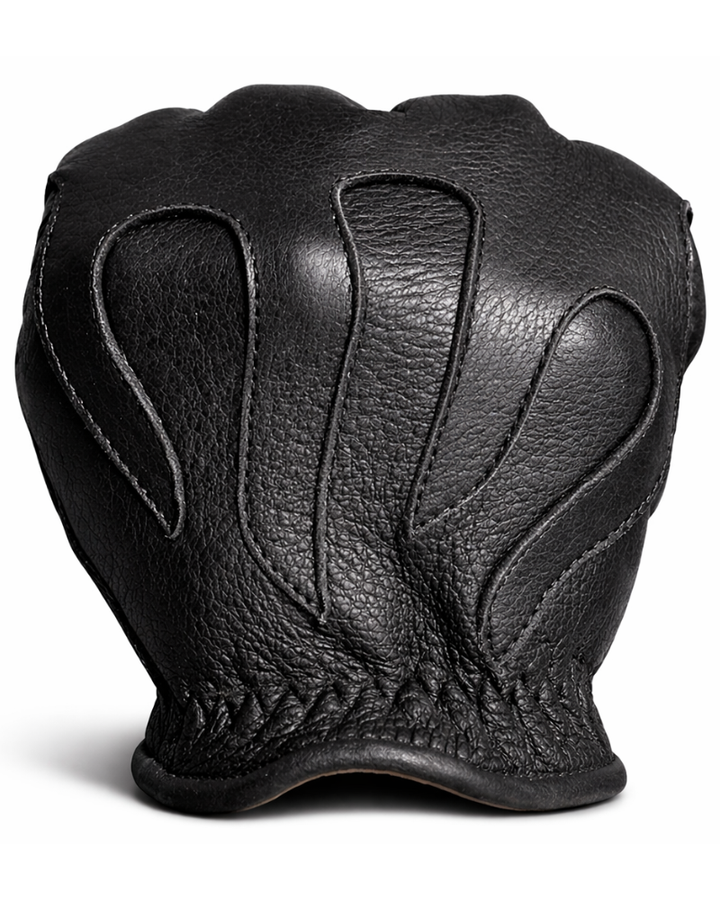
It is a small change and an elegant one. It adds no bulk, no weight, and no stiffness. It does not alter the pattern the glove is cut from. Legendary USA builds this into the aramid-lined deerskin touchscreen glove, and the glove breaks in exactly the way its non-touchscreen sibling does.
Why the Keystone Thumb Made It Possible
Here is the part that gets overlooked. A touchscreen thumb only works if the thumb can comfortably reach a screen, and that depends on how the thumb is cut.
A keystone thumb is a separate wedge-shaped piece set into the glove body rather than a shape cut out of the palm panel. It lets the thumb sit at the angle a human thumb actually sits at instead of being pulled flat against the hand. American glovemakers have been cutting keystone thumbs for well over a century, long before anybody imagined a phone.
That old technique is what makes the new feature usable. A thumb cut as part of the palm fights you when you rotate it toward a screen. A keystone thumb goes where you send it. The touchscreen glove is a modern answer built on top of traditional American glovemaking, not a replacement for it. Our piece on the keystone thumb in American glovemaking covers the construction in detail.
Frequently Asked Questions
- How do touchscreen motorcycle gloves work?
- A phone screen registers a touch by detecting a change in its electrical field, and it needs a conductive material to do that. Leather is not conductive. A touchscreen glove solves this by working conductive thread into the fingertip of the thumb and index finger, giving the screen something it can read. The rest of the glove stays ordinary leather. That is the whole trick, and it is why the conductive area is limited to the two fingers you actually tap with.
- Why did motorcycle gloves need a touchscreen feature at all?
- Because the phone replaced the paper map, the gas station stop, and the pay phone all at once. Once riders were navigating by phone, checking weather by phone, and reaching people by phone, taking a glove off at every stop became a constant small annoyance on a long day. Riders started removing gloves to use screens, and glovemakers responded by building the capability into the leather instead.
- Do touchscreen gloves wear out over time?
- The conductive thread sits at the fingertip, which is a wear point on any glove, so it can lose responsiveness over years of hard use. In practice, most riders wear through other parts of a glove before touchscreen response becomes the reason they replace it. Keeping the fingertip clean helps, since road grime and dried conditioner on the surface can interfere with contact before the thread itself is worn.
- Does adding a touchscreen thumb change how a glove fits?
- No. The conductive thread is worked into the existing fingertip panel and does not add bulk or change the pattern. A touchscreen deerskin glove fits and breaks in the same way the non-touchscreen version of the same glove does, softening across the palm within two to three weeks of regular riding. The keystone thumb and the seam construction are unaffected.
- Are touchscreen gloves worth it for short rides?
- For short local rides where you are not navigating, the feature matters little and you should choose the glove on fit and material instead. It earns its place on touring days, commutes with route changes, and any ride where you stop repeatedly. Since the feature adds no bulk and no weight, most riders take it when it is offered rather than seek it out specifically.
- What is a keystone thumb on a motorcycle glove?
- A keystone thumb is a thumb cut as a separate wedge-shaped piece and set into the glove body, rather than cut as part of the palm panel. It lets the thumb sit at a natural angle instead of being pulled flat, which matters on a motorcycle because your thumb wraps a grip rather than lying open. It is an old American glovemaking technique, and it is what makes a touchscreen thumb usable, since the thumb has to reach a screen comfortably.
Where It Leaves Us
The touchscreen thumb is the rare piece of riding gear innovation that arrived because riders needed it rather than because a marketing department wanted something new to say. It solved a real annoyance, it added nothing you have to carry, and it sits on top of glovemaking techniques that predate the automobile. That is about as good as gear changes get. Browse Legendary USA's Made in USA motorcycle gloves to see which pairs carry it, or start with the ventilated deerskin touchscreen glove if you ride in heat.