

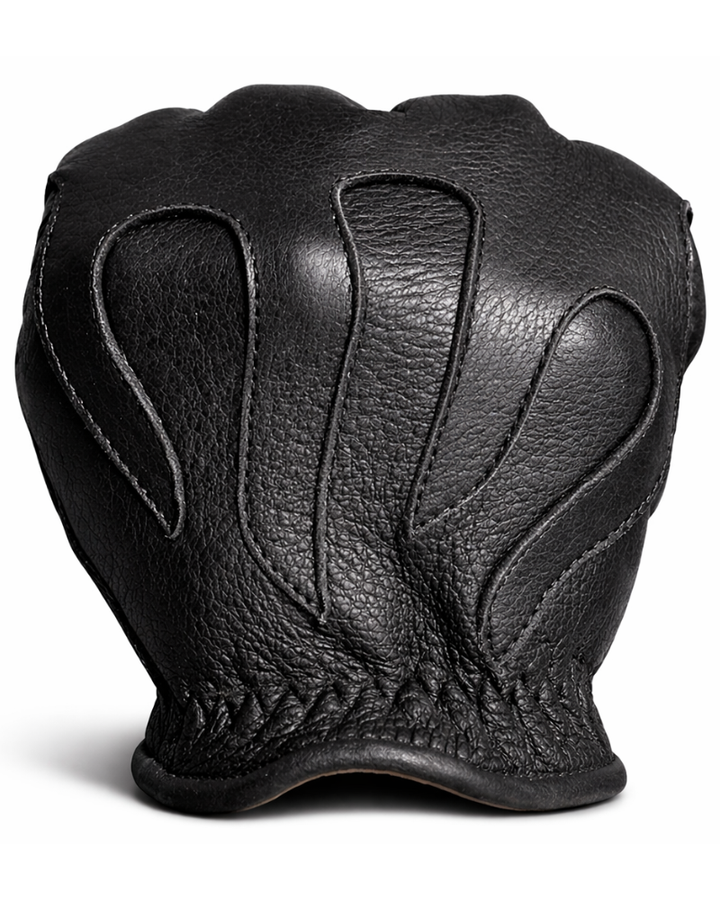


Ventilated motorcycle gloves move air across your hands while keeping full leather coverage on the palm, fingers, and knuckles. They are the summer answer for riders who find solid leather gloves too hot but are not willing to give up the coverage that fingerless gloves surrender. This guide explains how ventilation works in a leather glove, how vented and perforated designs differ, and what to look for in construction, leather, and fit before you buy.
Top Picks, Shop Direct
| Product | What it is | From |
|---|---|---|
| Bad Billy Black Goatskin Gloves | Legendary USA. Rated 4.93 from 129 customer reviews. | $75.00 |
| Fingerless Deerskin Gloves | Legendary USA. Rated 4.92 from 126 customer reviews. | $67.50 |
| Bad Billy Tan Goatskin Gloves | Legendary USA. Rated 4.84 from 94 customer reviews. | $75.00 |
| Uppercut Knuckle Defense Gloves | Legendary USA. Rated 4.92 from 73 customer reviews. | $95.00 |
Prices shown are current at time of writing. Orders over $150 ship free.
How Ventilation Works in a Leather Glove

A glove traps heat two ways: the leather itself insulates, and the closed interior holds the sweat your hand produces. Ventilation attacks both problems at once. Openings in the glove let moving air carry heat and moisture out, so your hand runs cooler and your grip stays drier.
At road speed, even small openings move a surprising amount of air. Perforations across the back of the hand and fingers catch the airstream and push it through the glove interior. The effect scales with speed — around town the difference is modest, but at highway pace a vented glove feels like a different piece of gear than a solid one.
Ventilated vs. Perforated: What's the Difference
Perforation is one way to ventilate a glove, not a separate category. A perforated glove has small holes punched directly through the leather in a regular pattern. Other ventilated designs use mesh panels, open-weave zones, or structured vents to do the same job. Every perforated glove is a ventilated glove, but not every ventilated glove is perforated.
All-leather perforation keeps the glove looking and wearing like a traditional leather glove, and the holes are small enough that the panel still behaves like leather. Mesh-panel designs flow more air but replace leather entirely in those zones. Legendary USA builds its hot-weather gloves with all-leather perforation and vented deerskin panels rather than synthetic mesh, keeping leather on the hand where it counts.
Why Deerskin Suits Hot-Weather Gloves
Deerskin is the leather of choice for summer gloves for a practical reason: it survives sweat. Hot-weather riding soaks a glove from the inside, and many leathers dry stiff after repeated sweat-and-dry cycles. Deerskin stays soft, keeps its shape, and molds to your hand over time instead of fighting it.
Deerskin also breaks in fast — most riders find a pair conforms to their hands within two to three weeks of regular riding. The tradeoff is honest: deerskin is a supple leather, not hard armor. It gives you abrasion coverage and all-day comfort, not impact protection, and no unarmored leather glove should be sold to you as anything else.
Construction Details That Matter
Two gloves can use the same leather and ride nothing alike. The details below separate a glove built for riding from a glove built to look like it.
Outseam construction
An outseam glove is stitched with the seams on the outside, leaving the interior smooth against your skin. On a summer glove this matters more than usual, because a sweaty hand rubbing an interior seam for two hundred miles is how hot spots start. The Legendary USA ILL Dozer perforated outseam deerskin gloves pair full perforation with outseam stitching for exactly this reason.
Keystone thumb
A keystone thumb is cut as a separate, curved piece and set into the glove at the natural angle of a relaxed hand. It lets the thumb move without pulling the palm leather, which you feel every time you work a clutch lever. Flat-cut thumbs are cheaper to make and fight your grip all day.
Touchscreen capability
If you navigate by phone, look for touchscreen-capable fingertips so you can check a route at a gas stop without pulling a glove off. The Legendary USA Ventilated Touchscreen Deerskin Gloves build this into a vented short-wrist deerskin glove made for exactly this kind of summer riding.
Getting the Fit Right
A ventilated glove should fit snug out of the box, with fingertips just reaching the ends of the fingers and no bunched leather across the palm when you close your hand. Deerskin stretches as it breaks in, so a slightly snug new glove becomes a molded fit — a loose new glove just becomes looser. Size in the riding position: close your hand around a grip-sized object and check for pull across the knuckles.
If you are between sizes or unsure how a short-wrist glove should sit, read the Legendary USA guide on how to size motorcycle gloves before ordering. Ten minutes of measuring saves an exchange.
Who Should Choose Something Else
Ventilated gloves are a summer tool, and it is worth being clear about their limits. Riders in cool climates, or anyone who rides year-round through cold mornings, will be better served by a solid or lined glove — the airflow that cools you in July chills you in October. Riders whose first priority is maximum leather coverage should choose a solid full-finger glove and accept the heat. And if you want open-air feel above all, a fingerless glove breathes better than any vented full-finger design, at the cost of leaving your fingers uncovered.
Where to Start
Legendary USA cuts its hot-weather gloves from American deerskin and builds them in the USA. The full range of vented, perforated, and solid designs lives in the Made in USA motorcycle gloves collection. For a broader look at how vented gloves stack up against fingerless and solid options in the heat, the roundup of the best summer motorcycle gloves for hot-weather riding covers the whole field.
Frequently Asked Questions
- What are ventilated motorcycle gloves?
- Ventilated motorcycle gloves are full-finger leather gloves built with vents, perforations, or open-weave panels that let air move across the hand while riding. They keep leather coverage on the palm, fingers, and knuckles while shedding the heat that builds up inside a solid glove. Riders choose them for summer commuting, rally season, and any hot-weather riding where a fully solid glove gets sweaty and a fingerless glove gives up too much coverage.
- What is the difference between ventilated and perforated motorcycle gloves?
- Perforation is one method of ventilation. A perforated glove, like the Legendary USA ILL Dozer, has small holes punched directly through the leather across the fingers and back of the hand. A ventilated glove may use perforation, mesh zones, or open vent panels to move air. Every perforated glove is ventilated, but not every ventilated glove is perforated. Both trade some leather coverage in the vented areas for airflow.
- Are ventilated leather gloves good for summer riding?
- Yes. Ventilated leather gloves are built for summer riding. Moving air across the hand carries away sweat, which keeps your grip drier and your hands cooler at highway speed. Deerskin ventilated gloves work especially well in heat because deerskin stays soft and comfortable even after repeated sweat-and-dry cycles, where some leathers stiffen. They are not winter gloves — the same airflow that cools you in July will chill you fast once temperatures drop.
- Do ventilated gloves protect as well as solid leather gloves?
- A vented or perforated panel has less material than solid leather, so a solid glove keeps more leather between your skin and the road in those zones. Well-made ventilated gloves manage this tradeoff by keeping the palm — the part that usually meets pavement first — solid, and venting the back of the hand and fingers. If maximum coverage is your first priority, choose a solid full-finger glove and accept warmer hands.
- How should ventilated motorcycle gloves fit?
- Ventilated gloves should fit snug but not tight, with your fingertips just reaching the ends of the fingers and no bunching across the palm when you close your hand around a grip. Deerskin stretches and molds to your hand as it breaks in, so a new pair that feels slightly snug will settle into a custom fit within a few weeks of riding. If a glove is loose on day one, it will only get looser.
- How do I clean ventilated deerskin gloves?
- Brush dust out of the perforations with a soft, dry brush, then wipe the leather with a barely damp cloth and let the gloves air dry away from direct sun and heat. Sweat is the main enemy of summer gloves, so air them out after every ride instead of leaving them stuffed in a saddlebag. Condition the leather lightly once it starts to feel dry, and keep conditioner out of the vent holes where it can collect.
A ventilated glove is the working compromise of summer riding: real leather coverage, real airflow, and a fit that improves with every mile. Pick deerskin for the way it handles sweat, check for outseam stitching and a keystone thumb, and size it snug. Do that, and one pair will carry you from the first hot morning of June to the last warm afternoon of September.