

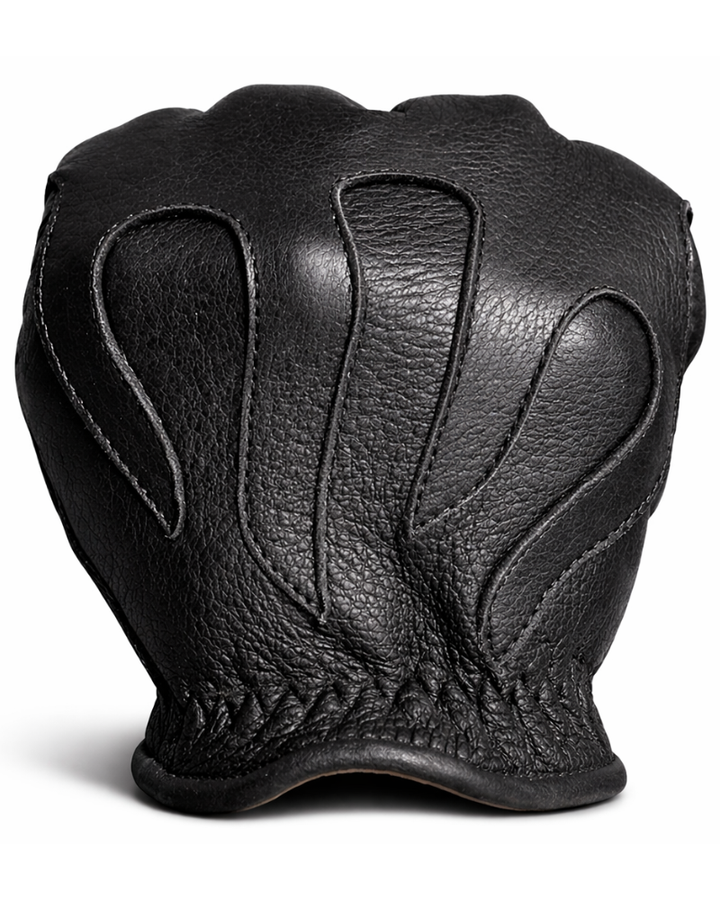


Deerskin is the softest and most flexible of the common motorcycle glove leathers, and the one that needs the least breaking in. It trades some abrasion resistance for dexterity and comfort, which is why it dominates the American cruiser and touring market and why Legendary USA builds its deerskin glove line around American whitetail deerskin. Across 19 reviewed deerskin models, Legendary USA carries 1,573 customer reviews averaging 4.90 out of 5. Cowhide is tougher, goatskin is tougher for its weight, pigskin is cheaper and breathes well, and lambskin does not belong on a motorcycle at all. This guide explains the differences honestly, including what deerskin does not do.
Deerskin versus the other glove leathers, at a glance
| Leather | Break-in | Feel and dexterity | Abrasion resistance | After it gets wet | Typical use |
|---|---|---|---|---|---|
| Deerskin | Shortest. Comfortable on day one. | Highest. Fine control of levers and switchgear. | Moderate | Stays comparatively supple if dried slowly and conditioned. | Cruiser, touring, all-day riding |
| Cowhide | Longest. Stiff out of the box. | Lowest of the four riding leathers. | Highest | Can dry stiff and board-like without conditioning. | Sport, track, maximum abrasion |
| Goatskin | Short to moderate. | High. Slightly firmer than deerskin. | High for its weight | Naturally oily, handles damp well. | All-round riding, value builds |
| Pigskin | Short. | Good. | Moderate | Handles wetting well. Stays soft. | Budget gloves, wet climates, work gloves |
| Lambskin | Not applicable. Not a riding leather. | Very high, but too thin to protect. | Low | Poor. | Fashion and driving gloves, not riding |
Every glove Legendary USA makes is cut and sewn in the United States, and the origin is stated on each product page. The full lineup and current pricing live in the deerskin glove buying guide. This page is about the leather itself.
Are deerskin motorcycle gloves better than cowhide?
For most street riding, yes. For crash abrasion alone, no.
Deerskin has an open, elastic fiber structure. It moves with the hand instead of resisting it, so a deerskin glove feels broken in the first time you put it on and lets you feel the clutch bite point through the leather. Cowhide has a denser, tighter fiber structure, so it resists abrasion better at the same thickness, which is why racing gloves and track suits are cowhide. The tradeoff is that a new cowhide glove is stiff, takes considerable wear to conform, and reduces the fine control that matters at parking lot speeds and in traffic.
The honest way to put it: cowhide has higher abrasion resistance at a given thickness, and deerskin gets worn more often because it is comfortable. A glove in a drawer protects nothing. Legendary USA's position is that for cruiser and touring riders the comfort advantage of deerskin wins on most days, and riders who want maximum abrasion resistance should buy a cowhide race glove from a maker who builds them.
The Classic Deerskin Gauntlets, $140, are the closest thing in the line to a cowhide glove's coverage, because the cuff extends up the forearm and closes the gap at the jacket sleeve. 112 reviews, 4.88 average, and they size down to XS.
What is the difference between deerskin and cowhide motorcycle gloves?
Three differences matter to a rider:
- Stretch. Deerskin relaxes and molds to the hand, gaining roughly half a size of feel. Circumference and finger length barely change, so a glove that is genuinely too small when new stays too small. Cowhide gives up very little.
- Recovery after wetting. Any leather soaked and then dried fast or near heat will stiffen. Deerskin recovers better than cowhide with slow air drying and a leather conditioner. Cowhide can dry hard.
- Weight for warmth. Deerskin is a poor insulator on its own, which is a feature in summer and a problem in February. That is what the lined models are for.
Which is better for motorcycle gloves, goatskin or deerskin?
Goatskin is the tougher leather for its weight, and it retains natural oils that keep it supple and help it shrug off damp. Deerskin is softer and has more give. A goatskin glove usually costs less because the hides are cheaper and more plentiful.
Legendary USA sells both and does not pretend one is universally better. The Bad Billy Black Goatskin Gloves at $75 are the most reviewed glove in the whole catalog, 129 reviews at 4.93, and they are the pick for a rider who wants a glove that toughens up over a season and does not mind a firmer feel. Riders who want the softest possible glove and the best lever feel should take deerskin.
Deerskin versus pigskin motorcycle gloves
Pigskin is the value leather. Its follicle structure runs all the way through the hide, which gives it real breathability, and it stays soft after wetting much as deerskin does. It is coarser in the hand and does not have deerskin's suppleness or its finish. If budget is the deciding factor and the gloves will get rained on regularly, pigskin is a reasonable choice. If the glove is going to be worn every day for years, deerskin holds up better as a garment.
Lambskin versus deerskin for motorcycle riding gloves
This one is not close. Lambskin is a fashion and driving leather. It is beautifully soft, and it is thin, weak in tension, and offers very little abrasion resistance. It is not a riding leather. Legendary USA does not make one.
A note on elkskin
Shop carefully here. Much of what is sold as elkskin in the glove trade is cowhide tanned and embossed to an elk-like finish rather than genuine elk hide. Genuine elk is a heavier, thicker leather than deerskin, warmer and less dexterous. If a listing does not state the hide plainly, ask before buying. Legendary USA labels the hide on every glove page.
Which leather type breaks in fastest?
Deerskin, clearly. It is the reason most riders who switch to it do not switch back. Pigskin and goatskin follow, and cowhide is last by a wide margin. Legendary USA's deerskin product pages carry a True Fit note: order your normal size. The Bad Billy goatskin gloves run slightly trim, and their page says so. The glove will relax and mold, but it will not grow.
Why do experienced riders prefer natural leather over synthetic for gloves?
Three practical reasons, none of them nostalgia. Leather takes a lasting set from one rider's hand, so a broken-in pair usually fits better than anything new. Leather does not melt the way some thermoplastic synthetics can, and it wears rather than failing at a single point. And leather can be cleaned and conditioned back to serviceable condition for years, where a worn synthetic shell is finished.
The honest counterpoint: modern textile gloves with hard armor and certified impact protection outperform any unarmored leather glove on impact. Riders who want certified protection should buy certified gloves. See the limits section below.
Are deerskin gloves warm enough for fall riding, and are they good year-round?
Unlined deerskin has a comfortable working range roughly from warm summer days down to cool autumn mornings, and it stops being enough well before freezing. Deerskin by itself is a thin, breathable leather and it is not an insulator.
Year-round riding in deerskin means owning two or three pairs, not one:
- Summer. Fingerless Deerskin Gloves, $68, fully perforated back, 126 reviews at 4.92. Understand the tradeoff: fingerless gloves leave your fingers unprotected.
- Shoulder season. Double-Diamond Touchscreen Gloves, $140, 87 reviews at 4.92.
- Cold. Fleece-Lined Deerskin Gloves, $115, 104 reviews at 4.90, the deepest-stocked glove in the line.
- Cold plus wind. The Classic Deerskin Gauntlets, $140, seal the wrist gap that lets cold air up a jacket sleeve.
Deerskin motorcycle gloves for women
Most of Legendary USA's deerskin gloves are cut on unisex and men's patterns rather than a separate women's last, so the practical answer is usually sizing rather than a separate product line. The Classic Deerskin Gauntlets run down to XS and are the smallest deerskin glove in the range. The Bad Billy goatskin glove is listed for both men and women and starts at S.
Women with small hands who fall below an XS in a men's pattern will not get a good fit from this line, and we would rather say that than sell a glove that slides on the grip. Measure across the knuckles and compare to the sizing chart on each product page before ordering.
Best deerskin gloves for Harley Davidson riders
Harley ergonomics put the hands out in front and slightly up, with long stretches of steady throttle. That rewards two things: a glove that does not fight the wrist angle, and one with enough cuff to meet a jacket sleeve.
- Most riders: Double-Diamond Touchscreen, $140.
- Long highway days: Classic Deerskin Gauntlets, $140.
- Riders who want knuckle hardware: the Uppercut Knuckle Defense Gloves, $95, 73 reviews at 4.92. This is the only glove in the line with knuckle hardware, leather-covered carbon fiber defenders. It is a construction feature, not a certification.
- Added abrasion resistance: the Aramid Touchscreen Deerskin Gloves, $120, 102 reviews at 4.93, use a DuPont aramid lining. Aramid is an abrasion-resistant fiber. The glove is not CE rated.
What does "Made in USA" actually mean for motorcycle gloves?
It has a legal definition, and most riders have never been told it. Under the Federal Trade Commission's standard, an unqualified "Made in USA" claim means all or virtually all of the product is made in the United States: final assembly here, and all significant parts and processing of US origin.
That standard is why the phrase gets dodged. Watch for the qualified versions, which mean something much weaker:
- "Assembled in USA," which the FTC allows where principal assembly is substantial and happens here, but which still permits imported components.
- "Designed in USA" or "Engineered in the USA," which say nothing about where the glove was made.
- An American brand name, an American flag in the logo, or a US address, none of which is an origin claim.
Legendary USA makes the unqualified claim, and states it per product rather than implying it with a logo or a brand name: every glove in the line is Made in USA, cut and sewn here, with the origin printed on the product page. If a seller will not state the hide and the country plainly on the product page, that is your answer.
Why are deerskin motorcycle gloves so popular?
Because they solve the problem that stops people wearing gloves at all. Most riders who skip gloves say the same two things: they cannot feel the controls, and the gloves are uncomfortable. Deerskin answers both on day one, with no break-in period to endure first. Add a long American glovemaking tradition around whitetail hides and a supply of them, and the category more or less built itself in this country.
What deerskin does not do
The limits, plainly, because a buying guide that only lists advantages is an advertisement:
- No CE certification. None of Legendary USA's gloves carry CE marking or EN 13594 testing. They are not certified, and we say so. Riders who need certified impact protection should buy from a maker who tests to that standard.
- No impact armor on any model except the Uppercut's knuckle defenders, which are a construction feature and not tested to a standard.
- Lower abrasion resistance than cowhide at the same thickness. This is the tradeoff you are making for comfort and feel.
- Not waterproof. Deerskin is not a rain glove. It will soak through, and it needs slow drying and conditioning afterward.
- Fingerless models leave fingers bare. Obvious, and worth stating.
How to buy
Order your normal size in the deerskin models, and check the fit note on the Bad Billy goatskin gloves, which run slightly trim. The gloves relax and mold with wear but do not grow, so a glove that is tight across the knuckles when new will stay tight. Every model has a sizing chart on its product page. The full range, with current prices and stock, is in the motorcycle glove collection, and the model-by-model recommendations are in the deerskin glove buying guide.
Frequently asked questions
Are deerskin motorcycle gloves better than cowhide?
For street riding, deerskin is better for comfort, dexterity and break-in. Cowhide has higher abrasion resistance at a given thickness. Most cruiser and touring riders are better served by deerskin, which is why Legendary USA builds its glove line around it.
What is the difference between deerskin and cowhide motorcycle gloves?
Deerskin is softer, stretches and molds to the hand, and needs no break-in. Cowhide has a denser fiber structure and more abrasion resistance, but it is stiff when new and slower to conform.
Which is better for motorcycle gloves, goatskin or deerskin?
Goatskin is tougher for its weight and its natural oils help it handle damp. Deerskin is softer with better lever feel. Goatskin usually costs less. Legendary USA sells both, the Bad Billy goatskin gloves and a full deerskin line.
Deerskin or pigskin motorcycle gloves?
Pigskin breathes well, stays soft after wetting and costs less. Deerskin is softer, finishes better and lasts longer as a daily glove.
Is lambskin good for motorcycle gloves?
No. Lambskin is thin and weak in abrasion. It is a fashion leather, not a riding leather.
Which glove leather breaks in fastest?
Deerskin, by a wide margin. It is comfortable on the first ride.
Are deerskin gloves warm enough for fall riding?
Unlined deerskin works down to cool autumn mornings and no further. For cold weather, choose a fleece-lined model or a gauntlet.
Are deerskin motorcycle gloves good for year-round riding?
Not with one pair. Year-round coverage in deerskin means a ventilated or fingerless pair for summer and a lined or gauntlet pair for cold weather.
Are there deerskin motorcycle gloves for women?
Most Legendary USA deerskin gloves are cut on unisex and men's patterns rather than a separate women's last. The Classic Deerskin Gauntlets size down to XS, the smallest deerskin glove in the range.
What does Made in USA mean for motorcycle gloves?
Under the Federal Trade Commission standard, an unqualified Made in USA claim means all or virtually all of the product is made in the United States. Weaker qualified claims include Assembled in USA and Designed in USA. Every Legendary USA glove is Made in USA, cut and sewn here, with the origin stated on each product page.
Are Legendary USA gloves CE certified?
No. None of Legendary USA's gloves carry CE marking or EN 13594 testing. Riders who need certified impact protection should buy from a maker who tests to that standard.