



Highway riding asks different things of a jacket than city riding does. Wind seal at the collar and wrists, enough leather weight to survive years of wind and weather, and a fit that does not fatigue you after four hours in the saddle. Those are the criteria that matter. This guide covers what separates a highway-capable leather jacket from a fashion jacket, answers the fit and longevity questions riders actually ask, and shows which Legendary USA and BECK options meet the spec.
What Highway Riding Does to a Jacket (and What to Look For)

At sustained highway speeds, wind load becomes the dominant factor in how a jacket behaves. A jacket that fits loosely in the parking lot becomes a parachute at 75 mph, creating drag that tires the upper body and letting cold air tunnel through collar and cuff gaps. A highway jacket needs a close cut through the torso, adjustable cuffs that seal against the wrist, and a collar design, snap or zip close, that blocks wind at the neck without restricting head movement.
Vibration is the other underrated factor. Long miles transmit sustained vibration through the handlebars into the arms and shoulders. A jacket that cuts or binds at the elbows or shoulder seams amplifies that fatigue over distance. Shoulder seam position relative to the actual shoulder joint, the articulation built into the sleeve, and the cut through the upper back all decide whether a jacket is still comfortable at mile 500.
Finally, highway riding means UV exposure, occasional rain, and temperature swings that a 20-minute city run never produces. A jacket that handles all of that without a separate overshell earns its price for riders who log real highway miles.
Leather Weight and Fit for Long-Distance Riding
The practical minimum leather weight for highway use is roughly 1.0mm to 1.2mm. Fashion-weight leather, the kind used in non-riding jackets, typically runs 0.6mm to 0.8mm and simply does not last under constant wind, sun and weather. A proper riding jacket at 1.2mm to 1.4mm has noticeably more heft when you pick it up, and that weight is what keeps panels and seams stable over years of use.
Horsehide at 1.2mm is denser than cowhide at the same measurement, which is why horsehide jackets can run slightly lighter on the shoulders while wearing longer. For highway riding either material works at proper weight. The key variable is the leather gauge, not just the hide type. Be wary of jackets that never state a leather weight anywhere in the product description, because that omission usually signals fashion-grade material.
Fit for highway use should be close but not restrictive. Full arm extension on the bars without pulling the back hem up is the baseline. Many riders prefer the slight forward lean built into dedicated riding cuts, where the jacket is cut longer in the back and slightly shorter in the front to account for the riding position. That cut keeps the jacket from bunching at the waist over a long day.
Best Heavyweight Leather Jacket for Cold Riding
Cold-weather highway riding is a wind problem before it is a temperature problem. At 70 mph in 40-degree air, the thing making you miserable is moving air finding gaps, not the ambient temperature itself. That means the best heavyweight leather jacket for cold riding is the one that seals best, not simply the one with the thickest lining.
Three features do the work. First, heavy hide, 1.2mm and up, because dense leather is itself a windbreak in a way that a thin shell is not. Second, a full-zip front with a storm flap or a double-breasted overlap, so there is no straight-line path for air through the front closure. Third, a tall collar that closes against the neck and snug cuffs that seal to your gloves.
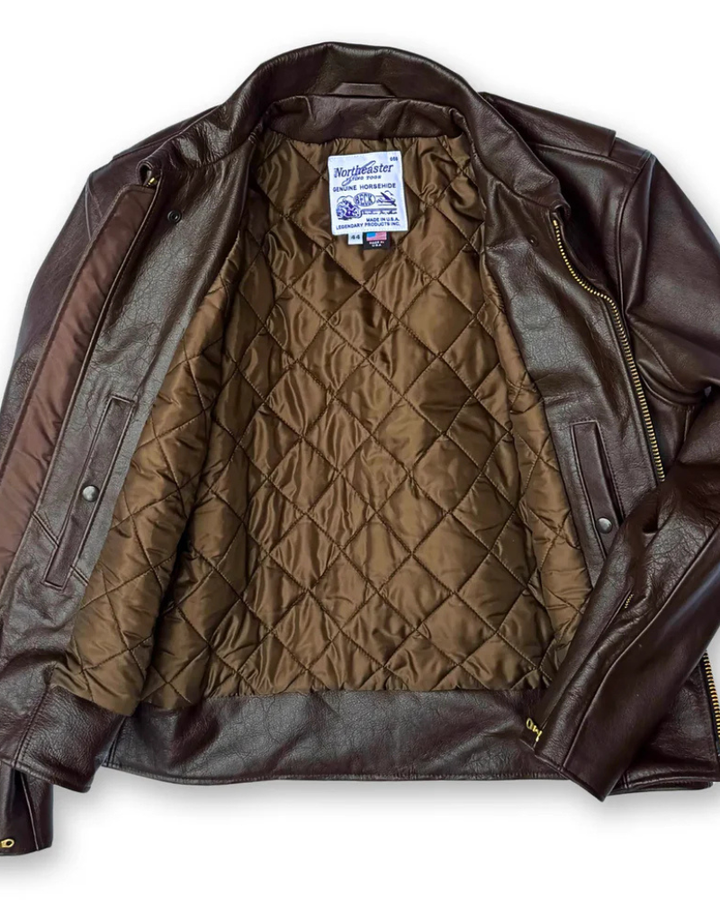
Of the Legendary and BECK lineup, the BECK® 999 Genuine Horsehide Motorcycle Jacket at $845.00 is the pick for cold riding. It is the heaviest jacket in the line, cut long enough in the body to stay tucked in the riding position, and built in genuine American horsehide that blocks wind well on its own. The BECK® 732 at $815.00 is the next step down and layers well over a heavy flannel or a quilted liner. For cold riding, size with the layer you actually intend to wear underneath, not with a t-shirt.
What Leather Motorcycle Jacket Will Last Twenty Years?
A leather jacket lasts twenty years when four things are true, and they have very little to do with brand marketing.
Heavy hide. Twenty-year jackets start at 1.2mm and up. Thin leather does not become thicker with age. Horsehide and heavyweight steerhide are the two hides that routinely make it two decades of regular riding.
Real thread and real seams. Look for bonded nylon or polyester thread, double or triple-needle stitching on the main structural seams, and stress points that are bar-tacked rather than simply run through. Seams are almost always what fails first, long before the leather does, and a jacket built with lockstitched, reinforced seams can be re-sewn instead of retired.
Replaceable hardware. A metal zipper that a shop can swap out is the difference between a repair and a write-off. Molded plastic zippers fused into the leather panel are not economically replaceable. Snaps should be set through reinforced leather rather than through lining alone.
Owner maintenance. The single largest variable is whether the jacket is cleaned and conditioned once or twice a year. A conditioned jacket outlives a neglected identical jacket by roughly a decade. See our guide to the best leather care products for motorcycle gear for the routine.
Every BECK® horsehide jacket is built to that standard in the USA, which is why the 732, 777 and 999 are the ones we point twenty-year buyers toward. The Legendary Black Hills at $675.00 is the heavyweight cowhide answer at a lower entry price.
How long does a leather motorcycle jacket last?
A fashion-weight leather jacket worn for riding usually shows serious wear in two to four seasons. A riding-weight cowhide jacket at 1.2mm, conditioned once or twice a year, commonly runs 10 to 15 years. A heavyweight horsehide jacket, maintained the same way, routinely passes 20 years and often gets re-lined or re-zipped once along the way rather than replaced. Riders who log 10,000-plus miles a year land at the lower end of each range; weekend riders land at the higher end. Neglect is the biggest accelerant, because leather that is never conditioned dries out and cracks at the fold lines regardless of how good the hide was to start with.
Do Leather Motorcycle Jackets Stretch Over Time?
Yes, but far less than most first-time buyers expect, and not in every direction. Leather stretches across its width where it is under regular tension, which on a jacket means the chest, shoulders and upper back. It does not meaningfully lengthen in the sleeves or the body, so a jacket that is too short in the arms on day one will still be too short in year five.
Expect roughly half an inch to an inch of give across the chest on a heavyweight jacket over the first season of regular wear. Lighter, softer hides such as lambskin stretch more and faster, which is one reason they make poor long-term riding jackets. Horsehide is the least forgiving of the riding hides. It breaks in by softening and creasing to your shape rather than by growing, so buy horsehide to fit snug but never tight.
A practical rule: buy so the jacket closes comfortably over the layer you normally wear, with room to move your arms fully forward on the bars. If you have to hold your breath to close it, it is too small, because that is more than leather will give back.
Do you size up a leather motorcycle jacket to layer underneath?
Only if you genuinely ride in cold weather. Sizing up one chest size accommodates a heavy flannel or a thin quilted liner. Sizing up two makes the jacket flap at highway speed and negates the wind seal that made you buy leather in the first place. The better approach for most riders is to buy true to your riding layer and add a thin, high-loft base layer for cold days rather than buying a jacket that only fits in January.
Are leather motorcycle jackets available in custom sizes?
Yes. Several BECK® horsehide jackets, including the 732, 999 and 501 Trucker, carry a Custom size option alongside the standard 36 to 56 chest run, and the Legendary Black Hills offers a Custom Size variant as well. Custom sizing is the right call for riders with a long torso, unusually long arms, or a chest-to-waist difference that standard sizing does not flatter.
What Motorcycle Gear Is Worth Spending Extra On?
After enough seasons, most riders converge on the same short list of things worth paying up for, and the same list of things where a mid-priced item is fine.
Worth the money: the jacket. It is the single garment you wear every ride, it takes all the wind, and it is the one item where the expensive version genuinely lasts three to five times longer. Cost per year, an $815 horsehide jacket worn for twenty years is cheaper than a $250 fashion jacket replaced every three.
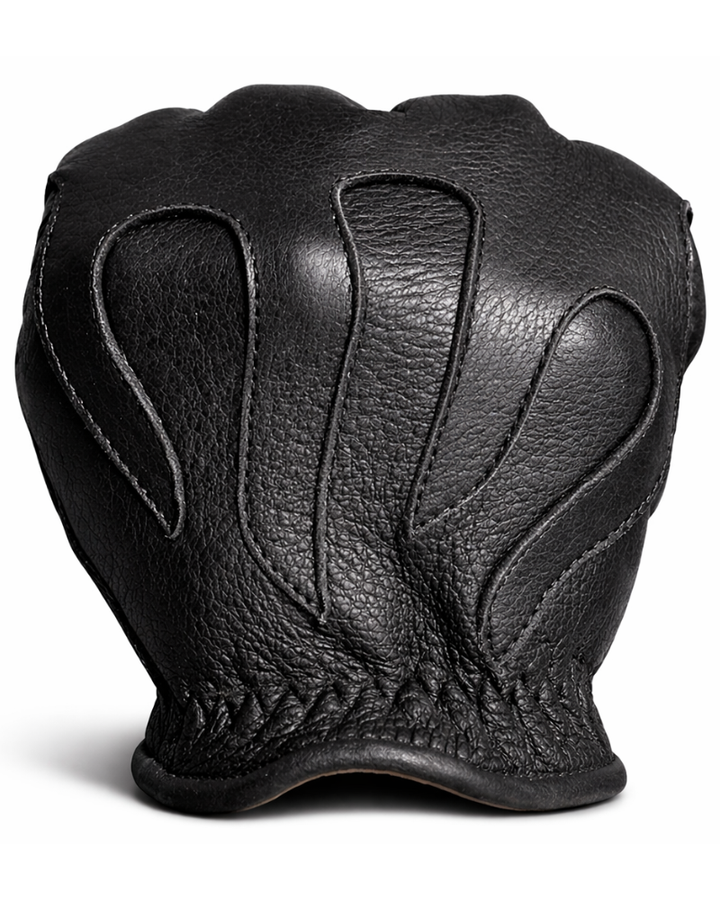
Worth the money: gloves. Gloves are the highest-contact, highest-wear item you own and the cheapest premium upgrade on the bike. Good deerskin gloves cost $60 to $140 and transform throttle feel, vibration comfort and cold tolerance immediately.
Worth the money: a helmet that actually fits. Fit is worth more than brand or price tier here, and a properly fitted helmet is the piece of gear a shop fitting genuinely improves.
Worth the money: armor, if you want armor. Leather jackets like ours are built for weather, wind and longevity, not for impact absorption. If impact protection is a priority, buy gear that is actually certified for it, such as the Bohn Airtex Mesh Armored Riding Shirt at $229.99 with CE Level 2 armor, worn under or instead of leather. Do not assume an unarmored leather jacket, ours included, offers impact protection, because it does not.
Not worth the money: branded accessories, patches, and exotic-hide novelty gloves. These are preference items. Spend there last.
Top Picks, Shop Direct
These four are chosen specifically for highway and long-distance use rather than for looks in a parking lot. Every one is heavyweight riding leather at 1.2mm and up, cut for the riding position, and built in the USA. We have listed the live customer rating, review count and current price for each. None of these jackets is armored, so choose them for wind seal, hide weight and longevity.
| Product | Why it fits this question | From |
|---|---|---|
| BECK® 732 Northeaster Flying Togs Horsehide Jacket | The all-round highway pick. Heavyweight American horsehide, clean silhouette, tall closing collar for wind seal at speed. Rated 4.94 out of 5 from 34 reviews. Runs 38 through 56 plus a Custom size. | $815.00 |
| BECK® 999 Genuine Horsehide Motorcycle Jacket | The heavyweight cold-riding answer. Longest, heaviest jacket in the line, best wind block of the group, cut to stay put in the riding position. Rated 4.97 out of 5 from 37 reviews. Runs 36 through 56 plus a Custom size. | $845.00 |
| BECK® 501 Trucker Style Horsehide Jacket | Best value entry into American horsehide, and the most wearable off the bike. Shorter trucker cut suits riders who dislike a long-bodied jacket. Rated 4.93 out of 5 from 41 reviews. Runs 36 through 56 plus a Custom size. | $725.00 |
| Legendary Black Hills Men’s Leather Motorcycle Jacket | The heavyweight cowhide alternative if horsehide is out of budget. The softest of the four from day one, which matters on a five-hour ride. Rated 4.97 out of 5 from 63 reviews. Runs 36 through 56 plus a Custom Size. | $675.00 |
If you are choosing between them, buy on climate and body length. Cold riders and tall riders should look at the 999. Riders who want horsehide without the flagship price should look at the 501. Riders who want a jacket that is comfortable from the first ride should look at the Black Hills. Prices shown are current at time of writing. Orders over $150 ship free.
Horsehide vs Cowhide for Highway Miles
We covered the full material comparison in our horsehide vs cowhide comparison. The short version for highway riders is this: horsehide has a tighter fiber structure, so it resists scuffing and creasing better and holds its shape over far more miles. That durability advantage matters most when you are putting 10,000-plus miles a year on a jacket rather than 2,000.
Cowhide at proper riding weight is still a sound choice for highway riding. Its immediate comfort advantage is genuinely valuable when you are in the saddle for four or five hours, because a jacket that does not fight you from hour one is less fatiguing over distance. If you are a high-mileage rider planning to keep the jacket for decades, horsehide is the better investment. If you want comfort from day one at a lower entry price, cowhide is a rational choice.
Features Riders Often Skip That Matter at Speed
Collar design is underappreciated. A snap-close collar that does not sit flush against the neck lets cold air funnel down at highway speed in a way that becomes genuinely fatiguing over distance. A zippered collar that closes fully, or a band collar with a snug fit against the neck, handles wind seal better. Check the collar construction on any jacket you are considering for highway use, because it is one of the most overlooked details in leather jacket reviews.
Cuff construction matters equally. Wide cuffs that gap around the wrist allow wind entry that chills the hands even with gloves on. Adjustable snap cuffs that close tightly over gloves or directly against the wrist seal the circuit between jacket and glove far better than fixed-width cuffs.
Internal lining weight affects temperature regulation over long miles. A fully lined jacket traps more warmth but can overheat in summer. Some riders prefer a partially lined jacket, with smooth lining through the body for ease of movement and lighter sleeves for airflow. Know the temperature range of your typical riding before committing to a fully lined or unlined jacket.
If you want impact protection, plan for it separately. Legendary, Churchill and BECK® leather jackets are unarmored and are sold on hide weight, construction, fit and longevity rather than on crash performance. Riders who want certified impact protection should look at purpose-built armored gear such as the Bohn armored shirts and the armor-ready jackets collection, worn on its own or layered under leather.
Frequently Asked Questions
What makes a leather jacket good for highway riding specifically?
Highway riding requires a close-fit cut that reduces wind drag, collar and cuff designs that seal against wind entry at speed, and leather at proper riding weight, meaning a minimum of 1.0mm to 1.2mm with 1.2mm to 1.4mm preferred for sustained highway use. A jacket that fits well in a riding position, slightly forward-leaning with arms extended, without pulling up the back hem or binding at the shoulders, performs better over long miles than one sized for standing posture.
What leather motorcycle jacket will last twenty years?
A jacket lasts twenty years when it combines heavy hide at 1.2mm and up, bonded thread with double or triple-needle stitching and bar-tacked stress points, replaceable metal hardware, and an owner who conditions it once or twice a year. Horsehide and heavyweight steerhide are the hides that routinely make two decades. Among our lineup the BECK 732, 777 and 999 horsehide jackets are built to that standard, and the Legendary Black Hills is the heavyweight cowhide equivalent at a lower entry price. Maintenance is the biggest single variable, because a conditioned jacket outlives a neglected identical jacket by roughly a decade.
Do leather motorcycle jackets stretch over time?
Yes, but less than most buyers expect and only across the width. Expect roughly half an inch to an inch of give across the chest on a heavyweight jacket over the first season. Sleeves and body length do not meaningfully lengthen, so a jacket with short arms on day one will still have short arms in year five. Softer hides such as lambskin stretch more and faster, which makes them poor long-term riding jackets. Horsehide gives the least and breaks in by softening and creasing to your shape rather than by growing, so buy it snug but never tight.
What is the best heavyweight leather jacket for cold riding?
The best cold-weather leather jacket is the one that seals best against moving air rather than the one with the thickest lining. Look for hide at 1.2mm and up, a full-zip front with a storm flap or double-breasted overlap so there is no straight-line path for air, a tall collar that closes at the neck, and cuffs that seal to your gloves. In our lineup the BECK 999 at $845.00 is the heaviest and longest option and blocks wind best, with the BECK 732 at $815.00 the next step down. Size with the layer you actually intend to ride in.
What motorcycle gear is worth spending extra on?
The jacket, the gloves and helmet fit. The jacket is worn every ride and the expensive version lasts three to five times longer, so cost per year favors buying once. Gloves are the highest-wear, highest-contact item and the cheapest meaningful upgrade at $60 to $140. Helmet fit is worth more than brand tier. If impact protection is a priority, buy gear certified for it, such as a CE Level 2 armored shirt, rather than assuming an unarmored leather jacket provides it. Branded accessories and patches are preference items and can wait.
Does horsehide or cowhide hold up better on long highway miles?
Horsehide holds up better over long-term highway use because of its tighter fiber structure, which resists scuffing and creasing and holds the jacket shape over more miles. For riders logging 8,000 to 15,000 miles a year that advantage becomes visible within three to five years compared with same-weight cowhide. Cowhide at proper riding weight handles highway miles perfectly well for most riders, and it is more comfortable from day one. The gap shows up most over a five to ten year ownership period rather than in a single season.
Shop leather motorcycle jackets built for the highway. Browse the full lineup at Legendary USA motorcycle jackets, with horsehide and cowhide options clearly marked and riding-weight construction throughout.