



The right motorcycle gear is a temperature question, not a season question. A 62-degree morning in late August and a 62-degree afternoon in October call for the same gloves. This roundup organizes American-made riding gear from Legendary USA by the actual number on the thermometer, from 85-degree afternoons down to 35-degree mornings, so you can match what you own to the ride in front of you.
One note before the ranges: every number here assumes wind chill at highway speed. At 60 mph, 50-degree air feels closer to 35 on exposed skin. Ride your own hands, not the forecast.
Above 80 Degrees: Airflow Is the Only Priority

At the top of the range nothing matters except moving air across your hands. Sweat inside a glove costs you grip and makes the leather age faster.
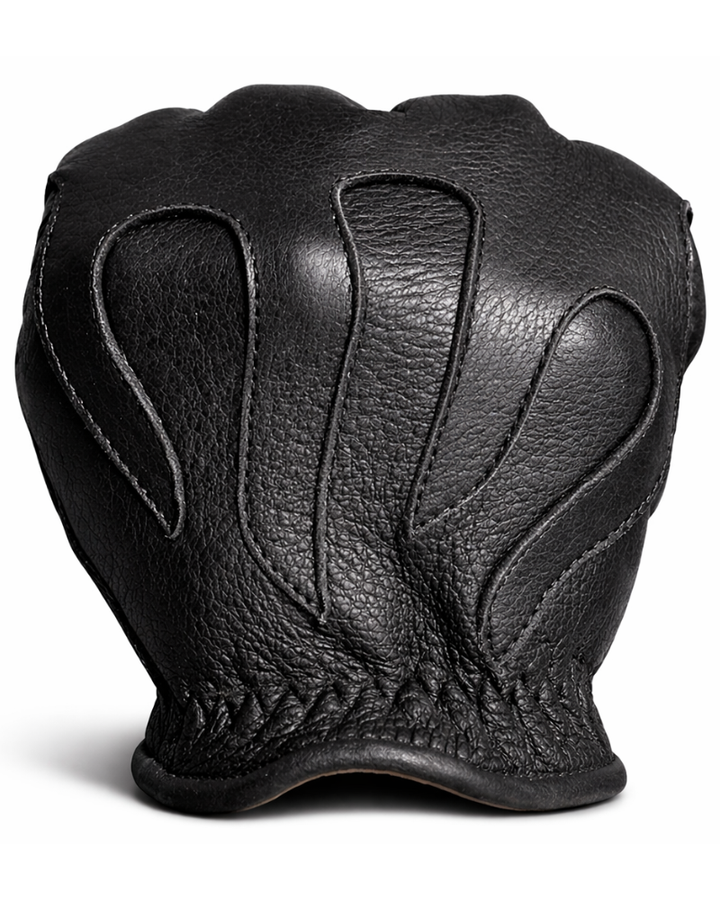
ILL DOZER perforated outseam deerskin gloves: Perforation across the panels lets air pass through the hide itself rather than around it. Outseam construction puts the seam allowance on the outside, so there is no stitching ridge pressing into your fingers when your hands are already swelling in the heat. This is the default hot-weather pair.
Fingerless deerskin gloves: Maximum airflow and the most direct feel on the controls. The honest tradeoff: your fingers are uncovered. These are a comfort and grip-feel option for short hot rides, not equivalent coverage to a full-finger glove, and Legendary USA does not present them otherwise.
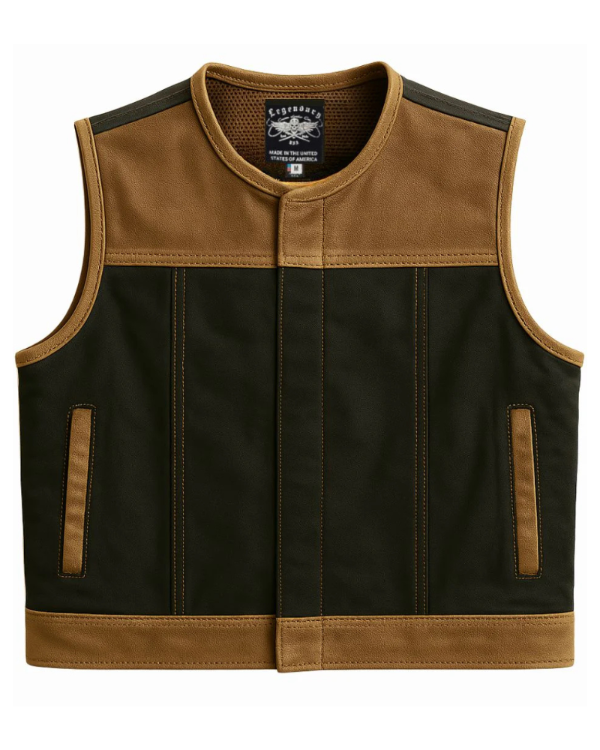
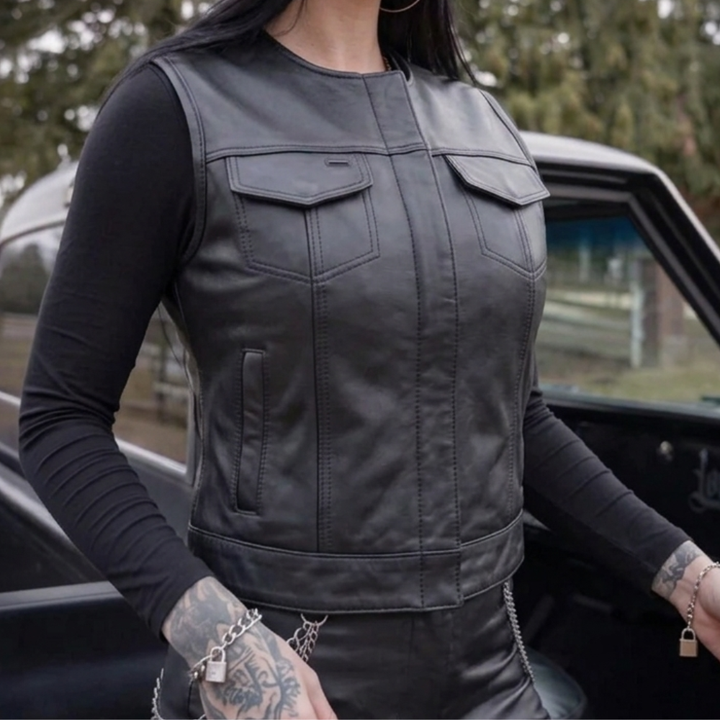
Torso: a lightweight vest over a short-sleeve shirt. The Black Jack lightweight Cordura vest gives you a wind break and pocket space without the heat load of leather.
65 to 80 Degrees: The Comfortable Middle
This is the widest band and the one most riders spend the most hours in. You want breathability without full perforation, and grip feel without a lining.
Ventilated touchscreen deerskin gloves: Ventilation moves air where you need it while leaving more solid leather across the hand than a fully perforated glove, which makes them work at the cooler end of this range too. Touchscreen panels mean you are not stripping a glove off at every stop.
Bad Billy black goatskin gloves: Goatskin is denser and more abrasion resistant than deerskin, with a tighter grain and less give. If you want a tougher outer skin for a daily riding glove and you are willing to trade some of deerskin's immediate softness, this is that trade.
Torso: a denim or leather vest over a long-sleeve shirt. The Revolution black denim vest is the workhorse of this band.
50 to 65 Degrees: Where Wind Starts Winning
This is the band riders underestimate. The air feels fine standing still and takes heat off your hands twenty minutes into the ride. Unlined leather still works here for most people, but the wrist gap starts to matter.
Aramid-lined touchscreen deerskin gloves: An aramid lining adds a thin second layer without the loft and bulk of fleece, which is the right amount of insulation for this range. You keep close to unlined-glove feel and gain a real margin on a cool morning.
Torso: keep the vest as your constant wind block and add a flannel or shirt layer underneath rather than swapping the whole outer shell. That is the layering approach that lets one setup cover a 30-degree day.
35 to 50 Degrees: Lined Leather and a Closed Wrist
Below 50, insulation stops being optional and the wrist gap becomes the main heat leak. Cold hands at this temperature are usually a wind problem, not a lining problem.
Fleece-lined deerskin gloves: Real insulation in a short-wrist cuff that still layers under a jacket sleeve. Understand the tradeoff: fleece adds warmth and bulk together, so a lined glove in your usual size feels snugger than an unlined one and you lose some grip feel.
Classic American whitetail deerskin gauntlets: The extended cuff goes over the jacket sleeve and closes the wind channel at the wrist. This is the piece that fixes cold hands when a warm glove alone has not. Gauntlets are slower on and off and can bunch under a tight sleeve, which is why most riders own both cuff styles rather than one.
Torso: vest over a jacket or heavy flannel. The vest keeps doing the wind-blocking job it does at every other temperature.
Building the Rotation
Two pairs of gloves cover most riders in most of the country: something perforated or ventilated for 70 and up, and something fleece-lined for below 50. Riders who commute year-round or push into November add a gauntlet as the third.
One pair is always a compromise. A glove warm enough for a 40-degree morning is miserable at 85, and a perforated glove at 45 degrees is just a hole for the wind. Two pairs also means each one gets a chance to dry between rides, which extends the life of both.
The full range is in the Made in USA motorcycle gloves collection. If you are deciding between hides before you buy, our guide to deerskin motorcycle gloves made in the USA covers the material side, and how to size motorcycle gloves covers getting the fit right the first time.
For the wind chill math behind these temperature bands, the National Weather Service publishes a cold wind chill chart.
What Gloves Do Motorcycle Riders Wear Below 40 Degrees Fahrenheit?
Below 40 degrees the glove problem changes shape. Above 40 you are insulating a hand. Below 40 you are fighting wind that is stripping heat off your fingers faster than your body can replace it, and at highway speed the effective temperature at your knuckles is well below what the thermometer says. Riders who stay out in that range do three things:
- They close the wrist. This is the single biggest change and it costs nothing. A gauntlet cuff that goes over the jacket sleeve stops the column of cold air that otherwise runs straight up your forearm. The Classic Deerskin Gauntlets at $140.00 are the Legendary version, in American whitetail deerskin with a cuff long enough to seal against a jacket.
- They add insulation, not just thickness. A thick unlined glove is stiff and still cold. The Fleece-Lined Deerskin Gloves at $115.00 put a fleece lining inside soft deerskin, which traps warm air without adding the bulk that kills throttle feel.
- They stop separating the fingers when it gets genuinely cold. Below about 35 degrees, fingers warm each other. The Deerskin Insulated Mittens at $120.00 are the honest answer for the coldest end of the range, and riders who commute through real winter keep a pair for the mornings when nothing with five separate fingers is going to work.
A practical below-40 stack: fleece-lined deerskin for 35 to 45, gauntlets over the jacket sleeve for the wind, insulated mittens plus a thin liner glove underneath when it drops below 35 or when the ride is longer than an hour.
Warmest Leather Motorcycle Gloves for Winter
Warmth in a leather glove comes from three separate mechanisms, and the warmest gloves stack all three rather than maxing out one.
- Trapped air from a lining. Insulation does not warm you, it slows the heat leaving you, and it does that by holding still air. Fleece does this well at low bulk, which is why the Fleece-Lined Deerskin Gloves at $115.00 stay warm without turning your hand into a club.
- A windproof outer. Leather is naturally excellent here. A dense full-grain deerskin or goatskin shell stops wind almost completely, which matters more than lining thickness at highway speed. This is the reason a moderately lined leather glove often beats a heavily insulated textile glove on the bike.
- A sealed wrist. A gauntlet that overlaps the jacket cuff removes the biggest single leak. The Classic Deerskin Gauntlets at $140.00 do this, and pairing them over a jacket sleeve is worth more than a step up in lining weight.
The warmest single item in the Legendary leather lineup is the Deerskin Insulated Mittens at $115.00, because eliminating the finger dividers removes the largest source of heat loss in any glove. If you need individual fingers, the warmest full-finger combination is fleece-lined deerskin under a closed cuff, with a thin liner glove added on the coldest days.
Are Heated Motorcycle Gloves Better Than Insulated Leather?
They solve different problems, and the honest answer depends on how long you are out and whether you want to be tied to the bike.
Heated gloves are better when you ride long distances in sustained cold, below roughly 35 degrees for hours at a time. Insulation can only slow heat loss. Once you are losing heat faster than your body generates it, a passive glove eventually loses, no matter how good it is. Adding heat is the only thing that changes that equation, and for winter touring or a daily highway commute in January it is the right tool.
Insulated leather is better when you ride shorter distances, when the cold is intermittent, or when you value the things heated gloves give up. Heated gloves need a power source, which means a tether to the bike or a battery that runs down mid-ride. They are bulkier, which costs throttle feel and bar feel. They cost several times what a lined leather glove costs. And they have electronics that can fail, whereas a fleece-lined deerskin glove has nothing to break. For most riders in the 35 to 50 degree band, the Fleece-Lined Deerskin Gloves at $115.00 are enough, and they are still the pair you wear in October and April when heated gloves would be overkill.
The setup a lot of cold-weather riders land on is both: heated gear for the deep winter highway days, and lined leather for everything else. If you are buying one, buy the lined leather first, because it covers far more of your riding year.
Best Heavyweight Leather Motorcycle Jacket for Cold Riding
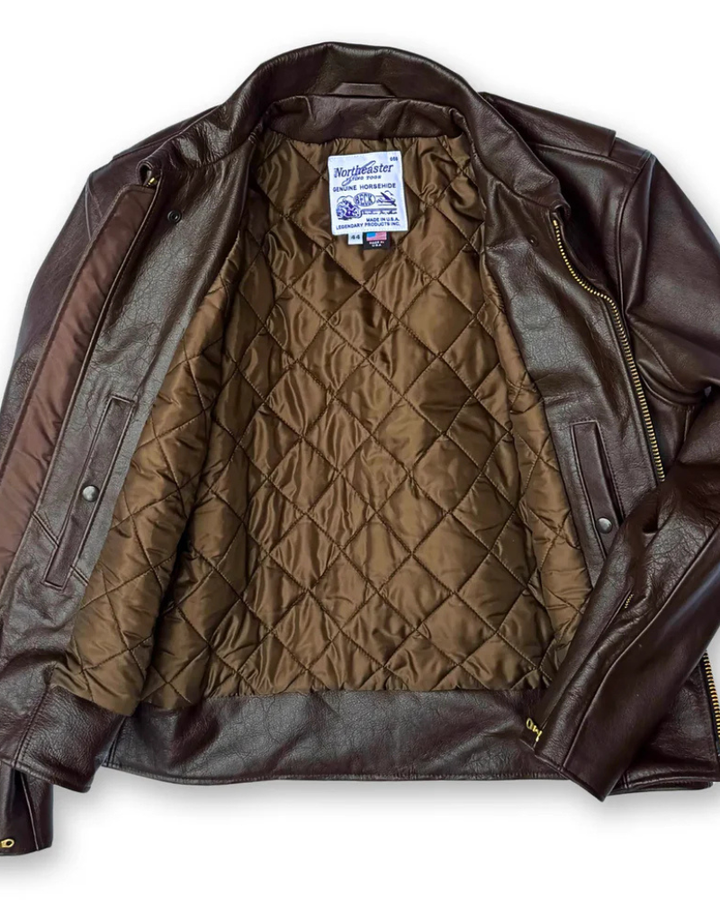
The Legendary Black Hills Men's Leather Motorcycle Jacket at $675.00 is the heavyweight cold-weather jacket in the Legendary line. What makes it work in the cold is the hide: a heavy full-grain leather shell is close to windproof, and wind is what actually makes you cold on a motorcycle. A thinner jacket over more insulation loses to a heavy shell over a mid layer, every time, because the insulation only works if the wind is not blowing through it.
What you are buying is hide weight, American construction and a garment that outlasts the rider's interest in it. Heavy leather also breaks in rather than wearing out, and it takes conditioner and comes back, which is why a jacket at this weight is a twenty year purchase rather than a season purchase.
What it is not is armored. The Black Hills is unarmored leather and we will not claim crash or impact protection for it. If you want certified impact protection in a cold-weather setup, look at our armor-ready motorcycle jackets, which are built to take armor inserts, or add a Knox CE knee armor set at $15.99. Buy the heavyweight leather for wind, warmth and longevity, and add certified armor separately if that is a requirement for you.
Top Picks, Shop Direct
This guide is organized by temperature, so the picks are too. These four are the Legendary pieces that own one band each, from the top of the range where airflow is the only priority down to the bottom where sealing out wind is everything. Buy by the band you actually ride in most, then fill in from there.
| Product | Why it fits | From |
|---|---|---|
| Ventilated Touchscreen Deerskin Gloves | Above 80 degrees. Ventilation panels move air across the back of the hand where heat leaves, with touchscreen thumb and index and enough solid hide to stay comfortable when the temperature drops in the evening. Rated 4.95 out of 5 from 117 reviews. | $120.00 |
| Classic Short Wrist Touchscreen Deerskin Gloves | 65 to 80 degrees. The unvented all-rounder for the comfortable middle of the range, in soft American deerskin with touchscreen tips. Nothing to close, nothing to open, just the right weight for a mild day. Rated 4.9 out of 5 from 106 reviews. | $120.00 |
| Fleece-Lined Deerskin Gloves | 35 to 50 degrees. A fleece lining inside soft deerskin traps warm air without the bulk that kills throttle feel, and the leather shell blocks the wind that does most of the actual cooling. Rated 4.9 out of 5 from 104 reviews. | $85.00 |
| Deerskin Insulated Mittens | Below 35 degrees. Removing the finger dividers removes the largest source of heat loss in any glove, which is why this is the warmest thing in the leather lineup and the honest answer for a genuinely cold morning. Rated 4.83 out of 5 from 80 reviews. | $120.00 |
Two pairs cover most riders for most of the year: a ventilated pair for anything above 65 and a fleece-lined pair for anything below 50. Add the gauntlets if you ride through winter, because closing the wrist over a jacket sleeve buys more warmth than a step up in lining weight does.
Prices shown are current at time of writing. Orders over $150 ship free.
Frequently Asked Questions
- What temperature is too cold to ride a motorcycle without lined gloves?
- Most riders reach for lined gloves below about 50 degrees Fahrenheit. Wind chill is the real factor, not the air temperature on your phone. At 60 mph, 50-degree air feels closer to 35 on exposed skin, and unlined leather stops keeping up somewhere in that band. Riders with good circulation stretch unlined gloves into the mid-40s. Riders whose hands run cold move to a fleece-lined pair at 55. Ride your own hands, not the forecast.
- How many pairs of motorcycle gloves do I actually need?
- Two pairs cover most riders in most of the country: a perforated or ventilated pair for 70 degrees and up, and a fleece-lined pair for below 50. Riders who commute year-round or ride into November usually add a third, typically a gauntlet for the coldest end. One pair is always a compromise, because a glove warm enough for a 40-degree morning is miserable on an 85-degree afternoon.
- What is the difference between perforated and ventilated motorcycle gloves?
- Perforated gloves have small holes punched through the leather panels themselves, usually across the back of the hand and fingers, so air passes directly through the hide. Ventilated gloves use openings, gussets, or mesh panels built into the glove's construction to move air. Perforation cools more evenly across the whole panel. Ventilation can move more air at specific points. Both stop being useful once the temperature drops, because neither blocks wind.
- Do I need a gauntlet glove or is a short-wrist glove enough?
- A short-wrist glove is enough above roughly 55 degrees. Below that, the gap between your glove cuff and your jacket sleeve becomes a wind channel that pulls heat off your whole hand, and a gauntlet cuff closes it. Short-wrist gloves are faster on and off, layer better under a jacket, and stay comfortable when the day warms up. Gauntlets are slower and can bunch under a tight sleeve. Most cold-weather riders own both.
- Is a vest warm enough on its own for fall riding?
- A vest over a long-sleeve shirt works down to roughly 55 degrees for most riders, because the vest blocks wind across the chest and core where wind chill does the most damage. Below that, your arms become the problem, since a vest gives no arm coverage at all. The usual fix is a flannel or a light jacket under the vest rather than replacing the vest, which keeps the wind block and adds sleeve insulation.
- How do I handle a 30-degree temperature swing in one ride?
- Carry two pairs of gloves and layer the torso rather than swapping the outer shell. Gloves are the piece that fails hardest at the wrong temperature and the easiest to carry a spare of, since a second pair fits in a jacket pocket. For the body, wear a vest as the constant wind block and add or remove a shirt layer underneath. That way you are never repacking the bike to change one garment.
- Are fingerless gloves worth owning?
- Fingerless gloves are worth owning for hot-weather short rides where airflow and bare-finger feel matter more than coverage. They breathe better than any full-finger glove and they never get sweaty at the fingertips. The tradeoff is straightforward and should not be glossed over: they leave your fingers uncovered. Legendary USA sells them as a comfort and grip-feel option, not as protective coverage equal to a full-finger glove.
- What gloves do motorcycle riders wear below 40 degrees Fahrenheit?
- Below 40 degrees the problem is wind stripping heat off your fingers faster than your body replaces it, and at highway speed the effective temperature at your knuckles is well below the thermometer reading. Riders who stay out in that range close the wrist with a gauntlet cuff worn over the jacket sleeve, such as the Classic Deerskin Gauntlets at $75.00, which stops the column of cold air running up the forearm. They add insulation rather than raw thickness, since the Fleece-Lined Deerskin Gloves at $85.00 trap warm air without the bulk that kills throttle feel. Below about 35 degrees they stop separating the fingers entirely, which is what the Deerskin Insulated Mittens at $120.00 are for.
- What are the warmest leather motorcycle gloves for winter?
- Warmth in a leather glove comes from three stacked mechanisms: a lining that traps still air, a windproof outer, and a sealed wrist. Dense full-grain deerskin or goatskin already stops wind almost completely, which is why a moderately lined leather glove often outperforms a heavily insulated textile glove at highway speed. The warmest single item in the Legendary leather lineup is the Deerskin Insulated Mittens at $120.00, because removing the finger dividers removes the largest source of heat loss in any glove. If you need individual fingers, the warmest combination is the Fleece-Lined Deerskin Gloves at $85.00 worn under a closed cuff, with the Classic Deerskin Gauntlets at $75.00 sealing over the jacket sleeve.
- Are heated motorcycle gloves better than insulated leather?
- They solve different problems. Heated gloves are better for long distances in sustained cold below roughly 35 degrees, because insulation can only slow heat loss and eventually loses when you are shedding heat faster than you generate it. Insulated leather is better for shorter rides and intermittent cold, and it gives up nothing to a tether or a battery, keeps more throttle feel, costs a fraction as much, and has no electronics to fail. For most riders in the 35 to 50 degree band the Fleece-Lined Deerskin Gloves at $85.00 are enough, and they are still the pair worn in October and April when heated gloves would be overkill. If you are buying one, buy the lined leather first because it covers more of your riding year.
- What is the best heavyweight leather motorcycle jacket for cold riding?
- The Legendary Black Hills Men's Leather Motorcycle Jacket at $675.00 is the heavyweight cold-weather jacket in the Legendary line. A heavy full-grain leather shell is close to windproof, and wind is what actually makes a rider cold, so a heavy shell over a mid layer beats a thin jacket over more insulation. Heavy leather also breaks in rather than wearing out and takes conditioner well, which makes it a twenty year purchase. It is unarmored leather, so it should be bought for hide weight, American construction and longevity rather than for impact protection. For certified impact protection, use the armor-ready jacket collection, which is built to take armor inserts.
The Short Version
Stop thinking in seasons and start thinking in numbers. Above 80, prioritize airflow. Between 65 and 80, a ventilated glove and a vest handle everything. Between 50 and 65, add a thin lining and layer under the vest. Below 50, go fleece-lined and close the wrist gap with a gauntlet. Two pairs of gloves and one good vest cover the overwhelming majority of American riding weather.