

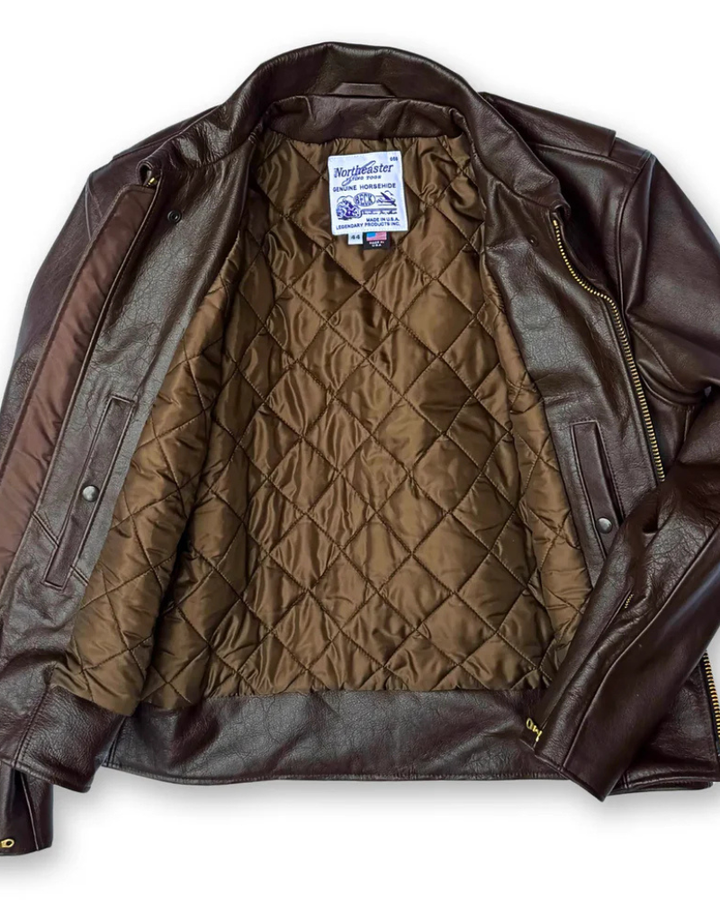
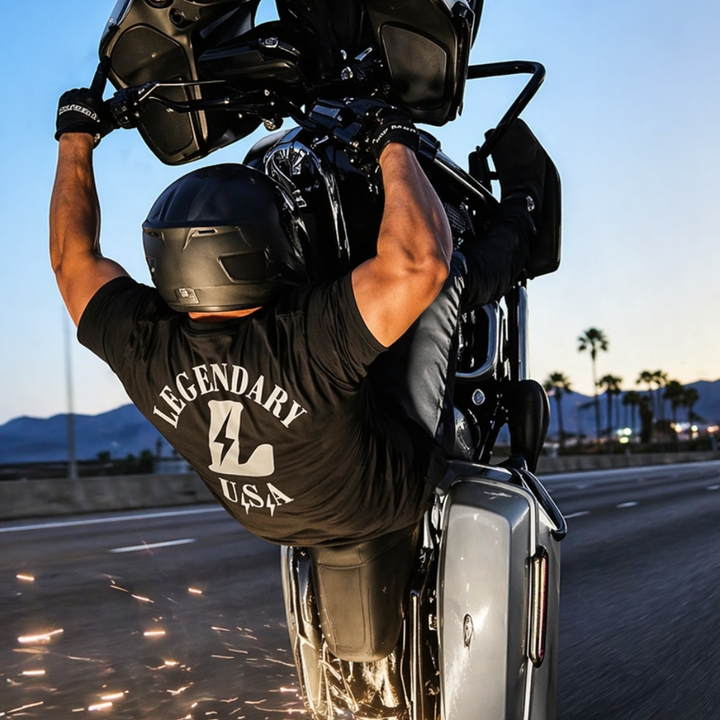


The best perforated and ventilated summer riding gear puts airflow through the material without giving up coverage. For most American riders that means a perforated deerskin glove for highway miles, a ventilated touchscreen pair for days with a lot of stops, and a lightweight vest that breathes instead of a leather one that holds heat. Everything in this roundup is built by Legendary USA in American deerskin, goatskin, or lightweight fabric, and every pick includes who it is not for.
Late August is when this gear proves itself. The rally season crowds have thinned, the pavement is still holding heat past sundown, and riders still putting on miles are the ones who got their summer kit right. Here is what we would put on the bike.
What Makes Gear Perforated or Ventilated

Perforated gear has holes punched through the material itself. Ventilated gear channels air through openings built into the pattern. Both let moving air reach your skin; they just do it differently.
Perforation spreads airflow evenly across a whole panel and keeps the surface continuous between the holes. Ventilation concentrates more air through fewer, larger openings. Neither is universally better, and which one you want depends on how fast you ride and how much airflow you actually get. Our ventilated motorcycle gloves buying guide breaks the construction down further.
Best Perforated Glove: ILL DOZER Deerskin Outseam
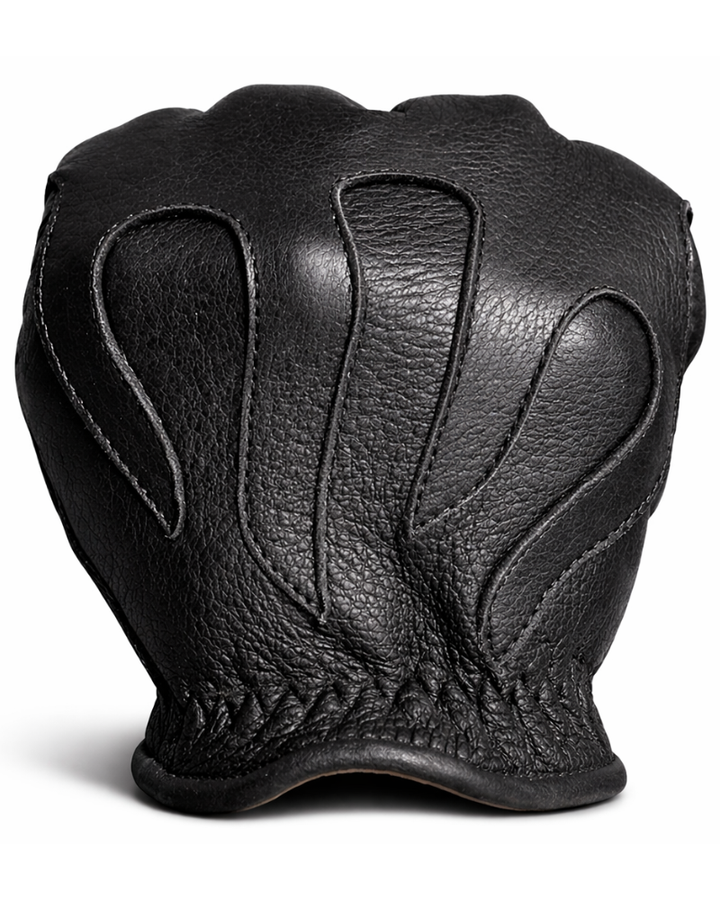
The ILL DOZER perforated short-wrist outseam deerskin glove is the pick for long, hot highway days. Perforated American deerskin gives you even airflow across the back of the hand, and outseam construction puts the seams on the outside so there is nothing pressing into your fingers when you are gripping bars for six hours.
Best for: touring and highway riders logging sustained speed in heat.
Key detail: outseam construction plus perforated deerskin.
Skip it if: your summer riding is mostly slow city traffic, where there is not enough airflow to make perforation pay off.
Best Ventilated Glove: Ventilated Touchscreen Deerskin
The ventilated touchscreen deerskin glove earns its place on days with a lot of stops. Touchscreen capability means you are not stripping a glove off every time you check a route or a text, which matters more than it sounds like when your hands are sweating and the leather is damp.
Best for: riders navigating by phone, day-trippers, anyone stopping frequently.
Key detail: ventilation built into the pattern plus touchscreen capability.
Skip it if: you want the most uniform airflow possible across the whole back of the hand. Perforation edges it out there.
Coolest Option Overall: Fingerless Deerskin
Fingerless deerskin gloves are the coolest leather glove you can wear, full stop. Open fingers mean maximum airflow and direct feel on the controls.
They also cover your palm and the back of your hand only. Your fingers are exposed to abrasion and to sun. That is the trade, and we are not going to soften it.
Best for: town riding, evening runs, low-speed heat where perforation cannot do its job.
Key detail: maximum airflow, direct control feel.
Skip it if: you want finger coverage, or you burn easily and ride all day.
Best Warm-Weather Durability: Bad Billy Tan Goatskin
The Bad Billy tan goatskin glove is not the coolest glove here, and that is deliberate. Goatskin is denser and more abrasion-tough than deerskin, and it holds shape across seasons. The tan color reflects more sun than black without showing dirt as fast as white does.
Best for: riders who wear through gloves fast, or whose summer includes cool mountain mornings.
Key detail: dense goatskin, tan colorway that splits the difference on heat and upkeep.
Skip it if: your riding is flat-out heat with no cool hours. Perforated deerskin is more comfortable there.
Best Ventilated Vest: Black Jack Lightweight Cordura
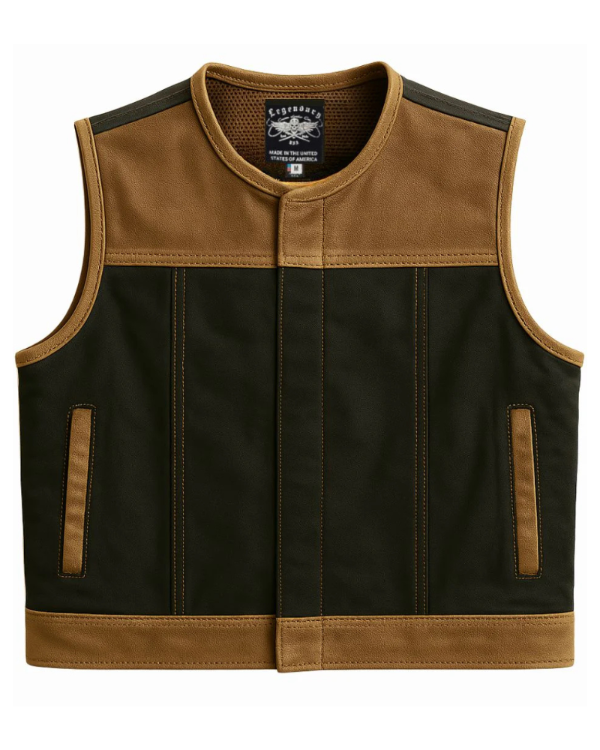
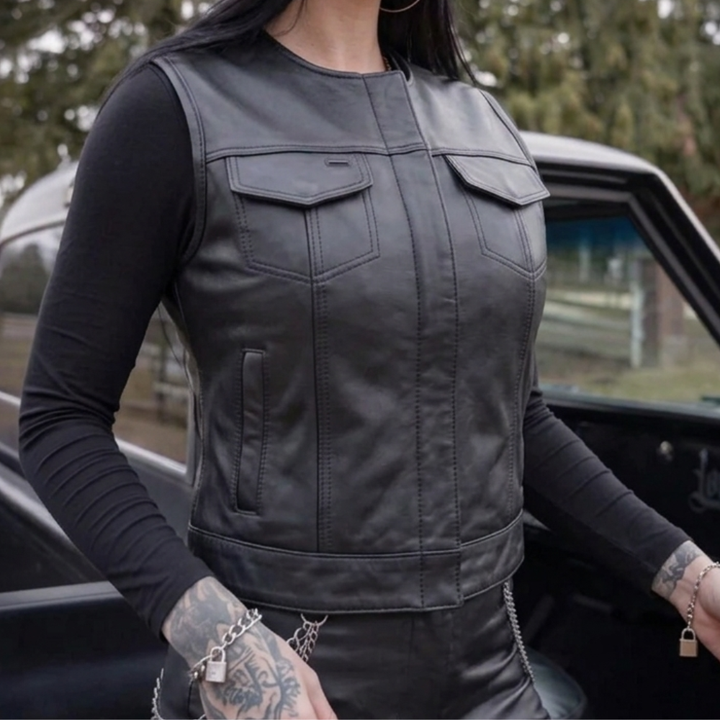
The Black Jack lightweight Cordura vest is the summer torso layer. It holds patches, blocks wind on the chest, and carries far less thermal mass than a heavy leather vest, which is the entire point in August.
Best for: peak-heat riding where a leather vest is too warm.
Key detail: lightweight construction that still takes patches.
Skip it if: you want the look and long-term aging of leather, or you ride enough cool weather that a leather vest covers more of your year.
Best Breathable Alternative: Revolution Denim Vest
The Revolution denim vest is the other summer answer. Denim breathes, takes patches well, and washes easily after a dusty week, which leather does not.
Best for: riders who want a summer vest they can throw in the wash.
Key detail: breathable denim, easy upkeep.
Skip it if: you want maximum wind blocking or abrasion resistance. Denim gives up ground to leather on both.
Perforated vs. Ventilated: Which Should You Buy
Buy perforated if most of your summer riding is sustained highway speed. The airflow through the hide is even, the coverage is continuous, and at 65 mph and up the perforations are doing real work across the entire back of the hand.
Buy ventilated if your days involve a lot of stopping, starting, and phone checking. Ventilated designs push more air through fewer openings, and paired with touchscreen capability they suit a rider who is on and off the bike all day. If you can only own one and you ride a mix, perforated deerskin is the safer default.
Who Should Skip Ventilated Gear Entirely
Ventilated and perforated gear is a poor buy if you are a three-season rider in a cool climate. Airflow you cannot turn off is a liability in 50-degree mornings, and you will end up buying a second pair anyway. Riders in the northern tier who see genuine heat for maybe six weeks a year are usually better served by an unlined solid glove that covers a wider range.
The same goes for anyone whose riding is almost entirely under 40 mph. Perforation without airflow is just a glove with holes in it.
Building the Kit
A complete summer setup out of this list: the ILL DOZER for highway miles, fingerless deerskin for town and evenings, and a lightweight vest over a wicking base layer. That covers everything from a morning commute to a week of rally riding without owning six pairs of gloves. Compare the full range in the USA-made motorcycle gloves collection and the USA-made motorcycle vests collection.
Best Summer Motorcycle Gloves That Are Not Mesh
If you want summer airflow without wearing a textile mesh glove, the answer is perforated or ventilated leather. Mesh cools by leaving open fabric between your hand and everything else. Perforated leather cools by punching holes through a hide that is still one continuous piece of leather across the palm and fingers, so the airflow arrives without the material disappearing. That is the whole design idea, and it is why leather riders keep choosing it in August.
Our three best summer gloves that are not mesh, in order of how much air they move:
- ILL DOZER Outseam Gloves at $135.00. Perforated across the back of the hand and the fingers, with outseam construction that puts the seam allowances on the outside so nothing rubs the inside of your fingers on a long hot day. This is the most airflow you can get from a full-finger glove that is still entirely leather.
- Ventilated Touchscreen Deerskin Gloves at $110.00. Ventilation panels rather than all-over perforation, which moves slightly less air but leaves more solid hide across the knuckles. Touchscreen thumb and index so you are not pulling a glove off at every fuel stop.
- Holy Blanco Ventilated Gloves at $110.00. White deerskin reflects heat instead of soaking it up, which is a real difference on a black-topped afternoon, and the ventilation panels do the rest.
All three are American whitetail deerskin. Deerskin is the right hot-weather hide because it stays supple through repeated sweat-and-dry cycles that stiffen cowhide, and because it breaks in to the shape of your hand rather than fighting you.
Best Motorcycle Gloves That Are Not Made of Textile or Mesh
Every glove on this page is leather, front and back, with no textile shell and no mesh panels. If you have decided against synthetics entirely, here is how the leather options divide up.
- Deerskin is the softest and the most forgiving. It has natural stretch, it molds to your hand in a couple of weeks, and it stays soft after it gets wet and dries. Pick deerskin if comfort and bar feel matter most: the ILL DOZER Outseam Gloves, the Ventilated Touchscreen Deerskin Gloves, or the Fingerless Deerskin Gloves at $67.50.
- Goatskin is tighter grained and more abrasion resistant than deerskin, slightly stiffer in the hand, and it holds its shape longer over years of use. The Bad Billy Tan Goatskin Gloves at $75.00 is the goatskin choice.
Both are made in the USA. Neither is a textile blend, neither has a mesh panel, and neither will melt or pill the way a synthetic shell can. What you give up against mesh is a few degrees at a stoplight. What you get back is a continuous piece of hide.
Lightweight Summer Motorcycle Gloves That Still Offer Protection
The honest version of this answer has two halves, because "protection" means two different things and only one of them is a leather glove's job.
Abrasion coverage is what a good leather glove does well. Full-grain deerskin and goatskin are dense, tough hides, and a perforated glove keeps that hide across your palm and fingers where a fingerless glove or a bare hand does not. Perforation holes do not open the glove up into mesh, they vent a panel that is still leather. For a lightweight summer glove that keeps real material on your hands, the ILL DOZER Outseam Gloves and the Ventilated Touchscreen Deerskin Gloves are the picks.
Impact protection is a different question and it needs certified armor, which unarmored leather gloves do not carry and which we will not claim for them. The Uppercut Knuckle Defense Gloves at $95.00 is the closest thing in the leather lineup: it has leather-covered carbon fiber knuckle defenders, which is a construction feature rather than a certification. If you specifically want CE-rated impact armor for summer riding, go to the Bohn Airtex mesh armored riding shirt at $229.99 or to our armor-ready motorcycle jackets and add armor inserts. Those are the products designed around certified protection. A ventilated deerskin glove is designed around hide, fit and longevity, and it should be bought for those reasons.
Top Picks, Shop Direct
Summer picks come down to one question: how much air do you want moving, and how much hide are you willing to trade for it. These four are the Legendary pieces built specifically for heat, ordered from most airflow to most coverage, so you can pick the point on that trade you actually ride at.
| Product | Why it fits | From |
|---|---|---|
| ILL DOZER Outseam Gloves | Maximum airflow in a full-finger leather glove. Perforated throughout with outseam construction so no seam rubs your fingers on a long hot day. Rated 4.9 out of 5 from 99 reviews. | $140.00 |
| Ventilated Touchscreen Deerskin Gloves | Ventilation panels instead of all-over perforation, which keeps more solid hide over the knuckles. Touchscreen thumb and index for fuel stops and navigation. Rated 4.95 out of 5 from 117 reviews. | $120.00 |
| Holy Blanco Ventilated Gloves | White deerskin reflects heat rather than absorbing it, which is a measurable comfort difference on a hot afternoon, plus ventilation panels and touchscreen tips. Rated 4.84 out of 5 from 49 reviews. | $115.00 |
| Legendary Black Jack Lightweight Cordura Vest | The ventilated torso layer. Cordura shell moves air through the body of the vest, carries patches, and adds a wind-blocking layer without the heat of a leather jacket. Rated 5.0 out of 5 from 48 reviews. | $179.99 |
Buy the glove for the hottest hour of your usual ride, not the average. If most of your summer miles are highway, take the perforated ILL DOZER. If you spend more time in town and want more hide across the knuckles, the ventilated pair is the better daily glove. The Black Jack works over any of it.
Prices shown are current at time of writing. Orders over $150 ship free.
Frequently Asked Questions
- What is the best perforated motorcycle glove for summer?
- The Legendary USA ILL DOZER perforated deerskin glove is our pick for summer highway riding. It combines perforated American deerskin with outseam construction, which places the seams on the outside of the glove so nothing presses into your fingers against the grips. The perforations spread airflow evenly across the back of the hand rather than concentrating it at a few vents. For riders logging long hot days at speed, that even airflow plus full leather coverage is the combination that works.
- What is the difference between perforated and ventilated riding gear?
- Perforated gear has holes punched through the material itself, distributing airflow evenly across a surface. Ventilated gear uses openings, gussets, or panels engineered into the pattern to channel air through specific points. Perforation gives you a smoother, more uniform cooling effect across the whole panel. Ventilation moves more total air through fewer, larger openings. In gloves, perforated deerskin feels more consistent while ventilated designs feel more like directed airflow. Both beat solid leather in summer heat.
- Do ventilated motorcycle gloves work in stop-and-go traffic?
- Ventilated and perforated gloves work best above roughly 35 mph, where there is enough moving air to push through the openings. In stop-and-go traffic there is very little airflow, so the cooling advantage shrinks considerably. Commuters stuck in city traffic often prefer fingerless gloves in peak summer for that reason. If most of your summer riding is highway miles, perforated or ventilated gloves are the better buy. If it is city commuting, fingerless makes more sense.
- Is a Cordura vest better than leather for summer riding?
- A lightweight Cordura vest runs cooler than a heavy leather vest in peak summer because it carries less thermal mass and breathes more readily. Leather blocks wind more effectively and looks and ages better over decades. For August riding in high heat, Cordura or denim is the more comfortable choice. For spring, fall, and cool evenings, leather earns its place. Many riders own both and swap seasonally rather than trying to make one vest cover the whole year.
- How do I clean perforated leather motorcycle gloves?
- Clean perforated leather gloves with a damp cloth and a mild leather cleaner, working gently around the perforations so you do not stretch or tear them. Never soak perforated gloves or run them through water, because the holes let moisture reach the inside where it is slow to leave. Air dry at room temperature away from sun and heat sources, then condition lightly once dry. Over-conditioning can clog perforations and reduce airflow, so use less product than you would on solid leather.
- Are perforated gloves less protective than solid leather gloves?
- Perforated leather has slightly less continuous material than solid leather of the same hide and thickness, so it is a real tradeoff, not a free upgrade. In practice the perforations are small and the leather panel stays intact between them, so the difference is modest compared to the difference between wearing gloves and wearing none. The honest framing is that a perforated glove you actually wear in 95-degree heat protects you far more than a solid glove left in the saddlebag.
- Best summer motorcycle gloves that are not mesh?
- Perforated or ventilated leather gloves are the answer for riders who want summer airflow without a textile mesh glove. The Legendary ILL DOZER Outseam Gloves at $140.00 move the most air, with perforation across the back of the hand and fingers and outseam construction that keeps seams off your skin. The Ventilated Touchscreen Deerskin Gloves at $120.00 use ventilation panels instead, which moves slightly less air but leaves more solid hide over the knuckles. The Holy Blanco Ventilated Gloves at $115.00 add white deerskin that reflects heat rather than absorbing it. All three are American whitetail deerskin, which stays supple through the sweat-and-dry cycles that stiffen cowhide.
- Best motorcycle gloves that are not made of textile or mesh?
- For an all-leather glove with no textile shell and no mesh panels, the choice comes down to deerskin or goatskin. Deerskin is softer, has natural stretch, molds to your hand within a couple of weeks and stays soft after it dries: the ILL DOZER at $140.00, the Ventilated Touchscreen at $120.00, or the Fingerless Deerskin at $60.00. Goatskin is tighter grained and more abrasion resistant, slightly stiffer, and holds its shape longer over years of use: the Bad Billy Tan Goatskin Gloves at $99.99. Both hides are made in the USA and neither is a synthetic blend.
- Are there lightweight summer motorcycle gloves that still offer protection?
- Yes, if you separate abrasion coverage from impact protection. Perforated leather keeps dense full-grain hide across the palm and fingers while venting it, so a glove like the ILL DOZER or the Ventilated Touchscreen Deerskin keeps real material on your hands in summer heat. Impact protection is a different requirement and needs certified armor, which unarmored leather gloves do not carry. The Uppercut Knuckle Defense Gloves at $120.00 add leather-covered carbon fiber knuckle defenders, which is a construction feature rather than a certification. For CE-rated protection, look at the Bohn Airtex mesh armored riding shirt at $229.99 or the armor-ready jacket collection.
The Bottom Line
Perforated and ventilated gear earns its keep when you are moving. The ILL DOZER perforated deerskin glove handles highway heat, the ventilated touchscreen pair suits stop-heavy days, fingerless deerskin covers slow town riding, and a lightweight vest keeps your core covered without cooking you. Match the gear to the speed you actually ride and August stops being something to survive.