



At 40°F and below, standard motorcycle gloves stop being adequate riding gear and start being a liability. Cold hands lose dexterity faster than most riders realize — throttle response and brake feel degrade before numbness sets in. This guide covers what actually works for keeping hands functional in cold weather and which gloves in the Legendary USA lineup are built for low temperatures.
Top Picks, Shop Direct
| Product | What it is | From |
|---|---|---|
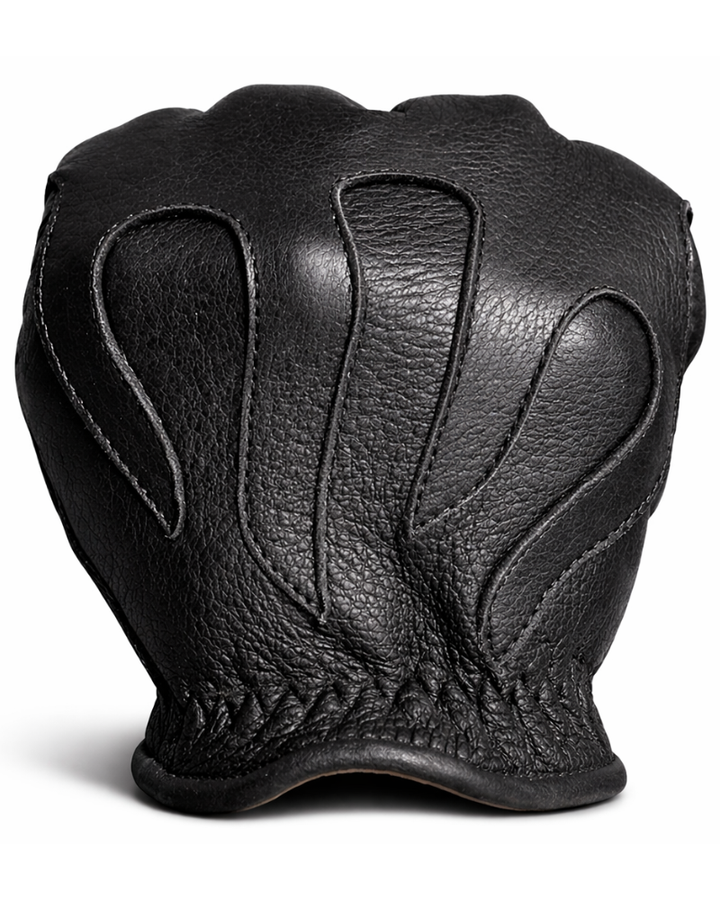
| Classic Deerskin Gauntlets | Legendary USA. Rated 4.88 from 112 customer reviews. | $140.00 |
| Fleece-Lined Deerskin Gloves | Legendary USA. Rated 4.9 from 104 customer reviews. | $115.00 |
| Aramid Touchscreen Deerskin Gloves | Legendary USA. Rated 4.93 from 102 customer reviews. | $120.00 |
| Deerskin Insulated Mittens | Legendary USA. Rated 4.83 from 80 customer reviews. | $115.00 |
Prices shown are current at time of writing. Orders over $150 ship free.
What Cold Actually Does to Riding Performance
The problem with cold hands isn’t just discomfort — it’s that fine motor control deteriorates well before a rider consciously registers numbness. Fingers stiffen as circulation pulls inward toward the core, and the precise inputs required for throttle modulation and smooth braking become harder to execute. Wind chill compounds the problem significantly: at 60 mph, 45°F ambient air feels closer to 28°F against exposed or under-insulated skin.
The hand is particularly vulnerable because it has a high surface-area-to-mass ratio and minimal fat insulation. Blood vessels close to the skin surface in the wrist and back of the hand accelerate heat loss. This is why the wrist seal — how well a glove closes against the jacket cuff — matters at highway speed as much as the insulation material inside the glove.
Riders often notice the issue first in braking precision and throttle smoothness rather than in grip itself. By the time grip is compromised, hands are already well past the point where corrective action is easy. A winter glove addresses this upstream, keeping hands in the functional temperature range before degradation starts.
The Lining Question: What Works Below 40°F
The most common lining materials in winter motorcycle gloves are fleece and Thinsulate. Fleece is soft, relatively inexpensive, and adds meaningful warmth without excessive thickness — it works well in the 30°F to 50°F range for most riders. Thinsulate, a synthetic microfiber, provides more warmth per millimeter of thickness than fleece, making it better for sustained cold at the lower end of that range or below.
The leather shell matters here too. Deerskin has a natural lanolin content and fiber structure that retains suppleness at low temperatures — stiffer leathers like cowhide can become rigid in cold, working against the lining’s insulation by restricting blood flow through compression. A supple shell over a thermal lining keeps the glove comfortable and functional rather than fighting the hand.
Waterproofing is worth considering for riders in wet winter conditions. A leather shell will absorb water over time, and wet leather loses much of its insulating value. Some winter gloves add a waterproof membrane between the lining and shell. If you ride in rain and cold together, this is worth the added cost.
One thing no lining prevents: conductive heat loss from handlebar grips. Heated grips address this directly and work well combined with an insulated glove. For riders without heated grips, an insulated glove significantly reduces the total heat loss even though it cannot block all conduction through the palm.
Gauntlet vs. Short Cuff for Winter Riding
The wrist gap — the space between a short cuff glove and a jacket sleeve — becomes a wind funnel at highway speed. Cold air enters that gap and travels up the sleeve, chilling the wrist and forearm and accelerating overall heat loss from the hand. Gauntlet-style gloves extend over the jacket cuff, eliminating that entry point.
For urban riding at speeds under 35 mph, the gap is less critical — wind pressure is lower and heat loss through the gap is slower. For highway commuting, touring, or any sustained riding above 50 mph in cold conditions, the gauntlet’s wrist seal is a meaningful functional difference. This is why traditional cold-weather riding gloves defaulted to gauntlet length.
Short cuff gloves are not useless in winter — they are more practical for frequent on/off situations, riding with a layering system where the jacket cuff cinches tightly, or urban commuting where the speed profile keeps wind chill lower. A well-fitted short cuff glove with a wrist cinch strap can reduce the gap significantly even if it cannot fully eliminate it.
The practical answer: if you do highway miles in cold weather, prioritize gauntlet length. If your winter riding is primarily urban stop-and-go, a quality short cuff insulated glove is a reasonable choice and easier to manage.
The Legendary USA Cold Weather Glove Options
Legendary USA produces its cold weather gloves with the same American deerskin used across their lineup — a hide selected for its naturally soft fiber structure, which remains pliable in low temperatures rather than stiffening the way heavier cowhide can. Two gloves in the lineup address cold weather directly.
Legendary Deerskin Fleece Lined Short Wrist Gloves — $115

The Fleece Lined Short Wrist glove pairs a deerskin shell with an interior fleece lining designed for the 35°F to 55°F range where most cold-weather commuting happens. The short wrist profile keeps it practical for daily use and on/off scenarios. Deerskin’s natural softness means the glove conforms quickly to the hand shape and doesn’t require an extended break-in period even in cold conditions.
This is the practical pick for riders who need a winter glove for daily commuting or shoulder-season riding rather than extreme cold. It provides meaningful warmth improvement over an unlined glove without the bulk and reduced feel of a heavier insulated option. At $120, it sits in the practical range for a quality lined glove made in the USA.
Legendary Deerskin Leather Insulated Mittens — $115

Mittens provide more warmth than any fingered glove design because fingers share heat with each other inside a single chamber rather than losing warmth from individual finger surfaces. These deerskin insulated mittens are the answer for riders in the coldest conditions — below 25°F, or for riders who run particularly cold. The trade-off is reduced individual finger control, which affects fine throttle and brake inputs more than a fingered glove does.
Mittens are also a legitimate heated grip companion: when heated grips are handling palm warmth, mittens provide excellent insulation for the back of the hand and fingers without needing to be the entire cold-weather solution. For touring riders doing long highway miles in deep winter, this combination is worth considering.
Broader Glove Lineup
For riders in mild cold who still want some protection, the Legendary Deerskin Aramid Lined Short Wrist Touchscreen Gloves ($120) and the Legendary Gold Deerskin Leather Short Wrist Gloves ($100) provide the deerskin shell without added insulation — appropriate for 50°F and above. See the full Legendary USA motorcycle gloves collection for the complete lineup.
Layering Under Gloves: Does It Work?
Silk liners are a practical addition to a motorcycle glove setup. Silk is a natural insulator, thin enough to fit inside most motorcycle gloves without significantly compressing fingers against the controls, and it adds genuine warmth. Silk liners also wick moisture away from the skin, which matters when hands sweat inside insulated gloves during exertion. A good silk liner costs $15 to $25 and can extend the usable range of a standard glove by 10°F or more.
Wool and fleece liners do not work as well inside motorcycle gloves. They are too thick to fit without compressing the fingers, which reduces circulation and throttle sensitivity simultaneously. Some riders use neoprene glove liners, which provide wind resistance but less warmth than expected for their bulk. The rule of thumb: if a liner doesn’t fit inside the glove without making it feel tight, it is adding problems rather than warmth.
Layering also addresses an issue that dedicated winter gloves don’t solve well: temperature variability on a single ride. Carrying a silk liner and a moderate-insulation glove is more adaptable than a single maximum-insulation glove that is too warm above 45°F. Riders who commute through varied temperature conditions — cold mornings, warmer afternoons — often find a liner-plus-glove system more useful than a single winter glove.
One important note: don’t size up your glove to accommodate a liner. A glove that fits correctly with a thin liner will be only slightly snug; a glove sized up for a liner will be loose without the liner and will shift on the hand, reducing control and accelerating heat loss from excess air space inside.
Frequently Asked Questions
What temperature requires winter motorcycle gloves?
Most riders begin to notice meaningful dexterity loss at around 50°F, particularly at highway speeds where wind chill accelerates heat loss from the hands. Below 40°F, standard unlined motorcycle gloves are generally inadequate — throttle feel and brake response degrade before numbness is consciously felt. A dedicated winter glove with a fleece or Thinsulate lining becomes practical gear rather than a comfort upgrade at that threshold. Riders frequently in temperatures below 30°F often add a silk liner inside an insulated glove for additional warmth.
Are gauntlet gloves warmer than short cuff gloves?
Yes, for highway-speed winter riding, gauntlet gloves are meaningfully warmer than short cuff gloves. The gauntlet extends over the jacket cuff, sealing the wrist gap where cold air enters at speed. Short cuff gloves leave a gap between the glove and jacket sleeve that channels wind directly against the wrist — an area with significant blood vessels close to the surface. For urban riding at lower speeds, the difference is smaller. At 60 mph and below 40°F, the gap seal that a gauntlet provides makes a measurable difference in how long hands stay functional.
Can I wear regular motorcycle gloves in winter with a liner?
Silk liners are a legitimate option inside regular motorcycle gloves — they add several degrees of warmth without meaningfully degrading throttle feel, and they pack flat. Wool or fleece liners are too thick and compress the fingers inside most motorcycle gloves, reducing grip and feel at the controls. The more significant limitation of liners under standard gloves is the wrist gap: a liner doesn’t solve the cold air entry point at the cuff. For sustained riding below 40°F, a dedicated insulated glove built to seal at the wrist will outperform a standard glove plus liner in most conditions.
What is the warmest leather motorcycle glove construction?
The warmest leather motorcycle glove construction combines a supple leather shell — deerskin is particularly effective because its natural fiber structure traps warmth while remaining pliable in cold — with an interior fleece or Thinsulate lining. A gauntlet-length cuff that overlaps the jacket sleeve eliminates the primary cold air entry point. Wrist-cinch adjustments that seal the cuff without binding are also a practical feature at low temperatures. Deerskin’s natural lanolin content and tight fiber density makes it an effective cold-weather shell compared to stiffer leathers that become rigid in the cold.
Do winter motorcycle gloves affect throttle feel?
A well-fitted winter motorcycle glove reduces throttle feel somewhat compared to a thin unlined glove — that is an honest trade-off. Lining materials add bulk between the fingertip and throttle. The practical question is whether the degradation is operationally significant: for most riders in most winter conditions, the reduction in fine feel is offset by the fact that warm hands maintain actual grip and response far better than numb ones. Deerskin gloves with thin fleece linings preserve feel better than gloves with thick foam insulation. Sizing correctly — not sizing up — is the single biggest factor in maintaining throttle feel in an insulated glove.
Browse the full Legendary USA motorcycle gloves collection, or visit the best motorcycle gloves guide for a complete look at the lineup. For riders new to choosing gloves, the beginner's glove guide covers fit and selection from the ground up.