



The best cold weather motorcycle gloves are the ones matched to how you ride, not just how cold it is. A commuter doing twenty minutes at 40°F needs a different glove than a touring rider doing four hours at the same temperature, and a cruiser rider who stops when it hits freezing needs something different again. This roundup sorts the Legendary USA glove line by riding style, from fleece-lined deerskin short wrists to unlined gauntlets with liners to 100-gram insulated mittens, with the honest limits of each.
How Riding Style Changes the Right Cold Weather Glove

Air temperature is only half the number. The other half is speed and time. At 60 mph, moving air pulls heat off a hand far faster than the same air does at a stop sign, and over four hours a small heat loss adds up to numb fingers. A glove that is perfect for a short cold commute can fail on a long cold highway ride at the same thermometer reading, and a glove warm enough for the highway can be too much for a ride that is mostly stop and go.
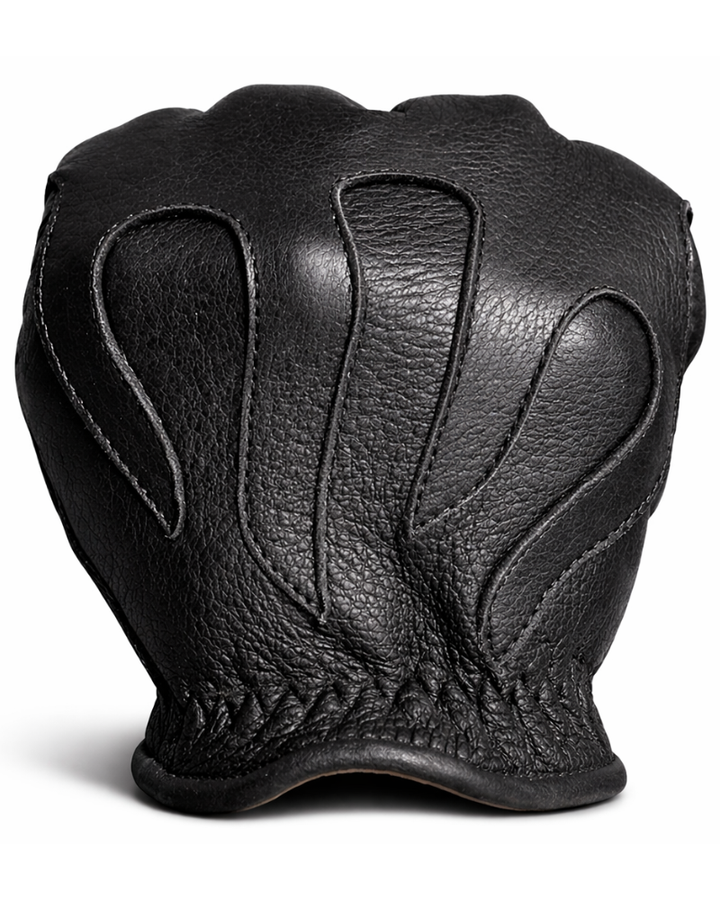
That is why this roundup is organized by rider rather than by temperature. Every glove below is built from American Whitetail deerskin unless noted, hand-cut and stitched in the USA, and none of them carry armor or a CE rating. They are leather riding gloves and should be judged as such.
For the Daily Commuter: Fleece-Lined Deerskin Gloves
The Fleece-Lined Deerskin Gloves are the commuter's cold weather glove. The 3M Thinsulate 40-gram lining is warm the moment the glove goes on, which matters when the ride is twenty minutes and there is no time to warm up. The short wrist cuff slides under a jacket sleeve without fuss at the end of the driveway, and the keystone thumb keeps the grip natural on a clutch worked a hundred times in city traffic.
Legendary USA builds this glove for 30°F to 50°F. Size up one from your unlined size to leave room for the lining. The limit is the cuff: at sustained highway speed, wind finds the gap between a short wrist and a sleeve, so this is the glove for the commute and the errand run, not the glove for a long cold highway day.
For the Touring Rider: Classic Deerskin Gauntlets With Liners
The Classic Deerskin Gauntlets are the touring rider's cold weather glove, and the reason is the cuff. It covers the wrist and lower forearm and seals the sleeve gap that a short wrist leaves open, which over four hours at highway speed is the difference between hands that work and hands that do not. The gauntlet is unlined, so it is also the glove that stays comfortable when the afternoon climbs to 60°F.
For cold mornings, the touring rider adds the Gators Skin Glove Liners, a thin, moisture-wicking, windproof synthetic that slips inside the gauntlet without changing control feel. The liner comes out at the first warm gas stop and goes in a pocket. One pair of gauntlets and one pair of liners covers a 35°F start and a 60°F finish, which no sewn-in lining can do. Size the gauntlet up one if the liner will be in every cold ride.
For the Cruiser Rider: Classic Longer Cuff Deerskin Gloves
Cruiser riders who ride in the 45°F to 60°F range and park the bike when it gets colder than that are usually best served by an unlined glove with a bit more cuff. The Classic Longer Cuff Deerskin Gloves carry a 1.5-inch elasticized wrist cuff that sits higher on the wrist than the short wrist profile and blocks more wind at the sleeve gap, without the full forearm coverage of a gauntlet. Touchscreen thumb and index finger work a phone mount. The keystone thumb and unlined deerskin keep the throttle feel direct.
This is a cool weather glove, not a cold weather glove. On a 40°F morning it will be cold within half an hour at speed. For a cruiser rider who does go out at 40°F, the fleece-lined short wrist is the better pick.
For the Rider Who Goes Out Below 30°F: Deerskin Insulated Mittens
The Deerskin Insulated Mittens are the only glove in the Legendary USA line built for riding below 30°F. The lining is 100-gram 3M Thinsulate, two and a half times the weight of the fleece-lined short wrist, and the mitten shape keeps fingers together to share heat rather than isolating each one. Outseam stitching keeps the inside smooth, and a double-layer palm takes the wear at the grip.
The tradeoff is obvious and worth saying plainly: a mitten gives up finger dexterity. Brake and clutch levers are fine. Turn signals and phone mounts take practice. This is the glove for the rider who is going out in real cold regardless, and would rather work the switchgear a little slower than lose feeling in his fingertips.
For the Short Wrist Loyalist: Aramid Touchscreen Deerskin Gloves
Some riders will not wear a gauntlet or a lined glove, and for them the Aramid Touchscreen Deerskin Gloves are the warmest short wrist option that is not insulated. The aramid fiber liner is there for cut and abrasion resistance beyond deerskin alone, not for warmth, but as a second layer between skin and wind it adds a small margin over a bare unlined glove. Touchscreen thumb and index finger, minimal bulk, direct throttle feel.
Think of this as a 50°F glove with a little more reach than the standard short wrist. It is not a 35°F glove and should not be bought as one.
What About Goatskin in the Cold?
The Bad Billy Black Goatskin Gloves come up in cold weather searches because goatskin runs warmer than deerskin and is more cut-resistant. Both are true. But the Bad Billy is unlined with a short wrist cuff, built for warm-climate riding, and it is not a cold weather glove on its own. It works as a cool-morning glove in the 50s, and Legendary USA's comparison of deerskin vs goatskin gloves for cold riding covers where each leather belongs once the temperature drops.
Fleece-Lined vs. Gauntlet and Liner: The Comparison Most Riders Need
If the choice comes down to two gloves, it is almost always these two. The fleece-lined short wrist is warmer on the first mile, simpler, and the better glove for rides under two hours in the 30°F to 50°F range. The gauntlet and liner is warmer at sustained highway speed because the cuff seals the sleeve gap, and it adjusts to the day because the liner comes out. The commuter buys the fleece-lined glove. The touring rider buys the gauntlet and liner. The rider who does both ends up with both, and that is not a sales pitch, it is what the glove drawer of a year-round rider looks like.
The Legendary USA Cold Weather Glove Lineup
Daily commuter: Fleece-Lined Deerskin Gloves. Touring rider: Classic Deerskin Gauntlets with Gators Skin liners. Cruiser rider in cool weather: Classic Longer Cuff Deerskin Gloves. Rider below 30°F: Deerskin Insulated Mittens. Short wrist loyalist: Aramid Touchscreen Deerskin Gloves. Every one of them is in the USA-made motorcycle gloves collection, and the full buying guide to winter gauntlet motorcycle gloves goes deeper on the cuff question for riders leaning that way.
Pick the glove for the riding you actually do, size it for the lining it will carry, and a pair of American deerskin gloves will cover more cold mornings than most riders expect.
For the wind chill math behind riding at speed in cold air, the National Weather Service publishes a cold wind chill chart.
Frequently Asked Questions
- What are the best motorcycle gloves for cold weather commuting?
- For a daily commute in the 30°F to 50°F range, the Fleece-Lined Deerskin Gloves are the best fit. The 3M Thinsulate 40-gram lining is warm immediately, which matters on a short ride with no time to warm up, and the short wrist cuff goes under a jacket sleeve quickly. Size up one for the lining. For commutes that include long highway stretches, a gauntlet with a liner seals the wrist better.
- What gloves do touring riders wear in cold weather?
- Touring riders generally wear an unlined deerskin gauntlet with a thin liner inside. The gauntlet cuff covers the wrist and lower forearm and seals the sleeve gap that lets wind in at highway speed, and the liner adds warmth that can be removed when the day warms up. Legendary USA's Classic Deerskin Gauntlets with Gators Skin liners cover a 35°F morning and a 60°F afternoon with one pair of gloves.
- Are mittens better than gloves for winter motorcycle riding?
- Below 30°F, yes, for warmth. A mitten keeps the fingers together so they share heat, and the Deerskin Insulated Mittens carry 100-gram 3M Thinsulate, far more than any fingered glove in the line. The cost is dexterity: levers are fine, but turn signals and phone mounts take practice. Above 30°F, a fingered glove such as the fleece-lined short wrist is warm enough and easier to ride in.
- Is a gauntlet or a short wrist glove better for cold weather?
- At highway speed, a gauntlet is warmer because the long cuff seals the gap between glove and jacket sleeve. For short rides and city commuting, a lined short wrist is warmer because its insulation works immediately and the sleeve gap matters less at low speed. Legendary USA's gauntlets are unlined, so pair them with a liner for cold days; the fleece-lined short wrist is insulated on its own.
- Are goatskin gloves good for cold weather riding?
- Goatskin runs warmer than deerskin and is more cut-resistant, but Legendary USA's Bad Billy goatskin gloves are unlined with a short wrist cuff and are built for warm-climate riding. They work as a cool-morning glove in the 50s. For riding in the 30s and 40s, a fleece-lined deerskin glove or a deerskin gauntlet with a liner is the better choice.
- How cold is too cold for leather motorcycle gloves?
- Unlined deerskin gloves are comfortable down to about 50°F at speed. Fleece-lined deerskin with 40-gram Thinsulate covers 30°F to 50°F. Below 30°F, fingered leather gloves at any practical insulation weight struggle to keep fingertips warm on more than a short ride, which is where the 100-gram insulated mittens take over. Wind chill at highway speed makes every one of those numbers feel colder than the thermometer says.