



The fall foliage motorcycle ride is the last great ride of the American season, the one riders in the Northeast, the Appalachians and the upper Midwest plan the whole year around. It happens in a narrow window, roughly the first week of October in northern New England to the last week of October in the southern Blue Ridge, when the hardwoods turn, the mornings drop into the 40s and the afternoons climb back into the 60s. It is also the ride that made American riders learn to layer, because no other ride asks a jacket, a vest and a pair of gloves to cover a 25-degree swing between the first mile and the last. Legendary USA has been building the gloves and vests for that swing since 2001, and the leaf ride is where most of them earn their keep.
Where the tradition comes from

Americans were driving to see the leaves before they were riding to see them. The New England foliage trip was a railroad and then an automobile tradition by the early twentieth century, and the roads that made it possible, the two-lane state highways over the Green Mountains and the White Mountains and the ridge roads of the Appalachians, turned out to be exactly the roads a motorcycle wants. The Blue Ridge Parkway, built from the 1930s onward through Virginia and North Carolina, and Skyline Drive above it in Shenandoah National Park, were designed as slow scenic drives with no commercial traffic. Riders discovered that a road designed for looking at the view is also a road designed for leaning through a corner.
By the postwar decades, the foliage ride had become a fixture of the riding calendar in the same way the spring shakedown ride and the summer rally were. It was never organized the way a rally is. It was a Saturday in October, a group of friends, a route somebody's uncle had ridden, and a diner at the far end. That informality is why it survived. There is no promoter to lose interest and no fairground to close. There is only the first hard frost and the week after it.
The roads riders come back to
Every region has its leaf road. In New Hampshire it is the Kancamagus Highway, Route 112 between Lincoln and Conway, 34 miles through the White Mountain National Forest with no gas stations and no towns. In Vermont it is Route 100, which runs the length of the state down the spine of the Green Mountains. In the Appalachians it is the Blue Ridge Parkway and Skyline Drive, 574 miles between them, and the tighter mountain roads that feed into them from Tennessee and North Carolina. In Michigan it is M-119, the Tunnel of Trees along Lake Michigan north of Harbor Springs, a road so narrow the canopy closes overhead.
What those roads have in common is that they climb. Elevation is what makes the foliage ride a layering ride. A rider who leaves a valley town at 48 degrees and tops a 3,000-foot gap an hour later is riding in the high 30s with the wind chill of highway speed on top of it, and then descending into a 62-degree afternoon by lunch. No single jacket is right for all of that, which is why the vest, the riding shirt and the glove rotation became the leaf rider's standard kit.
How riders geared up for the leaf ride
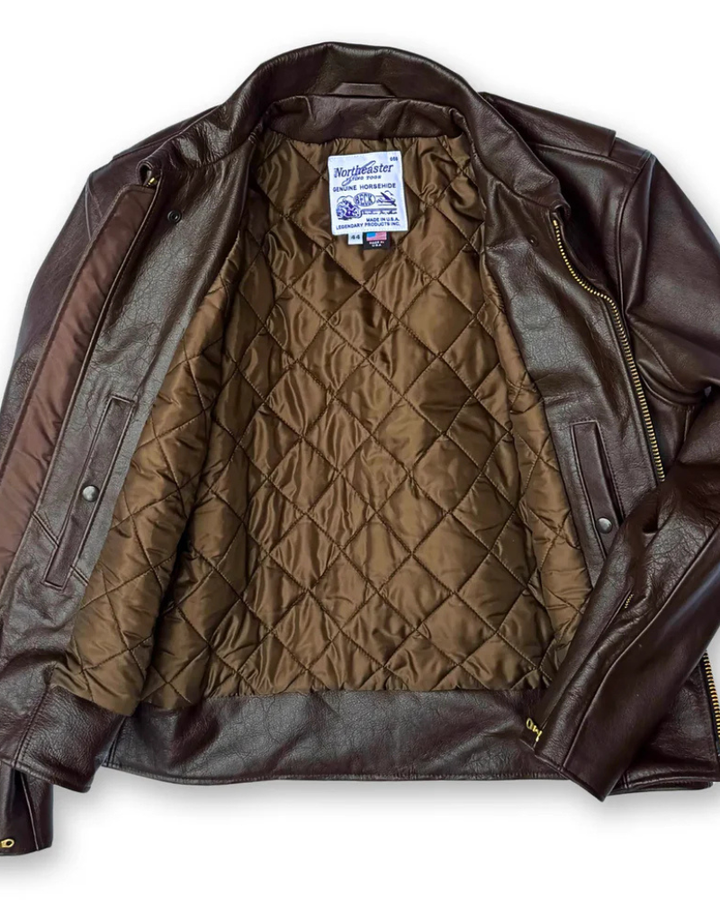
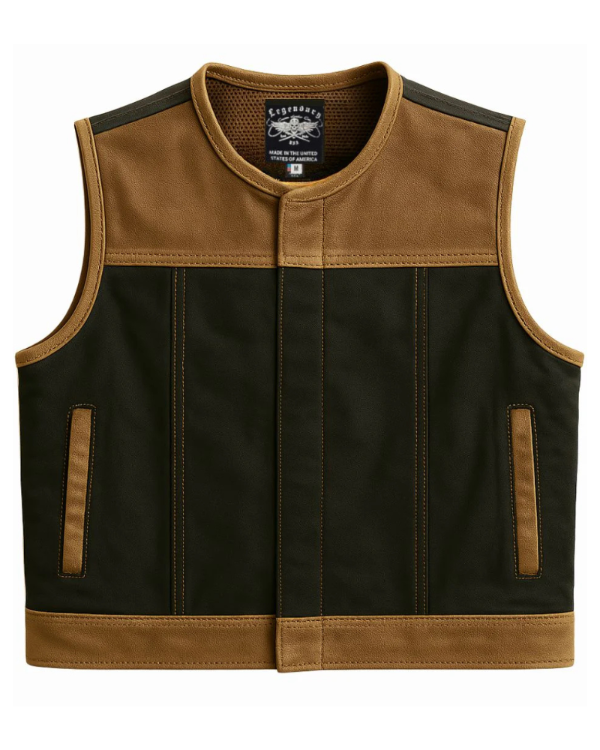
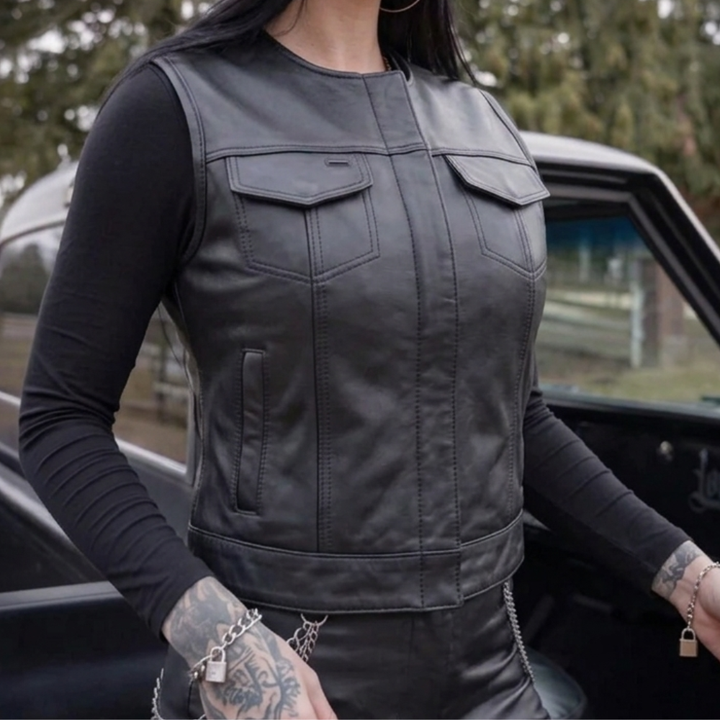
The old answer was a leather jacket over a wool shirt, and the old answer still works. BECK Northeaster Flying Togs, the horsehide label Legendary USA owns today, has been building riding jackets in the USA since 1928, and a horsehide jacket like the BECK 777 Northeaster is still what a rider wants at the top of the gap: front quarter horsehide blocks wind the way nothing lighter does. The problem has always been the afternoon, when that same jacket is too much. The vest solved it. A horsehide or cowhide vest over a heavy flannel handles the valley miles, and the jacket rides in a saddlebag until the road climbs.
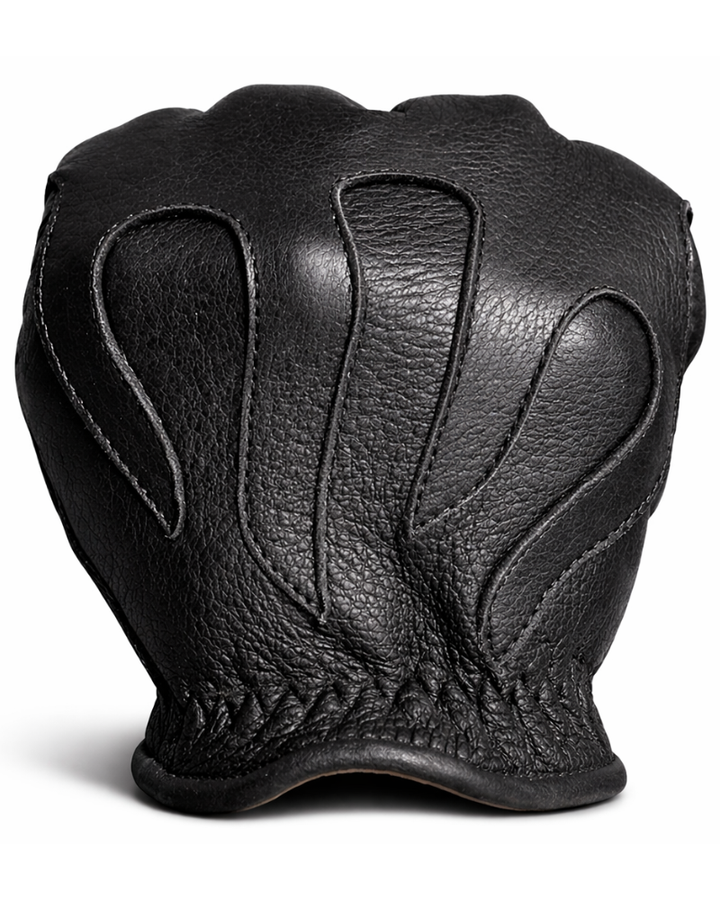
Gloves follow the same logic. A short-wrist deerskin glove is right at 60 degrees and wrong at 38, and the leaf rider learned to carry two pairs. The Classic Deerskin Gauntlets, unlined, with a cuff long enough to close the sleeve gap, are the morning glove, and a short-wrist deerskin is the afternoon glove. Both pack flat. American Whitetail deerskin is the hide for this ride specifically because it stays soft in the cold morning and does not stiffen when the first wet leaves on a shaded corner throw spray on it. Legendary USA builds every pair in the Made in USA motorcycle gloves collection from that hide for that reason.
What the leaf ride taught American riders
Three things, mostly. The first is that layering beats bulk: a vest, a flannel and a packable jacket cover more of a riding day than one heavy coat. The second is that leather earns its place in the cold. Textile gear has its uses, but a horsehide front and a deerskin glove block wind at speed in a way riders could feel the first time they crested a ridge in October, and that feeling is why the leather vest and the leather glove never left the American rider's kit. The third is respect for the road itself. Wet leaves are as slick as ice, shaded corners hold frost until noon, and the leaf rider learned to read the pavement the way a winter rider does.
Legendary USA was founded in 2001 by riders who ride that swing every October, and the gear the line has produced over 25 years reflects it: gauntlets with cuffs that actually close over a jacket, vests cut to layer, riding shirts in horsehide that work as outerwear in a valley and as a midlayer on a ridge. The story of fall riding in American motorcycle culture covers the wider season; the foliage ride is its peak.
Riding the leaves this year
The window is short and it moves south about a week at a time. Northern New Hampshire and Vermont peak in the first half of October; the Berkshires, the Catskills and the Poconos follow in the middle of the month; the Blue Ridge and the Smokies run into the last week of October and the first of November. Ride early in the week if you can, because the leaf roads fill with cars on weekends. Leave with the gauntlets on and the short-wrist pair in the bag, the vest over a flannel and the jacket packed, and plan the fuel stops around where the road climbs.
For rider training and general guidance on riding in changing conditions, the Motorcycle Safety Foundation publishes rider training and gear guidance.
Frequently asked questions
- When is the best time for a fall foliage motorcycle ride?
- It depends on latitude and elevation. Northern New England, including the Kancamagus Highway and Vermont Route 100, peaks in the first half of October. The Berkshires, Catskills and Poconos follow in mid-October. The Blue Ridge Parkway and the Smokies peak in the last week of October and sometimes the first week of November. Higher elevations turn earlier than valleys on the same road, so a single ride often crosses several stages of color.
- What should I wear on a fall foliage motorcycle ride?
- Layers that come off. A typical leaf ride swings 25 degrees between a 40-degree morning and a 65-degree afternoon, so riders wear a horsehide or cowhide vest over a heavy flannel, carry a leather jacket in a saddlebag for the climbs, and run two pairs of gloves: unlined deerskin gauntlets for the cold morning and a short-wrist deerskin pair for the afternoon. Deerskin stays soft in the cold and does not stiffen when it gets wet.
- Why do riders carry two pairs of gloves on a fall ride?
- Because no single glove covers a 25-degree swing well. A gauntlet with a long cuff closes the sleeve gap and keeps the wrist warm at the top of a mountain gap in the high 30s, but it is too much glove by a 62-degree afternoon. A short-wrist deerskin glove is right in the afternoon and cold in the morning. Both pack flat, so carrying two pairs costs nothing in space and makes the whole day comfortable.
- What are the best motorcycle roads for fall foliage?
- The Kancamagus Highway in New Hampshire, Route 100 in Vermont, the Blue Ridge Parkway through Virginia and North Carolina, Skyline Drive in Shenandoah National Park, and M-119, the Tunnel of Trees, in northern Michigan are the ones riders return to year after year. They share two traits: they climb, which brings the color and the temperature swings, and they were built as slow scenic roads with little commercial traffic.
- Are wet leaves dangerous on a motorcycle?
- Yes. Wet leaves on pavement are as slick as ice, and shaded corners on a mountain road can hold frost until late morning in October. Riders on a foliage ride slow down for shaded corners, avoid braking or leaning on a leaf-covered patch, and read the pavement the way a winter rider does. Slowing before the corner, not in it, is the habit that gets riders through leaf season.
- Is a leather vest warm enough for fall riding?
- Over the right layer, yes, for most of the day. A horsehide or cowhide vest over a heavy flannel blocks wind across the core and handles valley miles in the 50s and 60s comfortably. It is not enough on its own at the top of a mountain gap in the high 30s, which is why leaf riders pack a leather jacket for the climbs. The vest is the layer that stays on all day; the jacket comes and goes.
The fall foliage ride is the American riding season saying goodbye properly: the best roads in the country, at their best, in a window short enough that nobody takes it for granted. Pack the gauntlets, pack the jacket, wear the vest, and ride the leaves while they are there.