



Choosing between gauntlet and short-wrist motorcycle gloves comes down to one part: the cuff. Gauntlet gloves have a long cuff that flares over your jacket sleeve and seals the wrist gap against wind and debris. Short-wrist gloves stop at the wrist for maximum airflow and fast on-and-off. Legendary USA builds both styles from full-grain American deerskin, and the right pick depends on your weather, your speed, and how you ride.
Most riders own one pair of gloves and make it do everything. That works until the weather changes. A short-wrist glove that feels perfect on a July afternoon does nothing for the cold blast running up your sleeve on a 45-degree morning. A gauntlet that seals out that wind can feel like too much glove in August traffic. Knowing what each cuff is built for lets you buy the right pair the first time, or build a two-glove rotation that covers the whole season.
Top Picks, Shop Direct
| Product | What it is | From |
|---|---|---|
| Bad Billy Black Goatskin Gloves | Legendary USA. Rated 4.93 from 129 customer reviews. | $75.00 |
| Classic Deerskin Gauntlets | Legendary USA. Rated 4.88 from 112 customer reviews. | $140.00 |
| Gold Short Wrist Cuff Deerskin Gloves | Legendary USA. Rated 4.91 from 108 customer reviews. | $100.00 |
| Classic Short Wrist Touchscreen Deerskin Gloves | Legendary USA. Rated 4.9 from 106 customer reviews. | $105.00 |
Prices shown are current at time of writing. Orders over $150 ship free.
What a gauntlet glove does

A gauntlet glove has an extended cuff, usually four to six inches long, that widens past the wrist and covers the lower forearm. The cuff flares so it can go over the outside of your jacket sleeve. That single design choice closes the gap where wind, rain, and road grit otherwise sneak in between glove and sleeve.
At highway speed, that gap matters. Air funnels up an open cuff and chills the whole forearm, and a cold forearm means a cold, stiff hand on the controls. The gauntlet cuff blocks that airflow. The Legendary USA Classic American Whitetail Deerskin Gauntlets use soft, full-grain deerskin for the hand and a longer cuff with an adjustable closure to seal the forearm. Deerskin is naturally insulating and stays supple in the cold, which is why it has been the American glove leather of choice for generations.
The tradeoff is airflow and convenience. A gauntlet is warmer, so it is more glove than you want in high heat. The long cuff also takes an extra second to pull on and adjust, and it needs a jacket sleeve trim enough to slide under. For touring, shoulder-season riding, and cold mornings, that tradeoff is worth it.
What a short-wrist glove does
A short-wrist glove ends at or just past the wrist bone. There is no cuff to seal the forearm, and that is the point. Air moves freely around the wrist, the glove pulls on and off in a second, and the low profile disappears under any jacket sleeve. For hot-weather and around-town riding, short-wrist is the honest answer.
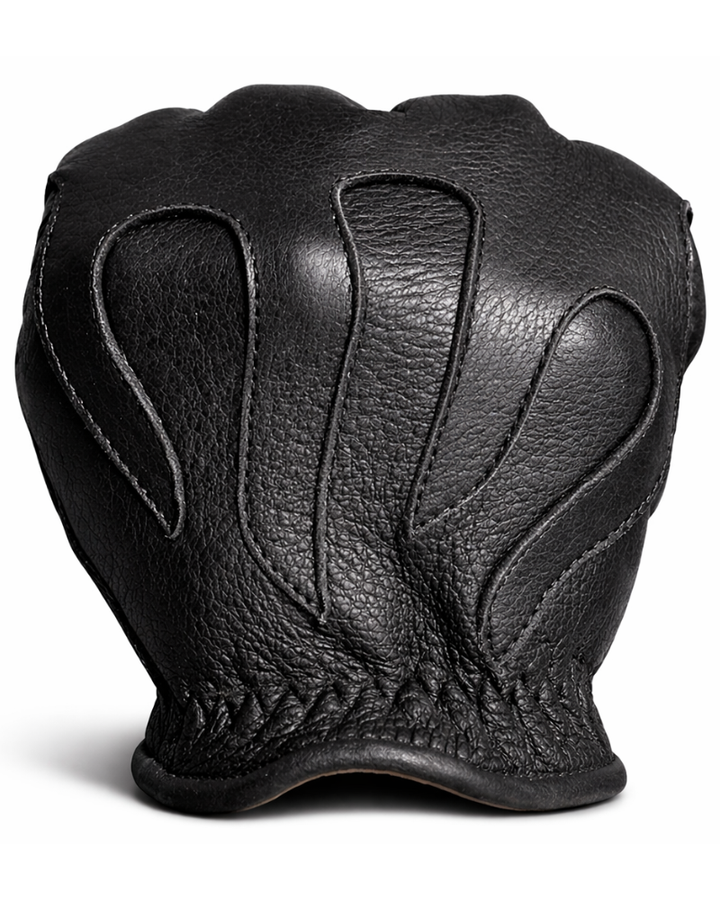
Legendary USA builds its short-wrist gloves for airflow and feel. The Legendary ILL DOZER Perforated Short-Wrist Deerskin Gloves add perforation across the back of the hand and outseam construction, where the seams are stitched on the outside of the glove so nothing rubs the hand. The result is a glove that breathes in summer heat and gives you clean feel on the grips and levers.
The honest tradeoff runs the other way from the gauntlet: less wind protection and no coverage where the sleeve meets the glove. On a cold highway run, a short-wrist glove lets the wind up your sleeve. That is a comfort limit, not a flaw. Short-wrist gloves are built for the conditions where a sealed cuff would only make you sweat.
Gauntlet vs short-wrist: a direct comparison
Put the two side by side and the decision gets simple. The gauntlet wins on wind sealing, cold-weather comfort, and forearm coverage. The short-wrist wins on airflow, quick on-and-off, low bulk, and jacket compatibility. Neither is better in the abstract. They are built for different jobs.
Weather is the deciding factor for most riders. If you ride in cold, wind, and rain, or you spend hours at highway speed, the gauntlet earns its place. If you ride in heat, run short trips, or stop often, the short-wrist is the glove you will actually keep wearing. Riding style matters too: touring and long-distance riders lean gauntlet, while cruiser and daily around-town riders lean short-wrist. Both styles live in the men's USA-made motorcycle gloves collection, cut and sewn from American deerskin and goatskin.
Leather and construction still matter more than cuff length
The cuff decision is real, but do not let it distract from what makes a glove worth owning. Full-grain leather, honest stitching, and a secure closure outlast any styling choice. Legendary USA hand-cuts each glove from full-grain American deerskin or goatskin, so the leather breaks in to your hand instead of wearing out. Deerskin is prized for softness and a fast break-in; goatskin runs a little more structured and abrasion-tough. Both beat the thin, corrected-grain leather common on imported gloves.
Construction is where a glove earns its miles. Outseam stitching keeps the seams outside the glove for a smoother feel against the hand. A keystone thumb is set with a separate panel so the thumb bends naturally on the grip instead of fighting you. These are the details that separate a glove built by people who ride from a glove built to a price. For the full rundown on why American deerskin has held its ground, read our guide to the best deerskin motorcycle gloves made in the USA.
How to choose the right pair
Start with your worst riding weather, not your best. The glove that handles your coldest, windiest ride is the one you will be glad to own when the temperature drops. If most of your miles are hot and short, buy the short-wrist and enjoy the airflow. If you cover distance, ride into fall, or hate a cold forearm, buy the gauntlet. Many riders end up with both and rotate by season, which is the simplest way to always have the right glove on the bike.
Whatever cuff you choose, fit is non-negotiable. Gloves should be snug when new, because deerskin relaxes into your hand over the first few weeks of riding. Size for a firm fit at the fingers and a secure wrist closure that holds the glove in place. Get the leather, the construction, and the fit right, then let the cuff match your conditions. That is how you buy a glove once and ride it for years.
Frequently asked questions
- What is the difference between gauntlet and short-wrist motorcycle gloves?
- The difference is the cuff. Gauntlet gloves have an extended cuff that flares over the jacket sleeve and closes the wrist gap, sealing out wind and road debris. Short-wrist gloves stop at or just past the wrist bone for maximum airflow and fast on-and-off. Gauntlets favor cold-weather and highway riding; short-wrist gloves favor hot weather and around-town riding.
- Are gauntlet gloves better for cold weather?
- Yes. Gauntlet gloves are better for cold weather because the long cuff overlaps the jacket sleeve and blocks the wind blast that funnels up the forearm at highway speed. That sealed wrist keeps warm air in and cold air out. Legendary USA gauntlets in full-grain American deerskin add natural insulation, and a fleece-lined glove takes the same principle further for sub-50-degree mornings.
- Are short-wrist gloves good for summer riding?
- Short-wrist gloves are the better choice for summer riding. The low cuff lets air move freely around the wrist, and perforated or ventilated deerskin models like the Legendary ILL DOZER add airflow across the back of the hand. Short-wrist gloves also pull on and off quickly at gas stops. The tradeoff is less wind protection and no coverage where the sleeve meets the glove.
- Do gauntlet gloves work with any jacket?
- Gauntlet gloves work best with jackets that have a trim or adjustable sleeve cuff, because the glove cuff is designed to flare over the sleeve. Bulky or wide jacket cuffs can bunch under a gauntlet. Most riders wear the gauntlet cuff on the outside of the sleeve to shed rain and wind. With a leather riding shirt or a slim jacket, a gauntlet seals cleanly.
- Which is safer, gauntlet or short-wrist gloves?
- Both cover the hand, which is what matters most. Gauntlet gloves add coverage over the wrist and lower forearm, so they offer more abrasion coverage in that area than short-wrist gloves. Legendary USA does not make crash-protection claims about any glove. Choose full-grain leather, solid stitching, and a secure closure, and pick the cuff length that fits your riding conditions.
- How should motorcycle gloves fit at the wrist?
- A motorcycle glove should sit snug at the wrist without cutting off circulation, and the closure should hold the glove in place so it cannot roll off the hand. On a gauntlet, the cuff strap tightens the forearm opening; on a short-wrist glove, the wrist strap or elastic does the work. Deerskin gloves stretch slightly with break-in, so a snug new fit relaxes into a comfortable one within a few weeks.
Gauntlet or short-wrist, the cuff is a conditions decision, not a quality decision. Build the glove from full-grain American leather, sew it right, and fit it snug, then let the cuff match your weather. Ride hot and short, go short-wrist. Ride cold, far, or into the wind, go gauntlet. Legendary USA makes both the way American gloves have always been made, so you can pick the cuff and trust the glove.