



Goatskin came to American motorcycling the same way most honest gear did: it proved itself at work first. For generations, goatskin was the glove leather of ranch hands, welders, and riggers — a thin, tough hide with natural lanolin that stayed soft through hard use. Riders picked it up because the qualities that survive a fence line survive a handlebar, and Legendary USA still cuts goatskin gloves for exactly that reason.
The Working Hide

American glove-making settled on goatskin for a specific problem: hands that needed protection and precision at the same time. Heavy cowhide gauntlets protected a hand but fought every movement. Thin dress leathers moved beautifully and shredded in a week. Goatskin's tight fiber structure gave it abrasion resistance well beyond its weight, in a hide thin enough to feel the work through.
The lanolin mattered just as much. Goats produce it naturally, and it stays in the tanned hide, keeping the leather supple and water-resistant without constant oiling. A goatskin work glove could soak, dry, and go back to work without turning to cardboard. Welders valued the hide for the same reasons, and goatskin remains a standard in welding gloves to this day.
From the Fence Line to the Handlebar
Motorcycling borrowed its early gear from the trades, not from catalogs. The first generations of American riders wore work boots, work jackets, and work gloves, because that is what was tough, available, and already trusted. A glove that spent a decade proving itself on ranches and job sites did not need a marketing campaign to earn a place on a handlebar.
What riders discovered is that the handlebar asks for almost exactly what the fence line does. Hours of continuous grip, vibration working at the fingers, wind and weather drying the hide, and the occasional hard contact with something unforgiving. Goatskin's blend of dexterity and wear resistance fit riding so naturally that it never left, even as purpose-built motorcycle gear became its own industry.
The short-wrist work cut carried over too. Trade gloves ended at the wrist so they could come off fast and work under a cuff, and American riders kept that profile for the same practical reasons. The story of that cut runs deeper than one leather — our post on the short-wrist glove in American riding history traces it in full.
Goatskin and Deerskin: Two American Traditions
American riding gloves grew up around two hides with different personalities. Deerskin is the comfort tradition — soft, elastic, molding to the hand until the glove disappears. That story is told in the American deerskin riding tradition. Goatskin is the work tradition: a slightly firmer hand at first, a more gradual break-in, and a hide that shrugs off surface wear and moisture longer.
Neither tradition beat the other, and riders never asked one to. Deerskin gives more feel sooner; goatskin holds its shape and finish longer under abuse. A rider who covers commuting miles in all weather leans goatskin. A rider chasing bare-hand feel on the grips leans deerskin. Plenty of American riders settled the argument by owning both.
How Legendary USA Builds Goatskin Today
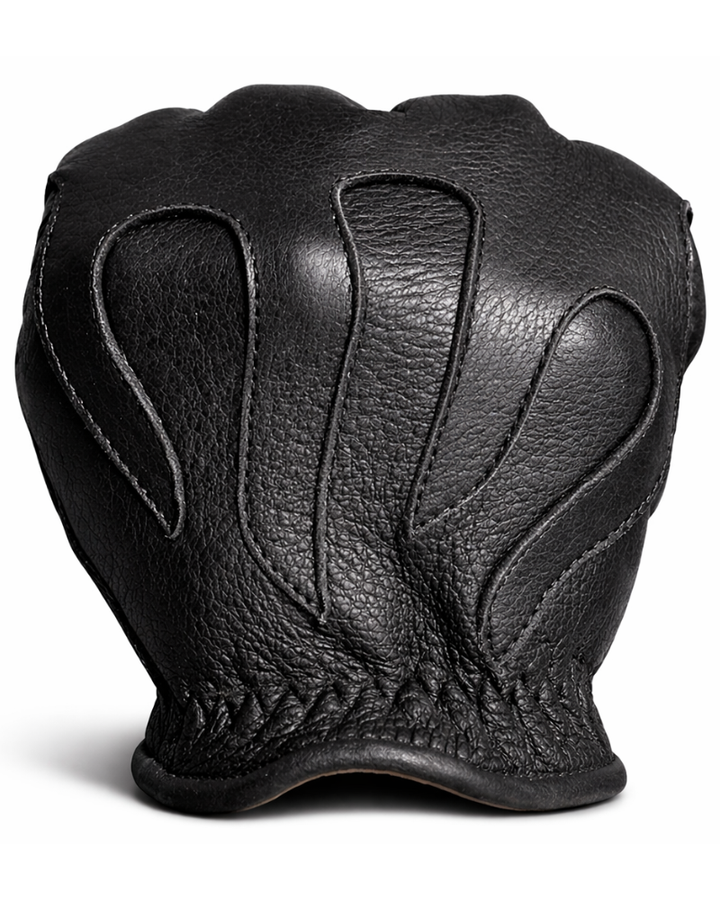
Legendary USA carries the working tradition forward with the Bad Billy, a short-wrist goatskin glove cut and sewn in the USA. The Bad Billy in black goatskin is the road-standard version; the Bad Billy in tan goatskin is the same glove in the color work gloves have always worn, and it shows its miles the way a good tan hide should — by getting better looking.
The honest tradeoff has not changed in a hundred years. Goatskin is a soft, tough, working leather, not armor, and a full leather glove runs warmer than a perforated one in August traffic. What it offers is what it has always offered: a thin, durable American hide that works as hard as the hands inside it. The rest of the lineage lives in our Made in USA motorcycle glove collection.
Frequently Asked Questions
- What is goatskin leather known for?
- Goatskin is known for an unusual combination of toughness and softness in a thin hide. The leather carries a high natural lanolin content, which keeps it supple and water-resistant, while its tight fiber structure gives it abrasion resistance that outperforms its weight. That is why goatskin became a standard in American work gloves — welding, ranching, rigging — long before motorcyclists adopted it. The same properties translate directly to riding: durable, flexible, and comfortable through long days of grip work.
- Why did goatskin become a work glove leather in America?
- Because working hands needed dexterity and durability in the same glove. Thick cowhide protected but fought every finger movement; thin leathers moved well but wore through. Goatskin split the difference: its dense fiber structure resists abrasion while the hide stays thin and flexible, and its natural lanolin keeps it from drying out under hard daily use. Ranchers, fence crews, welders, and riggers put goatskin through decades of proving, and it became a fixture of American glove-making.
- What is the difference between goatskin and deerskin motorcycle gloves?
- Deerskin is softer and more elastic; goatskin is tougher for its thickness and holds its shape longer. Deerskin breaks in faster and molds to the hand like a second skin, which riders love for feel on the grips. Goatskin starts with a slightly firmer hand, breaks in more gradually, and resists surface wear and moisture better thanks to its lanolin content and tight grain. Neither is the wrong choice — deerskin leans comfort-first, goatskin leans work-first, and plenty of riders keep one of each.
- Are goatskin motorcycle gloves good for hot weather?
- Yes. Goatskin's thinness is its advantage in the heat: it delivers real leather coverage without the bulk or heat retention of heavier hides. A short-wrist goatskin glove like the Legendary USA Bad Billy stays wearable through summer riding because the hide is light, flexible, and breathes better than thick cowhide. It is still a full leather glove, so on the hottest days a perforated or ventilated glove moves more air — the tradeoff is coverage versus airflow.
- Does goatskin leather need special care?
- No — goatskin is one of the lower-maintenance glove leathers. Its natural lanolin keeps the hide conditioned longer than most leathers, so it needs oiling less often than cowhide or deerskin under the same use. The routine is standard: let gloves air-dry at room temperature after wet or sweaty rides, keep them out of stationary sun and hot storage, and work in a light coat of leather conditioner when the surface starts to look dull or feel dry.
The Leather That Earned Its Seat
Goatskin never needed reinvention to belong on a motorcycle. It arrived already proven, carried by hands that worked for a living, and it does the same job on the open road that it did on the fence line. That is the kind of history Legendary USA builds from — American hides, American work, and gloves that expect to earn their keep.