





The short-wrist motorcycle glove is the American work glove, adapted to the handlebar. Before it was riding gear, the same cut — leather shell, snug cuff ending at the wrist — was pulling fence wire, swinging hammers, and working brake levers on American railroads. That working origin is why the style still dominates cruiser riding today: it was never designed to look like motorcycle equipment, because it started as equipment for everything else.
From the Job Site to the Handlebar

Leather work gloves were standard issue across American farms, ranches, and rail yards by the late 1800s. They ended at the wrist for a practical reason: a working man pulled his gloves on and off dozens of times a day, and a short cuff made that fast. The hides were whatever American tanneries produced — cowhide for heavy work, deerskin when a job needed dexterity.
When motorcycles spread across the country in the early 1900s, the first riders did not shop for riding gloves, because riding gloves barely existed. They wore what hung by the door. The work glove's short cuff, snug fit, and broken-in leather turned out to suit the handlebar as well as it suited the hammer, and a riding standard was born by accident.
Why the Cut Stuck With Cruiser Riders
Gauntlet gloves — the long-cuff style borrowed from military and aviation use — earned their own place in American riding, especially for cold weather and long highway miles. But the short-wrist glove became the default of cruiser culture, and the reasons are practical before they are stylistic.
An upright rider on wide bars does not need forearm coverage in July. A short glove comes off at every gas stop without a wrestling match. It packs into a vest pocket. And in the heat, it breathes where a gauntlet traps. The comparison is honest in both directions: a gauntlet seals out wind and weather better than a short-wrist glove ever will, and a short-wrist glove stays comfortable through a summer of riding in a way a gauntlet will not. American riders have sorted themselves by those tradeoffs for the better part of a century — if you are weighing the two styles today, our glove fit guide walks through the decision.
The Hides That Built the Tradition
The American short-wrist glove tradition is inseparable from American hides. Deerskin has been prized by glove makers on this continent for centuries — Native Americans worked buckskin into gloves and clothing long before European settlement pushed west — because it is soft without being weak and it molds to the wearer's hand. That tradition runs straight through to the deerskin riding glove; we tell that longer story in The American Deerskin Riding Tradition.
Goatskin is the other working hide in the lineage: tougher per ounce than most leathers, with a tight grain that shrugs off abrasion, which is why it showed up on military and work gloves throughout the twentieth century.
Carrying It Forward
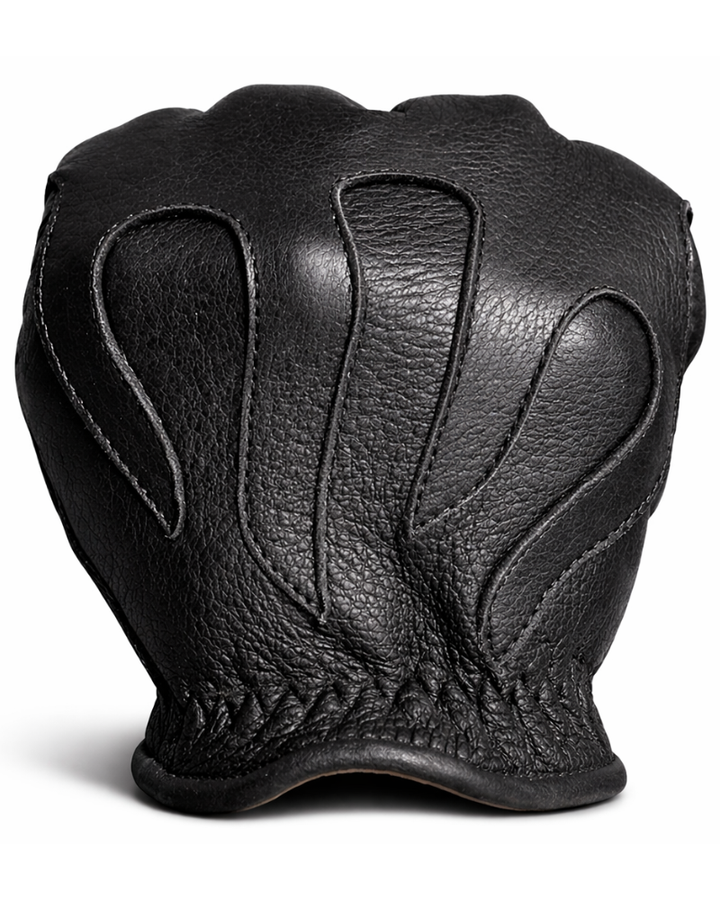
Legendary USA builds its short-wrist gloves in the USA from those same two hides, the same way the tradition demands. The Bad Billy tan goatskin short-wrist gloves are the direct descendant of the American work glove — tough goatskin, wrist-length cut, nothing decorative. The ILL Dozer perforated deerskin gloves take the same silhouette and build it for summer, with outseam construction that keeps stitching off the palm — a detail glove makers have used for generations because working hands notice seams.
After 25 years of cutting gloves, we can say the appeal has not changed since the rail-yard days: a short-wrist glove in good American leather disappears on your hand. You stop thinking about it, which is the whole point. Every pattern we make in the style lives in our USA-made motorcycle glove collection.
Frequently Asked Questions
- What is a short-wrist motorcycle glove?
- A short-wrist motorcycle glove is a riding glove that ends at or just past the wrist, rather than extending up the forearm the way a gauntlet does. It is the style most American cruiser riders wear: quick to pull on, easy to stuff in a pocket or saddlebag, and comfortable in warm weather because it does not trap heat up the forearm. The design traces directly back to American leather work gloves.
- Where did the short-wrist glove style come from?
- The short-wrist glove came from American work gloves — the leather gloves worn on farms, ranches, railroads, and job sites long before motorcycles were common. Those gloves ended at the wrist so a worker could pull them on and off dozens of times a day. When early American riders needed hand protection, they wore what they already owned, and the work glove's cut carried straight into riding culture.
- What is the difference between a short-wrist glove and a gauntlet glove?
- Length and coverage. A short-wrist glove ends at the wrist; a gauntlet extends over the jacket cuff and up the forearm, sealing out wind and cold. Gauntlets are the touring and cold-weather choice, while short-wrist gloves are the everyday, warm-weather choice because they are cooler, easier on and off, and less bulky. Neither is more authentic than the other — both have deep roots in American riding — but the short-wrist is the style most associated with cruiser culture.
- Why do Harley riders usually wear short-wrist gloves?
- Cruiser riding position and cruiser culture both favor the short-wrist cut. Sitting upright with hands on wide bars, a rider does not need forearm coverage the way a rider tucked behind a fairing at sustained highway speed might, and the short glove stays comfortable in the warm months when most cruiser miles happen. Culturally, the style also reads as classic Americana — it is the same silhouette riders have worn since leather work gloves first met handlebars.
- What leather is best for a short-wrist motorcycle glove?
- Deerskin and goatskin are the two hides Legendary USA builds short-wrist gloves from, and each has a case. Deerskin is soft from the first wear, breaks in within a few weeks, and stays comfortable through all-day rides. Goatskin is tougher and more abrasion-resistant for its weight, with a firmer hand feel that some riders prefer. Both are full-grain hides that improve with miles; neither is hard armor, and honest riders choose based on feel and season.
The Bottom Line
The short-wrist glove earned its place in American riding the honest way — by working. It came off the farm and the rail yard, followed riders onto the road, and never needed a redesign because the original idea was right: good leather, cut to the wrist, built to be forgotten once it is on your hand. Legendary USA keeps making it that way because a century of American riders already proved the pattern.