

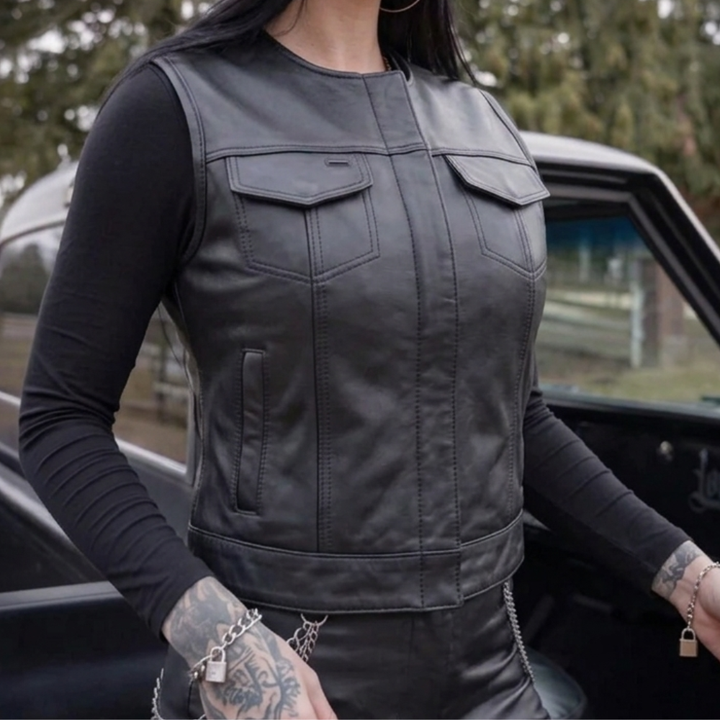


The horsehide jacket for winter riding is not a modern idea. It became the cold-season jacket of American motorcycling in the 1930s because horsehide blocks wind better than cowhide at the same thickness and holds its shape through decades of cold, wet miles. A dense, tight-grained hide was the difference between finishing a November ride and turning back. Legendary USA's BECK Northeaster Flying Togs label has built horsehide riding gear in the USA since 1928, and the winter story of the horsehide jacket runs straight through it.
Why Horsehide Was the Cold-Weather Hide

Horsehide is dense. The fibers pack tighter than cowhide fibers, which is why a 1.3mm front quarter horsehide panel resists wind better than a 1.3mm cowhide panel. For a rider on an unfaired bike in 1935, wind was the whole problem, and the leather that stopped the most of it won.
Horsehide also shed water well and stiffened less than most leathers when cold and wet, which mattered on a jacket ridden in sleet and hung by a stove to dry. It was slower to break in, and riders accepted that. A jacket that took a season to soften would still be in service twenty winters later.
The same qualities put horsehide on early aviators, because open-cockpit flying was cold-weather riding at altitude. The history of horsehide in American riding traces the overlap.
BECK and the Northeaster: Built for the Cold Season
BECK's Northeaster Flying Togs label started producing horsehide riding gear in the United States in 1928, and the name says what the gear was for. A nor'easter is the storm that defines a New England winter, and a jacket called a Northeaster was meant to be worn into one.
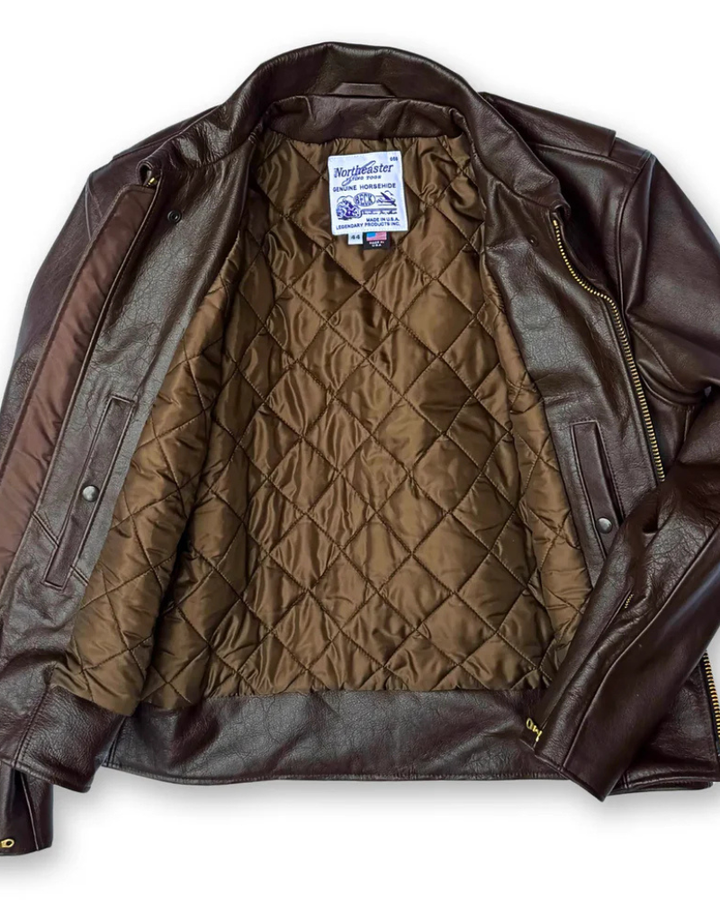
The BECK 732 Northeaster is 1.3mm front quarter horsehide with a diamond-quilted lining and poly-fill insulation, a racer snap collar that closes at the throat, and side buckle tabs that extend to fit a hoodie underneath or tighten for a closer fit on a cold day. Every one of those is a winter detail.
The BECK 777 Northeaster carries the same horsehide and insulation with a snap-down collar, and it is BECK's most popular current horsehide jacket. Both are made in the USA. BECK Northeaster Flying Togs is a Legendary USA house brand, and that continuity is the point.
What Winter Riders Did With a Horsehide Jacket
A horsehide jacket was the outer shell of a layered system long before anyone used the phrase. Riders wore wool underneath and counted on the horsehide to keep wind from ever reaching it. The jacket's job was to be a wall, and the layers' job was to be warm behind it.
That division of labor is still how experienced cold-weather riders dress. The horsehide does not generate heat. It stops wind at highway speed, resists abrasion on cold pavement, and stays supple enough to move in after an hour at 35°F, while everything thermal happens underneath. That is why BECK's side buckle tabs exist at all.
The tradition of winter riding in American motorcycle culture was built by riders who did not put the bike away in October. Their jackets were horsehide because it outlasted the alternative, and the patina on a well-ridden BECK is the record of those seasons.
Why Horsehide Got Rare and Why It Came Back
Horsehide became scarce in the decades after World War II as horses left farm and transport work and American tanneries shifted toward abundant cowhide. Most jacket makers followed the supply. Riders who grew up in horsehide kept wearing it, and it kept working, which is why vintage horsehide carries the reputation it does.
The comeback is a cold-weather story. Riders who compared the two hides in winter kept arriving at the same result: horsehide blocked more wind and held its shape longer, while cowhide broke in faster and cost less. Legendary USA kept the BECK line in horsehide because riders buying a jacket for twenty winters keep asking for it.
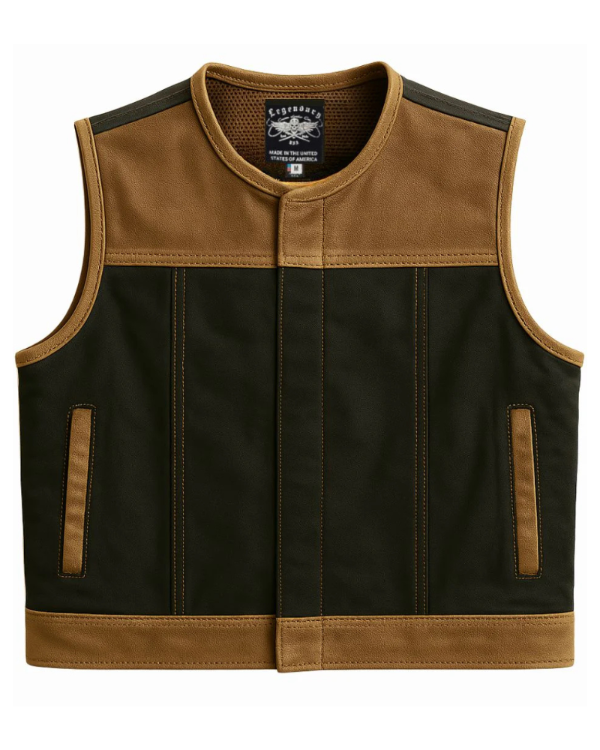
Horsehide is not armor. The BECK line is a heritage riding jacket, not an armored riding jacket, so it has no CE armor. What it offers is what it offered in 1928: wind resistance, abrasion resistance, and a shell that gets better with every cold season. The full BECK Northeaster Flying Togs collection includes the 732, the 777, the half-belt 999, the flannel-lined 666, and the horsehide vests built on the same hide.
The horsehide jacket earned its winter reputation by standing between a rider and moving cold air for decades without quitting. BECK has built that jacket in the USA since 1928. Buy it for the wind, break it in over a season, and expect to hand it down.
For rider training and general cold-weather riding practice, the Motorcycle Safety Foundation publishes rider education and guidance.
Frequently Asked Questions
- Why were old motorcycle jackets made of horsehide?
- Horsehide was the cold-weather hide of early American motorcycling because its tightly packed fibers block wind better than cowhide at the same thickness, and it held its shape through years of wet, cold riding. Riders on unfaired bikes in the 1930s needed a wall against moving air, and horsehide was the leather that did it best. BECK's Northeaster Flying Togs label has built horsehide riding gear in the USA since 1928 for that reason.
- Is a horsehide jacket warm enough for winter riding?
- A horsehide jacket is a wind barrier, not a heat source, and it works in winter as the outer shell of a layered system. The horsehide stops wind at highway speed while wool or fleece layers underneath supply the warmth. BECK's 732 and 777 Northeaster jackets add a quilted lining with poly-fill insulation and side buckle tabs that extend to fit a hoodie, which is how the line has always handled cold.
- What is the difference between horsehide and cowhide for cold-weather jackets?
- Horsehide is denser than cowhide, so at 1.3mm it resists wind better and holds its shape longer. Cowhide is more abundant, breaks in faster, and costs less. For winter riding, horsehide's wind resistance is the deciding advantage; for a rider who wants a jacket soft from day one, cowhide is the easier choice. Legendary USA builds the BECK line in horsehide because its buyers want a jacket for twenty winters.
- Why did horsehide motorcycle jackets become rare?
- Horsehide supply fell in the decades after World War II as horses left farm and transport work and American tanneries moved to the far more abundant cowhide. Most jacket makers followed the supply. The riders who already owned horsehide kept wearing it because the jackets kept working, and that durability built the reputation vintage horsehide carries today. BECK's Northeaster line is one of the labels that stayed with the hide.
- Is BECK Northeaster Flying Togs a Legendary USA brand?
- Yes. BECK Northeaster Flying Togs is a Legendary USA house brand, and Legendary USA builds the current 732, 777, 999, 666, and 501 horsehide jackets and the BECK horsehide vests in the USA. The label's history of horsehide riding gear goes back to 1928. Cockpit USA, Churchill, and Bohn are separate businesses that Legendary USA carries as an authorized dealer, not house lines.