

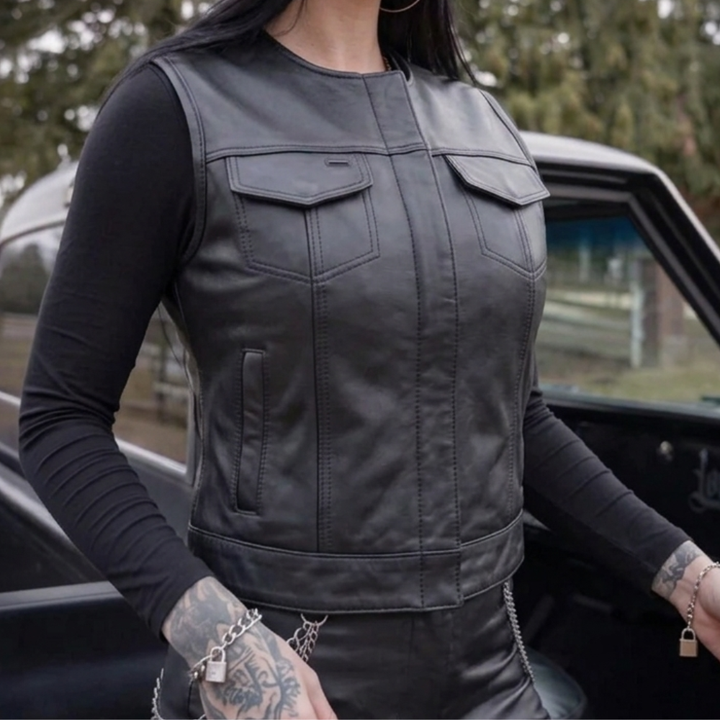


The horsehide vest became a cold-weather layer in American riding because it does one thing a jacket cannot: it blocks wind across the chest and back without covering the arms, so a rider can add it over a flannel in October and keep it on under a jacket in December. BECK Northeaster Flying Togs has built horsehide riding gear in the USA since 1928, and the vest has been part of that story for as long as riders have needed a layer that works across three seasons. This is how the horsehide vest earned its place in the cold-weather kit, and why Legendary USA still builds it the same way.
Why Horsehide, and Why a Vest

Horsehide was the working leather of the early American motorcycle era for a practical reason: the front quarter of the hide is dense and tightly grained, which makes it more wind-resistant and more rain-repellent than cowhide at the same thickness. A rider in 1930 did not have a windproof membrane. He had horsehide, and horsehide did the job.
The vest came out of the same practicality. A full jacket is warm until the day turns, and then it is a heavy thing to carry. A vest covers the torso, where the body loses heat fastest at speed, and leaves the arms free. On a cool morning it goes over a shirt. On a cold afternoon it goes under a jacket, and the two layers of leather across the chest block more wind than either alone. Riders who worked outdoors, rode to work, or rode in the mountains learned that the vest was the layer that stayed in rotation from September through April.
BECK Northeaster Flying Togs and the Working Vest
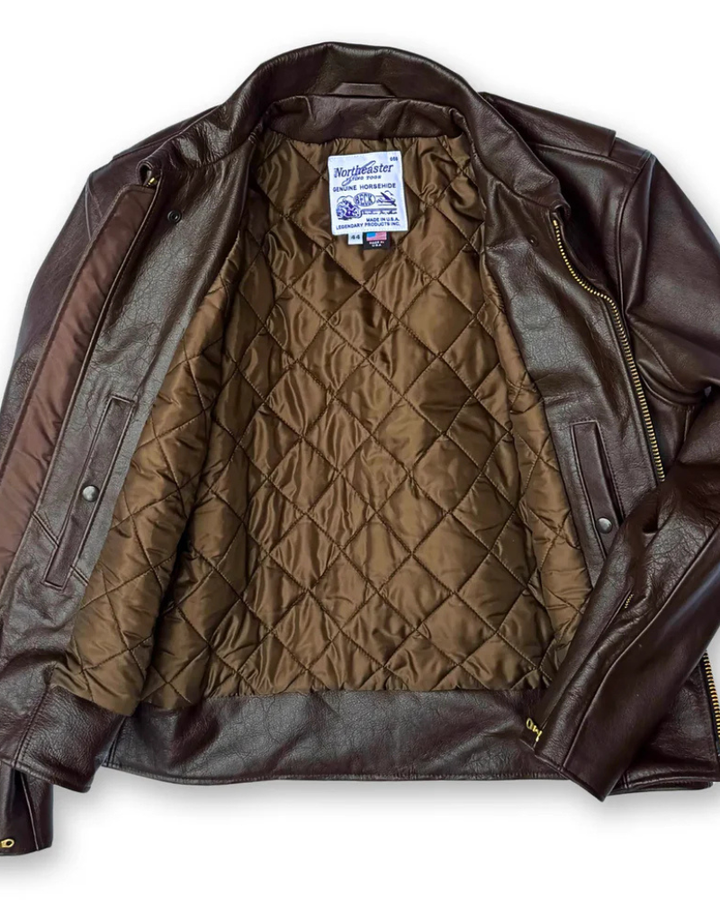
BECK Northeaster Flying Togs started making horsehide riding gear in 1928, when the label built for riders who rode in every kind of weather because they had no other way to get where they were going. The construction choices that came out of those years are still in the line. Front quarter horsehide for density. A one-piece back panel with no seams across it, which was originally about strength and later became the reason club riders chose the vest for patches. Perma Core thread by American and Efird. Antique brass hardware. A nylon Oxford liner that slides over a flannel or a sweater instead of grabbing it.
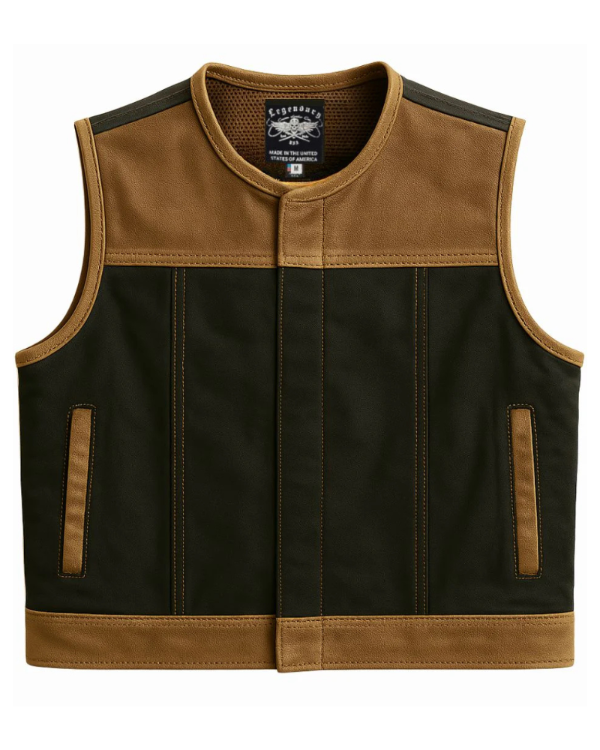
BECK is a Legendary USA house brand, and the vests in the line today are built in the USA to that pattern. The BECK 566 Horsehide Vest is the foundation piece: front quarter horsehide, a stand-up collar for neck coverage without bulk, twin chest pockets with hidden snaps, and the one-piece back. The BECK 882 Fitted Horsehide Vest is the tapered version, cut close to the torso so it sits flat under a jacket. The BECK 501 Trucker Horsehide Vest borrows the pointed chest pockets and 1960s trucker proportions from the 501 jacket and puts them in 1.3mm horsehide.
How the Vest Moves Through a Cold Season
The reason the horsehide vest became tradition rather than a novelty is the way it moves through the calendar. In early fall, it is the outer layer over a riding flannel, and the horsehide across the chest is enough on a 55°F morning. By late October, it goes under a horsehide jacket, and a BECK 777 over a BECK 882 puts two layers of front quarter horsehide between the wind and the rider's chest. In the dead of winter, it stays under the jacket with a wool sweater beneath it. In spring the jacket comes off first and the vest is back on top.
That is four months of use from a single piece that weighs less than a jacket and packs flat in a saddlebag. No other garment in the kit does that. Legendary USA's winter motorcycle vest guide covers the layering order in detail for riders setting this up for the first time.
Horsehide vs. Cowhide in a Cold-Weather Vest
Cowhide vests exist, and Legendary USA builds them, but the horsehide vest holds its place in cold-weather riding for a reason. Front quarter horsehide is denser than cowhide at the same thickness, so it blocks more wind. It resists rain better, so a wet October ride does not soak through to the sweater. And it breaks in differently: a horsehide vest stands up on its own off the body when new, then molds to the rider's shape over the first season and holds that shape for decades. Cowhide softens faster and is more comfortable on day one, but it loses oil faster and needs more conditioning to stay that way.
The honest tradeoff is the break-in. A new BECK horsehide vest is stiff, and a rider who wants a vest that feels broken in out of the box will prefer cowhide. The rider who wants the vest that is still in rotation twenty winters from now picks horsehide and puts in the miles.
Why the Vest Still Belongs in the Cold-Weather Kit
Heated gear, windproof membranes and synthetic insulation have all arrived since 1928, and the horsehide vest is still in the kit. Part of that is heritage. More of it is that the vest still does its job without a battery, a charger or a lining that wears out. A BECK horsehide vest over a flannel in October and under a jacket in January is the same layering logic riders used ninety years ago, and it works for the same reason: dense leather across the chest stops wind.
It is a heritage riding vest, not an armored one. No BECK vest carries armor or a CE rating, and the layering described here is about warmth and wind, nothing more. Every current BECK vest is in the BECK Northeaster Flying Togs collection, alongside the jackets they were built to go under.
For general guidance on protective riding equipment, separate from the heritage leather discussed here, the National Highway Traffic Safety Administration publishes motorcycle safety resources.
Frequently Asked Questions
- Why were early motorcycle vests made of horsehide?
- Horsehide was the working leather of early American motorcycling because the front quarter of the hide is dense and tightly grained, which makes it more wind-resistant and more rain-repellent than cowhide at the same thickness. Riders in the 1920s and 1930s had no synthetic windproof layers, so horsehide across the chest was the practical way to block wind. BECK Northeaster Flying Togs has built horsehide riding gear in the USA since 1928.
- Is a horsehide vest warm enough for cold-weather riding?
- On its own, a horsehide vest covers cool mornings in the 50s over a flannel. For colder riding it works as a layer under a jacket: a BECK horsehide vest under a BECK horsehide jacket puts two layers of dense leather across the chest, which blocks more wind than either piece alone. The vest adds warmth by stopping wind across the torso, not through insulation, so pair it with a wool or fleece layer underneath in winter.
- What is the difference between a horsehide vest and a cowhide vest?
- Front quarter horsehide is denser than cowhide at the same thickness, blocks more wind, and resists rain better. It is stiffer when new and molds to the rider over the first season, then holds that shape for decades. Cowhide is softer on day one and more comfortable out of the box, but it loses oil faster and needs more conditioning. For a vest that will see many cold seasons, horsehide is the longer-lasting choice.
- Why do BECK horsehide vests have a one-piece back panel?
- The one-piece back panel was originally a strength choice: fewer seams means fewer places for a vest to fail under years of wear. It later became the reason club riders chose BECK vests, because a back with no seams across it gives a clean, flat area for patches. The BECK 566 and 882 horsehide vests both carry the one-piece back.
- Is BECK Northeaster Flying Togs a Legendary USA brand?
- Yes. BECK Northeaster Flying Togs is a Legendary USA house brand, and Legendary USA owns the trademark. The label has built horsehide riding gear in the USA since 1928, and the current BECK jackets and vests are made in the USA from front quarter horsehide with Perma Core thread by American and Efird, antique brass hardware and YKK zippers.