

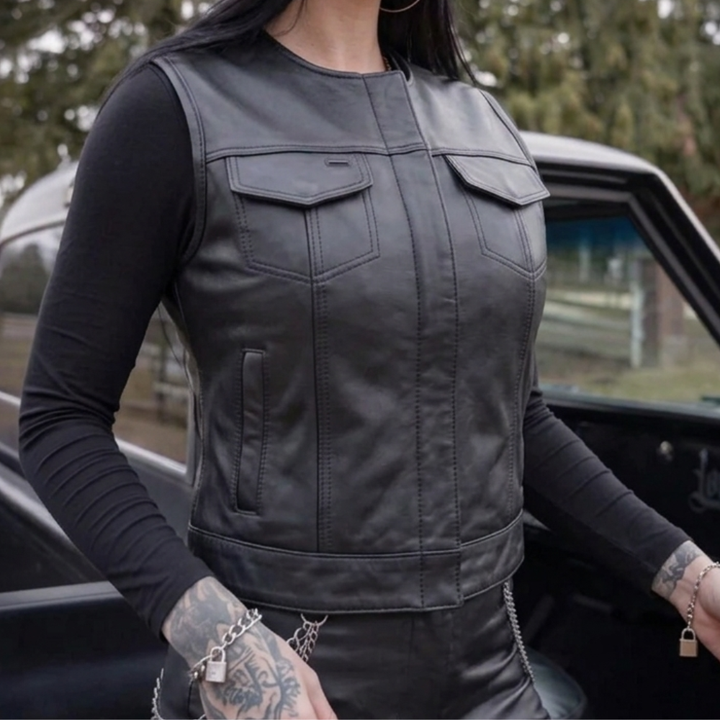


If you are choosing a leather motorcycle jacket and you've done enough research to land on the horsehide vs cowhide question, you already know more than most buyers. The short answer is that horsehide wins on long-term durability and break-in character; cowhide wins on immediate comfort and price. The right choice depends entirely on how long you plan to keep the jacket.
The Material Difference — Fiber Structure Is Everything

Leather is not uniform. Hide type, tanning method, thickness, and fiber density all determine how a jacket wears, ages, and performs. Horsehide and cowhide share the same general category but behave differently from the first day you put them on.
Horsehide has a tighter fiber structure than cowhide. That density is what gives it better abrasion resistance per millimeter of thickness and produces the patina that longtime riders seek — a surface that darkens and conforms to the wearer rather than simply wearing out. The tradeoff is stiffness out of the box, which leads to the break-in conversation every horsehide buyer eventually has.
Cowhide is more open in grain, softer from day one, and widely available, which keeps prices lower and production volumes higher. A well-tanned cowhide jacket at 1.2–1.4mm thickness rides comfortably on the first outing. It doesn't develop quite the same depth of patina over years, but for riders who rotate jackets or don't plan to hold one piece for a decade, cowhide is a perfectly rational choice.
The grain surface also differs visually. Horsehide tends to have a smoother, finer grain that shows character over time. Cowhide shows more visible pore structure, which can look good in distressed finishes but reads differently at the fiber level.
Break-In: The Real Difference Between the Two
Ask any rider who has owned both and the break-in period is the first thing they mention. A quality horsehide jacket typically requires 3–6 months of regular wear before it fully softens and molds to the wearer's body. During that period, it can feel board-stiff, especially through the shoulders and upper back where the leather needs to conform to movement.
This is not a defect — it is the property that makes horsehide last. The same fiber density that takes time to open up is also what resists abrasion and holds structure through years of hard riding. Riders who understand this accept the break-in as part of the process and often say the jacket becomes a second skin after the first season.
Cowhide jackets typically break in within 2–4 weeks of regular wear. The softer fiber structure responds to body heat and movement quickly. If you need a jacket that feels right immediately — for daily commuting, a road trip coming up, or a climate where you'll wear it infrequently — cowhide delivers comfort faster.
One practical note: hanging a horsehide jacket in a warm room, conditioning it with a quality leather conditioner, and wearing it through a few short rides before any long trip accelerates the process without damaging the hide. More on that in the FAQ below.
Abrasion Resistance and Why Fiber Density Matters
Motorcycle jackets exist to protect the rider's upper body in a slide situation. The abrasion resistance of the outer shell is what separates a riding jacket from a fashion jacket, and this is where horsehide's fiber density becomes quantifiably relevant.
Independent abrasion tests consistently show horsehide outperforming same-weight cowhide in slide distance before wear-through. The tighter weave of fibers in horsehide resists friction longer. This is why horsehide was the standard for military aviator jackets and early motorcycle gear before cowhide's lower cost and easier availability shifted the market.
At equivalent thickness — say 1.2–1.4mm — horsehide holds together longer under abrasive load. That doesn't mean cowhide is inadequate; a well-constructed cowhide jacket at proper riding weight handles road abrasion appropriately. But horsehide has a meaningful edge, which matters to riders who log high annual mileage or ride conditions where a slide is a realistic outcome.
For armor-ready construction, both materials can accommodate CE-rated armor at the shoulders, elbows, and back. Look for dedicated armor pockets rather than afterthought elastic sleeves — the jacket's construction matters as much as the leather when it comes to impact zones.
Horsehide Motorcycle Jackets at Legendary USA
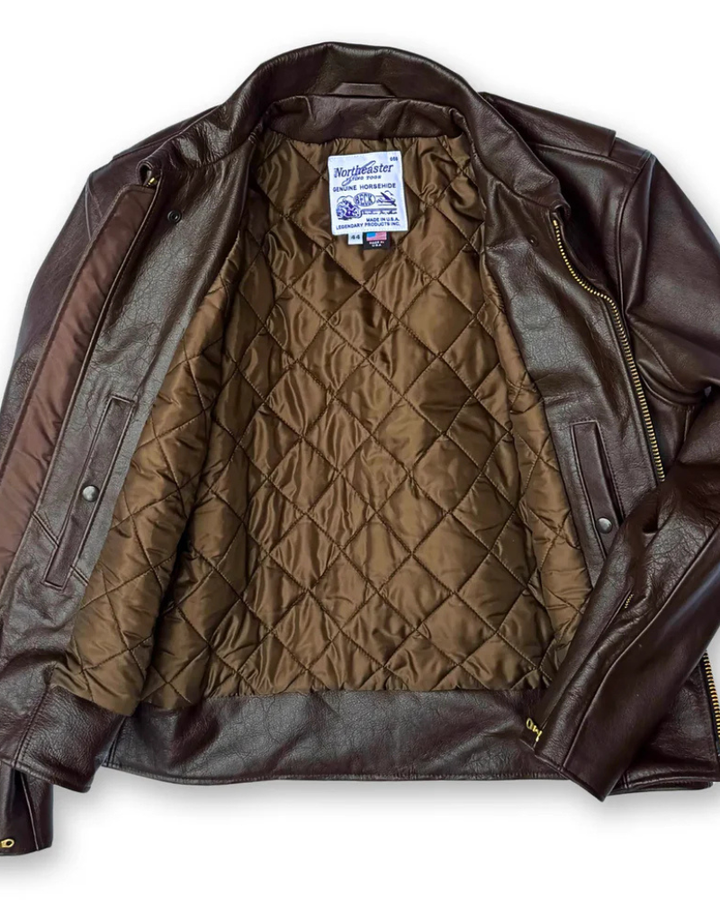
Legendary USA carries several horsehide jacket options across price points. The standout is the BECK® 666 Distressed Horsehide Cafe Racer, made in the USA by BECK® Northeaster Flying Togs — a brand with a legitimate manufacturing heritage in American leather goods. The 666 starts from $815 and comes in the distressed finish that horsehide buyers typically seek: a surface that shows the hide's character rather than hiding it under heavy dye.
The BECK® 732 Northeaster Flying Togs Black Horsehide Jacket is another option for riders who want a cleaner silhouette without the distressed surface. Both the 732 and 666 are priced from $815 and share the same genuine horsehide shell. The 732 also comes in chestnut brown for riders who prefer a warmer finish.
For riders who want the BECK® quality with a zippered front, the BECK® 777 steps up to $815 and delivers the same genuine horsehide with a slightly updated construction. The BECK® 999 represents the top of the line from $845 for riders who want the most refined horsehide option in the lineup.
Legendary USA also carries the BECK® 501 Trucker Style Genuine Horsehide Motorcycle Jacket from $725 for riders who want the same 1.3mm front quarter horsehide in the waist-length 1960s trucker silhouette, with pointed chest pockets, covered snap front and Cordura-lined pockets. Browse the full horsehide selection at Legendary USA motorcycle jackets — horsehide options are clearly marked by material in the product titles.
Comparison Table: Horsehide vs Cowhide Motorcycle Jackets
| Factor | Horsehide | Cowhide |
|---|---|---|
| Fiber Density | Higher — tighter grain structure | Lower — more open grain |
| Break-In Period | 3–6 months of regular wear | 2–4 weeks of regular wear |
| Long-Term Patina | Deep character, conforms to rider | Good, softens and darkens with age |
| Abrasion Resistance | Higher per mm of thickness | Solid at proper riding weight |
| Price | Higher — less common material | Lower — widely available |
| Best For | Long-term ownership, high-mileage riders | Daily commuters, first-time leather buyers |
| Legendary USA Option | BECK® 666 Distressed Horsehide from $815 | Legendary Black Hills from $675 |
Who Should Choose Horsehide vs Who Should Choose Cowhide
Choose horsehide if you plan to keep the jacket for five or more years, ride more than 5,000 miles annually, or want a piece that develops a specific worn-in character over time. Horsehide rewards patience. The break-in period is real, but after it the jacket becomes a rider's personal piece in a way that shorter-lived gear cannot replicate.
Choose cowhide if you want immediate comfort, you're buying your first leather riding jacket, or you ride in conditions where you'll frequently swap jackets and won't accumulate the hours needed to fully break in horsehide. A cowhide jacket at proper riding weight is a legitimate choice for the majority of street riders.
If you're unsure, the Legendary USA motorcycle jackets buying guide breaks down the full selection by use case and material. You can also find additional context on best American motorcycle gear brands if heritage is part of your decision.
Frequently Asked Questions
Is horsehide better than cowhide for a motorcycle jacket?
For long-term ownership and maximum abrasion resistance, horsehide has a clear edge. Its tighter fiber structure outlasts cowhide at equivalent thickness and develops a richer patina over years of wear. For riders who prioritize immediate comfort and a lower entry price, cowhide is a practical and legitimate choice. Neither material is wrong — the decision comes down to how long you plan to ride the same jacket and how much patience you have for break-in.
How long does a horsehide motorcycle jacket take to break in?
Most riders report that a horsehide jacket needs 3–6 months of regular riding before it fully softens and conforms to their body. The shoulders and upper back take the longest. Stiffness in the early weeks is normal and expected — it reflects the same fiber density that makes horsehide more abrasion-resistant than cowhide. Wearing the jacket on shorter rides before any long tour helps accelerate the process at a pace the leather handles well.
What horsehide motorcycle jackets does Legendary USA carry?
Legendary USA carries several horsehide jacket options, including multiple models from BECK® Northeaster Flying Togs — an American-made brand. The BECK® 666 Distressed Horsehide Cafe Racer from $815 is one of the most popular. The BECK® 732, 777, and 999 offer additional silhouettes and finishes at similar price points. The BECK® 501 Trucker Style Genuine Horsehide Motorcycle Jacket from $725 puts the same front quarter horsehide into a waist-length 1960s trucker cut for riders who want a shorter silhouette. See the full selection at Legendary USA motorcycle jackets.
Can I speed up the horsehide break-in process?
Yes, within limits. Conditioning the jacket with a quality leather conditioner before the first wear opens the fibers and reduces initial stiffness without compromising the hide. Wearing the jacket in a warm room for a few hours before riding also helps. Avoid soaking horsehide in water to force a break-in; it can stress the stitching and dry out unevenly. The most reliable method is simply regular wear — short rides stacked over several weeks do more for break-in than any treatment.
Ready to shop horsehide and cowhide motorcycle jackets? Browse the full lineup at Legendary USA motorcycle jackets — all materials are clearly labeled so you know exactly what you're buying.