

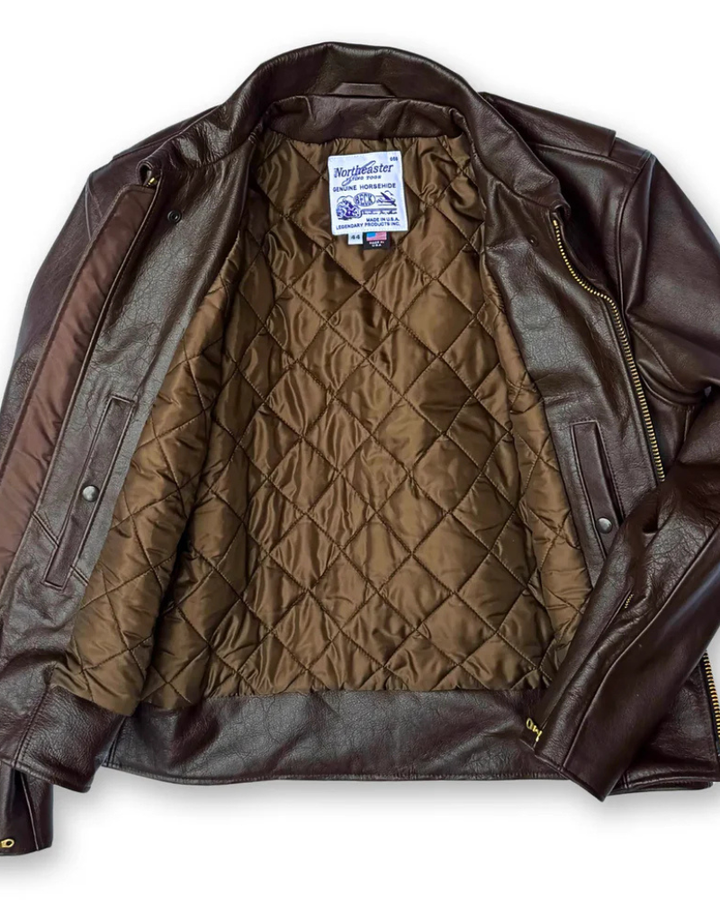
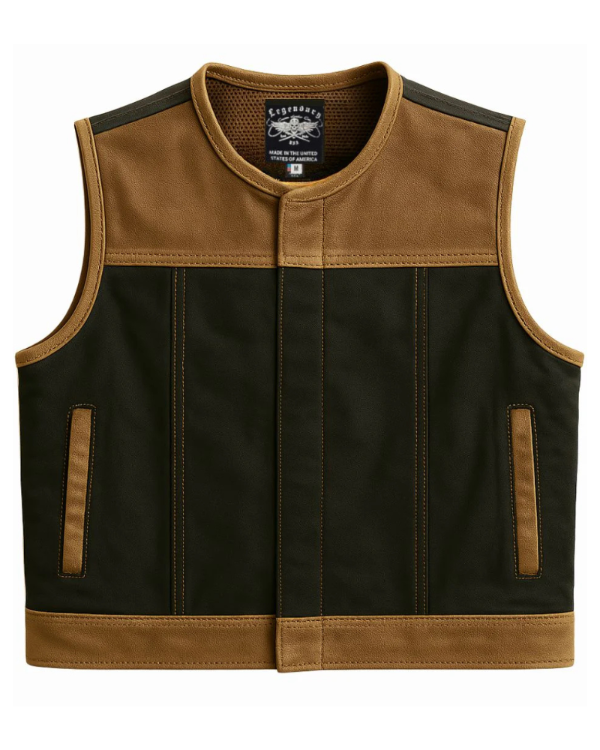
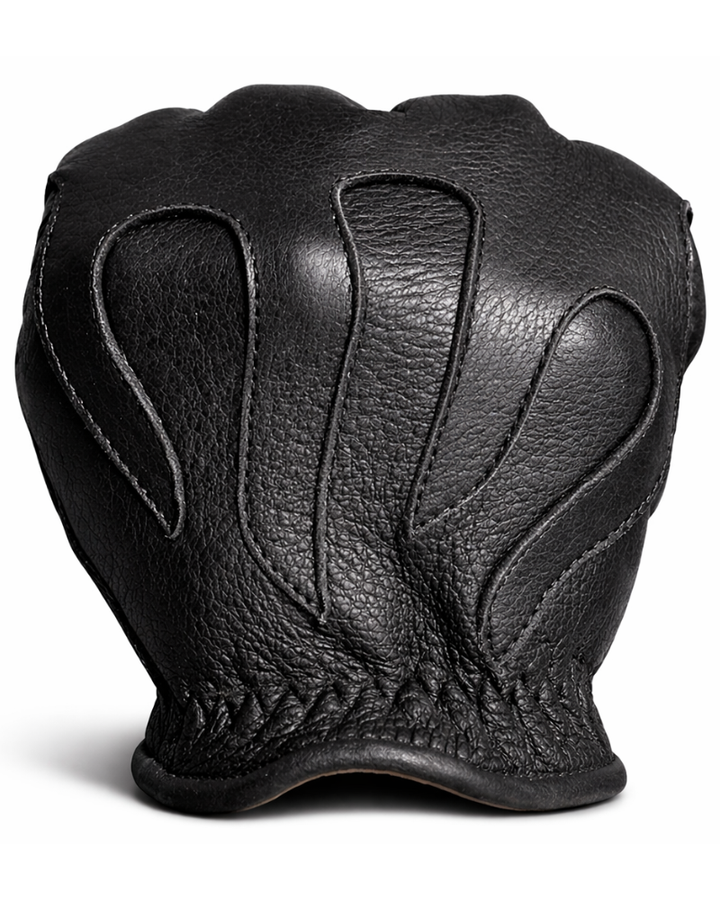
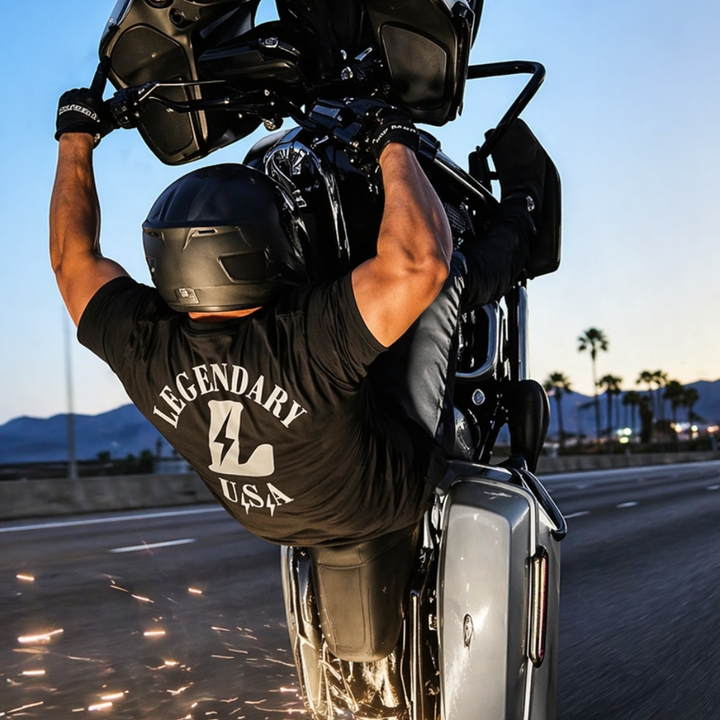


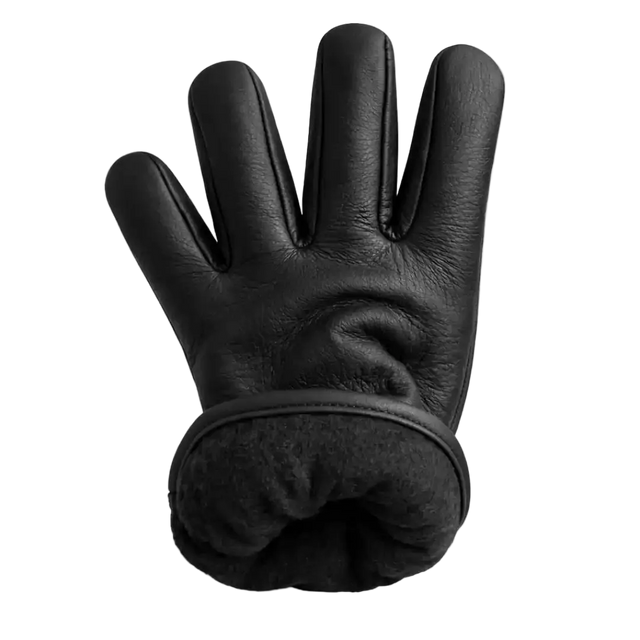
The insulated motorcycle glove in American riding history started as a wool liner stuffed inside a buckskin gauntlet and ended up as a 3M Thinsulate fleece lining sewn inside American Whitetail deerskin. The glove on the handlebar of a 1915 board-track racer and the fleece-lined deerskin short-wrist glove Legendary USA hand-cuts today solve the same problem: keep the hand warm enough to work a lever without losing the feel of that lever. The leather barely changed. The insulation did.
Buckskin before the motorcycle
American riders inherited deerskin from people who never saw a motorcycle. Buckskin gloves and gauntlets were working gear in colonial America because the hide was local, soft, and tough, and because it dried soft after a soaking instead of turning to board. By the 1800s, the towns of Gloversville and Johnstown in upstate New York had become the center of the American glove trade, cutting and sewing leather gloves by the millions for farmers, teamsters, and cavalry.
Cold was handled the old way. A rider on horseback in a Northeastern winter wore a knit wool glove or a wool liner under a leather gauntlet, and the leather's job was to block wind and wear while the wool did the insulating. That two-layer logic, shell outside and insulation inside, is still the logic of every cold-weather glove in the cold-weather deerskin motorcycle gloves collection.
The gauntlet comes to the motorcycle
The first motorcyclists borrowed the gauntlet from the cavalry trooper and the carriage driver. A long cuff that covered the wrist and lower forearm mattered on an open machine with no fairing, where wind at 40 miles an hour drove straight up a jacket sleeve. Early twentieth century riding gloves were heavy horsehide or cowhide gauntlets, unlined or lined with wool, and they were stiff until they were broken in by months of use.
The gauntlet never went away because the sleeve gap never went away. The Classic American Whitetail deerskin gauntlets Legendary USA builds now are cut long enough to tuck under a jacket sleeve or ride over it, exactly as a rider in 1920 would have expected, with deerskin in place of the horsehide so the glove softens in a few rides instead of a few months.
What aviation taught the glove trade
The cold-weather lessons that shaped American riding gloves were learned in airplanes before they were learned on bikes. Open-cockpit and unpressurized aircraft put crews in temperatures far below anything a road rider sees, and the answer the military arrived at in the 1930s and 1940s was sheepskin. The B-3 sheepskin flight jacket and its matching gauntlet gloves used the fleece side of the hide as insulation and the skin side as a wind block, in one piece of leather.
That idea, insulation bonded to shell, is the direct ancestor of the lined motorcycle glove. Shearling is bulky, though, and bulk is the enemy of lever feel. The glove trade spent the next thirty years looking for a lining that insulated like fleece without the thickness, and until the late 1970s the honest answer was still wool.
Synthetic insulation changes the equation
The late 1970s brought the two materials that define the modern insulated riding glove: synthetic fleece and thin synthetic insulation, of which 3M Thinsulate is the one Legendary USA uses today. Both trap air in fine fibers, both keep insulating when damp, and both do it in a fraction of the thickness of wool or shearling. For the first time a glove maker could put real cold-weather warmth inside a short-wrist glove without turning it into a mitten.
The fit question followed immediately. A lining fills space inside the glove, so an insulated glove has to be cut or sized larger than an unlined glove of the same pattern. Riders who ignored that found their lining compressed flat and useless. That is why Legendary USA tells buyers of its fleece-lined short-wrist to size up one from their unlined size, and why the guide to sizing motorcycle gloves for liners exists at all.
Why deerskin carried the tradition forward
Horsehide and cowhide dominated early riding gloves because they were cheap and tough, but both stiffen hard in the cold, and a stiff glove around a thin lining is a poor cold-weather tool. Deerskin stays pliable below 40 degrees and weighs roughly half what cowhide does at equivalent thickness. When thin synthetic insulation arrived, deerskin was the leather that let the combination work: a soft shell that flexed in the cold wrapped around a lining that insulated without bulk.
Legendary USA has built on that combination since it opened in 2001, and Chris has spent most of those 25 years cutting deerskin for riders who refuse to park the bike in November. The American deerskin riding tradition is older than the company, and the insulated glove is the part of it that a cold-weather rider feels first. For the broader story of riders who kept going when the season ended, read about winter riding in American motorcycle culture.
Every insulated motorcycle glove in American history is a shell and a filling, and the filling is what moved: wool, then shearling, then synthetic fleece and Thinsulate. The shell settled on deerskin because deerskin is the hide that stays soft when the air does not. A fleece-lined deerskin glove from Legendary USA is the current chapter of a story that started with buckskin on a cold morning, and it still has no CE armor in it, because it was never meant to be anything other than warm, soft, and made here.
For rider training that covers cold-weather practice as well as gear, the Motorcycle Safety Foundation publishes rider training and gear guidance.
Frequently asked questions
- What did early motorcycle riders wear to keep their hands warm?
- Early twentieth century motorcycle riders wore leather gauntlets borrowed from cavalry and carriage-driving tradition, usually horsehide or cowhide, with a knit wool glove or wool liner underneath for warmth. The leather blocked wind and wear while the wool insulated. The long gauntlet cuff covered the gap between glove and sleeve on open machines with no wind protection. That two-layer approach, leather shell outside and insulation inside, is still how cold-weather riding gloves work.
- When did insulated motorcycle gloves become common?
- Insulated riding gloves became practical in the late 1970s, when synthetic fleece and thin synthetic insulation such as 3M Thinsulate arrived. Before that, insulation meant wool or shearling, both of which were bulky and hurt lever feel. The new synthetics trapped air in fine fibers, kept insulating when damp, and fit inside a short-wrist glove without turning it into a mitten. Legendary USA uses a 3M Thinsulate 40-gram fleece lining in its fleece-lined deerskin short-wrist glove.
- Why is deerskin used for cold-weather motorcycle gloves instead of cowhide?
- Deerskin stays pliable below 40 degrees, while cowhide firms up noticeably below about 50 degrees. A stiff shell wrapped around a thin lining makes a poor cold-weather glove because the rider loses throttle and brake feel. Deerskin also weighs roughly half what cowhide does at equivalent thickness, so an insulated deerskin glove is still lighter than an unlined cowhide winter glove. Legendary USA cuts all of its cold-weather gloves from American Whitetail deerskin for those reasons.
- What is the history of the gauntlet motorcycle glove?
- The gauntlet glove came to motorcycling from cavalry troopers and carriage drivers, who needed a long cuff to cover the wrist and lower forearm against wind and weather. Early motorcyclists on open machines adopted it for the same reason, because wind at speed drove straight up a jacket sleeve. The design has not changed in a century. Legendary USA cuts its Classic American Whitetail deerskin gauntlets long enough to tuck under a jacket sleeve or ride over it, as a rider in 1920 would have expected.
- Did military flight gloves influence motorcycle gloves?
- Yes. Military aviation in the 1930s and 1940s solved extreme cold with sheepskin, using the fleece side of the hide as insulation and the skin side as a wind block in a single piece of leather. That idea of insulation bonded to the shell is the direct ancestor of the lined motorcycle glove. Shearling was too bulky for lever feel, so the glove trade spent decades looking for a thinner lining, which synthetic insulation finally provided in the late 1970s.