



The Long-Haul Rider: America's Touring Motorcycle Tradition
American motorcycle culture was built by people going a long way on purpose. Before there was a rally circuit, before there were club colors, there were riders crossing a country that had barely finished building roads. The long-haul rider is the oldest character in American motorcycling, and the gear tradition that came out of those miles is still the one Legendary USA builds around.
Where the American Touring Tradition Started

In the 1910s and 1920s, Erwin George Baker, remembered as Cannon Ball Baker, made a series of transcontinental record runs on motorcycles across a country where paved highway was the exception. He rode through mud, sand, and railroad ballast because that was what existed. Those runs turned coast-to-coast riding from a stunt into an American ambition.
Route 66 was commissioned in 1926 and gave the idea a map. By 1940 the Motor Maids had organized as one of the country's first women's motorcycle associations, and riders like Bessie Stringfield were covering the country solo. By 1983 the Iron Butt Association had formalized endurance riding into documented certifications. Same instinct in every era: point the bike at the horizon and keep going.
The Gear the Long Haul Produced
Touring did something rally riding never had to do. It forced gear to work for ten hours straight, in three different climates, with no way to go back to the truck.
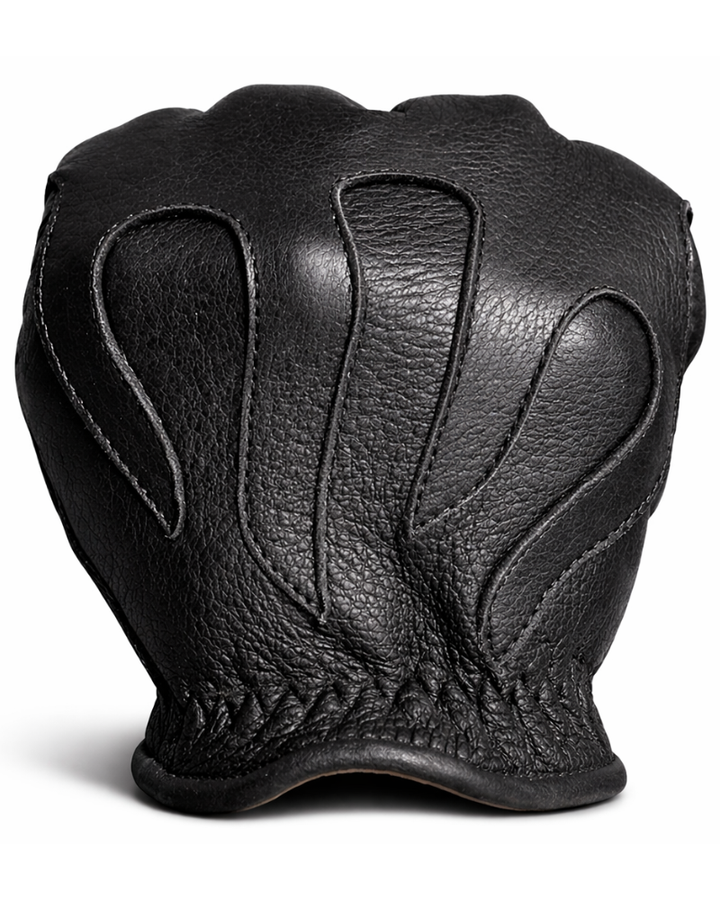
That pressure produced the American riding glove as we know it. Outseam construction, where the seams are turned to the outside of the glove, exists because a rider gripping a bar for eight hours cannot have stitching pressing into the palm. The keystone thumb exists because a thumb panel cut on its own curve moves with the hand instead of fighting it. Neither detail matters much on a twenty-minute ride. Both matter enormously at mile 400. Our piece on lessons learned after decades of building motorcycle gloves covers how those choices took hold.
Gauntlets, Fleece, and the Cold-Morning Problem
Any rider who has left a motel in Wyoming at 5 a.m. knows the problem long-haul riding creates: the day starts at 41 degrees and finishes at 88. Gear that solves one end fails the other.
The American answer was never one perfect glove. It was two. A longer-cuff glove such as classic deerskin gauntlets seals the wrist gap and takes the sting out of the first two hours. A lined pair like the fleece-lined deerskin gloves handles genuine cold. Then both come off when the sun does its work. Riders have been running that rotation since long before anyone called it a system.
Touring vs. Rally Riding: Two American Traditions
Both are American, and they are not the same thing. Rally riding is about arriving. The daily distances shrink once you are at Sturgis or Laconia, the gear gets chosen partly for the crowd, and a heavy vest is easy to shed at the campground.
Touring is about the road. The distances do not shrink, the weather is not negotiable, and every piece of gear has to still be working at hour eight in the rain. That difference explains why touring riders talk about fit and fatigue while rally riders talk about patches and finish.
Twenty-Five Years of Watching Long-Haul Riders Buy Gear
Legendary USA opened in 2001. Twenty-five years in, the long-distance riders are the easiest customers to spot. They do not ask which glove looks best. They ask how it is stitched, whether the leather stays soft after a soaking, and whether the cuff will clear a jacket sleeve.
Chris has said for years that the highest-mileage riders taught us the most about what holds up, because they find the weak point in a design faster than any test bench. That feedback loop is why the Made in USA motorcycle gloves we carry look the way they do.
The Motorcycle Safety Foundation publishes rider training courses and general riding resources at msf-usa.org.
Frequently Asked Questions
- What is long-distance motorcycle touring?
- Long-distance motorcycle touring means riding multi-day routes with your gear on the bike, often several hundred miles in a day. In American riding culture it grew alongside the national highway system and later became an organized pursuit with documented endurance certifications. The defining feature is not speed. It is staying comfortable and alert hour after hour, which is why touring riders judge gear by fatigue rather than looks.
- Who was Cannon Ball Baker?
- Erwin George Baker, known as Cannon Ball Baker, was an American endurance rider who set numerous transcontinental records in the 1910s and 1920s, crossing the United States by motorcycle when paved highway was the exception rather than the rule. His runs turned coast-to-coast riding into an American ambition, and the Cannonball name outlived his riding career by decades.
- What gear do long-distance motorcycle riders need?
- Long-distance riders prioritize gear that manages temperature swings and reduces fatigue. That usually means two pairs of gloves for different conditions, a vest or jacket you can add or shed at a gas stop, and leather broken in before the trip rather than during it. Nothing new goes on a long ride untested.
- What is the difference between touring and rally riding?
- Rally riding centers on a destination such as Sturgis or Laconia, with short daily distances once you arrive. Touring centers on the road itself, with long days, unpredictable weather, and gear chosen entirely for endurance. A rally rider can shed a heavy vest at the campground. A touring rider carries what still works at hour eight in the rain.
- Why do touring riders carry two pairs of gloves?
- Because one pair will get wet, and a soaked glove does not dry on the bike. Touring riders typically pair a ventilated glove for daytime heat with a longer-cuff or lined glove for cold mornings and elevation. Swapping also gives your hands a different set of contact points, which cuts fatigue on a long day.
- Are deerskin gloves good for long-distance riding?
- Deerskin is a common choice for high-mileage riders because it stays soft, moves with the hand, and does not stiffen after a soaking the way some hides do. That softness reduces grip fatigue over long hours. The tradeoff is honest: deerskin is a comfort leather, not hard armor, and it shows wear sooner than heavy cowhide.
Why the Tradition Still Holds
The bikes changed. The roads got better. The instinct did not. Riders still leave before sunrise, still watch the temperature climb thirty degrees before lunch, and still judge a glove by how their hands feel at the end of the day. That standard is what American touring gave motorcycle gear. For the material side of the story, read about deerskin and the American riding tradition.