


The peacoat reached the road the same way the flight jacket did: it was cheap military surplus that already solved a cold-weather problem, and riders noticed. Built from heavy melton wool for sailors on wet, freezing decks, the double-breasted peacoat blocks wind, holds warmth even when damp, and carries an honest working-class story. For a certain kind of cold-weather town rider, it became a natural fit.
At Legendary USA we have spent 25 years around heritage American gear, and the peacoat belongs to the same tradition: functional clothing, born from real work, that riders made their own. Here is where it came from and why it still shows up on cold mornings.
From Navy decks to the street

The peacoat started as a sailor's coat, and every feature was a working answer to cold and spray. The melton wool was woven dense enough to turn wind and shed light water. The broad collar folded up and buttoned across the throat when the weather turned. The double-breasted front put two overlapping layers of wool across the chest, doubling the insulation where a sailor needed it most. The short cut kept the coat out of the way, and anchor-stamped buttons marked it as issued gear.
When wartime surplus flooded civilian stores, that coat found a second life. It was warm, tough, cheap, and it looked like it had been somewhere. The culture that grew up around motorcycles, leather, and surplus gear folded it in, and the peacoat sat comfortably next to the field jacket and the flight jacket in the American rider's closet.
Why the peacoat made sense on a bike
The peacoat rides well for the exact conditions it was built for: cold, slow, and around town. The dense wool traps body heat and slows the wind, the double-breasted front stacks warmth over your core, and the collar flips up to shield your neck at a stoplight. Because wool still insulates when damp, a peacoat handles a cold, drizzly morning better than many synthetics, and the short body clears the seat without bunching.
Where it falls short is speed and protection, and honesty matters here. Wool is not abrasion gear, there is no armor, and a looser peacoat body can catch air at highway speed. This is a cold-weather town coat, not crash protection. Ridden for what it is, it is a comfortable, characterful layer; asked to do the job of a race jacket, it will disappoint.
Peacoat vs. leather: two answers to the cold
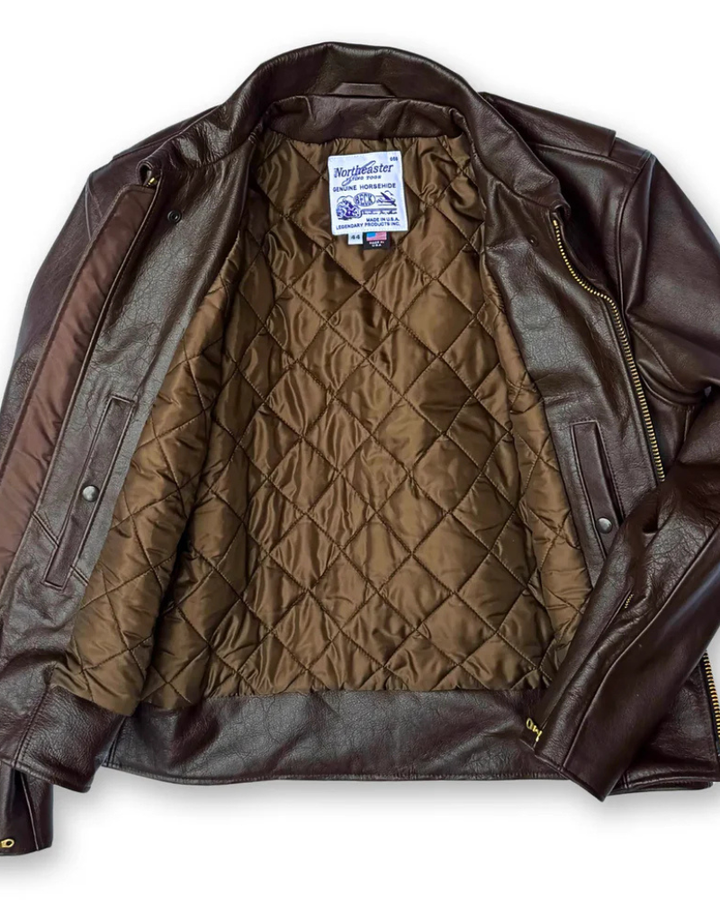
The peacoat and the leather motorcycle jacket are two solutions to the same cold-weather question. Wool wins on warmth-for-weight, holds heat when damp, and costs less, making it ideal for cold, slow days. Leather wins on wind-tightness at speed, water shedding, and grit resistance, and it ages into a patina wool never will. That is why heritage-minded riders often keep both. Our look at the BECK Northeaster shows the leather side of that same American tradition.
Wearing the peacoat today
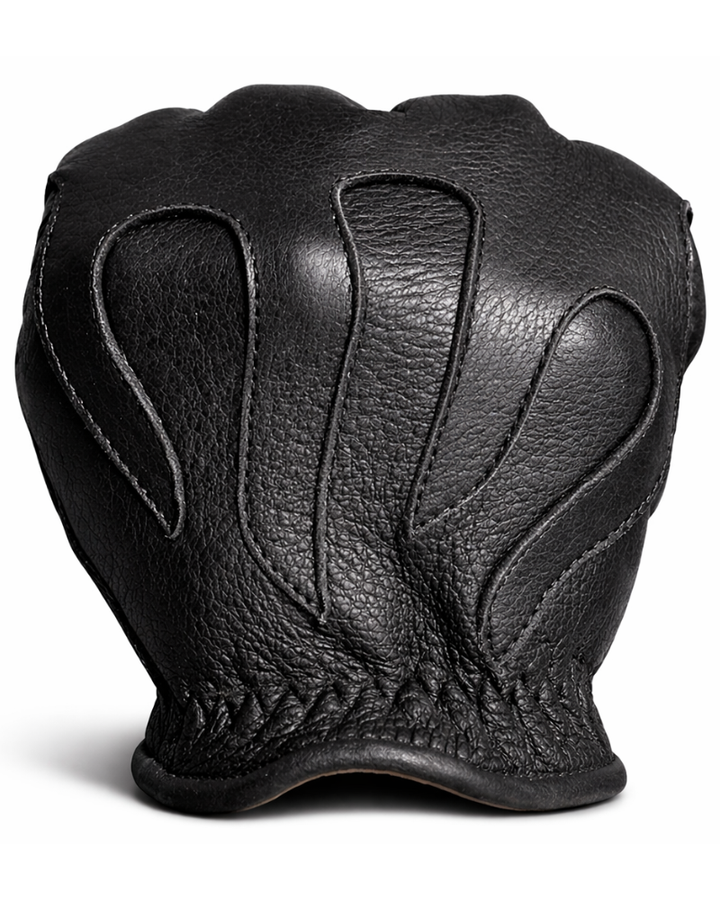
If you ride cold mornings around town, a peacoat still earns its place. Layer it over a flannel or sweater, flip the collar up against the wind, and close the gaps at your hands with a pair of deerskin gauntlets so the warmth the wool traps does not leak out at the wrists. It is a coat with a real story, worn by people who worked in the cold long before it was a style. Explore the rest of that tradition in our motorcycle gear collection.
Frequently asked questions
- What is a peacoat?
- A peacoat is a short, double-breasted wool coat first issued to sailors in European and American navies. It uses heavy melton wool, a broad convertible collar that folds up against wind and spray, wide overlapping front panels for a double layer of warmth across the chest, and anchor-stamped buttons. The design was built to keep deck sailors warm in cold, wet, windy conditions, which is exactly why it later appealed to riders.
- Why did motorcycle riders adopt the peacoat?
- Riders adopted the peacoat because it solved a cold-weather problem with heritage credibility. Heavy melton wool blocks wind and holds warmth even when damp, the double-breasted front doubles the insulation over the chest, and the tall collar shields the neck. It came out of military surplus at low cost, carried an honest working-class story, and looked right on a bike without pretending to be a race jacket. For town riding and cold commutes, it made sense.
- Is a peacoat good for motorcycle riding?
- A peacoat is a solid choice for slow, cold, around-town riding, and a poor choice for highway or protection-focused riding. The heavy wool blocks wind and holds warmth, and the short cut clears the seat. But wool is not abrasion gear, the loose body can catch air at speed, and there is no armor. Treat it as a cold-weather town coat with heritage, not as crash protection, and pair it with real gloves for the hands.
- What is the difference between a peacoat and a leather motorcycle jacket?
- A peacoat is heavy wool built for cold and wind, while a leather motorcycle jacket is hide built for wind and abrasion. The peacoat wins on warmth-for-weight and heritage looks, holds heat when damp, and costs less. The leather jacket wins on wind-tightness at speed, water shedding, and grit resistance, and it ages into a patina. Many riders own both: wool for cold, slow days around town, leather for faster miles and harder weather.
- Does wool keep you warm on a motorcycle?
- Heavy melton wool does keep you warm on a motorcycle, and it has one edge over many fabrics: it still insulates when damp. That is why navies used it on wet, cold decks. On a bike, the dense weave slows wind and traps body heat, and the double-breasted peacoat front stacks two layers over your core. The limit is wind at high speed, where a looser wool coat lets air in at the hem and cuffs, so wool suits slower, colder rides best.
- Can you wear a peacoat with a motorcycle vest?
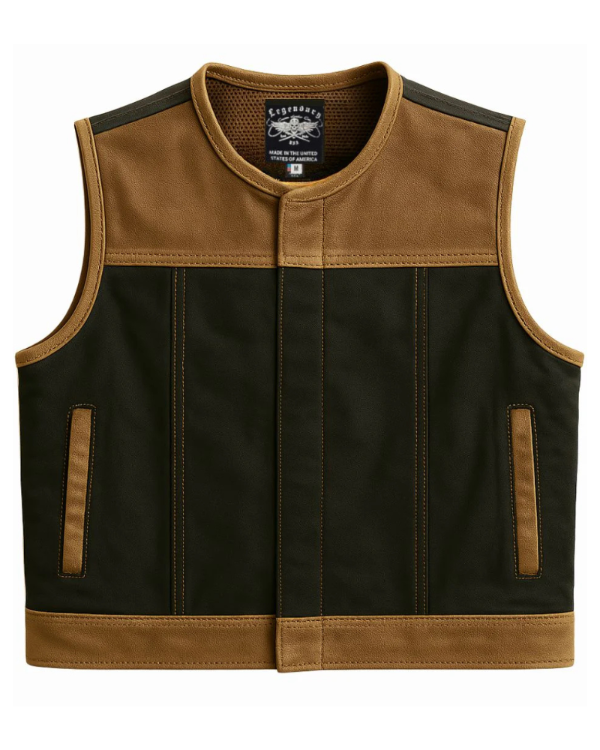
- You can layer a leather or denim motorcycle vest under a peacoat for extra core warmth and to carry your patches, though the peacoat's slim double-breasted front leaves less room than a boxy jacket. A better everyday combination is a peacoat over a flannel or sweater with the vest worn on milder days. Either way, close the wind gaps at the wrists with gauntlet gloves so the warmth the wool traps does not escape at your hands.
The peacoat never set out to be motorcycle gear. It set out to keep sailors warm in the worst weather the ocean could throw at them, and it did that so well that generations of working people and riders adopted it. That is the heart of American riding culture: taking honest, hard-working gear and making it your own. Worn for cold town miles, the peacoat still holds up its end of the bargain.