

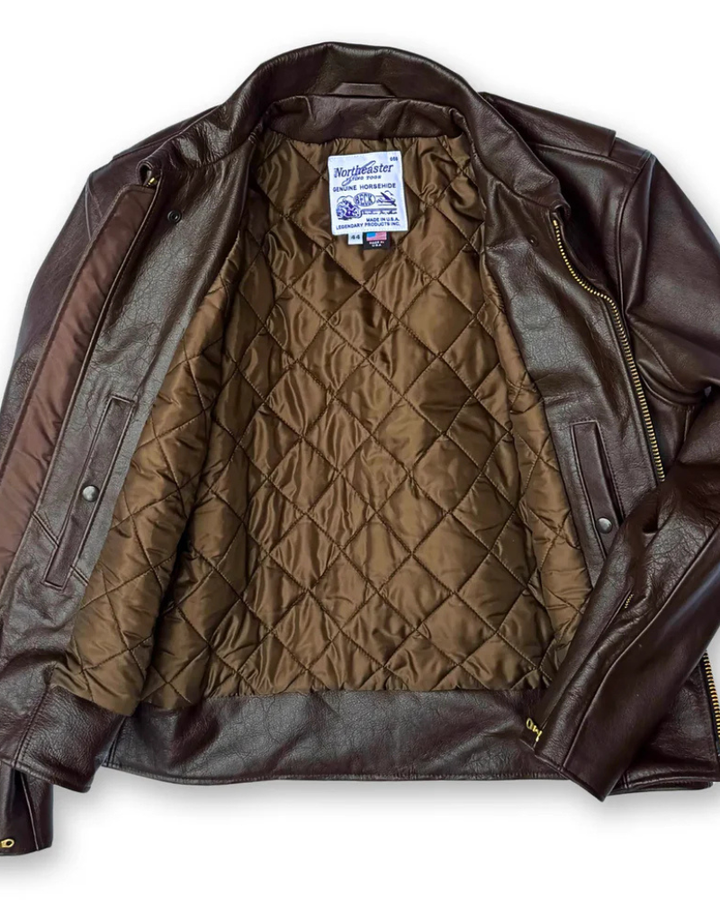
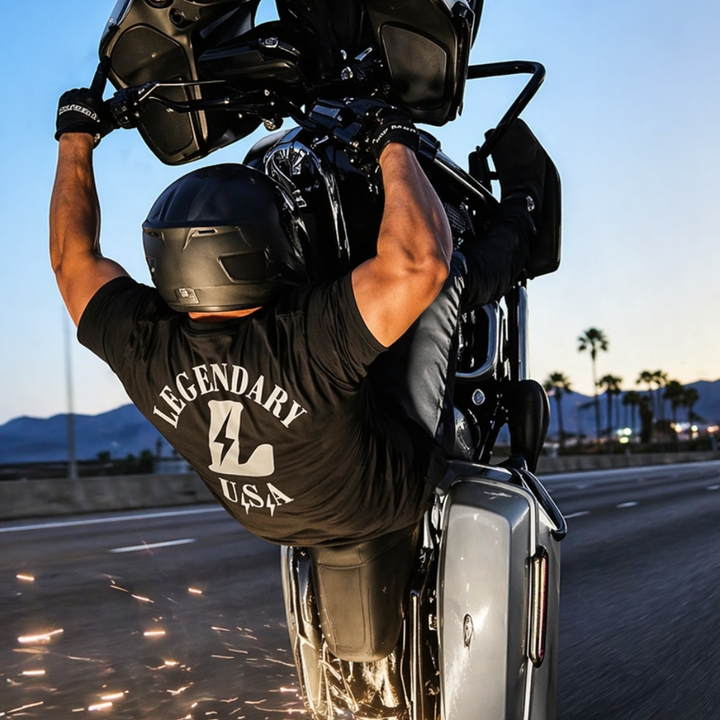


There are motorcycle jackets that follow trends, and there are motorcycle jackets that define eras. BECK Northeaster Flying Togs belongs to the second category — a pre-war American institution forged from horsepower, grit, and the kind of craftsmanship that refuses to die quietly.
For decades, the BECK name lived in the shadows of its own legend, whispered about on forums, passed around in collectors’ circles, and worn by riders who knew the difference between heritage and hype. Today, BECK Northeaster Flying Togs is emerging from the past — rebuilt, restored, and roaring back to life the same way a forgotten WWII aircraft gets pulled from a hangar and returned to the skies.
This is not nostalgia. This is a resurrection.
Table of Contents
- What Is BECK Northeaster Flying Togs?
- The Origins: Leather Togs, Flying Togs & Pre-War Motorcycle Culture
- The Jacket That Defined a Generation: The D-Pocket Revolution
- Why Horsehide Still Reigns Supreme
- The Warbird Analogy: A Restoration, Not a Reinvention
- Modern Craftsmanship Meets Historic Design
- How BECK Compares to Today’s Big Brands
- Who Is the BECK Rider Today?
- Why BECK Is Poised for a Massive Revival
- Final Thoughts: When American Icons Return, the Industry Shifts
1. What Is BECK Northeaster Flying Togs?
BECK Northeaster Flying Togs was one of America’s earliest and most respected motorcycle jacket lines, dating back to the 1930s and 1940s. These jackets were built for real riders — long before motorcycle jackets were fashion pieces and long before imported fast-fashion leather flooded the market.
What set BECK apart wasn’t marketing. It was design and materials:
- Heavyweight U.S. horsehide
- Functional D-pocket layouts
- Distinct curved coin pockets predating later “iconic” designs
- Wide belts and strong brass hardware
- Chin straps, storm flaps, and linings made for real Northeastern weather
BECK didn’t borrow from biker culture. It helped create it. Today, through the Legendary USA BECK Northeaster Flying Togs collection, that legacy is back on the road.
2. The Origins: Leather Togs, Flying Togs & Pre-War Motorcycle Culture
Before “vintage-style” was a thing, BECK and related labels like Leather Togs and Flying Togs were outfitting riders, dispatchers, and early motorcycle police units. These weren’t weekend hobbyists. Motorcycles were transportation, work tools, and lifelines.
In the 1930s and 1940s:
- Motorcycles were cheaper than cars.
- Rural roads were rough, and leather was armor.
- Courier riders and servicemen needed gear that could handle weather, crashes, and abuse.
The leather jacket as we know it came out of that world. It wasn’t designed for style — it was designed for survival. BECK was there at the ground level, producing jackets that would later become templates for the entire industry.
3. The Jacket That Defined a Generation: The D-Pocket Revolution
One of the most important designs in the BECK lineup was the D-pocket jacket, often referenced as the Lot 333 style. Introduced around the early 1940s, it’s widely considered one of the earliest true American D-pocket motorcycle jackets.
D-Shaped Map Pocket
The oversized D-shaped pocket wasn’t a fashion statement. It was a practical storage solution for maps, tools, and gloves — crucial before tank bags and modern luggage.
Curved Coin Pocket
BECK’s distinctive coin pocket with its unique curvature and corner rivets predates later designs from more widely known brands. Collectors still obsess over these details because they mark genuine early-era innovation.
Belted Waist & Asymmetrical Front
The wide belt and asymmetrical front zip weren’t random aesthetic choices. They reduced wind intrusion, improved comfort in a seated riding position, and added a second layer of protection across the chest.
Chin Strap & Storm Protection
Before full-face helmets and modern wind protection, a proper chin strap and storm flap could be the difference between a tolerable ride and a miserable one. BECK jackets were designed with that in mind. You can still see this DNA in the modern BECK D-pocket jackets we offer today.
4. Why Horsehide Still Reigns Supreme
If cowhide is the standard, horsehide is the inheritance. BECK originally used heavyweight horsehide for good reasons:
- Higher abrasion resistance: Denser fiber structure means more protection if you go down.
- Natural water resistance: Horsehide sheds water better than many standard cowhides.
- Slow, powerful break-in: It doesn’t melt onto you in a week. It earns its patina over years of real use.
- Longevity: A well-cared-for horsehide jacket can easily outlast its owner.
There’s a reason so many wartime bomber jackets and early motorcycle jackets used horsehide. It wasn’t a boutique option — it was the best material available for serious leather gear. The modern BECK Northeaster Flying Togs line keeps that tradition alive with heavyweight American horsehide that feels more like equipment than clothing. For the deeper case, see our horsehide vs. cowhide guide.
5. The Warbird Analogy: A Restoration, Not a Reinvention
The comeback of BECK Northeaster Flying Togs is a lot like pulling a WWII fighter plane out of storage, restoring it, and flying it again.

Both stories have the same beats:
- Born in an era when engineering came before marketing.
- Forgotten for decades as the world moved on.
- Rediscovered by people who still care about how things are built.
- Returned to working condition, not as museum pieces, but as functional machines.
When a restored warbird roars back into the sky, you don’t change the shape of the wings to be trendy. You keep what worked and bring it back to spec. The same goes for BECK. The goal isn’t to “modernize” the look. The goal is to rebuild the jacket faithfully, using today’s best leather and construction standards while keeping the original geometry and attitude intact.
6. Modern Craftsmanship Meets Historic Design
In its modern form, BECK Northeaster Flying Togs is produced with a level of detail that honors its original era while benefiting from modern consistency and quality control. Key features of the revival builds include:
- Heavyweight U.S. horsehide cut to historically accurate patterns.
- True-to-period pocket layouts, including the D-pocket and curved coin pocket.
- Vintage-style hardware chosen to echo original metalwork.
- Quality linings reminiscent of older cotton plaids, built for real riding weather.
- Reinforced seams and stress points for longevity on the road.
This isn’t a reinterpretation. It’s a continuation. The design language remains pre-war; the craftsmanship meets modern expectations.
7. How BECK Compares to Today’s Big Brands
Most modern leather jackets are built for looks first and riding second. BECK sits in a different category — closer to historical reproductions and serious rider gear than to fashion pieces.
BECK vs. Mass-Market Leather Jackets
- Mass-market jackets are often lighter, thinner, and treated as seasonal fashion.
- BECK uses heavyweight horsehide, thick belts, and rugged construction intended for long-term wear and crash resistance.
BECK vs. Other Heritage Brands
- Schott: Legendary in its own right, but more widely produced and often more modernized in silhouette. BECK leans harder into pre-war geometry and D-pocket heritage.
- Vanson: Built like tanks and superb for modern riding, but more contemporary in design. BECK feels like stepping directly into the 1930s–40s.
- UK/European heritage brands: Great in their lane, but BECK is unmistakably American — from design language to leather attitude.
If you want a jacket that looks like a costume, BECK isn’t it. If you want a jacket that feels like equipment and carries historical weight, that’s where BECK shines.
8. Who Is the BECK Rider Today?
BECK isn’t designed to appeal to everyone — and that’s the point. The modern BECK rider usually:
- Values American-made gear and traditional craftsmanship.
- Wants leather that actually protects, not just drapes.
- Appreciates the history of early motorcycle culture.
- Prefers products that get better over years, not months.
- Is willing to break in serious horsehide because they plan to keep it.
Owning a BECK jacket is less about chasing a trend and more about joining a lineage. It’s something you can use hard, maintain, and eventually hand down.
9. Why BECK Is Poised for a Massive Revival
Riders and enthusiasts are getting tired of disposable gear. People want:
- Fewer, better things.
- Real leather, not bonded mystery hide.
- Traceable heritage and real stories, not made-up brand lore.
BECK Northeaster Flying Togs checks all three boxes. It has:
- Historic significance: One of the early American motorcycle jacket lines.
- Serious construction: Horsehide, D-pocket designs, belted waists, and rider-focused layouts.
- Modern execution: Produced today with tight quality standards.
For riders who want gear that feels like it could have come off a 1940s assembly line — without giving up modern consistency — BECK is an obvious answer.
10. Final Thoughts: When American Icons Return, the Industry Shifts
The return of BECK Northeaster Flying Togs isn’t just a feel-good heritage story. It’s a reminder of what motorcycle gear used to be — and what it still can be when a brand refuses to cut corners.
In an era of shortcuts and compromises, BECK stands for something simple:
- Make it right.
- Make it tough.
- Make it to last.
- Make it in the USA.
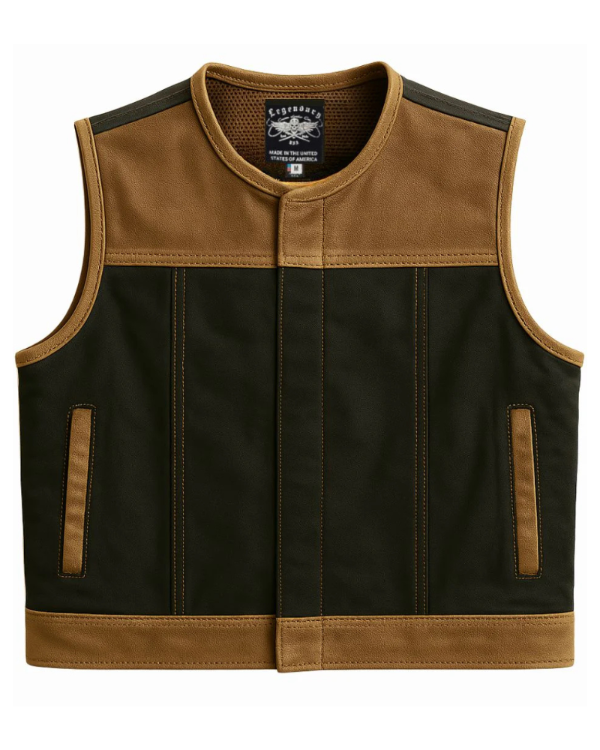
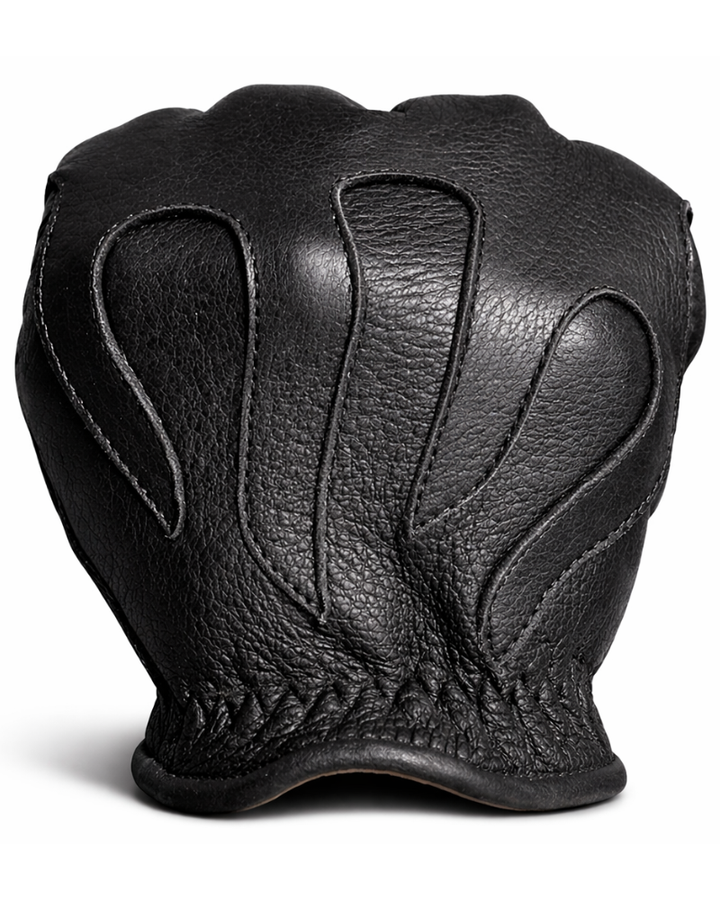
If you’re looking for a jacket that carries history on its back and has the build quality to handle real miles, take a closer look at the BECK Northeaster Flying Togs collection at Legendary USA. Or read our companion piece on why BECK horsehide jackets and vests are worth the investment.
Some legends don’t fade. They just wait for the right time to come back.
Article originally published December 2025. Updated May 2026 with verified collection links and image alt text.