

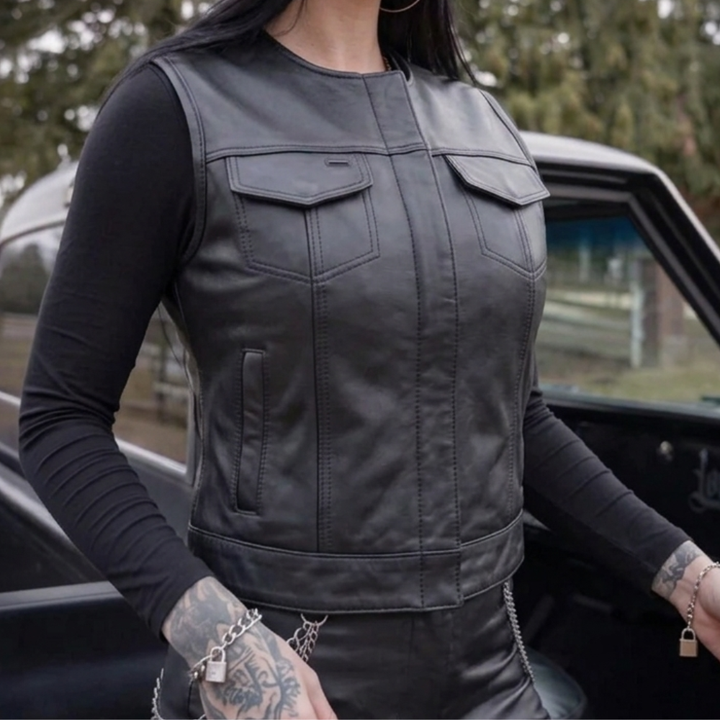


The rally vest is the most personal garment in American motorcycling. It is a wind-blocking layer that solves a real problem in August heat, and it is the surface where a rider records decades of miles in patches, pins, and rockers. No other piece of riding gear does both jobs, which is why the vest — not the jacket — became the thing riders carry through a lifetime of rallies.
Legendary USA has built American-made vests for 25 years, and the ones that come back for repair tell the story better than any catalog could: worn thin at the shoulders, stitched over three times at the same patch corner, owners with no interest in replacing them.
Why the Vest, and Not the Jacket

The practical answer is heat. American rally season runs through the hottest weeks of the year — Sturgis in early August, Laconia in June, Daytona in March — and a full leather jacket is a lot of garment to wear across a South Dakota afternoon. A vest blocks wind where it matters most, across the chest and core, and leaves the arms open. It comes off at a gas stop in ten seconds.
The cultural answer runs deeper. Riding clubs in the decades after World War II needed a garment that could display affiliation clearly and durably, and the vest solved it. A flat back panel reads from thirty feet across a parking lot, and a vest lasts long enough to be worth committing to.
What a Rally Vest Carries
A rally vest is a record. The back panel usually holds the largest patch — a club center patch for members, or a favorite event patch for independent riders. Rally rockers stack around it, one per year. The front carries vendor pins, state patches, memorial patches for riders who are gone, and oddities picked up at a swap meet in Deadwood.
There is a real distinction worth drawing. A club vest carries colors, arranged by rules that club sets about who may wear what. A rally vest is personal — it collects events the rider actually attended. Both are built the same way. What differs is the back panel and who decides what goes on it.
What Makes a Vest Patch-Ready
Not every vest takes patches well. A one-piece back panel with no center seam is the single most important feature, because a seam forces you to sew across a raised ridge and can pull a large back patch out of square. Beyond that, look for leather or denim heavy enough to hold a patch flat without puckering.
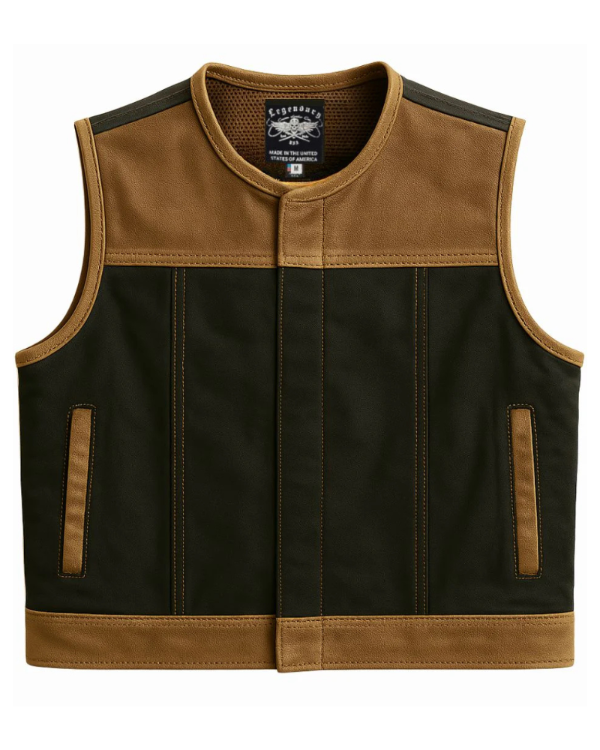
The Revolution denim motorcycle vest is the lighter, cooler option riders choose for August rally weather; the Made in USA motorcycle vest collection covers leather alongside it.
The honest comparison: denim breathes better and weighs less, leather blocks more wind and ages with more character. Denim is the smarter pick for a hot rally; leather is better for cool mornings and cross-country miles. Neither is impact protection, and neither replaces a jacket.
A Garment Built to Outlast the Events on It
Chris started Legendary USA in 2001 on a simple premise: American riders would rather buy something once. Stitching has to hold through years of patches added and removed. Hardware has to survive a few thousand snaps. None of that shows up in a product photograph. It shows up fifteen years later, when the vest is still the thing the rider reaches for.
Frequently Asked Questions
- Why do motorcycle riders wear vests at rallies?
- Riders wear vests at rallies for two reasons that reinforce each other. Practically, a vest blocks wind across the chest and back without adding sleeves that trap heat during August rally weather, and it goes on and off in seconds at a stop. Culturally, the vest is the surface that carries a rider's patches, pins, and rally rockers. Over years of riding, it becomes a record of where someone has been and who they ride with, which is why riders keep the same vest for decades.
- What is the difference between a rally vest and a club vest?
- A club vest carries a club's colors, typically a top rocker, center patch, and bottom rocker, and its layout follows that club's rules about who may wear what. A rally vest is personal rather than organizational. It collects event patches, state pins, memorial patches, and rally rockers from places the rider has actually been. The garments are often built the same way. The difference is what goes on the back and who decides.
- What kind of vest is best for sewing patches on?
- The best patch vest has a one-piece back panel with no center seam, because a seam forces you to sew across a raised ridge and can distort a large back patch. Look for a flat, uninterrupted back, leather or denim heavy enough to hold a patch without puckering, and minimal hardware across the shoulders. Legendary USA builds patch-friendly vests in both leather and denim for exactly this reason. Sew patches by hand or with a heavy-duty machine rather than relying on adhesive backing.
- Should a motorcycle vest be tight or loose?
- A motorcycle vest should close comfortably over the layers you actually ride in, not over a bare T-shirt. Most riders size so the vest sits flat across the chest with the snaps or zipper closed while wearing a base layer and a mid layer. Too tight and it pulls open at the chest in a riding position. Too loose and it flaps in highway wind, which is both loud and hard on the leather over time.
- Is a leather or denim vest better for a summer rally?
- Denim is the cooler choice for a hot rally and leather is the better wind blocker. Denim breathes, weighs less, and takes patches well, which makes it a common August pick. Leather blocks more wind, holds its shape longer, and takes on character with age, but it runs warmer in direct sun at a standstill. Many riders own both and choose by forecast. Neither material provides impact protection, and neither substitutes for a jacket.
- How long should a motorcycle vest last?
- A well-built leather or denim vest, cared for reasonably, is a decades-long garment rather than a seasonal one. There is no motor, no lining to blow out, and no zipper doing structural work. What wears is stitching at stress points and hardware at the snaps, and both are repairable. That longevity is why the vest became the patch-carrying garment in American riding culture, because riders needed something that would outlast the events recorded on it.
The Bottom Line
The rally vest earned its place by being useful first and meaningful second. It solves the August heat problem, carries the record of where a rider has been, and built correctly outlasts the events sewn onto it. If you are starting one this season, choose a one-piece back panel and buy the material that fits your climate. Read more on the denim motorcycle vest and its American heritage, or see our roundup of the best vests for rally season.