
A blood chit is a cloth or paper notice carried by military aircrew, printed with a national flag and a message in local languages promising a reward to any civilian who helps a downed airman reach safety. American aircrew have carried them since 1941, and the Department of Defense still runs a blood chit program today. This guide covers what they said, what they were worth, and how the four best-known American chits differ.
Legendary USA carries four reproduction silk blood chits, one from each of the conflicts that defined the program: the Flying Tigers chit of 1941, the Korean War chit, the Vietnam era chit, and the Persian Gulf chit of Desert Storm. This guide is the history behind them, checked against museum and archive records rather than repeated from collector folklore.
Where the popular account and the documented record disagree, we say so. There is a fair amount of blood chit lore in circulation that museums do not support, and a history guide that repeats it is not worth reading.
What a Blood Chit Actually Is

The Joint Chiefs of Staff define it in one sentence. In the current personnel recovery instruction, a blood chit is "a small sheet of material depicting an American flag and a statement in several languages to the effect that anyone assisting the bearer to safety will be rewarded."
That is the whole idea. An airman who goes down in country where he does not speak the language cannot negotiate for his life. The chit negotiates for him. It identifies him, it asks for help in words the finder can read, and it makes a promise his government intends to keep.
The word "chit" is Anglo-Indian, from the Hindi chitthi, a small note recording a debt to be paid. That is exactly what a blood chit is: a promissory note. The "blood" half of the name is less settled. The Smithsonian's National Museum of American History notes only that "some sources suggest" it refers to the physical harm a downed pilot faced, and no source we could find fixes a date or place for the coinage. Anyone who tells you precisely when the term was coined is guessing.
Before the Airplane: Washington's Pass of 1793
The document usually cited as the ancestor of the blood chit predates powered flight by 110 years.
On 9 January 1793, the French balloonist Jean-Pierre Blanchard prepared to ascend from Philadelphia on the first manned balloon flight in North America. He had no way of knowing where he would come down and spoke almost no English. President George Washington handed him a signed pass.
The pass is real and its full text survives. Calling it the first blood chit is an interpretation rather than a fact, and archivists hedge it accordingly: the National Archives writes that it was "possibly the first recorded usage of such a document." We treat it the same way. It is the earliest recognizable ancestor of the idea, not the first blood chit.
Goolie Chits: The British Version
The practice that led directly to the American blood chit was British, and it had a blunter name.
Royal Flying Corps and later RAF crews operating over India, the North-West Frontier and the Middle East carried what airmen called a "goolie chit." The Royal Air Force Museum describes it as "a message of vital importance written in many languages which promised a reward for anyone who aided an airman trapped behind enemy lines," and dates the practice from the 1920s to the present day. The nickname, as the RAF Museum's own object notes put it delicately, referenced the authorities' desire that the airman be returned alive and in one piece.
The Imperial War Museum holds a Second World War example issued in South East Asia Command: a Union Jack above the same promise in seventeen languages.
You will often see a claim that the First World War goolie chit was printed in four languages. That figure traces back to a memoir of service on the North-West Frontier in the 1930s, not to a WWI document, and no museum or archive we could reach quotes verbatim WWI-era chit text. We are not going to put a number on it.
The Flying Tigers Chit, 1941
The most recognizable blood chit in American history was not issued by the American government at all.
The American Volunteer Group, the Flying Tigers, were civilian American pilots flying P-40s for the Chinese Air Force against Japan from 1941, before the United States formally entered the war. Their chits were issued by the Aviation Commission of the Republic of China, whose characters appear on the cloth alongside a serial number.
The design is spare and famous: white silk, the Nationalist Chinese flag across the top, black Chinese characters beneath. The Smithsonian's National Air and Space Museum holds Claire Chennault's own example, numbered 0001, measuring roughly 27 by 21 centimeters.
The Chinese text reads 來華助戰洋人,軍民一體救護. Museums render it in English as:
The practice was older than the AVG. The National Archives records that foreign pilots advising the Chinese Air Force were issued a rescue patch called a hu chao from 1937.
Sewn Into the Jacket
Aircrew flying over Asia commonly had chits sewn to their flight jackets. The surviving artifacts show it done two ways. Chennault's own A-2 at the National Air and Space Museum carries the chit sewn inside, on the right side of the lining. A 23rd Fighter Group A-2 in a dealer collection has one stitched to the lining as well. Others were carried on the outside back panel.
There is a wartime propaganda leaflet that settles the intent. American psychological warfare leaflet CA-115b, airdropped over China, shows an aviator opening his flight jacket to display his chit to a Chinese farmer. The companion leaflet, CA-114, reproduces a chit in color under the instruction to recognize the American flag. The chit only worked if civilians knew what it was, so the Army Air Forces taught them.
If you want the jacket that carries one properly, the Cockpit USA Flying Tigers Horsehide A-2 is the closest thing to the original in our catalog. Cockpit USA is a separate manufacturer we carry as an authorized dealer, and their military reproductions are covered in the Cockpit USA jackets guide.
The Second World War Program: Scale and Reward
Once the United States entered the war the blood chit became a system. Flight crew survival kits carried chits printed across roughly fifty languages over the life of the program, covering European, North African and Asian theaters.
That fifty is a program total, not a count on any one chit, and this is where a lot of collector copy goes wrong. Individual documented chits carry anywhere from one language to seventeen. The Air Mobility Command Museum alone holds China-Burma-India chits in one language, in five languages, and in seventeen.
The rewards were real and they were paid at scale. Standard compensation ran to roughly the equivalent of fifty dollars in local currency in the European theaters and a hundred dollars in China-Burma-India. Some 65,000 people were rewarded for aiding American airmen in Europe alone.
The Serial Number
Most chits carry a number, and the number is the mechanism that makes the promise enforceable. It let a claimant prove which airman he had helped, and as Western Kentucky University's archive notes, it could identify the airman if he did not survive.
Chennault's AVG chit is 0001. The War Department issued its own series prefixed with a W. A 1968 Southeast Asia chit sold at auction carries number 74495S.
What It Traveled With
A blood chit was one item in an evasion kit, not a standalone charm. It went out with a "Pointie Talkie," an illustrated phrase book the airman could point at to make himself understood, and a currency kit of local coins and notes. The Air Mobility Command Museum catalogs one Russian chit together with a phrase card and a fourteen-language pointee-talkee booklet.
Chits Issued Against Friendly Forces
Not every chit was aimed at civilians in enemy territory. The Imperial War Museum holds an American chit printed in English and Russian only, with two American flags, the phrase Ya Amerikanets, "I am American," and instructions telling the airman to memorize the phrase, keep the folder in his left breast pocket, and shout it on meeting Soviet troops. It existed so that Soviet forces would not shoot down American aircrew by mistake during the Operation Frantic shuttle-bombing missions.
Korea: Several Chits, Not One

There is no single Korean War blood chit. The peninsula presented an unusually messy problem, with territory held by North Korean, Chinese, South Korean and United Nations forces at various times, and the chits issued between 1950 and 1953 came in several distinct variants.
The Air Mobility Command Museum holds one carrying the American flag and ten languages: Japanese, Korean, Chinese, German, Burmese, French, Hindi, Russian, Urdu and English. Its text reads:
The Smithsonian catalogs a second Korean War era chit oriented toward Europe and the Middle East, in twelve languages, under a 48-star flag. The United States Army Transportation Museum holds a third type, catalogued as a US, UN and ROK chit, worn during the war by Lieutenant Colonel C. Miguel Duncan Jr. A fourth variant is a purely embroidered flag patch carrying no text at all.
Vietnam: Fourteen Languages and a Number

The Southeast Asia chit is the one most people picture: a broad American flag across the top, dense blocks of type beneath it, a serial number along the bottom edge.
The Air Mobility Command Museum catalogs the Vietnam War chit at fourteen languages. A dated example sold at auction, lithographed in October 1968 and published by the Aeronautical Chart and Information Service, lists them: English, Burmese, Thai, Laotian, Cambodian, Vietnamese, Malayan, Indonesian, Chinese, Chinese in modern script, Tagalog, Visayan, French and Dutch. That chit measures 10 by 19.75 inches and carries serial number 74495S. Its English text:
Fourteen is the documented figure. Counts of thirteen appear because two of the fourteen entries are the same language in two scripts. Counts of twelve appear in retail listings and we could not source them anywhere.
Language counts also varied within the era. Chits dated 1961 exist in two flavors, one oriented to Asian languages and one to European.
Desert Storm: Four Corners, Payable in Gold

The Gulf War chit of 1990 to 1991 introduced the single cleverest refinement in the program's history.
It carries a serial number in each of its four corners. A downed airman helped by several people could tear off a corner and hand one to each of them, and every holder could redeem his corner separately. One document, four enforceable claims.
Rewards in that theater were offered in gold. American chits promised gold to anyone returning a coalition pilot to friendly forces, and RAF aircrew were issued silk chits accompanied by gold sovereigns.
Are Blood Chits Still Issued? Yes
The blood chit is not a historical artifact. It is current doctrine.
Chairman of the Joint Chiefs of Staff Instruction 3270.01C, the personnel recovery instruction dated 30 June 2019, tasks the Joint Personnel Recovery Agency to manage the Department of Defense blood chit program, directs the National Geospatial-Intelligence Agency to produce blood chits against combatant command requirements, and requires geographic combatant commands to establish theater blood chit programs.
The CIA Museum holds a modern example used in Afghanistan. It is printed on Tyvek rather than silk, roughly 43 by 28 centimeters, with the American flag over the same promise in multiple languages. The Royal Air Force Museum says its own goolie chit has been saving RAF lives from the 1920s until the present day.
What ended was silk. The four chits in this guide represent the era when these things were printed on cloth, which is exactly why they are collectible now.
Materials: How to Date a Chit by What It Is Made Of
Blood chits were made in leather, cotton, silk and rayon, and the material tracks the period.
- Leather. Used in the China-Burma-India theater, where a chit might need to survive months in the field.
- Silk. The classic wartime material. Light, foldable, quiet, and it does not rustle in a pocket. Chennault's chit is silk.
- Rayon. Adopted as silk supplies tightened during the Second World War. A 1944 to 1945 P-47 pilot's chit at the National Museum of the United States Air Force is rayon.
- Tyvek. The modern issue, and the reason a silk chit now reads as a period piece.
The Four Blood Chits We Carry
All four are reproductions printed on silk, made in the USA, and sold as history you can frame or wear rather than as original artifacts. An original AVG chit is a five-figure auction lot. These are not that, and we are not going to pretend otherwise.
| Chit | Conflict and dates | What defines it | Price |
|---|---|---|---|
| Flying Tigers WWII Style | American Volunteer Group, China and Burma, 1941 to 1942 | Nationalist Chinese flag, Chinese text, issued by the Chinese Aviation Commission rather than the US government | $43.99 |
| Korean War | UN forces, Korean peninsula, 1950 to 1953 | Multi-flag coalition design, issued in several distinct language variants | $43.99 |
| Vietnam Era | USAF, USN and USMC aircrew, Southeast Asia, 1960s to 1975 | Broad American flag, fourteen documented languages, serial number along the bottom | $43.99 |
| Persian Gulf | Coalition aircrew, Desert Shield and Desert Storm, 1990 to 1991 | Serial numbers in all four corners, rewards offered in gold | $43.99 |


All four together are available as the four-piece blood chit collectible set at $135.00, which is the way most people frame them: four chits, fifty years of the program, one wall.
Displaying and Wearing a Blood Chit
Three things people actually do with these.
Frame the set. Four chits in one frame reads as a timeline rather than four separate souvenirs. Mount them chronologically, left to right, and let the change in flag design and language density tell the story on its own. Use UV-filtering glass. Silk fades.
Sew one into a jacket. This is the historically correct thing to do with a blood chit, and it is why they were made in cloth. Inside the lining follows Chennault's own jacket. On the back panel follows the other documented practice. Either is defensible. Have it done by someone who sews leather for a living, not on a home machine.
Carry one. Folded in a breast pocket is exactly how the originals were carried, and the instructions on the English and Russian chit at the Imperial War Museum specified the left breast pocket.
For the doctrine behind the modern program, the Joint Chiefs of Staff publish CJCSI 3270.01C, Personnel Recovery, which defines the blood chit and assigns responsibility for producing them.
Frequently Asked Questions
What is a blood chit?
A blood chit is a cloth or paper notice carried by military aircrew, printed with a national flag and a message in local languages promising a reward to anyone who helps a downed airman reach safety. The Joint Chiefs of Staff define it as "a small sheet of material depicting an American flag and a statement in several languages to the effect that anyone assisting the bearer to safety will be rewarded."
What does the Flying Tigers blood chit say?
The Chinese text is rendered by the Smithsonian and the National Archives as "This foreign person has come to China to help in the war effort. Soldiers and civilians, one and all, should rescue, protect, and provide him medical care." It was issued by the Aviation Commission of the Republic of China, not by the United States government, because the American Volunteer Group were civilian volunteers flying for China before America entered the war.
Why is it called a blood chit?
The word chit comes from the Hindi chitthi, a small note recording a debt to be paid, which is precisely what the document is. The origin of the "blood" half is not settled. The Smithsonian says only that some sources connect it to the physical harm a downed airman faced, and no archive we could find fixes a date for the term.
Were the rewards actually paid?
Yes, and at scale. Standard rewards during the Second World War ran to roughly fifty dollars equivalent in local currency in European theaters and a hundred dollars in the China-Burma-India theater. Around 65,000 people were rewarded for helping American airmen in Europe. The serial number on each chit is what made a claim provable.
How many languages were on a Vietnam blood chit?
Fourteen, according to the Air Mobility Command Museum and a dated 1968 example: English, Burmese, Thai, Laotian, Cambodian, Vietnamese, Malayan, Indonesian, Chinese in two scripts, Tagalog, Visayan, French and Dutch. Counts of thirteen come from treating the two Chinese scripts as one language.
Are blood chits still issued today?
Yes. The Department of Defense runs an active blood chit program under CJCSI 3270.01C, managed by the Joint Personnel Recovery Agency with production by the National Geospatial-Intelligence Agency. Modern chits are printed on Tyvek rather than silk. The CIA Museum holds one used in Afghanistan.
Are these originals or reproductions?
Reproductions, printed on silk and made in the USA. Original chits, particularly AVG examples with low serial numbers, are serious auction pieces. These are made to be framed, displayed, or sewn into a jacket the way the originals were.
Related Guides
- Cockpit USA Jackets Guide, covering the A-2, G-1 and B-3 military reproductions, including the Flying Tigers A-2.
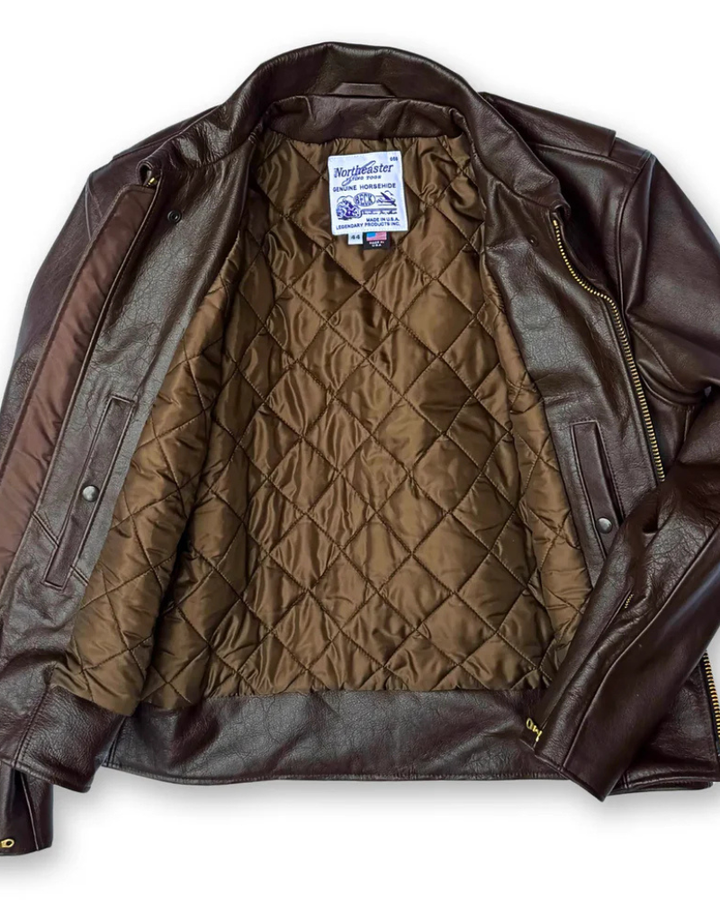
- BECK Northeaster Flying Togs Guide, our house horsehide line and its history since 1928.
- Military collection, patches, insignia and militaria.