

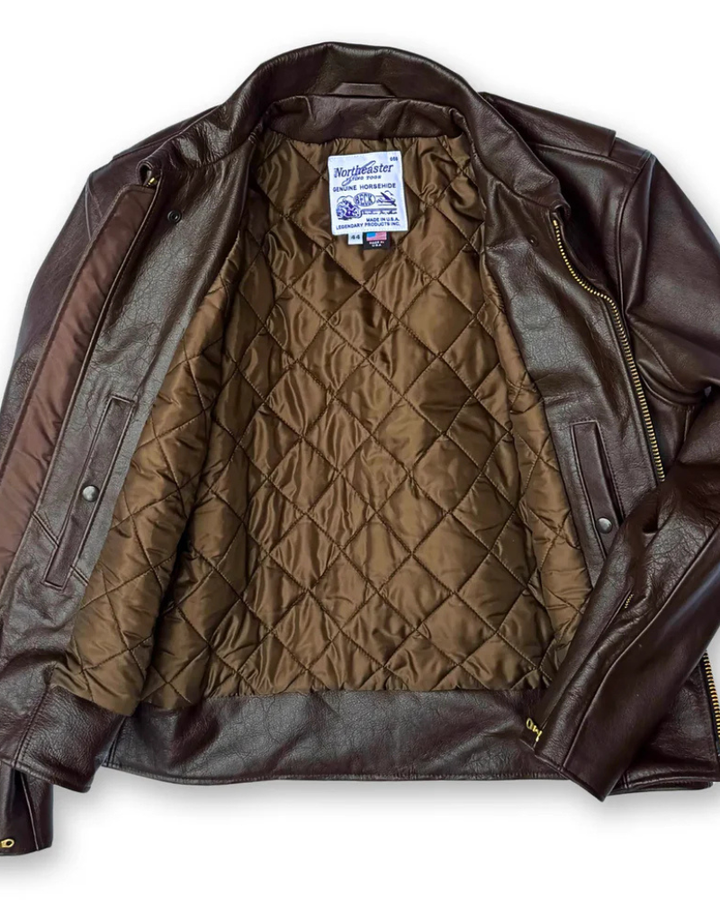
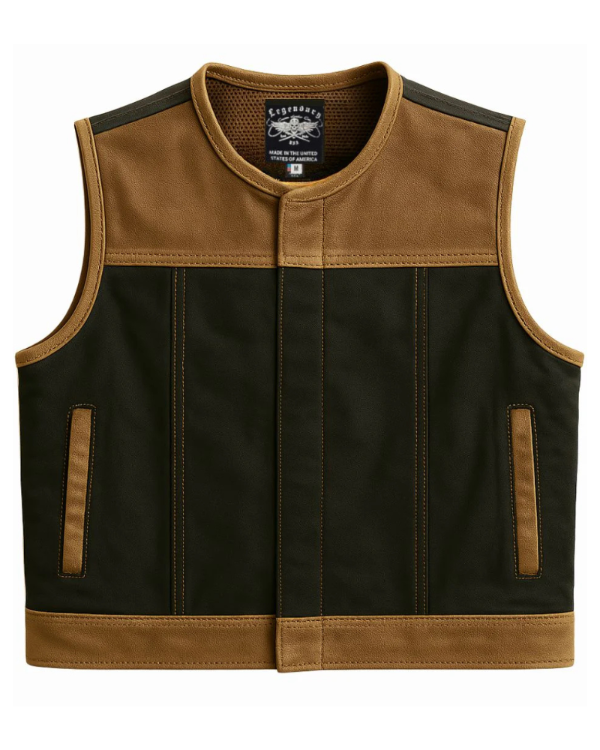
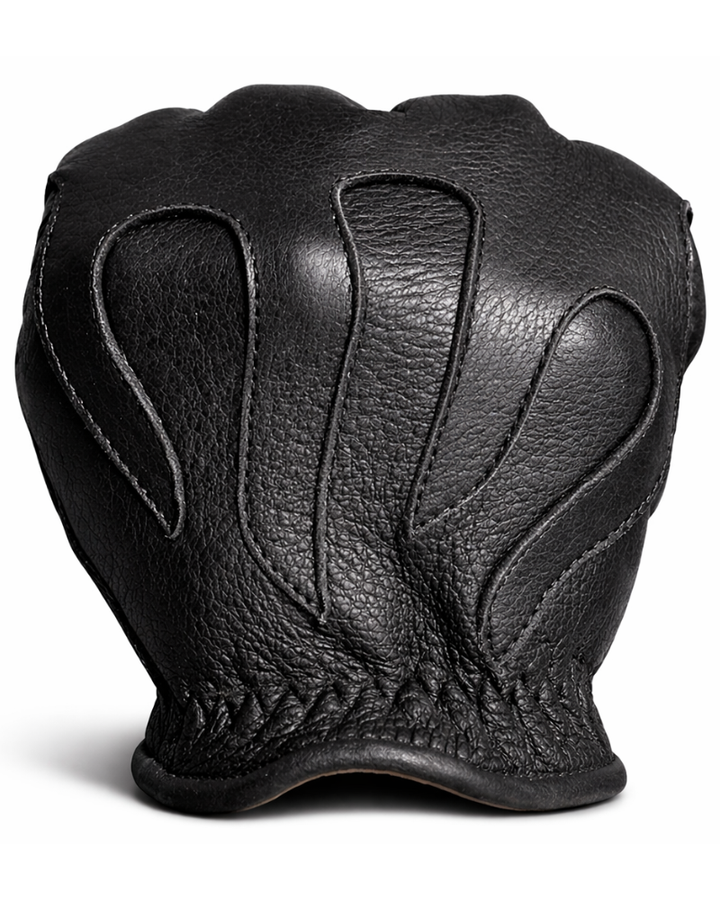

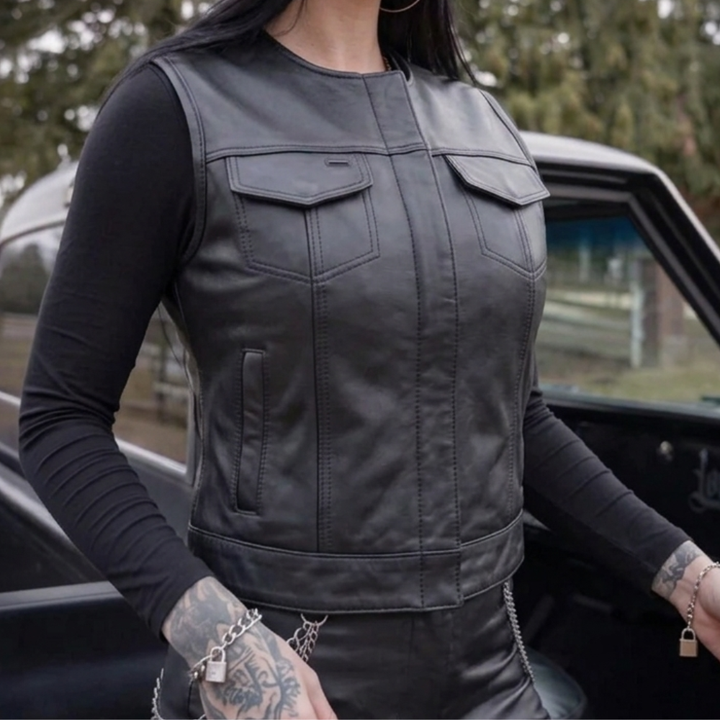


A well-built leather jacket is a long-term investment. Treat one right and it will outlast trends, weather, and everyday hard wear — in fact, the best American-made leather jackets often look better at twenty years old than they did the day you bought them. Treat one wrong and the leather can dry, crack, or stiffen in a single rough season.
The good news: leather care is simple. Below are five core habits we recommend to every customer, gathered from years of helping riders, collectors, and everyday wearers protect their heritage leather jackets.
1. Protect the Leather from Water and Moisture
Avoid wearing your leather jacket in heavy rain or snow whenever you can. If it does get wet, blot — don’t rub — with a clean, dry towel and let the jacket dry naturally at room temperature on a wide wooden hanger. Never use direct heat to speed up drying. Radiators, heat vents, hair dryers, and car defrosters all pull moisture out of the leather faster than the natural oils can rebound, which is what causes leather to crack.
2. Condition the Leather Regularly

Leather is skin. Like skin, it needs moisture to stay soft and supple. We recommend conditioning two to four times a year for jackets in regular rotation, and at every season change for riders. Use a quality leather conditioner formulated for garment leather — Obenauf’s Heavy Duty LP is our long-running favorite for hard-worn riding jackets and boots, and we keep our full lineup at our leather care products collection. Apply a thin coat with a clean cotton cloth, work it in evenly, and let it sit overnight before wearing.
3. Clean the Leather Gently
For routine maintenance, dust the jacket with a soft, dry cloth or a horsehair brush. If it’s soiled, use a barely-damp cloth with a small amount of mild soap and gently spot-clean the affected area. Always test on an inconspicuous spot first. Let the jacket air dry naturally and follow up with conditioner to replace any lost oils. Avoid harsh household chemicals, alcohol-based cleaners, and abrasive sponges — they strip the topcoat finish and can permanently dull the surface.
4. Store the Jacket Properly
When the jacket isn’t in rotation, hang it on a wide wooden or padded hanger in a cool, dry, well-ventilated closet. Avoid wire hangers (they distort the shoulders), plastic garment bags (they trap moisture), and damp basements or attics. If you’re storing seasonal pieces — like a heavy sheepskin B-3 bomber — use a breathable cotton garment bag, condition the leather first, and check on the jacket every few weeks.
5. Repair Damage Promptly
Small problems become big ones quickly. A loose stitch, a popped snap, or a minor scuff is a five-minute fix today and a major restoration in six months. Catch issues early. For repairs beyond your skill level — ripped seams, broken zippers, torn linings, or worn cuffs — turn to a leather specialist rather than a general tailor. We outline what to expect (and what to avoid) in our guide to professional leather gear repair.
Why Quality American-Made Leather Lasts Longer
Care routines matter, but so does the leather you started with. American-tanned hides — particularly horsehide and full-grain cowhide from heritage U.S. tanneries — are denser, oilier, and more resistant to drying out than the corrected-grain or split leathers used in many import jackets. If you’re curious about the differences between the two most popular riding hides, our horsehide vs. cowhide comparison breaks down the durability and break-in characteristics in detail.
Frequently Asked Questions
How often should I condition a leather jacket?
Two to four times per year for normal wear. Riders, working cowboys, and anyone who wears their jacket in dust, sun, or rain regularly should condition every season change. If the leather looks dull, feels stiff, or sounds dry when you flex it, it’s overdue.
Can a leather jacket get wet?
Occasional rain won’t ruin a quality leather jacket. Sustained soaking will. If your jacket gets wet, blot it dry, hang it on a wide wooden hanger, and let it air dry at room temperature. Apply leather conditioner once it’s fully dry to restore the natural oils that water leaches out.
How do you clean a leather jacket without damaging it?
Use a soft, dry cloth for routine dust. For light staining, a barely-damp cloth with a drop of mild soap, applied gently in small circles, is enough. Always air dry, never use heat, and condition afterward. Skip household cleaners, alcohol wipes, and saddle soaps not labeled for garment leather.
What’s the best way to store a leather jacket long-term?
Condition the leather first, then hang it on a wide wooden or padded hanger inside a breathable cotton garment bag in a cool, dry closet. Avoid plastic bags and avoid attics, basements, or unconditioned storage units that swing through extreme temperature and humidity changes.
Will a leather jacket last decades with proper care?
Yes. Quality American-made leather jackets — horsehide, full-grain cowhide, or sheepskin — routinely last 20, 30, even 40+ years with simple, consistent care. Many of our long-time customers are still wearing the same Cockpit USA or BECK jacket they bought in the 1980s, just better broken in.
Need a New Leather Jacket?
If you’re shopping for a jacket worth caring for, browse our men’s Made in USA motorcycle jackets — built from American hides by American hands, with the construction quality that rewards good care.
Article originally published January 2023. Updated May 2026 with expanded care guidance, product recommendations, and FAQ.