



The right gear for year-round motorcycle riders is a small rotation, not a closet: one perforated deerskin glove for warm months, one lined or gauntlet glove for cold ones, a vest that layers over whatever the morning calls for, and a dense leather jacket for the coldest stretch. Legendary USA builds every piece in this roundup in the USA, and each one earns its place by covering a season the others cannot. Here is the four-season rotation and the honest tradeoffs inside it.
The two-glove rotation that covers 30°F to 95°F

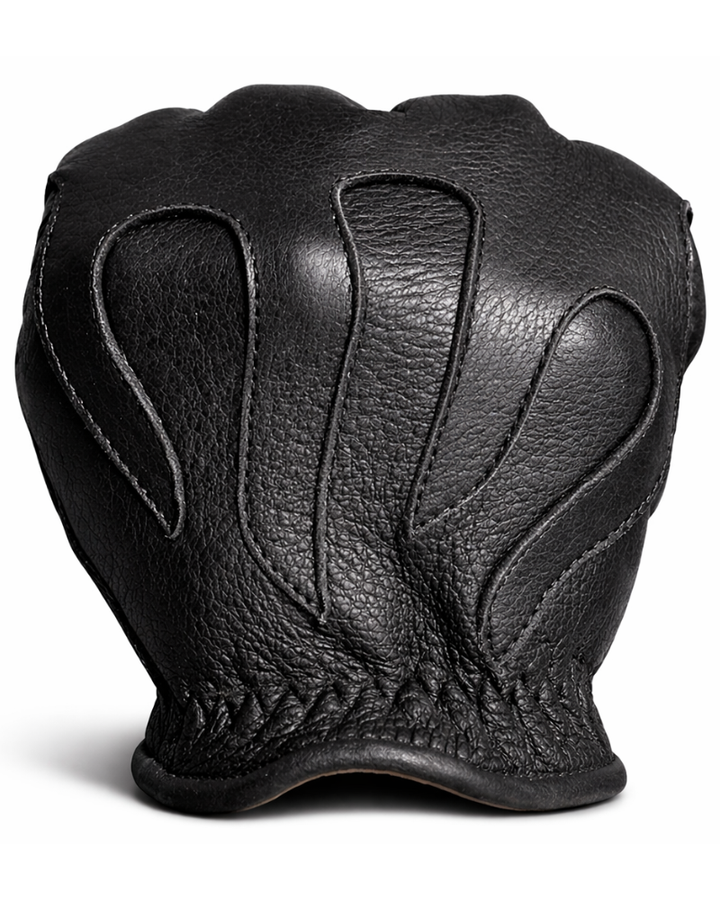
Riders who ride every month need two gloves, not six. The warm-weather glove is the ILL DOZER Outseam Gloves, a perforated short-wrist glove in 100% American Whitetail deerskin. The outseam construction moves every stitch to the outside of the glove, so the palm and fingers are smooth against the skin, which is the single biggest reason long rides stop causing hand fatigue. The perforated top panel moves air, which also means it is not a cold-weather glove, and it should not be treated with water repellent because sealing the perforations defeats the purpose.
The cold-weather glove is the Fleece-Lined Deerskin Gloves, the same American Whitetail deerskin outer with a 3M Thinsulate 40-gram fleece lining rated for the 30 to 50°F range. Size up one from your warm-weather glove to leave room for the lining. Between those two gloves, a year-round rider covers everything from a 35°F November commute to a 95°F August afternoon, and the deerskin in both breaks in to the same hand.
Deerskin versus cowhide is the comparison that makes this rotation work. Whitetail deerskin weighs roughly half what cowhide does at equivalent protection, stays pliable in the cold where cowhide stiffens, and comes back soft after getting wet without conditioning. A cowhide glove rotation would need a heavier winter glove and more care to reach the same range.
Add a gauntlet if you ride the highway in winter
A third glove is optional for most riders and essential for one kind: the year-round highway commuter. At 65 mph in 40°F air, the gap between a short-wrist cuff and a jacket sleeve is where the cold gets in. The Classic Deerskin Gauntlets close that gap with a cuff that covers the wrist and lower forearm, worn over or under the sleeve as conditions call for. They are unlined, which keeps brake feel direct and lets them work as the shell over a thin liner on the coldest mornings.
Short wrist versus gauntlet comes down to how you ride. Short-wrist gloves are faster on and off and fit under any sleeve, which suits in-town riding with frequent stops. Gauntlets are warmer at speed and better for highway miles. A year-round rider who does both keeps a short wrist for most of the year and a gauntlet for the highway months, and the deerskin motorcycle gloves buying guide walks through how the Legendary USA glove line fits together.
One vest that layers from spring to fall
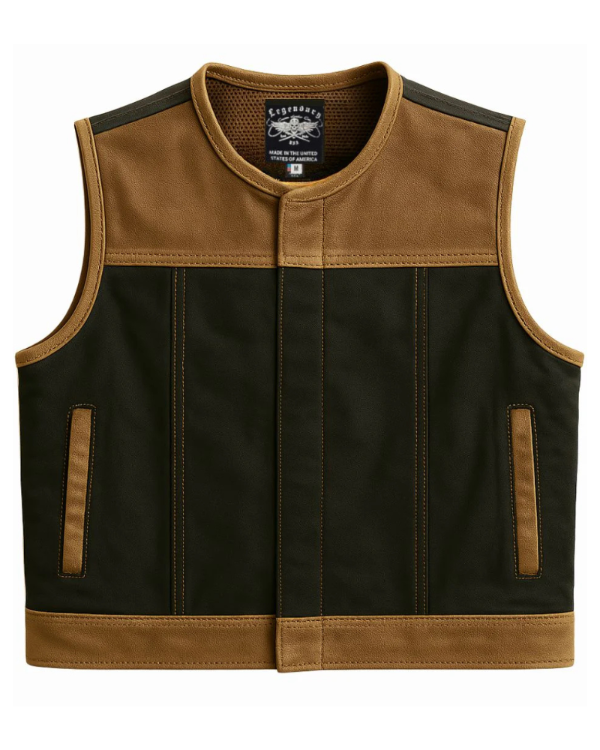
A vest is the year-round rider's most-used piece after gloves because it does not care what is under it. In April it goes over a flannel. In July it goes over a T-shirt. In October it goes over a hoodie, and the Legendary Revolution denim vest is cut from 13.5 oz pre-rinsed North Carolina cotton denim, with twin snap chest pockets, two handwarmer pockets and two interior pouch pockets. Denim takes patches on any home sewing machine, which matters to riders who treat the vest as a running record of where they have been.
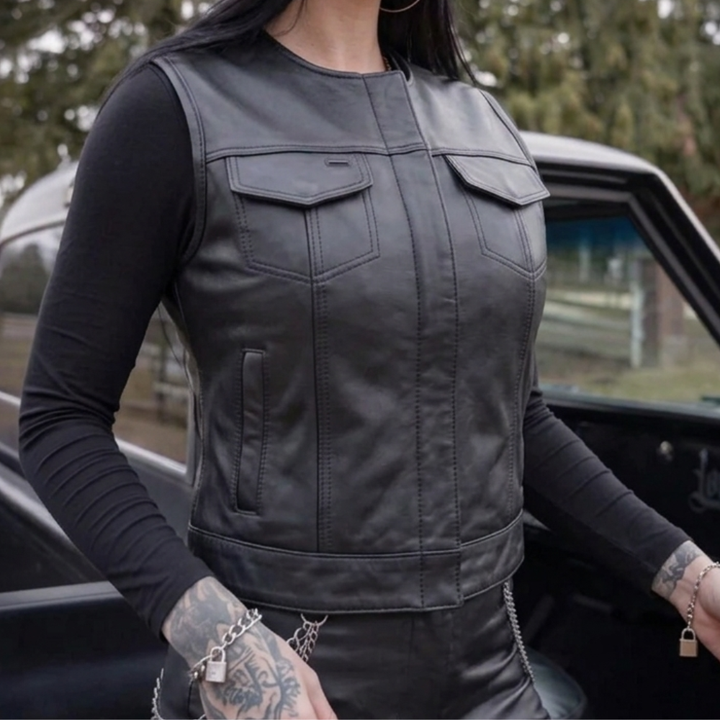
For riders who want something lighter and more weather-tolerant, the Black Jack Lightweight Cordura Vest pairs a water-resistant Cordura nylon shell with leather pocket flaps, armhole binding and neck binding. Side lacing adjusts the fit as the layers underneath change, and wide armholes make room for a sweater. Leather versus Cordura on a vest is a trade of character for convenience: a leather vest develops a patina over decades and weighs more; Cordura sheds a wet ride with no treatment and weighs less. The full range of both is in the USA-made motorcycle vests collection.
A dense leather jacket for the cold months
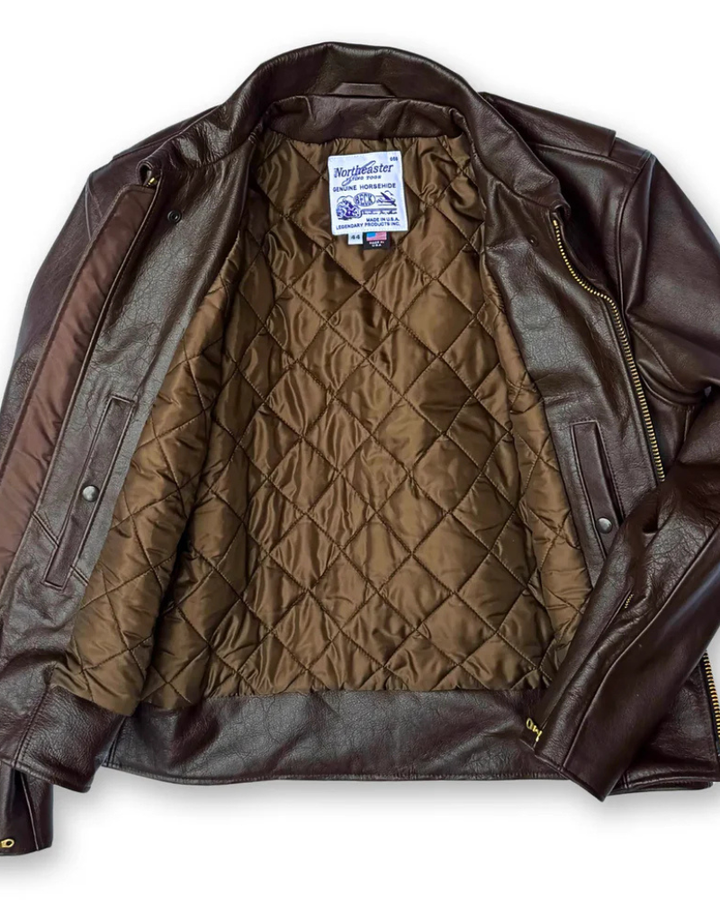
The jacket is the piece that gets the year-round rider through December. For that job, dense horsehide outperforms cowhide at the same thickness because its tighter grain blocks more wind, and wind is what makes a 40°F ride feel like 25°F. The BECK 732 Northeaster Flying Togs jacket from our BECK Northeaster line is cut from 1.3mm front quarter horsehide with a quilted lining, a snap racer collar that closes at the neck, side buckle tabs that let out for a hoodie, and a bi-swing back that moves with the shoulders.
Two honest notes. Horsehide takes longer to break in than cowhide, and a year-round rider should buy it in October, not December, so it is moving freely by the time it is needed. And it is a heritage riding jacket, not an armored one, so it has no CE armor; riders who want armor wear a separate armored layer under it. What the horsehide does is block wind, resist abrasion and hold its shape for decades of cold mornings.
How the rotation fits together by season
| Season | Gloves | Torso |
|---|---|---|
| Spring, 45 to 70°F | Fleece-lined short wrist on cold mornings, ILL DOZER by afternoon | Denim or Cordura vest over a flannel or hoodie |
| Summer, 70 to 95°F | ILL DOZER perforated deerskin | Denim or Cordura vest over a T-shirt |
| Fall, 40 to 65°F | Fleece-lined short wrist; gauntlet for highway days | Vest over a hoodie, horsehide jacket by late fall |
| Winter, 30 to 50°F | Fleece-lined short wrist in town; gauntlet over a liner on the highway | Horsehide jacket with a sweater or armored layer underneath |
Every piece in the table is hand-cut and stitched in the USA, and every piece is built to be the only one of its kind you need. That is the point of a year-round rotation: fewer things, each one chosen because it works for the season the others cannot cover.
Year-round riding does not require a garage full of gear. It requires two deerskin gloves that break in to the same hand, a vest that layers over whatever the morning demands, a gauntlet if the highway is part of the commute, and a horsehide jacket for the cold stretch. Build that rotation once, take care of it, and it will outlast most of the bikes it rides on.
The temperature bands in this roundup assume highway speed, where wind chill does most of the work. The National Weather Service publishes a cold wind chill chart for converting air temperature and wind speed into what your hands actually feel.
Frequently Asked Questions
- What gear do you need to ride a motorcycle year-round?
- A year-round rider needs a small rotation rather than a large closet: a perforated or ventilated leather glove for warm months, a lined or gauntlet glove for cold months, a vest that layers over a T-shirt, flannel or hoodie as the season changes, and a dense leather jacket for the coldest stretch. Legendary USA builds each of those pieces in the USA from American Whitetail deerskin, denim, Cordura and horsehide.
- How many pairs of motorcycle gloves does a year-round rider need?
- Two pairs cover most year-round riders: a perforated deerskin short-wrist glove like the ILL DOZER for warm weather and a fleece-lined deerskin glove for the 30 to 50°F range. Riders who commute on the highway in winter should add a third, an unlined deerskin gauntlet, because the gauntlet cuff closes the gap between glove and sleeve where cold air enters at speed and can be worn over a thin liner on the coldest mornings.
- Is a denim or leather vest better for year-round riding?
- A denim vest is lighter, takes patches on a home sewing machine and layers easily from spring through fall, which makes it the more versatile year-round piece. A leather vest is heavier, blocks more wind and develops a patina over decades. A Cordura vest like the Legendary Black Jack sheds a wet ride without treatment and weighs the least of the three. Many year-round riders keep a denim or Cordura vest for most of the year and reach for leather in the cold.
- What is the warmest leather for a winter motorcycle jacket?
- Horsehide is the most wind-resistant common leather for a winter motorcycle jacket because its dense grain blocks more wind than cowhide at the same thickness, and wind is what makes a cold ride feel colder. Warmth itself comes from the lining and the layers underneath. The BECK 732 Northeaster from Legendary USA's BECK line uses 1.3mm front quarter horsehide with a quilted lining and side buckle tabs that let out for a hoodie.
- Can you wear the same motorcycle gloves in summer and winter?
- Not comfortably. A perforated summer glove passes air by design and will leave hands cold at speed below about 50°F, while a fleece-lined winter glove traps heat and sweat in July. The practical answer is two gloves in the same leather, so they break in to the same hand and feel the same at the controls. Deerskin suits both because it stays pliable in cold and dries soft after summer storms.
- When should a year-round rider buy a horsehide jacket?
- Buy a horsehide jacket in early fall, not in December. Horsehide takes longer to break in than cowhide, and a jacket bought in October has several weeks of mild-weather rides to loosen up before the cold arrives. Breaking it in means wearing it, not treating it; the dense front quarter hide softens at the elbows and shoulders with riding and holds that shape for decades.