



Cold is the enemy of hand function on a motorcycle. At 40°F, unprotected or under-insulated hands lose fine motor control within 15 minutes. Throttle feel degrades. Brake response slows. The solution isn't accepting cold hands as part of winter riding — it's choosing the right glove for the temperature range you're actually riding in.
Temperature Ranges and What They Require
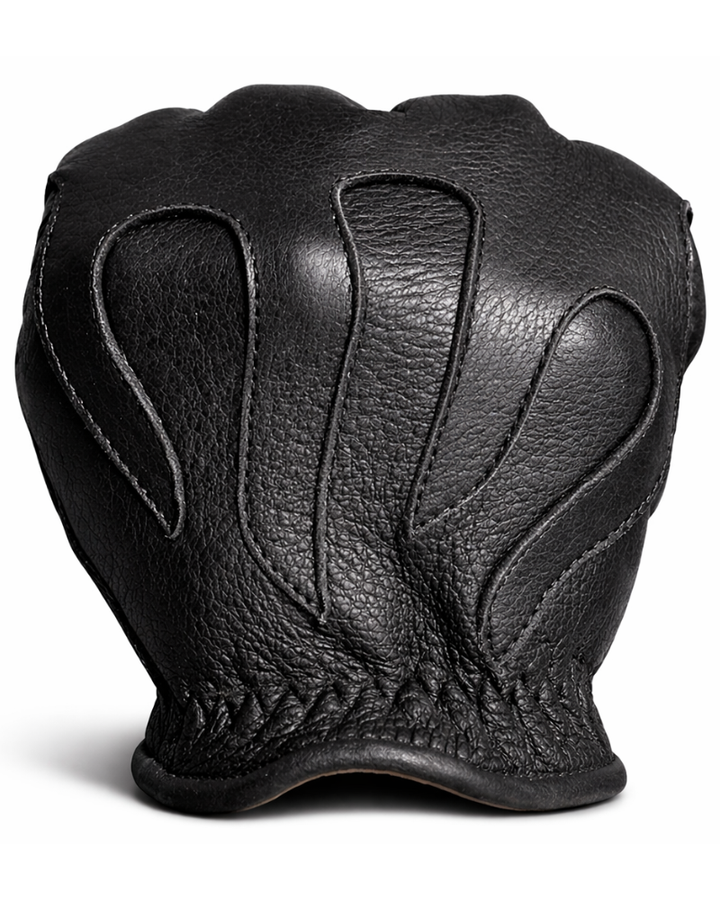
55–70°F (cool fall/spring): An unlined deerskin glove is often sufficient. At this range, body heat from riding keeps hands comfortable without insulation. The Churchill Classic Deerskin Gloves or Legendary Deerskin Short Wrist Touchscreen Gloves work well here — enough leather to block wind, no unnecessary lining to cause overheating.
35–55°F (mild cold): This is the primary range for fleece-lined deerskin gloves. The Legendary Deerskin Fleece Lined Short Wrist Gloves are built for exactly this range — deerskin exterior for wind resistance and abrasion protection, fleece interior for warmth, short-wrist profile that maintains the feel of a riding glove rather than a winter gauntlet. These are the most practical all-around cold weather riding glove for riders in temperate climates.
Below 35°F (serious cold): At sustained low temperatures, articulated finger gloves start to lose warmth efficiency because fingers can't warm each other. The Legendary Deerskin Insulated Mittens address this by keeping fingers together — maximizing warmth at the cost of some individual finger control. Paired with a thin glove liner for throttle feel, mittens over liners is the traditional solution for serious cold-weather riding.
Below 25°F (extreme cold): At this range, passive insulation in a glove has limits. Heated grips, hand guards, and heated glove liners become the most effective solutions. The Gator Skin Insulating Glove Liners can be worn under your outer glove to add a layer of thermal protection without adding significant bulk to your grip.
The Windchill Problem
At highway speed, the windchill against your hands is dramatically colder than the ambient air temperature. At 60 mph and 40°F ambient, the windchill at your hands can be equivalent to 20–25°F. This means your glove needs to be rated for the windchill temperature, not the thermometer temperature.
The best solution for high-speed cold-weather riding combines an insulated glove with handlebar-mounted wind deflectors or hand guards that reduce the airflow across your hands. Cutting windchill in half is more effective than doubling your glove insulation, because windchill is multiplicative and insulation has diminishing returns.
Gauntlets vs. Short Wrist in Winter
Gauntlet gloves that overlap the jacket sleeve eliminate the gap between cuff and sleeve where cold air enters. For cold-weather riding, the Legendary Classic American Whitetail Deerskin Gauntlets provide this seal at the wrist with the full protection of genuine deerskin construction.
Short-wrist gloves in winter require that your jacket sleeve overlaps the glove cuff adequately — a gap here is the single most common source of cold hand complaints among winter riders. If you're using short-wrist gloves in cold weather, make sure your jacket sleeve covers the gap.
Browse the full motorcycle gloves collection for all weather-appropriate options, and see our complete guide to American-made motorcycle gloves for a full comparison across seasons.
Frequently Asked Questions
What gloves are best for winter motorcycle riding?
Fleece-lined deerskin gloves work well from 35–55°F. Below 35°F, insulated deerskin mittens over a thin glove liner provide the most warmth while maintaining some control feel. Heated gloves or heated liner gloves are also effective for sustained cold-weather riding.
How do I keep my hands warm on a motorcycle in winter?
Start with a well-insulated glove that seals at the wrist and overlaps your jacket sleeve. Add handlebar wind deflectors to reduce windchill. For extended cold-weather riding, heated grips or heated glove liners address the problem at the source.
Can I wear regular winter gloves on a motorcycle?
Regular winter gloves are better than nothing but not designed for motorcycle use. They lack cuff retention for fall protection and their grip surface is often too thick for precise throttle and lever feel. A purpose-built winter motorcycle glove is safer and more comfortable.