

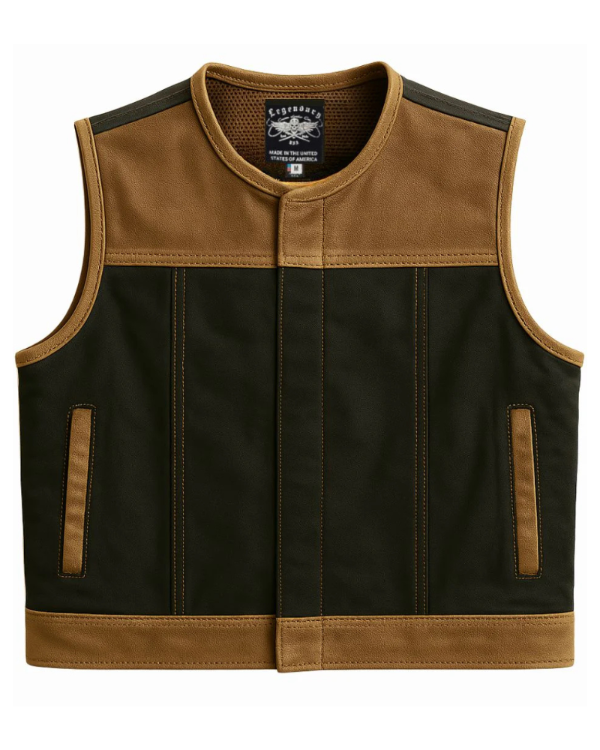
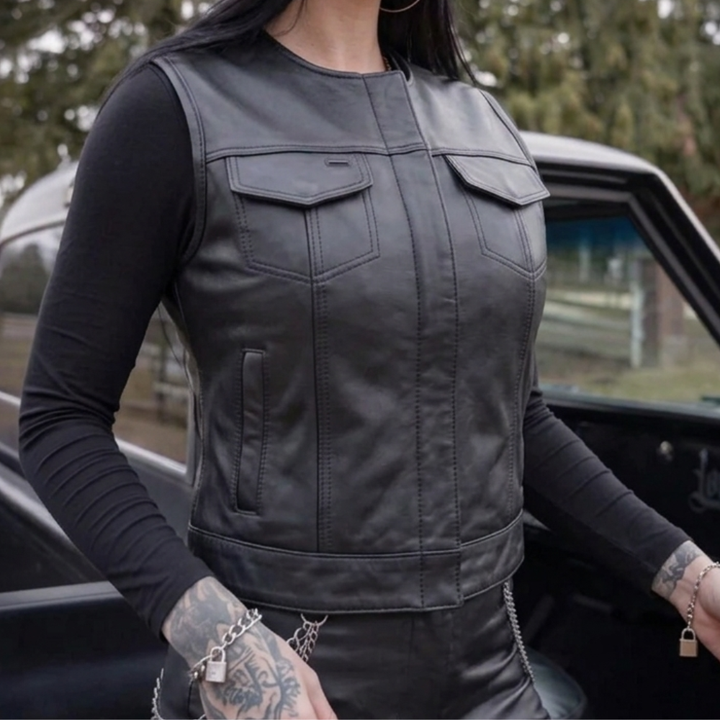


The best patch-friendly motorcycle vests share three things: a large flat back panel, a clean front that patches can sit on without crossing a zipper, and firm material that holds a sewn patch flat. Snap-front denim vests check all three boxes, which is why Legendary USA's denim lineup makes such a strong patch platform. Here are the vests we point riders to when patch display is the priority, and what makes each one work.
Top Picks, Shop Direct
| Product | What it is | From |
|---|---|---|
| Legendary Reaper Men's Leather Club Vest | Legendary USA. Rated 4.89 from 93 customer reviews. | $215.00 |
| Legendary Revolution Men's Black Denim Vest | Legendary USA. Rated 4.95 from 79 customer reviews. | $65.00 |
| Legendary 'Nightshift' Black Denim Vest | Legendary USA. Rated 4.95 from 79 customer reviews. | $145.00 |
| Legendary Outlaw Men's Leather Motorcycle Vest | Legendary USA. Rated 4.98 from 53 customer reviews. | $325.00 |
Prices shown are current at time of writing. Orders over $150 ship free.
What to look for in a patch vest

Before the picks, know what actually matters. A patch-friendly vest starts with panel space: a big, flat back for your back patch and rockers, and a clean front placket for chest patches. A snap-front layout beats a zip here, because a center zipper splits the front and can cut through a large patch. The material matters just as much. Firm denim or leather holds a sewn patch flat and stable, while thin or stretchy fabric puckers.
Fit is the quiet third factor. Do not size up just to gain patch room, because a loose vest flaps at speed and the patches sit poorly. Fit the vest to your riding layer first, then confirm the panels suit your patch set. With that in mind, here are the vests worth your patches.
Revolution Men's Denim Vest — best all-around patch platform
The Revolution men's denim motorcycle vest is our go-to recommendation for riders building a patch set. The rugged denim holds a sewn patch flat, the back panel gives a full back patch and rockers room to sit, and the snap front leaves the chest open for club patches and pins. Denim is also the most forgiving material to sew, by hand or machine, which matters if you are doing the work yourself.
Best for: riders who want a durable, breathable, easy-to-sew vest that takes a full patch set cleanly. The tradeoff, honestly, is that a snap front vents more wind than a zip, so in cold weather you will want a layer underneath.
Ol' Blue Revolution Denim Vest — same platform, classic blue
The Ol' Blue Revolution blue denim vest brings the same patch-friendly construction in a classic blue denim. You get the flat panels, the clean back, and the snap-front layout, with the traditional blue-jean look that a lot of riders prefer for a lived-in, all-American vest. It ages into a worn, personal finish the more you ride in it.
Best for: riders who want the Revolution's patch strengths but prefer classic blue denim over a darker vest. Same honest tradeoff on wind as any snap-front, and the same easy sewing that makes denim a favorite patch base.
How to build your patch set the right way
Once you have the vest, do the patches right. Position and pin each patch exactly where you want it before you commit, and start with the back set before adding chest patches. Sew, do not just iron. Heat-set adhesive alone will not survive wind and washing on a riding vest, so stitch around every edge with strong thread by hand or on a capable machine. Firm denim is the easiest surface to sew and keeps patches flat over the long haul.
Leather vests can absolutely carry patches too, but leather is thicker and harder to sew, so many riders have it done professionally. If you want the easiest do-it-yourself route, denim wins. Either way, buying USA-made means consistent panels and solid stitching that hold a patch set flat for years. See the full lineup in the men's USA-made motorcycle vests collection.
Denim, leather, or both?
Most patch riders land on denim for the ease of sewing and the breathability, then add a leather vest later for a heritage look. There is no wrong answer, only the layout and material that fit your patches and your climate. If you are still deciding on denim, our guide on what makes a denim motorcycle vest worth wearing walks through construction, fit, and durability in more detail.
Final word
A patch vest is a personal thing, and it should be built on a base worth the effort. Look for flat panels, a clean snap front, and firm, sewable material, then fit it to your real riding layer. Legendary USA's denim vests give you all of that in a USA-made package built to carry your patches for the long haul, whether you run a full club set or just the ones that mean something to you.
Frequently Asked Questions
- What makes a motorcycle vest patch-friendly?
- A patch-friendly motorcycle vest has a large, flat back panel and a clean front placket with room for patches to sit without crossing a zipper seam. Snap-front vests are usually the most patch-friendly because the front is not divided. The material also matters: firm denim or leather holds a sewn patch flat and stable, while thin or stretchy fabric can pucker. Legendary USA's denim vests are built with patch display in mind, offering the flat, uninterrupted panels a full patch set needs.
- Are denim vests good for patches?
- Yes. Denim vests are excellent for patches. The firm, woven fabric holds a sewn patch flat and stable, and the flat front and back panels give club patches, rockers, and rally pins plenty of room. Denim is also easy to sew through by hand or machine compared with heavy leather. Legendary USA's Revolution denim vest is a strong patch platform: rugged construction, a clean back, and a snap front that leaves the chest open for patch work.
- Should I use a snap-front or zip vest for patches?
- For patches, a snap-front vest is generally the better choice because the front placket stays flat and uninterrupted, giving chest patches and rockers room to sit without a zipper splitting them. A center zipper divides the front and can cut through a large patch. Zip vests can still carry a back patch fine, but if front patch space matters to you, choose a snap-front. Both styles work for a back patch set, so the decision comes down to your front layout.
- How do I sew patches onto a motorcycle vest?
- Sew patches onto a vest by first positioning and pinning the patch exactly where you want it, then stitching around the edge by hand with strong thread or on a machine that can handle the material. Many riders start with the back patch set, then add chest patches. Sew, do not just iron, on a riding vest, because heat-set adhesive alone will not survive wind and washing. A firm denim vest is the easiest platform to sew and holds patches flat over time.
- Can you put patches on a leather vest?
- Yes, you can put patches on a leather vest, though leather is harder to sew than denim because of its thickness. Many riders have leather vests professionally sewn or use a machine built for leather. The payoff is a durable, classic patch platform. If you want the easiest DIY patch vest, firm denim is more forgiving. If you want a heritage leather look and are willing to sew carefully or have it done, leather makes an excellent long-term patch vest.
- What size vest do I need to display a full patch set?
- To display a full patch set, you need a vest sized to fit your riding layer with a back panel large enough for your back patch and rockers. Do not size up just for patch room, because a loose vest flaps and the patches sit poorly. Instead, fit the vest properly over your usual layer and confirm the back panel dimensions suit your patch set. Legendary USA lists chest measurements on each vest so you can match fit and panel space before ordering.
- Are patch-friendly vests available in USA-made options?
- Yes. Legendary USA offers USA-made motorcycle vests built with patch display in mind, including denim options like the Revolution and Ol' Blue Revolution. American-made construction means consistent panels, solid stitching, and material that holds a patch set flat over years of wear. Buying USA-made also means the vest is built to last long enough to be worth sewing a full patch set onto, which is exactly the point of a patch vest.