

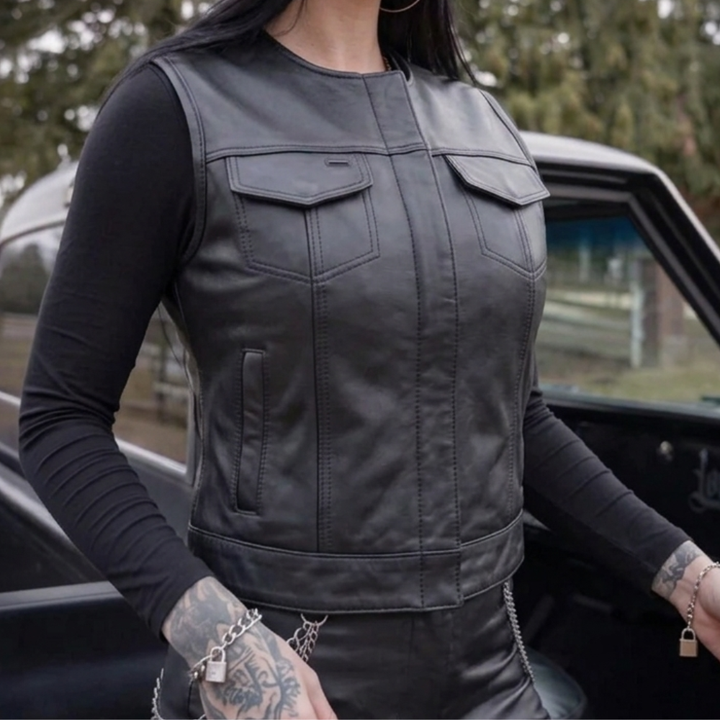


Why Riders Need Real Protection Without Sacrificing Style
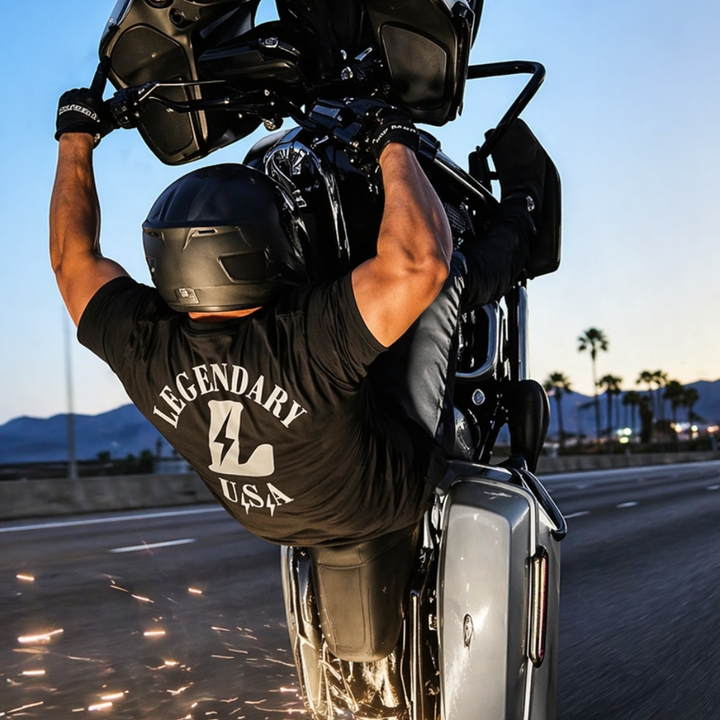
You get on a bike because you want freedom. Not because you want to dress like a crash test dummy. That’s the core tension every serious rider faces: protection matters, but so does looking the part.
We’ve been building leather gear for over 25 years. Riders won’t compromise on either side. They want a jacket that helps stop road rash. They also want it to look like something a rider would actually wear — not something that screams “safety gear.”
Properly designed armored riding gear solves this. CE-certified armor gives you tested impact protection in a design that respects motorcycle heritage. No bright neon panels. No plastic-looking armor bumps. Just quality leather or a discrete armored layer with strategic reinforcement where physics says you need it most.
The Fashion vs. Function Compromise
The motorcycle apparel market has split into two camps. One sells you invincible-looking armor vests with exposed padding and plastic components — functional, visible, and honestly pretty ugly. The other sells beautiful vintage leather jackets that look incredible and offer almost no impact protection if you go down.
The compromise most riders end up with is uncomfortable. They either look wrong to themselves or they ride with nagging doubt about whether they’re actually protected.
The cleaner solution: a heritage leather jacket layered over an armored riding shirt with CE-certified protection. The jacket reads as motorcycle leather. The armor is hidden underneath, doing its job.
How CE Armor Standards Actually Work
CE certification comes from European testing protocols. It’s not a marketing label — it’s a measurement standard.
The main standards for motorcycle armor are:
- EN 1621-1: Limb armor (shoulders, elbows, knees, hips). Tests how much force transfers through the armor when a weighted impact object hits it at a set velocity.
- EN 1621-2: Back protectors. Stricter than limb armor with two performance levels (Level 1 and Level 2).
- EN 1621-3: Chest protectors.
- EN 17092: Whole-garment standards covering the leather/textile shell itself.
Different armor types perform differently. Foam armor absorbs energy through compression. Gel-based armor distributes impact across a wider area. Modern shear-thickening polymers stay flexible during normal riding and stiffen on impact. All can pass CE testing — the certification just verifies which one does what.
What matters: a CE-certified piece of armor means an independent lab tested that specific configuration and confirmed it actually protects to a documented level. You’re not buying on faith. You’re buying on verification.
Layering: How Most American Riders Get CE Protection
Heritage American leather jackets are typically not CE-certified themselves. They’re built around aesthetics, classic patterning, and durable hide that performs well in slides without ever being tested under EN 1621 protocols.
The rider-friendly solution is layering. Many of our customers wear:
- An armored riding shirt or flannel as the base layer — CE-certified shoulder, elbow, and back armor in a comfortable cotton or flannel shell from brands like Bohn Armor.
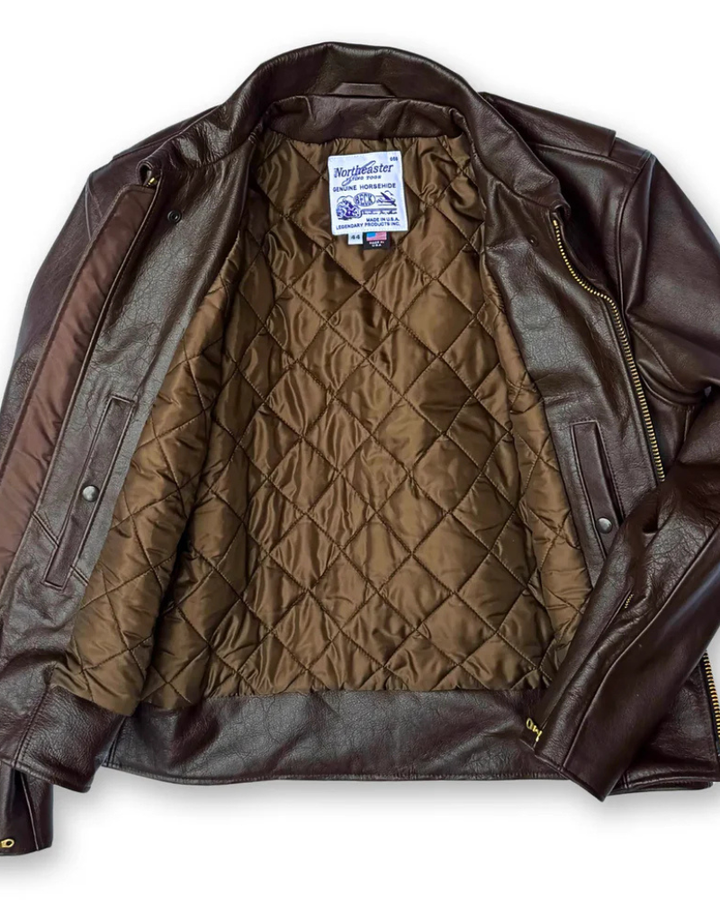
- A heritage leather motorcycle jacket on top — full-grain American leather for abrasion resistance and the silhouette you actually want to wear.
This combination gives you certified impact protection plus heritage leather construction. The armored shirt is invisible under the jacket. The jacket maintains its classic American look.
For riders who want all-in-one armor in the leather jacket itself, we offer armor-ready motorcycle jackets with built-in pockets sized for aftermarket CE armor. You add the certified armor to the pre-built pockets and you’re done. Many riders prefer this over fully-integrated jackets because they can swap armor levels (Level 1 vs Level 2 back protectors) based on the ride.
Premium Leather Selection and Durability
For armor-ready leather jackets, the leather grade still matters. We use full-grain American cowhide and select horsehide for our heritage motorcycle jackets. Both are tanned domestically. Neither is bonded leather, “genuine leather” marketing speak, or synthetic alternatives. They’re actual hides with natural variation in grain pattern.
Cowhide works best for jackets you plan to own for 10–15 years of regular riding. Stiffer initially, becomes supple with break-in. Better abrasion resistance in slides.
Horsehide — especially Front Quarter horsehide as used by BECK Flying Togs — is denser per millimeter than cowhide. The full case is in our horsehide vs. cowhide guide.
The durability difference between heritage American leather and lower-priced alternatives comes down to leather selection and stitching. We use heavier thread, double-stitch high-stress seams, and finish edges so they don’t fray.
Where to Place Armor for Real Protection
Effective armor placement covers three primary zones:
- Shoulders: EN 1621-1 rated foam or polymer armor at the top of the shoulder where impact typically occurs in a slide.
- Elbows: Same rating, positioned to handle both impact and abrasion. Elbow wear is constant, so reinforced stitching matters.
- Back: EN 1621-2 certified panel from lower shoulders to mid-spine. Most serious injury occurs here in a crash. The armor should be in its own compartment with minimal flex.
Whether the armor is built into a jacket, a riding shirt worn underneath, or a separate back protector, those three zones are non-negotiable for serious riders.
Styling Options That Honor Motorcycle Heritage
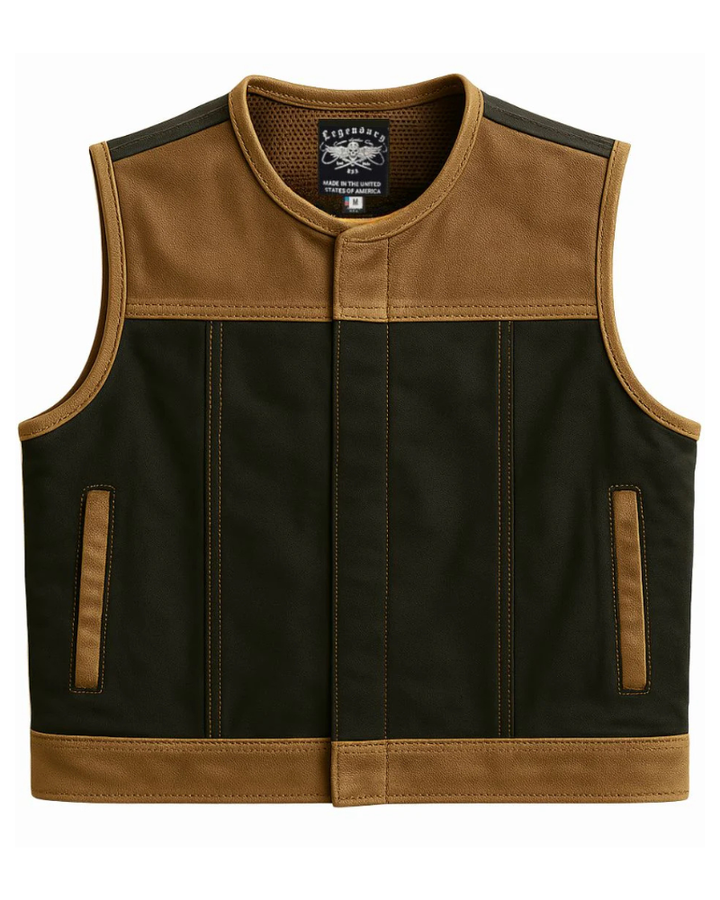
The classic cruiser style uses simple lines, minimal graphics, and a cut that matches what riders wore in the 1970s and 1980s. The armor — whether layered underneath via an armored shirt or pocket-mounted in the jacket itself — should be invisible from the outside.
Touring jackets offer a slightly longer cut with more pockets, reflective safety stitching, and stiffer collars that handle highway wind. The armor integration here is more visible because functional requirements demand it.
Military-inspired styles use elements from vintage flight jacket designs — thicker collars, throat latches, signal patches. These are rarely armor-ready out of the box but layer well over an armored shirt.
The common thread across our designs: armor never drives the silhouette. The jacket is first a jacket. The armor lives inside or under it, doing its job unseen. Browse our leather touring jackets across the full range.
Fit and Comfort for Long Rides
A protective jacket that doesn’t fit right becomes a liability. We cut our jackets for real riding posture, not standing posture. Sizing might feel slightly snug indoors. On the bike with arms extended, the fit changes. A jacket that felt tight standing up feels right when you’re actually riding.
For armor-ready jackets, account for the bulk of the certified inserts you’ll be adding — usually that’s a half size up from your normal jacket size to keep things comfortable.
For armored shirts under a heritage jacket: order the shirt to fit snugly and the jacket loose enough to layer over it without binding the shoulders.
Investment in Quality Gear
A heritage American leather jacket plus a quality armored shirt runs $700–$1,500 total. A premium fully-integrated CE-armored jacket from European brands like Dainese or Rev’It runs $800–$2,000+.
Both work. The American layered approach gives you a heritage jacket you’ll wear off the bike for the next 15 years and an armored shirt that does the protective work. The European single-piece approach gives you a more technical-looking jacket that’s certified end-to-end.
Buy the system that matches how you actually ride and what you actually want to look like wearing.
Frequently Asked Questions
What does CE certification mean for motorcycle armor?
CE certification means the armor was tested under European EN 1621 protocols by an independent lab and demonstrated specific impact-attenuation performance. EN 1621-1 covers limb armor; EN 1621-2 covers back protectors with Level 1 and Level 2 performance grades.
Are American-made leather jackets CE-certified?
Most heritage American motorcycle jackets are not whole-garment CE-certified out of the box because they’re built around classic styling rather than European certification standards. The most common solution for American riders who want CE protection is to layer a CE-certified armored riding shirt under their heritage leather jacket.
What’s the difference between Level 1 and Level 2 back armor?
Level 2 back protectors transmit less force through the armor in standardized testing — roughly half the impact transmission of Level 1. Level 2 is the higher protection grade.
Can I add CE armor to a jacket that didn’t come with it?
Yes, if the jacket is armor-ready (has built-in pockets sized for CE inserts). Otherwise, layer a CE-certified armored shirt underneath.
Does CE-certified armor make leather waterproof?
No. CE certification is about impact attenuation, not weather. Leather is naturally water-resistant when conditioned but not waterproof. For wet riding, layer a waterproof shell.
How long does CE armor last?
Most foam armor degrades after 5–10 years even without crash impact. After a significant impact, replace immediately — foam armor compresses on impact and may not return to full protective specification.
Article originally published April 2026. Updated May 2026 with verified collection links, FAQ, and accurate certification framing.