



Churchill Glove Company: American Deerskin Motorcycle Gloves Since 1897
There are a handful of American manufacturers still operating at a century-plus of continuous production. Most of them make things nobody buys anymore, or they've retooled so many times that the original craft is unrecognizable. The Churchill Glove Company is not that story. Since 1897, the Churchill family has been producing deerskin gloves from the same material — domestic American Whitetail deerskin — using a construction method that hasn't changed in the ways that matter. What has changed is who wears them. The original customers were workmen and hunters. The current ones are mostly riders.
Why the Churchill Family Chose Deerskin
American Whitetail deerskin is not the most commercially obvious material for glove production. It's more expensive per square foot than cowhide, it requires careful sourcing since it comes from domestic deer rather than livestock, and its minimally processed character means it can't be corrected the way cowhide is corrected to produce a uniform surface. But it has properties that no other widely available leather replicates.
Deerskin is naturally softer at equivalent thickness than cowhide or goatskin. That softness comes from the fiber structure of the hide itself — the interlocking weave of collagen fibers is looser in deer than in cattle, which is why deerskin stretches more, recovers better, and retains its hand through years of use. More importantly for riders, deerskin retains that softness after repeated wet/dry cycles without conditioning. A cowhide glove left to dry after a soaking ride stiffens noticeably until it's reconditioned. A deerskin glove dried correctly comes back to its original feel on its own.
The Churchill family understood this property in the context of working gloves — gloves that would be wet from rain, wet from handling animals, wet from morning dew, and still needed to function without complaint at the start of the next workday. That requirement maps almost exactly onto what a motorcycle rider needs from a glove: something that stays functional and comfortable across changing conditions without requiring intervention.
The American Whitetail Supply Chain
Domestic American Whitetail deerskin is not a commodity material available in unlimited quantity. The supply is bounded by the annual deer harvest, which varies by year and region. Churchill sources from domestic processors — the hides come from American deer, tanned in the USA, cut and sewn at the Churchill facility. This is a materially different supply chain from gloves made with offshore-sourced leather processed through multiple countries before final assembly.
The difference in sourcing is part of what makes the Churchill gloves traceable in a way that offshore production isn't. When you order a pair of Churchill Classic Motorcycle Gloves, the deerskin in them came from American deer, went through a domestic tannery, and was cut and assembled by the Churchill family. That provenance isn't marketing language — it's the actual production chain, and it's verifiable in a way that "made in USA" claims on imported-leather garments assembled domestically aren't.
What 127 Years of Production Looks Like
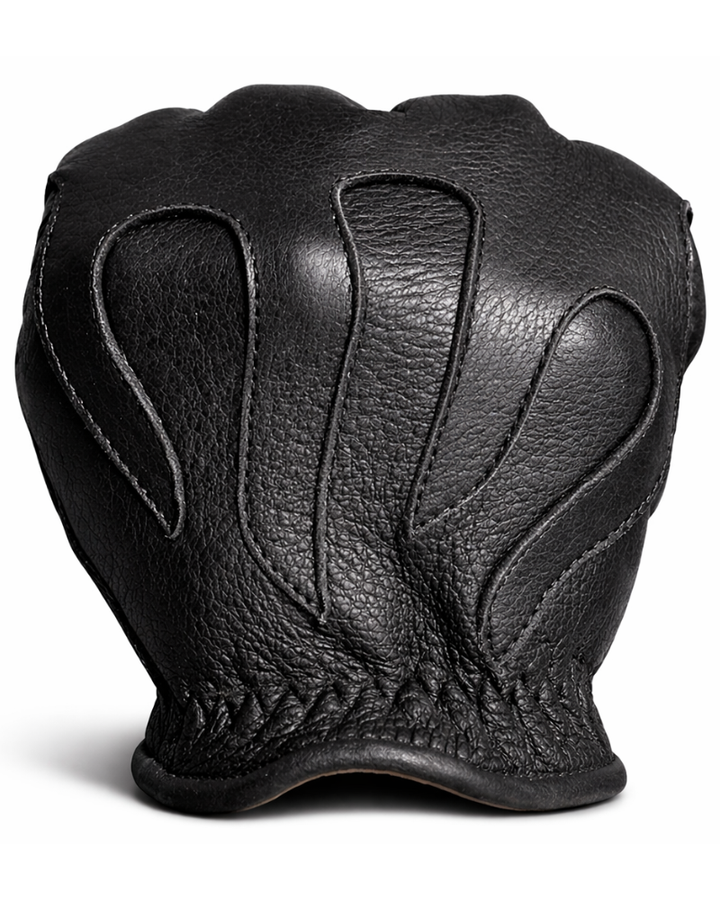
A glove maker who's been in production since 1897 has had the benefit — or the requirement — of working out every significant design failure over multiple generations. The Churchill Classic Motorcycle Glove has an elasticized wrist cuff that closes the gap between jacket cuff and glove without a buckle or snap system that adds bulk. The seam placement follows the flex lines of the hand rather than the most efficient cutting pattern. These aren't design innovations — they're the accumulated result of making the same product for long enough that every remaining choice is the correct one.
The gloves are sized true to size. Churchill deerskin stretches slightly with wear — if you're between sizes, size down for a snug riding fit. The elasticized wrist cuff and close-cut construction keep the glove from riding up under jacket sleeves, which solves a specific and common problem for motorcycle riders that no amount of marketing copy addresses as cleanly as a design that simply doesn't let it happen.
Where the Churchill Classic Fits in a Riding Kit
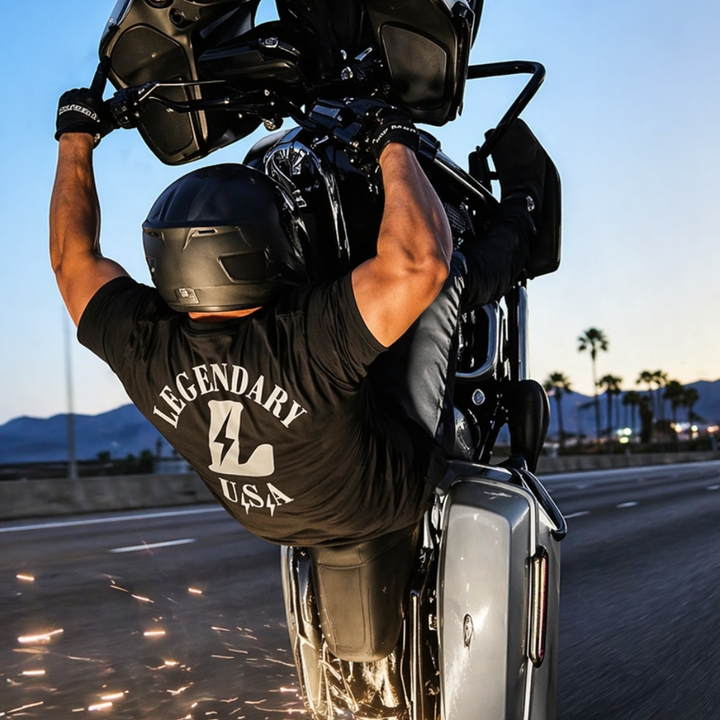
The Churchill Deerskin Classic Motorcycle Gloves are a three-season glove for riders who spend time on Harley-Davidson, Indian, and other cruiser platforms. They're not an armored glove — there's no CE-rated impact protection built in — and they're not a winter glove. What they are is a well-constructed, historically proven deerskin riding glove that performs consistently in the spring-through-fall temperature range without requiring the kind of maintenance that cowhide gear demands.
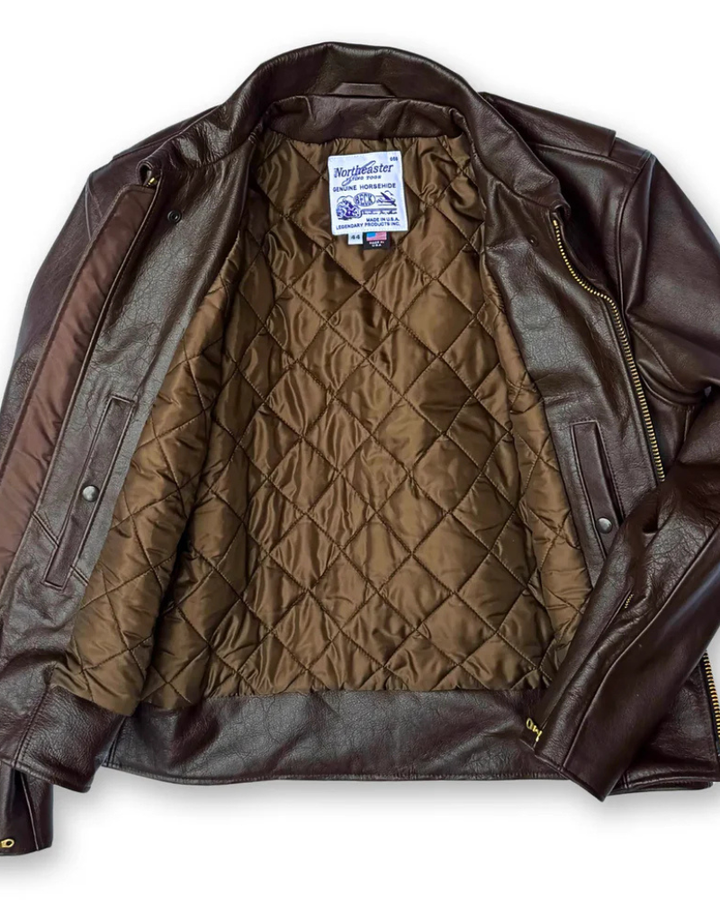
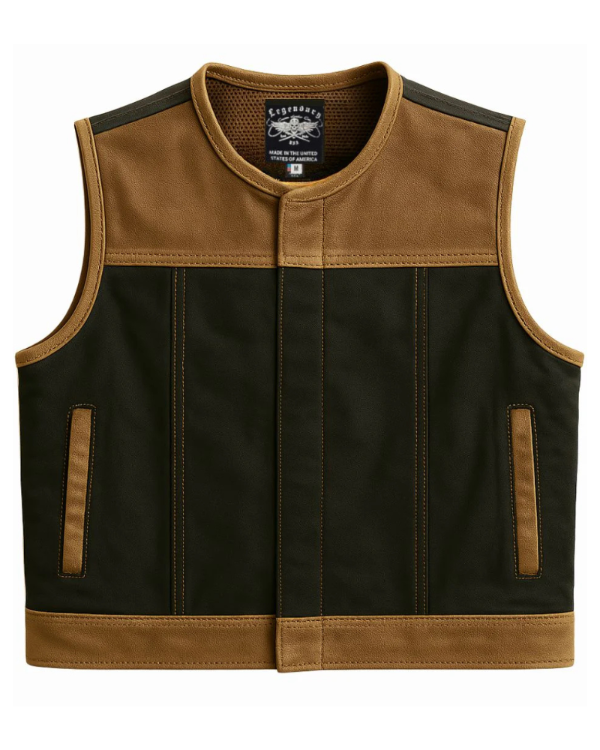
For riders building out a kit around American-made leather gear, they pair naturally with the Legendary USA jacket and vest lineup available in the men's made in USA motorcycle gloves collection. They also pair with the Legendary USA heritage line in a way that makes sense beyond marketing — both the gloves and the jackets reflect the same underlying commitment to domestic production and material honesty that doesn't require a story to hold up. The product carries the story on its own.
Why Legendary USA Carries Churchill
Legendary USA's buying criteria for brands starts with domestic production and material truthfulness — both conditions Churchill has met continuously since before Legendary USA existed. The fact that Churchill has been making the same glove from the same American Whitetail deerskin for over a century, and that the gloves still hold up against riders who've been wearing them for years, is the kind of track record that doesn't require marketing to validate. It's verifiable in the product.
The Churchill Classic sits at $119.99 — a price that reflects the domestic material cost, the small-batch production, and the fact that no corners have been cut in sourcing or construction. For riders who want to understand more about how American production compares to offshore alternatives in motorcycle gear, our comparison of USA vs. offshore production in motorcycle jackets and vests covers the construction differences in detail. The same principles apply to gloves.