



The history of the gauntlet glove starts with armor. The word comes from the Old French gantelet, a small glove, and it first described the steel-plated glove with a flared cuff that protected a knight's hand and wrist. Riders kept the long cuff, swapped the steel for leather, and made the gauntlet a standard piece of motorcycle gear. This post covers where the gauntlet glove history begins, why the cuff survived, and where it fits in a rider's kit today.
From Armor to Leather: Where the Gauntlet Began

Medieval armorers built gauntlets to protect the fighting hand. The cuff extended up the forearm and flared out to cover the wrist. The design was about coverage first and movement second.
Over time the word moved from armor to everyday gloves. A gauntlet came to mean any glove with a long, flared cuff, whether it was made of plate, mail, or leather. Riders, drivers, and workers adopted the leather version because a long cuff solves a practical problem: it covers the gap between glove and sleeve.
Why the Cuff Survived on the Motorcycle
At highway speed, a gap between your glove and your jacket sleeve lets wind run straight up your arm. On a cold morning that is the first place you feel it. A gauntlet closes that gap, which is the reason the style never left riding gear.
The cuff also gives you a choice. You can wear it over the sleeve to shed wind and rain, or tuck it under the sleeve for a tighter seal and a cleaner line. Our guide on how to wear gauntlet gloves with a jacket sleeve walks through both.
Gauntlet vs Short Wrist: A Fair Comparison
A gauntlet is the better glove for cool air, long highway miles, and riders who wear jackets. A short wrist glove is easier to pull on and off, and it suits warm days and riders in vests or short sleeves. Neither one is better in every case.
The gauntlet adds some bulk at the forearm and takes a little longer to put on. It also runs warmer, which is an advantage in fall and a problem in July. Short wrist styles breathe better, but they leave the wrist exposed.
The Legendary USA Classic Deerskin Gauntlet
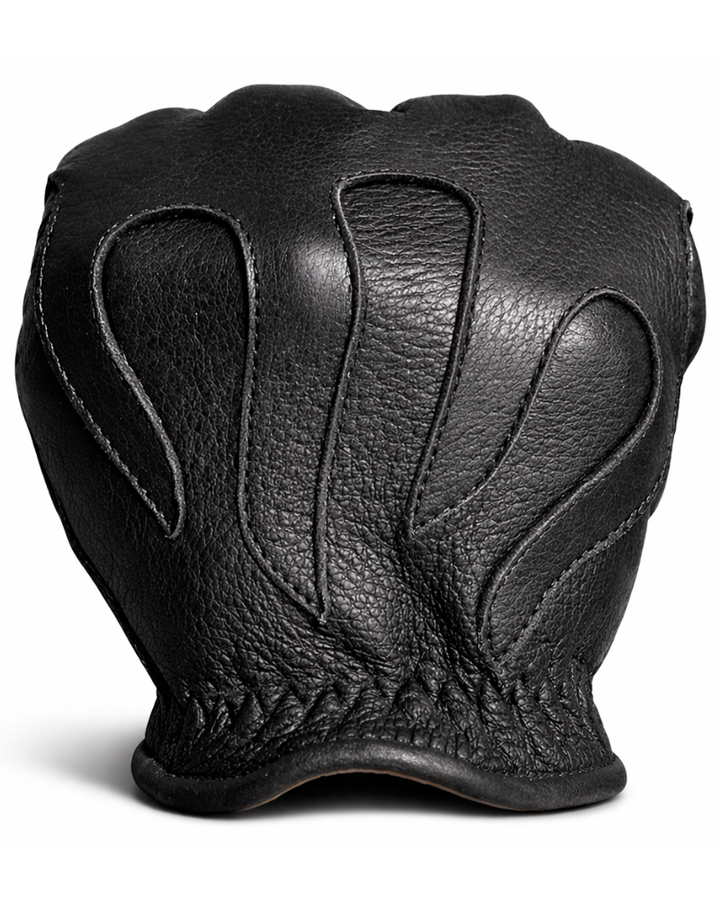
The Legendary USA Classic Deerskin Gauntlets are made from domestic Whitetail deerskin with a full gauntlet cuff that covers the wrist and lower forearm. They are unlined, so you keep direct feel at the throttle and brake. The deerskin softens and molds to your grip over the first few rides.
Deerskin weighs roughly half as much as cowhide at equivalent protection, and it stays pliable in wet conditions without conditioning. The stitching is reinforced at the palm, thumb saddle, and fingertip stress points. Deerskin is not hard armor, so treat these as a comfortable riding glove with a long cuff, not as an armored glove.
If you want to see the whole range, browse the Men's Made in USA motorcycle gloves collection. For more on the leather itself, read our post on the American deerskin riding tradition.
What the Gauntlet Still Means to Riders
For many riders, a pair of gauntlets signals that the season has turned. They come out when the mornings get cold, and they stay on through the long highway days. The long cuff and the snug fit are the same reasons riders keep reaching for them.
Legendary USA opened in 2001, and we have watched riders come back to the gauntlet every fall. It is a simple design that does one job well, and that is why it has lasted.
Bottom Line
The gauntlet glove traces back to armor, and it stayed in riding gear because the long cuff solves a real problem. It closes the gap at the wrist and keeps the wind off your arms. If you ride long highway miles in cool weather, a deerskin gauntlet is a practical choice.
For rider training and riding practice resources, the Motorcycle Safety Foundation publishes rider courses and training guidance.
Frequently Asked Questions
- Where does the word gauntlet come from?
- Gauntlet comes from the Old French word gantelet, a diminutive of gant, meaning glove. It first described the armored glove with a flared cuff worn by medieval knights to protect the hand and wrist. Riding gauntlets keep the long cuff but use leather instead of steel, so the name stuck for any glove with an extended wrist.
- What is the difference between a gauntlet glove and a short wrist glove?
- A gauntlet has a long cuff that covers the wrist and part of the forearm, while a short wrist glove ends at the wrist. The gauntlet closes the gap between glove and jacket sleeve, which matters at highway speed in cold air. A short wrist glove is easier to wear in warm weather and under tight sleeves.
- Do you wear gauntlet gloves over or under a jacket sleeve?
- Both work. Wear the cuff over the sleeve when you want the sleeve sealed against wind and rain running down your arm, and under the sleeve when you want a cleaner look or a tighter seal at the wrist. Legendary USA cuts its Classic Deerskin Gauntlets long enough to do either, depending on conditions.
- Are deerskin gauntlet gloves good for long rides?
- Yes. Whitetail deerskin is soft, light, and molds to your grip over the first few rides, which reduces hand fatigue on long days. The long cuff also keeps wind off your wrists. Deerskin is not hard armor, so choose a glove with the protection level you want for your riding conditions.
- How should gauntlet gloves fit?
- A gauntlet should fit snug across the palm and fingers with no extra material at the fingertips, and the cuff should close around your wrist without cutting off circulation. Leather gloves stretch slightly as they break in, so choose a fit that is firm but not tight on day one. Check the size chart on the product page before ordering.