



Choose a gauntlet when the glove needs to seal the gap at your jacket cuff, and choose a short-wrist glove when you value quick on-and-off and less bulk at the forearm. In fall that usually means gauntlets for the morning and short-wrist gloves for the ride home. Legendary USA builds both in the same American whitetail deerskin, so the hide is not the variable. The cuff is.
What Actually Separates the Two

A gauntlet has an extended cuff that goes over the jacket sleeve. A short-wrist glove stops at or just past the wrist bone and tucks under the sleeve, or meets it. That single difference drives everything else: warmth, wind, bulk, how fast you can pull them off at a gas pump, and whether they fit in a jacket pocket.
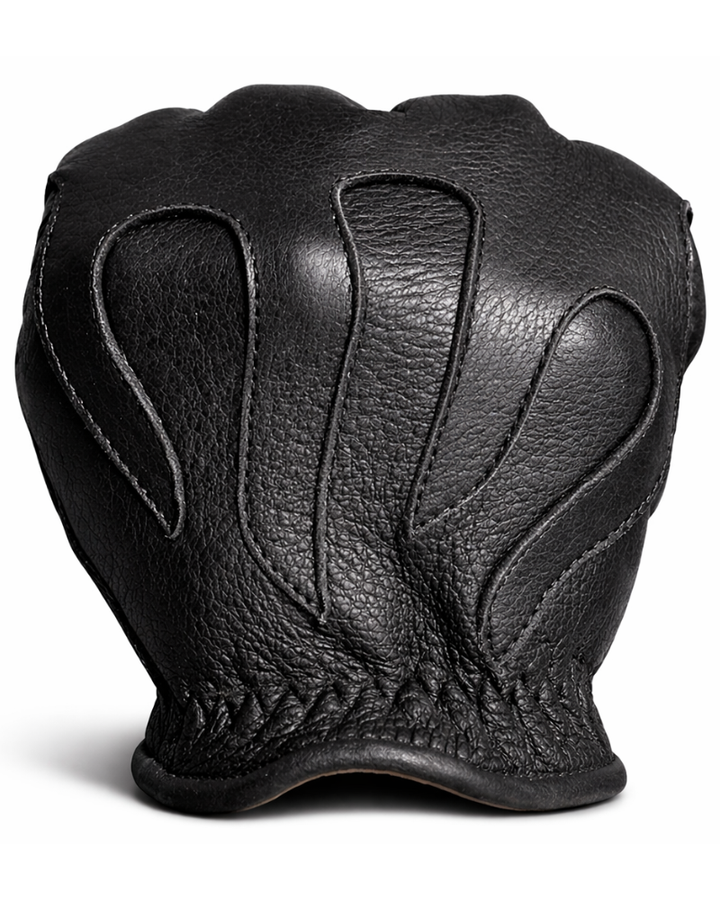
Legendary USA tags the Classic Deerskin Gauntlets for cold and windy riding. The Classic Short Wrist Touchscreen Deerskin Gloves are tagged year-round and mild weather. Both are unlined deerskin with reinforced seams, and neither carries knuckle protection or a CE rating. The cuff is doing the seasonal work, not the leather.
Step 1: Find Your Wrist Gap
Put on the jacket you will actually ride in this fall. Sit in your riding position with your hands on the bars, then look at where the sleeve ends. If the cuff rides up your forearm and exposes skin or a shirt sleeve, you have a wrist gap, and a short-wrist glove will not close it.
This is worth doing on the bike rather than standing in the kitchen. Reaching forward pulls the sleeve back two to three inches on most jackets. A cuff that looks fine with your arms at your sides can open up completely once you are behind the bars, and that is the position you will be in for the next two hours.
Step 2: Match the Cuff to the Temperature
If you ride below about 50 degrees, the gauntlet wins on the mornings that matter. Sealing the sleeve stops the wind from running up your forearm, and warm forearms send warmer blood to your fingers. That is the whole mechanism, and it is why a gauntlet in unlined deerskin often feels warmer than a short-wrist glove with a lining.
Above about 60 degrees the gauntlet stops earning its bulk. The extended cuff traps heat you now want to shed, and the forearm is the first place that gets clammy. This is where a short-wrist glove takes over for the rest of the day.
Between 50 and 60 is the honest gray zone and depends on your speed, your route, and how much you personally run cold. Most riders in that band carry both.
Step 3: Weigh the Practical Costs
What you give up with a gauntlet
Gauntlets are slower on and off. Every fuel stop, every phone check, every time you pull a glove to hand someone cash, the extended cuff has to clear the jacket sleeve first. They also do not stow in a jacket pocket, so they live on the mirror or in the saddlebag. Neither the gauntlet nor the short-wrist deerskin pair is touchscreen compatible in the unlined classic version, which is worth knowing before you plan on navigating by phone.
What you give up with a short-wrist glove
You give up the wind seal and you take on a dependency: the glove only works as well as your jacket cuff closes. A jacket with a loose or worn cuff turns a good short-wrist glove into a cold one. You also lose forearm coverage entirely, which some riders care about and some do not.
Step 4: Decide Whether Lining Changes the Answer
It does, but less than riders expect. The Fleece-Lined Deerskin Gloves are a short-wrist glove tagged for cold and windy conditions, so a lined short-wrist pair is a real cold-weather option. What it still does not do is close the wrist gap. Lining fixes conduction and wind through the back of the hand. Only a cuff fixes air coming up the sleeve.
The practical answer for most fall riders is a lined short-wrist pair plus a gauntlet, not one or the other. Browse both cuff styles in the Made in USA motorcycle gloves collection and buy the one you are missing.
Step 5: Size Them Separately
Do not assume your gauntlet size and your short-wrist size are the same number. The gauntlet has to clear a jacket cuff, so a pair that fits your hand perfectly can still be tight at the forearm opening. A lined short-wrist glove, meanwhile, has fleece taking up interior room and will feel snugger than the unlined pair you already own.
Deerskin relaxes with wear in both cases, but it relaxes at the hand faster than at the cuff. Our fit guide for wide hands and long fingers covers measuring, and our guide to conditioning leather gear before winter covers keeping both pairs supple once the cold arrives.
If you only buy one pair for fall and you ride early, buy the gauntlet. If you only buy one pair and your riding starts after the sun is up, buy the lined short-wrist glove. If you ride both ends of the day, which most people in September do, carry both and swap at the first stop.
The National Highway Traffic Safety Administration publishes general motorcycle safety and rider equipment guidance.
Gauntlet and Short-Wrist Questions
- Are gauntlet gloves warmer than short-wrist gloves?
- In most fall riding conditions, yes. A gauntlet extends over the jacket sleeve and stops wind from traveling up the forearm, which is where a lot of hand cold actually originates. Warm forearms deliver warmer blood to the fingers. An unlined deerskin gauntlet frequently feels warmer at speed than an unlined short-wrist glove of the same hide, purely because of the cuff. Add a lining and the gap widens further, though lining and cuff solve two different problems.
- Can I wear gauntlet gloves over any jacket?
- Usually, but check the sleeve before you buy. Gauntlets need room to slide over the jacket cuff, and a heavy leather jacket with a thick or snapped cuff can make a snug gauntlet difficult to seat properly. Try it in your actual riding position with the jacket you ride in. If the cuff bunches or the gauntlet will not close over it, you likely need the next size up rather than a different glove style.
- Do I still need a gauntlet if my gloves are fleece lined?
- Lining and cuff length solve different problems, so one does not replace the other. Fleece lining insulates the back of the hand and cuts wind coming through the leather. It does nothing about air entering at the wrist and running up your sleeve. If your jacket cuff seals well, a lined short-wrist glove may be all you need. If your sleeve rides up in the riding position, the gauntlet is the piece that fixes it.
- Are deerskin gauntlets good for winter riding?
- Legendary USA tags the Classic Deerskin Gauntlets for cold and windy conditions, which covers most fall riding and mild winter days. Unlined deerskin has limits, though. For sustained sub-40 riding many riders move to an insulated glove or mitten rather than asking an unlined gauntlet to do the job. The gauntlet is a shoulder-season and moderate-cold tool, not a deep-winter one.
- Which glove style is better for city commuting in fall?
- Short-wrist gloves generally suit commuting better. You are stopping often, handling a phone or a fob, taking gloves on and off at each end of the trip, and rarely holding highway speed long enough for the wrist gap to punish you. Gauntlets are slower at every one of those moments. If your commute starts before sunrise and runs on open road, that calculation flips and the gauntlet is worth the extra seconds.