

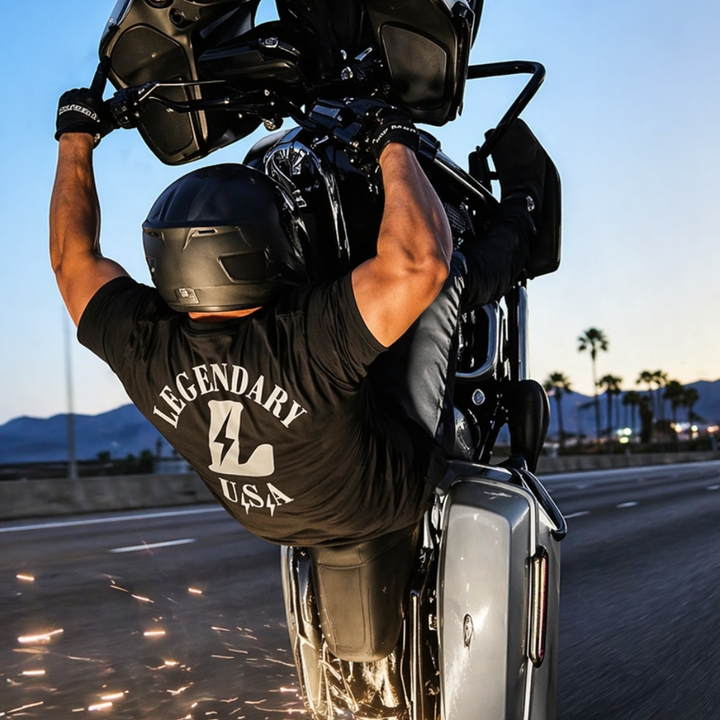


Hot-weather motorcycle gear works by moving air across your skin while still putting leather between you and the road. For most American riders that means perforated or ventilated deerskin gloves, a vest that breathes instead of a jacket that traps, and a light moisture-wicking base layer underneath. Legendary USA cuts its hot-weather gloves from full-grain American deerskin and goatskin, perforated or ventilated so airflow reaches the hand without giving up leather coverage.
August is the test month. Sturgis week is behind us, the pavement is holding heat into the evening, and the riders still putting on miles are the ones who sorted their summer gear out properly. This guide covers what actually makes gear hot-weather gear, what to look for in gloves and vests, and the mistakes that make riders miserable at 95 degrees.
What Actually Makes Gear Hot-Weather Gear

Hot-weather gear is defined by airflow, not by how little material it uses. Three things determine how hot you ride: how much air reaches your skin, how quickly sweat evaporates off it, and how much solar heat your outer layer absorbs.
That is why a perforated leather glove can ride cooler than a thin unperforated one. The perforations let moving air pull heat off the back of the hand. It is also why a light-colored glove runs cooler than a black one in direct sun, and why a wicking base layer under a vest beats a cotton tee that soaks and stays wet.
The part riders get wrong is assuming less gear equals cooler riding. Bare skin in direct sun at highway speed heats up, dries out, and burns. Covered skin with airflow across it stays cooler over a full day than exposed skin does.
Gloves for Hot-Weather Riding
Gloves are the single most important piece of hot-weather gear because your hands are in the wind for the entire ride and they are the first thing down in a spill. Hot hands also swell, and swollen hands grip harder, which is where fatigue and numbness start.
Perforated Leather
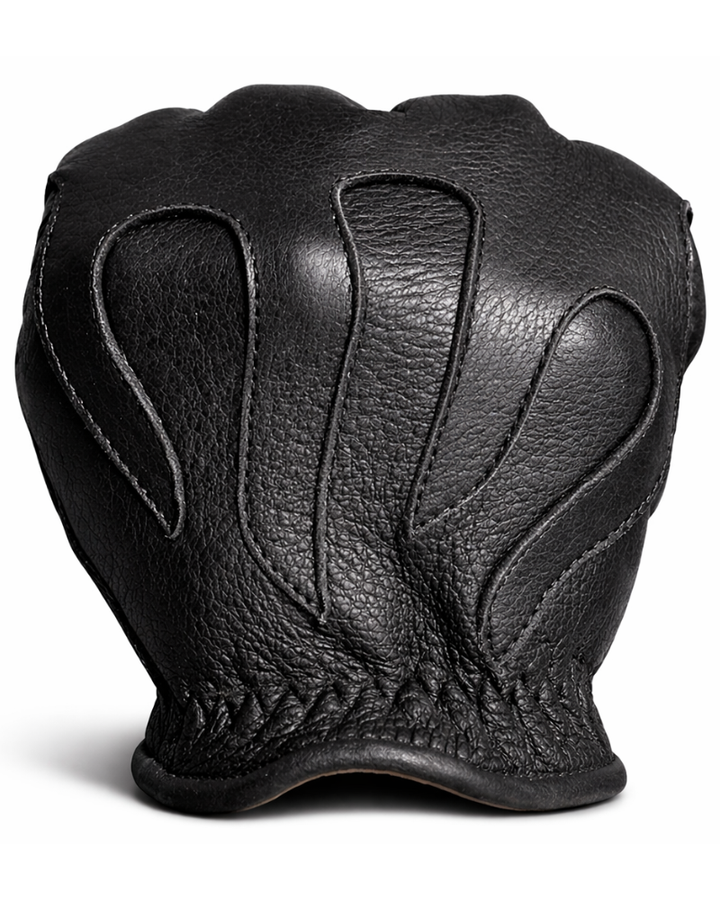
Perforated gloves have holes punched through the hide, usually across the back of the hand and the fingers. The ILL DOZER perforated deerskin outseam glove is built this way, with outseam construction that puts the seams on the outside of the glove so nothing presses into your fingers against the grips. Perforated deerskin gives you an even, spread-out airflow instead of a few big vents, and the leather surface stays continuous.
Ventilated Designs
Ventilated gloves move air through openings and gussets built into the glove pattern rather than through the leather itself. The ventilated touchscreen deerskin glove takes this approach and adds touchscreen capability so you are not pulling a glove off at every stop to check a route. Ventilated designs can push more air through fewer, larger openings than perforation does.
Fingerless: The Honest Tradeoff
Fingerless deerskin gloves are the coolest leather option and give you direct feel on the controls. They also leave your fingers uncovered. That is the whole trade, and we are not going to pretend otherwise. Plenty of riders keep a fingerless pair for town and short evening runs and a full-finger perforated pair for the highway. If you ride fingerless on long summer days, sunscreen on the backs of your fingers is not optional.
Fit Matters More in Heat
A glove that is too tight restricts airflow and traps sweat against the palm. A glove that is too loose bunches and rubs. Hands swell in heat, so a glove that fits perfectly on a cool morning can feel snug by mid-afternoon. Our guide to measuring your hand for gloves walks through measuring your hand properly. Browse the full USA-made motorcycle gloves collection to compare styles side by side.
Vests for Summer Heat
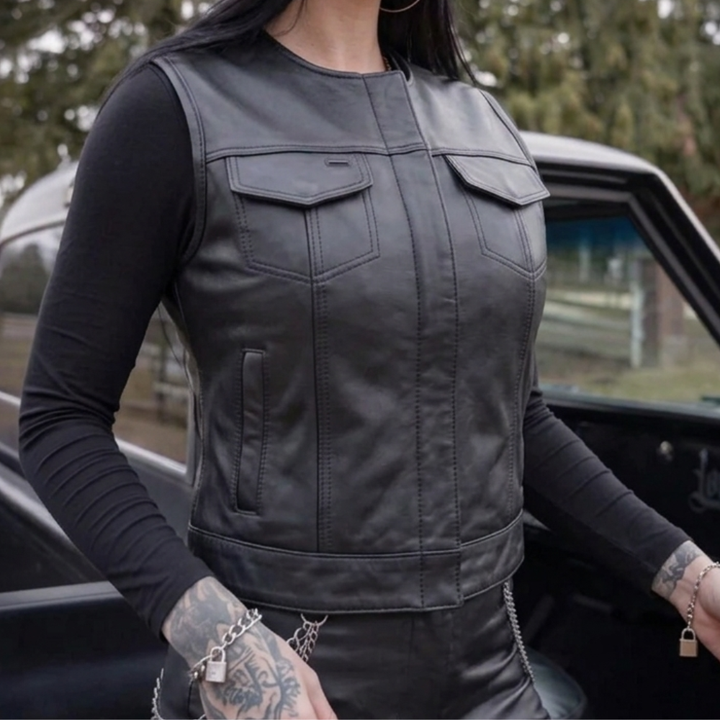
A vest is the right torso layer for hot weather because it covers your core while leaving your arms open to the air. Your arms and armpits shed a large share of your body heat, and a jacket shuts that down.
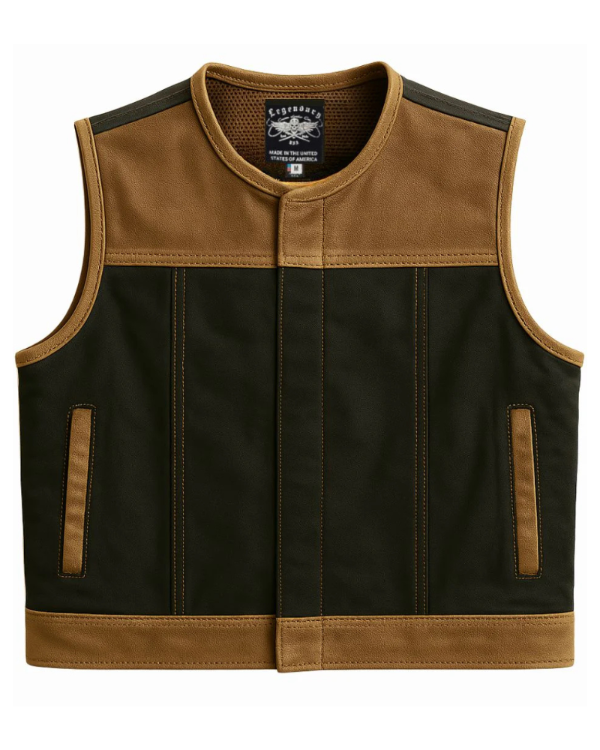
For peak-heat riding, lightweight vests beat heavy leather. The Black Jack lightweight Cordura vest is built for exactly this window: it holds patches, blocks wind on the chest, and does not carry the thermal mass a heavy hide does. A denim vest like the Revolution denim vest is another summer answer, breathable and easy to wash after a dusty week.
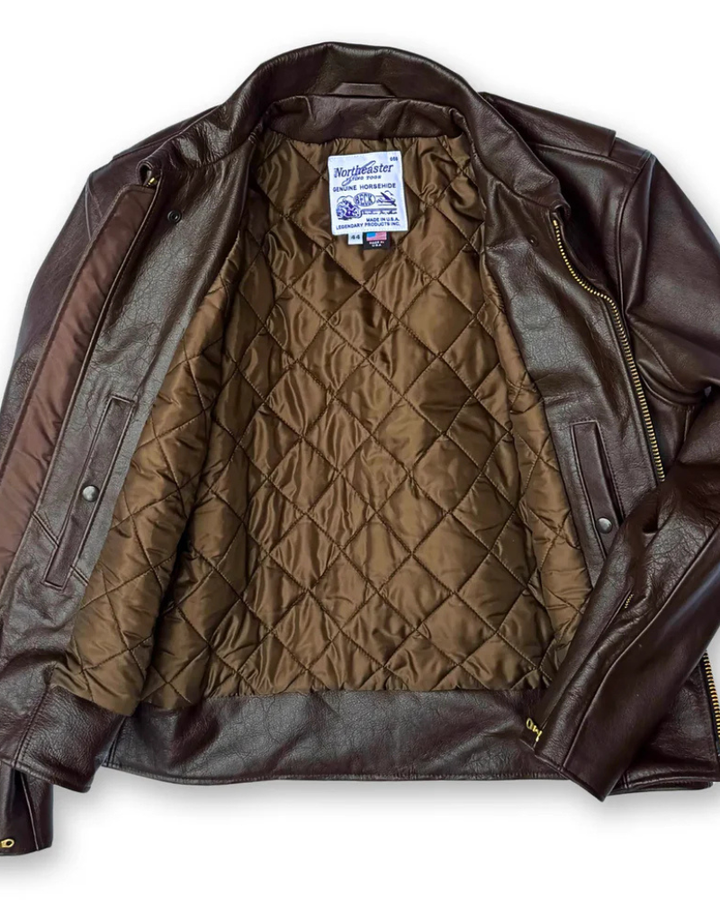
Leather vests are not off the table in August, but be honest about your conditions. If you are riding Texas or Arizona in the afternoon, a heavy leather vest is a warm layer. If you are riding the Northeast or the mountains where evenings drop, leather earns its place. Compare options in the USA-made motorcycle vests collection.
What to Wear Under the Vest
Wear a moisture-wicking base layer, not cotton. Cotton absorbs sweat and holds it, so it stops cooling you and then chills you when the sun goes down. A synthetic or merino tee moves sweat to the surface where airflow evaporates it, which is the mechanism that actually drops your skin temperature.
Long sleeves feel wrong in heat but usually ride cooler over a full day than bare arms. A light long-sleeve shirt blocks direct sun on the forearms and reduces the dehydration that comes with it. Riders who cover their arms on multi-day summer trips generally report less fatigue at the end of the day than riders who go bare.
Comparison: Perforated Deerskin vs. Solid Goatskin in Heat
Perforated deerskin and solid goatskin behave differently in summer. Perforated deerskin runs cooler at speed because air passes through the hide, and deerskin is the softer of the two with almost no break-in period. Solid goatskin, like the Bad Billy tan goatskin glove, is denser and more abrasion-tough, holds its shape longer, and blocks wind rather than passing it.
Practical read: if your summer riding is highway miles in direct heat, perforated deerskin is the more comfortable glove. If your summer includes early mornings, mountain passes, and cool evenings, solid goatskin covers a wider temperature band with one pair. Tan goatskin also splits the difference on color, running cooler in sun than black without showing dirt as fast as white.
Common Hot-Weather Gear Mistakes
Riding gloveless. Sweaty bare hands slip on grips, and there is no version of a get-off where bare palms come out ahead. A perforated glove is cooler than you think.
Buying gloves a size down. A snug glove feels precise in the store and miserable at hour four when your hands have swollen. Size for the afternoon, not the morning.
Wearing a cotton tee under everything. Cotton is the single most common reason riders feel clammy and overheated in summer gear.
Skipping the vest entirely. A vest costs you very little heat and gives you wind protection, patch space, and an abrasion layer over your core.
Letting sweat-soaked leather dry in the sun. Heat and direct sun stiffen leather. Air dry gloves in the shade and condition them afterward. Our leather glove care guide covers the routine.
Building a Hot-Weather Kit That Works
A working August kit looks like this: one perforated or ventilated full-finger deerskin glove for highway miles, one fingerless or lighter pair for short town runs, a lightweight vest over a wicking base layer, and light colors where the sun hits hardest. If you ride multi-day, carry a second pair of gloves so one can dry while the other rides.
None of this is exotic. It is the same setup riders have used across American summers for decades, refined by paying attention to which pieces actually move air and which ones just look like they do.
Frequently Asked Questions
- What is the best hot-weather motorcycle gear?
- The best hot-weather motorcycle gear combines perforated or ventilated leather gloves, a vest that breathes, and a light moisture-wicking base layer. Perforated deerskin gloves such as the Legendary USA ILL DOZER move air across the back of the hand while keeping full leather coverage. A lightweight vest layered over a wicking shirt handles wind and abrasion without trapping heat. Light colors reflect more sun than black. The goal is airflow at speed plus leather where your body would contact pavement, not the least gear you can get away with.
- Are perforated leather motorcycle gloves cooler than mesh gloves?
- Mesh gloves move more raw air than perforated leather, but perforated leather keeps a continuous hide surface across the palm and knuckles. Perforated deerskin sits between the two: the perforations pull heat off the back of the hand at speed, and the leather itself stays intact rather than relying on fabric panels. In stop-and-go traffic mesh will feel cooler because it breathes without airflow. At sustained highway speed the difference narrows considerably.
- Are fingerless motorcycle gloves good for hot weather?
- Fingerless motorcycle gloves are the coolest leather option because the fingers are open to the air, and they give you bare-skin feel on the controls. The honest tradeoff is that they leave your fingers and fingertips uncovered, so they protect the palm and back of the hand only. Many riders keep a fingerless pair for short town rides and a full-finger perforated pair for highway miles. Fingerless gloves also leave the tops of your fingers exposed to sunburn on long days.
- What should I wear under a motorcycle vest in summer?
- Wear a moisture-wicking base layer or a light long-sleeve shirt under a motorcycle vest in summer. A synthetic or merino tee pulls sweat off your skin so airflow can evaporate it, which is what actually cools you. A cotton tee holds sweat and turns clammy, then cold at night. Long sleeves feel counterintuitive in heat but block direct sun on your forearms, which most riders find cooler than bare skin over a full day of riding.
- Does glove color matter for hot-weather riding?
- Glove color matters on long, sunny rides. Light-colored leather reflects more solar radiation than black leather, so white, tan, and natural gloves run cooler on the back of the hand where the sun hits directly. The tradeoff is dirt. Light gloves show grime, chain fling, and hand oils faster and need cleaning more often. Black hides wear better but absorbs more heat. Tan goatskin is a reasonable middle ground for riders who want both.
- How do I keep my hands from sweating inside leather gloves?
- Choose unlined or ventilated leather, size the glove correctly, and let gloves dry fully between rides. Linings trap moisture, so an unlined perforated or ventilated glove breathes better in heat. A glove that is too tight restricts airflow and traps sweat against the palm. After a hot ride, pull the gloves off the bars and let them air dry away from direct heat. Rotating two pairs across a multi-day trip keeps both drier than wearing one pair every day.
- Is a leather vest too hot to wear in summer?
- A leather vest is warmer than no vest, but it is far cooler than a jacket because your arms stay open to the air. Vests block wind on the torso, carry patches, and add an abrasion layer over your core without covering the limbs that shed the most heat. Riders who find leather too warm in peak August heat often move to a lightweight Cordura or denim vest for summer and keep the leather vest for spring and fall.
- What is the difference between perforated and ventilated motorcycle gloves?
- Perforated gloves have small holes punched through the leather itself, usually across the back of the hand and fingers. Ventilated gloves use openings, gussets, or panels built into the glove pattern to channel air. Perforation spreads airflow evenly across a leather surface; ventilation concentrates it at specific openings. Legendary USA builds both styles in American deerskin. Perforated gloves tend to feel more uniform in airflow, while ventilated designs can move more air through fewer, larger openings.
The Bottom Line
Hot-weather riding gear is an airflow problem, not a coverage problem. Perforated or ventilated American deerskin gloves keep leather on your hands while letting air do its job. A lightweight vest over a wicking base layer covers your core without cooking you. Light colors help where the sun hits hardest, and a second pair of gloves keeps a multi-day trip from turning into a wet-leather problem. Get those pieces right and August riding stays comfortable straight through to the end of the season.