






The honest answer depends almost entirely on what the gloves are made of and how they were constructed. A well-made pair of American deerskin motorcycle gloves can last a decade of regular riding. A fashion pair made from split leather will start cracking in a year or two. The difference isn't care and maintenance — it's the material and construction decision made before you ever put them on.
Expected Lifespan by Material
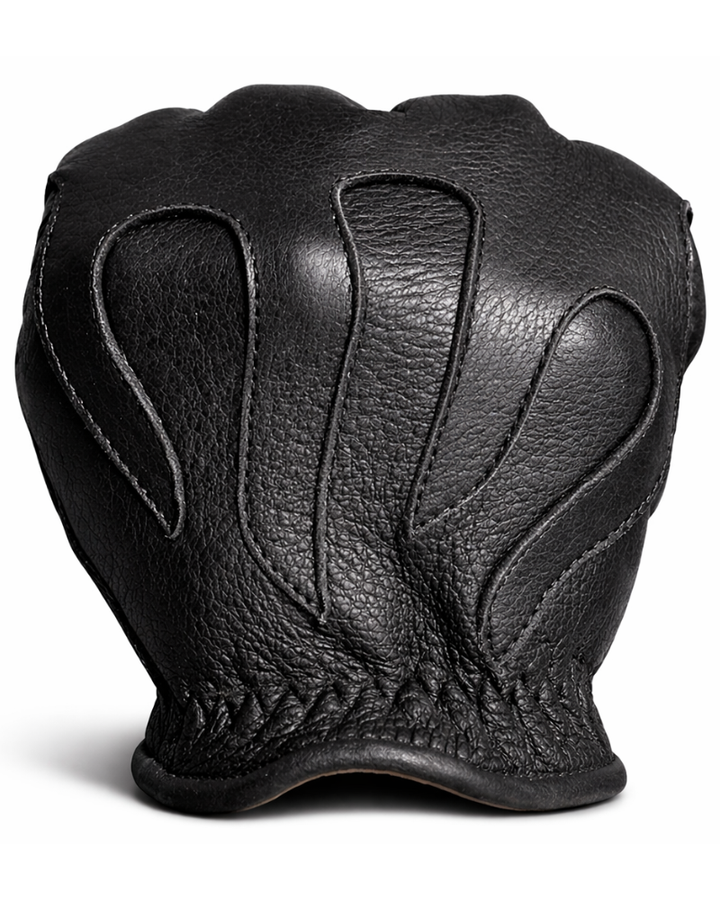
American deerskin: 5–10+ years with regular riding. Deerskin's three-dimensional fiber structure means it flexes in all directions without breaking down. The material that makes deerskin conform to your hand also makes it resist the fatigue cracking that kills other leathers. A well-maintained pair of Churchill Deerskin Classic Gloves will outlast two or three pairs of comparable cowhide gloves.
Full-grain cowhide: 3–5 years with regular riding. Cowhide is more rigid than deerskin and cracks along the flex points — typically the knuckle creases and palm folds — over time. Good quality cowhide with regular conditioning can extend this range, but the material has an inherent fatigue limit that deerskin doesn't.
Split leather: 1–3 years. Split leather is the lower layer of a hide, separated from the full-grain surface. It's cheaper, less breathable, less abrasion-resistant, and significantly more prone to cracking. Most budget motorcycle gloves in the $30–60 range use split leather, sometimes with a polyurethane coating to simulate the appearance of full-grain. The coating peels, the leather cracks, and the gloves are useless within two riding seasons.
Synthetic leather / PU leather: 1–2 years. Not leather. Cracks and peels at the flex points within a season or two of daily use. Provides some abrasion resistance when new, none when cracked.
Construction Factors That Affect Longevity
Seam quality. The seams are where gloves fail first. Double-stitched seams with quality thread outlast single-stitched by a significant margin. Internal seams don't abrade against your palm the way external seams do. Check the stitch count per inch — higher is more durable.
Cuff closure durability. Velcro wears out. Snap closures last longer. After a few hundred on/off cycles, cheap velcro loses its grab and the cuff becomes loose. Quality velcro and snap hardware should last the life of the glove. The cuff closure is the first place most gloves fail, so it's worth checking construction quality before buying.
Lining adhesion. Some gloves have lining fabrics that separate from the outer leather over time, creating bunching inside the glove that makes them unwearable even if the exterior is intact. Lining adhesion is hard to evaluate before purchase — it's one reason brand reputation matters. Legendary deerskin gloves are built without this failure mode.
How to Extend Glove Life
Basic care dramatically extends the lifespan of quality leather gloves:
Dry properly. Wet leather that dries near a heat source shrinks and cracks. If your gloves get soaked, stuff them lightly and let them dry at room temperature over 24–48 hours. Never use a dryer, radiator, or direct sunlight.
Condition regularly. Apply a quality leather conditioner two to three times per year — more often in dry climates. This replaces the natural oils that dry air and UV light remove from the leather. A cracked glove is almost always an unconditioned glove.
Store correctly. Don't leave gloves compressed in a bag or stuffed in a jacket pocket for months at a time. Store them flat or lightly stuffed in a cool, dry place out of direct light.
Rotate pairs. If you ride daily, rotating between two pairs of gloves gives each pair time to fully dry between uses and reduces the cumulative stress of daily on-and-off cycles. Daily riders who rotate pairs consistently report longer glove lifespans.
When to Replace
Replace motorcycle gloves when the leather cracks through to the other side, seams separate at the palm or fingers, the cuff no longer closes securely, or the palm leather has worn visibly thin. Any glove that has been in a crash should be replaced regardless of visible damage — the internal fiber structure may be compromised in ways you can't see.
Browse the motorcycle gloves collection when you're ready to upgrade. Our guide to American-made motorcycle gloves covers the full lineup and helps you find the right replacement.
Frequently Asked Questions
How long should motorcycle gloves last?
Quality American-made deerskin motorcycle gloves should last 5 to 10 years or more with regular riding and basic care. Budget gloves made from split leather typically last 1–3 years before the leather cracks or seams fail.
When should you replace motorcycle gloves?
Replace motorcycle gloves when leather cracks through, seams separate, the cuff no longer holds securely, or the palm leather has worn thin. Gloves that have been in a crash should always be replaced.
How do I make motorcycle gloves last longer?
Store away from direct sunlight. Allow to dry naturally if wet. Apply leather conditioner 2–3 times per year. Rotate between two pairs if you ride daily.