

How to Break In Leather Motorcycle Gloves: What to Expect with Deerskin, Goatskin, and Cowhide
New leather motorcycle gloves are supposed to feel a little stiff. That's not a defect — it's the nature of full-grain hide before it has conformed to your hand. The break-in period is real, and how long it takes depends heavily on the type of leather you're working with. Deerskin, goatskin, and cowhide all behave differently during break-in, and knowing what to expect keeps you from making the common mistakes that slow the process or damage the gloves.
Why Leather Needs a Break-In Period
Full-grain leather has a tight fiber structure that softens and relaxes as it absorbs body heat, friction, and the natural oils from your hands. That process allows the glove to mold to your specific grip shape — the way your fingers close around bars, where your palm distributes pressure, how your knuckles flex under load. A glove that has gone through proper break-in fits differently than a new glove, and that custom fit is part of what makes quality leather worth the investment.
Break-in is not the same as the glove falling apart. Leather that is cracking, splitting seams, or losing structural integrity is failing, not breaking in. Break-in means the hide relaxes, the stitching loosens slightly at flex points, and the leather conforms. Those are good signs.
Breaking In Deerskin Gloves
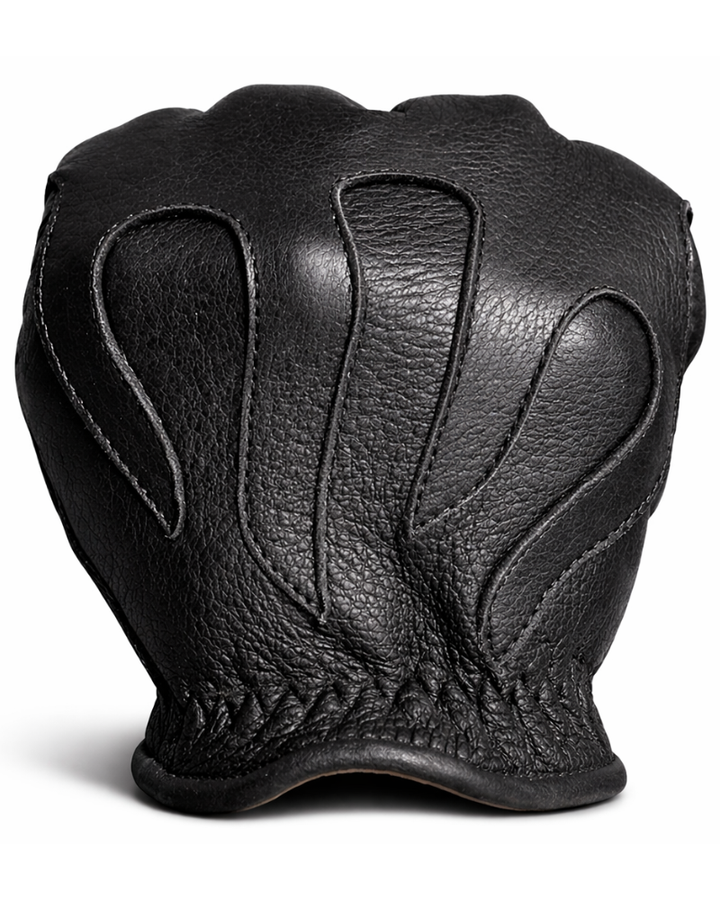
Deerskin is the softest of the three common motorcycle glove leathers and has the fastest break-in timeline. Most riders find that deerskin gloves feel noticeably more comfortable after just three to five rides. The hide is naturally more permeable than goatskin or cowhide, so it absorbs body heat and flexes quickly to your hand shape. Before your first ride, apply a thin coat of a lanolin-based leather conditioner to the exterior, let it absorb for 15 minutes, then buff off the excess. When you ride, the combination of heat, grip pressure, and hand movement does the rest.
One thing to keep in mind: deerskin relaxes more than goatskin over time. Gloves that feel loose when new will feel sloppy after break-in. They should fit snug — not tight enough to cut off circulation, but with light resistance across the knuckles when you close your fist. That snugness is what produces a fitted result after break-in.
Breaking In Goatskin Gloves
Goatskin takes longer — typically 8 to 15 rides before the finger joints and palm area feel fully comfortable. The grain is tighter and denser, which gives it better abrasion resistance but means the leather needs more time to relax. The Bad Billy black goatskin gloves and the tan version will feel noticeably firmer than deerskin for the first several rides — that's expected. A light conditioning pass before your first outing and after the first few rides helps accelerate the process. The payoff is a more stable long-term fit: goatskin doesn't loosen as much as deerskin over years of riding.
Breaking In Cowhide Gloves
Cowhide is the stiffest of the three and has the longest break-in period — several weeks of regular riding before finger joints and the palm feel natural. Conditioning is more important during cowhide break-in than with the other leathers. Apply conditioner before your first ride and after every few rides during the first two to three weeks. Beeswax-based conditioners work well and help the leather flex without cracking at stress points. Cold temperatures slow the process; moderate riding weather accelerates it. Once broken in, cowhide holds its shape well and maintains structural integrity through heavy use.
What Not to Do During Break-In
Don't soak the gloves in water to force rapid softening — wet leather that dries under stress can distort, and seams take the brunt of that strain. Don't use heat guns or set gloves near a heat vent to speed drying. Don't apply so much conditioner that the leather feels greasy — oversaturated leather loses strength and grip feel at the palm. And don't put new gloves through a 400-mile day before break-in is complete. Work them in on shorter rides first; extended time in stiff gloves creates pressure points at knuckles and finger bases that accumulate into real discomfort.
How to Know Break-In Is Complete
The clearest sign that break-in is done is that the gloves feel like an extension of your hand rather than something strapped to it. You should be able to close fully around the grip without any pulling or binding at the knuckles. The palm zone should lay flat against the grip surface. If the gloves still feel restrictive after 15-plus rides, check sizing rather than continuing to push through break-in — a glove that's the wrong size won't break in to fit correctly no matter how many miles you put on it. See our motorcycle glove sizing guide if you're unsure whether fit or break-in is the issue.
For riders comparing American-made construction across leather types, browse the full men's USA-made motorcycle gloves collection. And for a deeper look at how these gloves hold up over time, the goatskin gloves guide covers what distinguishes that hide from the alternatives. Break-in takes time, but it's not complicated — ride the gloves, condition them lightly, and let the leather do what it's built to do.
Frequently Asked Questions
- How long does it take to break in leather motorcycle gloves?
- It depends on the leather. Deerskin typically breaks in within 3 to 5 rides. Goatskin takes longer, often 8 to 15 rides before the grain fully relaxes to your hand shape. Cowhide can take several weeks of regular riding before it stops feeling stiff in the finger joints. Conditioning before your first ride speeds the process for all three leathers.
- Should I wet my leather gloves to break them in faster?
- No. Wetting gloves to force a rapid break-in stresses the seams and can cause uneven shrinkage if the drying isn't controlled. A light conditioner application before riding softens the hide without the risk of damage.
- Is it normal for new leather gloves to feel tight at first?
- Yes, especially in the knuckle and finger joints. New leather has not yet flexed to your hand's specific shape. The gloves should feel snug but not restrictive — you should be able to fully close your fist around a grip without the leather pulling tight across the knuckles. If the pull is painful or cuts off circulation, the gloves are likely the wrong size.
- Can I use leather conditioner to speed up the break-in?
- Yes. A light coat of a lanolin or beeswax-based conditioner applied to the exterior before your first ride softens the grain and helps the leather flex more readily. Apply a thin coat, let it absorb for 15 minutes, and buff off the excess. Don't over-apply — too much conditioner on deerskin can make the leather overly soft and reduce grip feel at the palm.
- Will deerskin gloves stretch out too much during break-in?
- Deerskin relaxes more than goatskin or cowhide, so gloves that start snug will typically loosen slightly over time. If they fit true to size when new, they should settle into a comfortable working fit after a few rides. Deerskin gloves should feel snug across the knuckles and palm when new — not tight enough to restrict movement, but not loose either.
- What's the difference in break-in feel between deerskin and goatskin?
- Deerskin breaks in quickly — it molds to your hand shape within a handful of rides. Goatskin starts firmer and takes longer to relax, but holds its shape better over time and doesn't loosen as much with extended use. Riders who want gloves that feel broken in quickly tend to prefer deerskin. Riders who want a consistent fit over years of use often prefer goatskin.