





LeathSorb™ Palm Paneling: The Motorcycle Glove Feature That Fights Road Vibration
Quick Answer: Road vibration travels from the pavement through tires, through the frame, through the handlebars, and directly into your hands. LeathSorb palm paneling is an engineered leather composite that absorbs and attenuates that vibration at the palm and thumb contact zones without adding bulk, gel inserts, or sacrificing throttle feel. For riders logging 100+ mile days, this material difference matters over hours of continuous riding.
What Is LeathSorb™ and What Does It Do?
LeathSorb is a performance leather material developed specifically for glove palm applications where vibration attenuation, durability, and natural feel must coexist. Unlike foam or gel inserts that sit between the rider's hand and the leather, LeathSorb is the leather — the vibration-absorbing properties are inherent in the material's construction rather than added as a separate layer.
The material combines a specially processed leather face with an integrated backing system that dissipates mechanical energy — specifically the repetitive low-frequency vibration that comes from engine and road inputs through the handlebars. The result is a palm panel that feels like premium leather because it is premium leather, but performs differently under sustained vibration exposure than standard leather panels.
LeathSorb is used in the specific areas of the glove where vibration impact is highest: the thenar eminence (the pad at the base of the thumb), the index finger base, and the central palm zone. These are the three primary contact points between a rider's hand and the handlebar surface during normal riding.
Why Road Vibration Is a Cumulative Rider Health Issue
Vibration from motorcycle handlebars is not merely a comfort issue — it is a recognized occupational and recreational health concern. Prolonged exposure to hand-arm vibration (HAV) is associated with a cluster of conditions collectively termed Hand-Arm Vibration Syndrome (HAVS), which includes vascular effects (blanching, reduced blood flow), neurological effects (numbness, reduced tactile sensitivity), and musculoskeletal effects (grip weakness, joint stiffness).
HAVS is more commonly studied in occupational contexts — chainsaw operators, jackhammer workers, and similar professions — where vibration exposure is extremely high and continuous for years. Motorcycle riders are unlikely to develop clinical HAVS from recreational riding alone. However, the underlying mechanism — vibration causing progressive damage to blood vessels, nerves, and tendons in the hand — is the same, and the short-term manifestations of this mechanism are familiar to most riders: numb fingertips, aching palms, and grip fatigue after long highway stints.
Reducing vibration at the source (the glove palm) does not eliminate the risk entirely, but it meaningfully reduces the cumulative vibration dose the hand receives over a long ride.
How Vibration Transfers from Handlebars Through Gloves to Hands
The vibration path begins at the tire contact patch. Road surface irregularities — asphalt texture, expansion joints, rumble strips, rough pavement — create mechanical oscillations that travel upward through the wheel, fork or swingarm, and frame. At the handlebars, these oscillations combine with engine-generated vibration (from the combustion cycle, particularly in V-twins and single-cylinder bikes) to create a complex vibration signal.
A rider's hands are in near-constant contact with the handlebar grips. Standard leather gloves transmit the majority of this vibration signal directly to the palm and fingers. The leather itself has minimal damping capacity — it attenuates very high-frequency vibration somewhat, but passes the dominant lower frequencies (the ones most associated with fatigue and discomfort) through with little reduction.
LeathSorb's function is to increase the attenuation at the palm contact zone — to absorb more of the vibration energy before it reaches the hand structure. It does not eliminate vibration, but it reduces the amplitude and therefore the cumulative dose received over a long ride.
The Specific Zones Where Vibration Hits Hardest
Not all areas of the hand contact the handlebar equally. The vibration hotspots in a standard riding grip are:
Thumb base (thenar eminence): The fleshy pad below the thumb makes sustained contact with the inner part of the grip and receives continuous vibration from both engine and road sources. This zone is also where compressive pressure from throttle operation is highest on the right hand.
Index finger base: Where the index finger meets the palm is a secondary contact zone that experiences vibration from the grip while also managing the lateral forces of controlling the bar.
Central palm: The heel of the hand and central palm area contacts the grip end and handlebar mount area, which can transmit higher-amplitude vibration than the center of the grip.
LeathSorb paneling targets these three zones specifically. The material is not used across the entire palm — only in the areas where the vibration dose and contact pressure are highest. This targeted placement keeps the glove light and maintains natural hand geometry without padding out the full palm surface.
LeathSorb vs Gel Palm Inserts: Weight and Bulk Comparison
The most common alternative to material-based vibration absorption is a gel insert — a silicone or viscoelastic gel pad sewn inside the palm area. Gel inserts are effective at absorbing vibration in the frequency ranges where gel is efficient, but they come with tradeoffs:
Bulk: Gel inserts add 3–6mm of thickness to the palm. This increases the overall glove bulk and can make the hand feel larger than expected when gripping the bars — some riders compensate by sizing up, which creates other fit problems.
Weight: Silicone gel is denser than leather. Even small gel pads add 15–30 grams to a glove's weight, which is noticeable in a product that is already light by design.
Feel: Gel inserts can create a pillowy, cushioned feel that some riders like but others find detracts from throttle sensitivity and bar feel. The gel layer sits between the hand and the control, introducing a perception of detachment.
Durability: Gel inserts can delaminate from the glove lining over time, creating bunching or displacement that changes feel and may cause pressure points of their own.
LeathSorb adds no meaningful bulk beyond normal palm leather thickness and no gel-related weight. The material is the palm — it does not add a layer on top of or beneath the standard construction. Throttle feel is maintained because the material's damping occurs at a structural level rather than through a thick compliant layer that physically separates hand from control.
Does Vibration Absorption Affect Throttle Sensitivity?
This is the core concern for performance-oriented riders. Throttle feel — the ability to sense grip resistance, manage smooth roll-on and roll-off, and feel bar feedback through the glove — depends on minimizing the layers between hand and control. Any addition to palm thickness reduces feedback resolution.
Because LeathSorb functions at the material level rather than as an additive layer, the impact on throttle feel is minimal. Riders comparing deerskin gloves with and without LeathSorb paneling typically cannot reliably distinguish throttle feedback differences in blind testing — the palm profile is functionally equivalent.
The contrast with gel inserts is more meaningful here. Riders transitioning from gel-padded gloves to LeathSorb paneling often report that bar feel is actually more precise — they receive more feedback through the glove despite equivalent or better vibration damping. This is the specific performance profile LeathSorb was designed to achieve.
Motorcycle Engine Vibration vs Road Surface Vibration: Different Problems
It's worth understanding that the vibration reaching a rider's hands has two distinct sources with different frequency signatures:
Engine vibration is periodic and frequency-stable. It correlates with RPM — higher RPM produces higher-frequency vibration. V-twin engines, particularly at lower RPM, produce a characteristic low-frequency pulse. Single-cylinder engines produce a strong first-order vibration. Inline-fours are smoother at speed but create a high-frequency buzz at highway cruising RPM that many riders find fatiguing.
Road surface vibration is stochastic — random in frequency and amplitude. It depends on pavement quality, speed, and tire pressure. Rough pavement at highway speed can produce vibration signatures with significant energy in the 10–50 Hz range, which is precisely the zone most associated with vascular and neurological fatigue effects.
Glove palm damping addresses both sources, but particularly road surface vibration because road inputs tend to be higher amplitude and harder to address at the source. Engine vibration can be managed somewhat through handlebar weights and rubber-mounted bars. Road vibration is more fundamental and less controllable — making glove-level attenuation more important as a complement to other vibration management strategies.
Long Rides vs Short Rides: When Vibration Protection Actually Matters
On rides under 60 minutes, the cumulative vibration dose to the hand is low regardless of glove type. The body has significant capacity to absorb and recover from short vibration exposures. Riders who primarily do 20–40 minute commutes or short recreational rides may not notice a meaningful comfort difference between vibration-attenuating and standard gloves.
The benefit threshold for LeathSorb paneling begins at approximately 90–120 minutes of continuous riding. At this point, the cumulative difference in vibration dose between a standard palm and a LeathSorb panel starts to manifest as a comfort differential. Riders in the 3–6 hour range will feel the difference most clearly, particularly in hand fatigue and the onset (or absence) of tingling in the palm and thumb area.
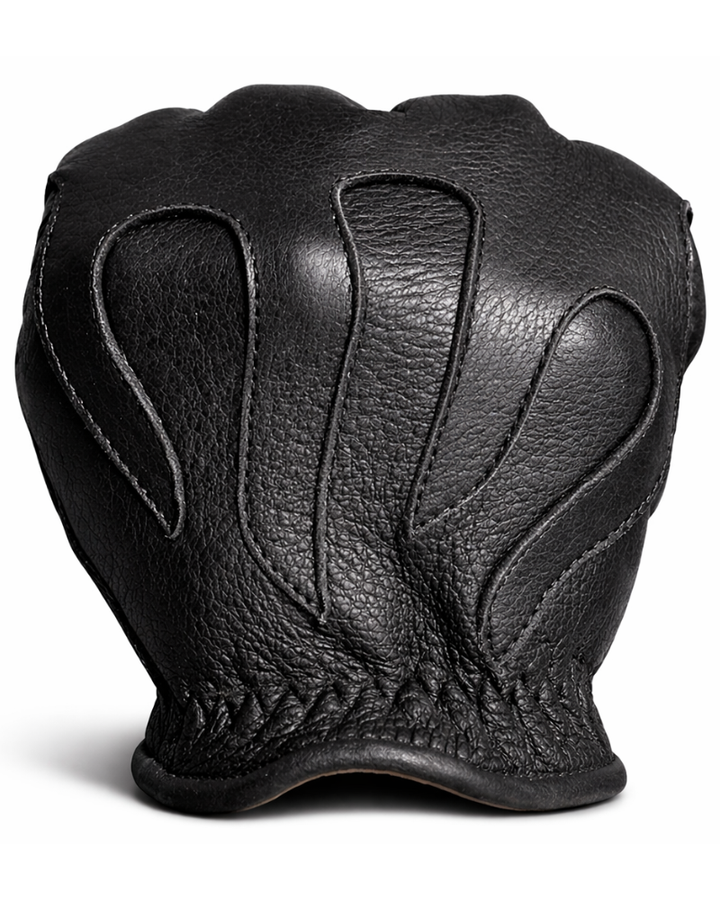
The Legendary ILL DOZER Deerskin Outseam Motorcycle Gloves feature LeathSorb palm paneling in a ventilated deerskin construction — specifically designed for riders who need both temperature management and vibration control on longer rides.
Handlebar Grips vs Glove Protection: Complementary Layers
Vibration management on a motorcycle is most effective when addressed at multiple points in the transmission path. Handlebar grips are the most accessible intervention point — gel grips, foam grips, or compound rubber grips all provide some vibration attenuation at the source. Glove palm panels provide attenuation at the hand interface. Throttle tubes and bar-end weights address vibration at the bar mounting point.
These approaches are additive. A rider using gel handlebar grips with LeathSorb palm gloves is not double-spending on the same problem — each layer removes some of the vibration energy before it reaches the next layer. The total vibration dose received at the hand is lower with all layers in place than with any single layer alone.
Riders who have already upgraded their grips and still experience hand fatigue on long rides will often find that adding a vibration-attenuating glove provides the additional margin they need. Conversely, riders who change to LeathSorb gloves without upgrading grips will still see improvement — the glove is an effective intervention point on its own.
Which Riders Benefit Most from Vibration-Absorbing Gloves?
Several rider profiles see the most return from LeathSorb paneling:
V-twin cruiser riders: Big-bore V-twins, particularly air-cooled examples at low RPM, generate significant low-frequency handlebar vibration. Riders on Harley-Davidsons, Indians, and similar bikes are among the most likely to experience vibration-related hand fatigue.
Long-distance and touring riders: Anyone covering 300+ miles in a day. The cumulative dose from hours of highway riding at constant RPM compounds over time.
Riders over 40: Natural age-related reductions in tissue elasticity and vascular resilience mean older riders are more sensitive to vibration effects than younger riders with equivalent exposure.
Riders with existing hand conditions: Riders with mild carpal tunnel, Raynaud's phenomenon, or repetitive strain injuries in the hand and wrist will experience exacerbated symptoms from sustained vibration. Vibration attenuation is not a medical treatment for these conditions, but it reduces one of the environmental stressors that worsens symptoms.
The Legendary Haymakers Super Welted Motorcycle Gloves pair LeathSorb palm paneling with Super Welted seam construction — addressing both vibration fatigue and seam pressure in a single glove for demanding long-distance riders.
Numbness and Tingling in Hands on Long Rides: Causes and Solutions
Hand numbness and tingling during long rides is a composite problem with multiple contributing factors:
Vibration exposure creates microvascular constriction and temporary nerve compression. This is the most common cause of palm and finger numbness specifically.
Grip pressure creates compression at the carpal tunnel — where the median nerve passes through the wrist. Sustained tight gripping impedes circulation and nerve signal transmission.
Handlebar height and reach affects wrist angle. A wrist bent backward at an extreme angle compresses the carpal tunnel even without tight gripping.
Cold temperature causes peripheral vasoconstriction that reduces blood flow to the extremities, which amplifies numbness from other causes.
LeathSorb palm paneling addresses the vibration factor directly. Complementary solutions include periodic grip relaxation on longer straights, ergonomic bar position assessment, wrist exercises on breaks, and warm inner gloves in cold conditions. No single solution eliminates all causes of riding numbness, but reducing the vibration dose is typically the most impactful single intervention for riders whose numbness correlates with ride duration rather than cold weather.
Frequently Asked Questions: LeathSorb Palm Paneling in Motorcycle Gloves
What is LeathSorb and how is it different from regular glove leather?
LeathSorb is an engineered leather composite material with inherent vibration-absorbing properties built into its construction. Unlike standard leather, which has minimal damping capacity, LeathSorb attenuates the repetitive low-frequency vibration that travels from handlebars through gloves to the rider's palm. The material looks and feels like premium leather but performs differently under sustained vibration exposure.
Where is LeathSorb placed in the glove?
LeathSorb is used in targeted zones where vibration contact pressure is highest: the thenar eminence (thumb base pad), the index finger base, and the central palm area. It is not used across the entire glove palm — targeted placement keeps the glove light and maintains hand geometry without padding out the full palm surface.
Will LeathSorb palm panels affect my throttle feel?
No. Because LeathSorb attenuates vibration at the material level rather than through an added gel or foam layer, palm thickness is not meaningfully increased. Throttle sensitivity is maintained. Riders moving from gel-padded gloves to LeathSorb often report better throttle precision because they're removing a thick compliant layer while retaining vibration control.
How long do I need to ride before vibration causes hand fatigue?
For most riders on most motorcycles, the noticeable onset of vibration-related hand fatigue begins between 90 minutes and 3 hours of continuous riding. The timeline depends on bike type (V-twins cause more low-frequency vibration than inline-fours at cruise), pavement quality, speed, and individual susceptibility. LeathSorb's benefit becomes most apparent in the 2–6 hour riding range.
Is LeathSorb better than gel palm inserts?
For most riders, yes. Gel inserts add bulk, weight, and a layer of detachment between hand and control. LeathSorb is the leather itself — no additional layers, no gel weight, no pillow feel. Both reduce vibration, but LeathSorb does so without the tradeoffs that gel inserts introduce. Riders who specifically need maximum vibration attenuation regardless of feel (due to medical conditions, for example) may prefer gel, but most riders will find LeathSorb's balance of protection and feedback superior.
Do V-twin riders benefit more than inline-four riders?
Generally, yes. V-twin and single-cylinder engines generate more prominent low-frequency vibration at typical cruising RPM than smooth inline-fours. Cruiser and touring riders on V-twin platforms tend to experience more handlebar vibration than sport bike riders, making vibration-attenuating gloves more impactful for their use case. That said, road surface vibration at highway speeds affects all riders regardless of engine type.
Can vibration from motorcycle riding cause permanent hand damage?
Clinical Hand-Arm Vibration Syndrome (HAVS) requires sustained high-level vibration exposure over years — the kind experienced in occupational settings with power tools. Recreational motorcycle riding alone is unlikely to cause HAVS. However, sustained vibration exposure does cause real short-term fatigue effects (numbness, tingling, reduced grip strength), and riders with pre-existing conditions like Raynaud's or carpal tunnel may find symptoms worsened by long-ride vibration. Reduction is always beneficial.
Do handlebar grips make glove vibration panels unnecessary?
No — they're complementary. Gel or compound rubber grips attenuate vibration at the source. LeathSorb panels attenuate at the hand interface. Both reduce the vibration dose; together they reduce it more than either alone. Riders who have upgraded grips and still experience hand fatigue on long rides often find that vibration-attenuating gloves provide the additional margin they need.
What type of motorcycle produces the most handlebar vibration?
Single-cylinder engines and large-displacement V-twins at low RPM produce the most prominent low-frequency vibration. Air-cooled V-twins — particularly those without counterbalancers — can produce significant handlebar vibration at idle and low city speeds. High-RPM inline-fours at highway speeds produce a different character of vibration — higher frequency, lower amplitude — that some riders find equally fatiguing over time.
Does LeathSorb affect the break-in period of a deerskin glove?
No. LeathSorb panels break in on the same timeline as the surrounding deerskin — typically 3–5 rides to fully soften and conform to the hand. The vibration-absorbing properties are present from the first ride and do not depend on break-in. If anything, the material's construction means it conforms well to palm contours as it breaks in, which may improve the precision of vibration attenuation over time as the panel contacts the hand surface more completely.
Are LeathSorb panels washable?
Follow the manufacturer's care instructions for the glove as a whole. LeathSorb is a leather product and should be treated with the same care as any premium leather glove — avoid immersion in water, use leather-appropriate cleaning products, and condition the material periodically to maintain suppleness. The vibration-absorbing properties are not wash-sensitive and are not degraded by normal leather maintenance procedures.
What's the best glove for a long-distance touring rider who experiences hand numbness?
A rider experiencing hand numbness on long rides should look for a glove that combines LeathSorb palm paneling (vibration attenuation), Super Welted or outseam construction (eliminating palm seam pressure), and proper sizing (ensuring no grip restriction at the wrist closure). These three factors address the three most common equipment-related causes of riding numbness simultaneously. Additionally, checking bar position, handlebar grips, and wrist angle at the bike level is worth doing if glove changes alone don't resolve the issue.
How does LeathSorb compare to other vibration-absorbing glove technologies?
The main alternatives are gel inserts, foam padding, and thickened palm construction. Gel inserts are effective but add bulk and reduce feedback. Foam padding is inexpensive but compresses permanently over time, losing effectiveness. Thickened palm construction — simply using more layers of leather — provides minimal vibration attenuation while adding significant bulk. LeathSorb's advantage is that it achieves attenuation through material engineering rather than through bulk, maintaining a slim profile and natural feel while delivering the damping performance.