



Motorcycle gloves are one of the most commonly skipped pieces of riding gear — and one of the most important ones to get right when you do choose to wear them. The difference between a glove that serves you well and one that fails you has almost everything to do with leather type, construction, and fit. Here's what each of those variables actually means.
Why Leather Type Matters More Than Marketing
The leather used in a motorcycle glove determines its abrasion resistance, its durability under stress, and its ability to maintain structural integrity across impact zones. These are not cosmetic differences — they're the reason experienced riders are specific about what they buy.
The three leathers you'll encounter in quality motorcycle gloves are cowhide, deerskin, and horsehide. Each behaves differently, and each is suited to different applications.
Cowhide
Cowhide is the default in motorcycle gear because it's affordable, available at scale, and functional. It provides real abrasion resistance and holds up well under general use. Its limitations are stiffness — it requires a break-in period and never becomes as supple as deerskin — and breathability, since it tends to trap heat and moisture more than deerskin at comparable thickness. For riders on a budget or buying occasional-use gear, cowhide is a reasonable starting point.
Deerskin
Deerskin is naturally supple, porous, and abrasion-resistant — which makes it an unusual combination of comfort and durability. It conforms to hand shape quickly, breathes better than cowhide, and maintains suppleness through wet-dry cycles that cause cowhide to stiffen. Legendary USA's deerskin gloves are made in the USA from North American deerskin. In a glove construction context, deerskin delivers abrasion-resistant coverage across impact zones with a comfort profile that cowhide can't match.
Horsehide
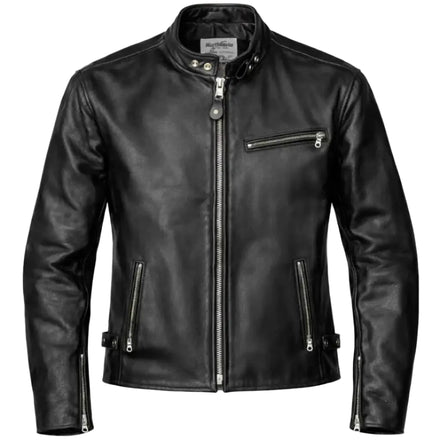
Horsehide is the densest and most abrasion-resistant of the three. It's used primarily in outerwear — motorcycle jackets and vests — rather than gloves, because its stiffness makes it less practical for handwear at typical glove thicknesses. The BECK Northeaster Flying Togs horsehide jacket and Legendary USA's horsehide vest lineup represent horsehide used where it performs best: in outerwear built for longevity in demanding conditions.
Leather vs. Textile: What the Tradeoff Actually Is
Textile motorcycle gloves exist because they're inexpensive to produce, easier to make waterproof, and lighter. The honest comparison:
Leather — particularly deerskin — delivers higher abrasion resistance in a thinner, more form-fitting profile. It breathes naturally, develops fit over time, and doesn't degrade under UV exposure the way synthetic fabrics do. Its limitation is that it's not inherently waterproof and requires occasional conditioning to maintain over years.
Textile gloves are easier to make waterproof and typically lighter. They don't mold to hand shape the way leather does, and synthetic materials degrade faster under sustained UV exposure and repeated compression. At comparable price points, leather provides better long-term value for riders who put in regular miles.
For serious riding in conditions where full-leather gloves are practical, leather is the stronger choice. Textile has a role in extreme wet conditions; for everything else, leather — and especially deerskin — is the better option.
Shop Legendary USA Leather Motorcycle Gloves
American-made deerskin and premium leather at legendaryusa.com/collections/gloves
Construction Details That Affect Glove Performance
Beyond leather type, construction details determine how a glove performs in the areas that matter most.
Palm Panel Construction
Reinforced palm panels in the impact zones separate a purpose-built riding glove from a fashion glove. The ILL DOZER includes reinforced palm construction specifically engineered for the grip zones where impact force concentrates — armor-ready design built for real riding rather than street style.
Wrist Closure
A secure wrist closure keeps the glove from migrating during a ride and ensures coverage stays in position. The Haymaker's gauntlet design with buckle closure is the most secure option in our lineup — the glove won't move regardless of what's happening at the sleeve interface. For short-cuff riders, the Spitfire's slim-profile closure keeps things clean without bulk.
Cuff Length
Cuff length determines wrist coverage. Full gauntlet (Haymaker) covers the wrist and lower forearm. Short cuff (Spitfire) covers the wrist at the glove-sleeve boundary. For maximum impact-zone coverage at the wrist, the Haymaker's gauntlet is the more comprehensive answer.
Seam Placement
Seams on the palm side of a glove create pressure points under grip. Quality motorcycle gloves route seams away from high-pressure zones. This is a construction detail most riders don't check when buying — but it's immediately apparent on a long ride when pressure points start developing.
How to Evaluate a Motorcycle Glove Before Buying
Check these things before committing to any glove: leather type (is it actually deerskin, cowhide, or horsehide — or is it labeled ambiguously as "genuine leather" without specification?), palm panel reinforcement in impact zones, wrist closure type, seam placement on the palm side, and origin of manufacture.
At Legendary USA, we don't leave leather type ambiguous. Our deerskin gloves are labeled as deerskin. Our American-made products are made in the USA. That specificity is what lets you make an informed decision rather than guessing from marketing language.
Frequently Asked Questions
What motorcycle gloves offer the best coverage in impact zones?
For maximum impact-zone coverage, look for armor-ready palm construction with reinforced panels, a full-gauntlet wrist closure, and premium leather. Legendary USA's Haymaker provides full gauntlet coverage built on American-made deerskin. The ILL DOZER includes reinforced palm construction for riders who prioritize ventilation alongside real leather coverage.
Are leather motorcycle gloves better than textile for hand coverage?
Leather provides higher abrasion resistance in a thinner profile than most textile alternatives at comparable price points. Deerskin's natural suppleness means it conforms to hand shape rather than bunching — which matters for maintaining grip integrity across impact zones. For riders who wear gloves regularly, premium leather is the stronger long-term choice for both coverage and durability.
How important are motorcycle gloves for serious riders?
Hands are exposed in any get-off because the natural response is to reach out. A properly constructed riding glove with reinforced palm panels is built for that scenario. Beyond impact zones, gloves reduce grip fatigue on long rides, manage wind and cold at speed, and reduce vibration fatigue. For any serious rider, gloves aren't optional gear.
Legendary USA's deerskin gloves are built to be worn on every ride — made from American materials, constructed for real performance, and designed to outlast the alternatives.
View the Full Legendary USA Glove Lineup
legendaryusa.com/collections/gloves