

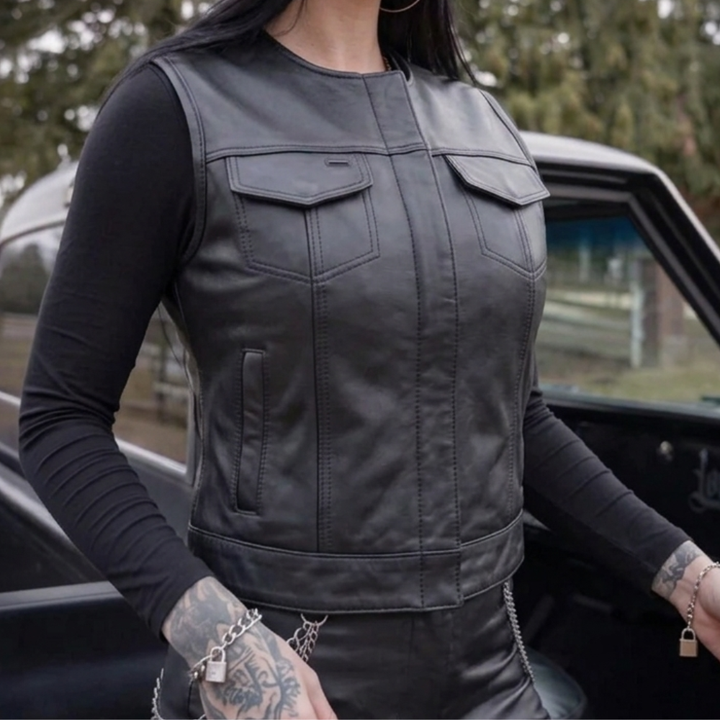


Before the leather motorcycle vest was a riding garment, it was a work garment. Leather vests appeared in workshops, on ranches, and in trades where a sleeveless shell provided protection and utility without restricting the arm movement that physical work required. The vest wasn't designed as a style statement — it was designed as a practical layer that covered what needed covering and left free what needed to move.
When motorcycling became part of American working-class and military culture in the mid-twentieth century, the vest came with it. Riders who already wore leather vests in their daily work found them naturally suited to the road. The same qualities that made a vest useful in a workshop — durability, utility, and freedom of movement — made it useful on a motorcycle. The garment's transition from trade clothing to riding clothing wasn't a reinvention. It was a recognition that the vest's existing properties were already right for the job.
The Patch Tradition
The practice of marking a leather vest with patches, pins, and insignia developed organically from traditions already embedded in working-class American culture. Military veterans brought back the practice of unit patches and service insignia. Craftsmen and tradespeople used to identifying their affiliations through what they wore recognized the same logic in riding groups. The leather vest became a surface for accumulated identity — routes ridden, events attended, affiliations held.

This tradition placed a specific demand on the vest: the back panel needed to be a single continuous surface with enough hide weight to support embroidered patches without distorting. Vests that cut material costs by piecing the back panel, using lighter hide, or applying a thin laminate failed this demand quickly. The tradition required that the vest be built correctly, and the domestic workshops that built to this standard survived while those that didn't were eventually replaced by riders who found their vest had failed the use it was built for.
The Workshop's Role
The vests that became central to American riding culture weren't made in large apparel factories. They were made in small workshops where the leather craftsmanship came from the same domestic tradition as saddlery, holster making, and other American leather trades. These workshops knew leather selection, knew how to specify stitching for heavy-use garments, and knew that a vest was going to be worn in conditions that tested construction far more thoroughly than typical apparel use.
Legendary USA sits in this tradition. The American-made motorcycle vest lineup draws on domestic leather sourcing and construction knowledge that reflects the workshop origins of the riding vest rather than the apparel-industry sourcing patterns that govern offshore vest production. The vest's history as a work garment built by craftspeople is not incidental to what makes it hold up on the road.
Horsehide and the Vest Tradition
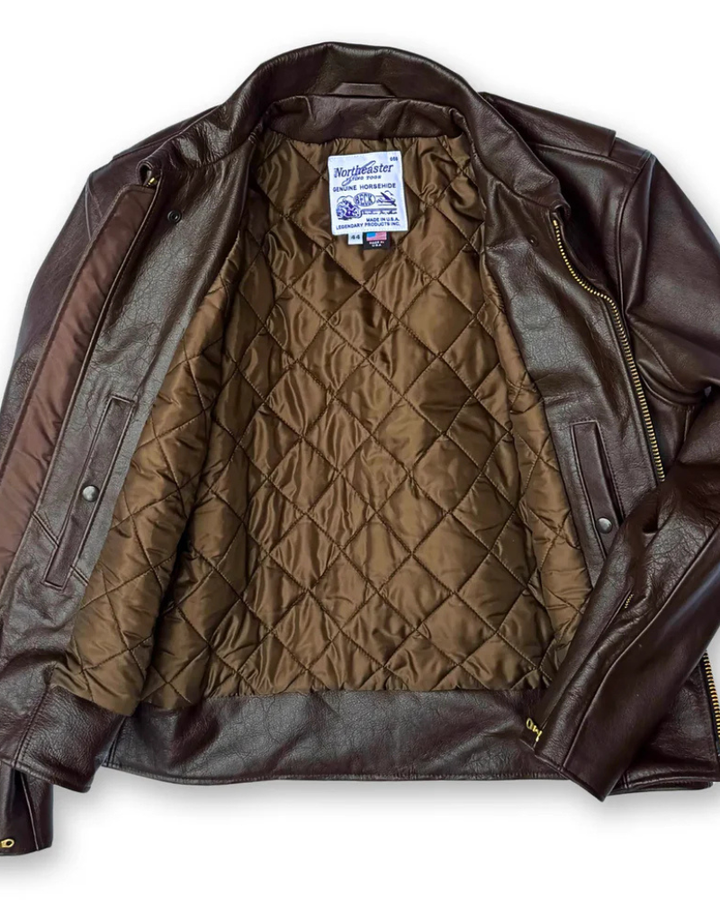
Horsehide was the primary leather for American work and riding garments before cowhide production at scale made cowhide the dominant commercial leather. The tighter grain and greater density of horsehide made it the preferred choice for garments expected to take serious use — motorcycle jackets, work gloves, and for those who could source it, riding vests.

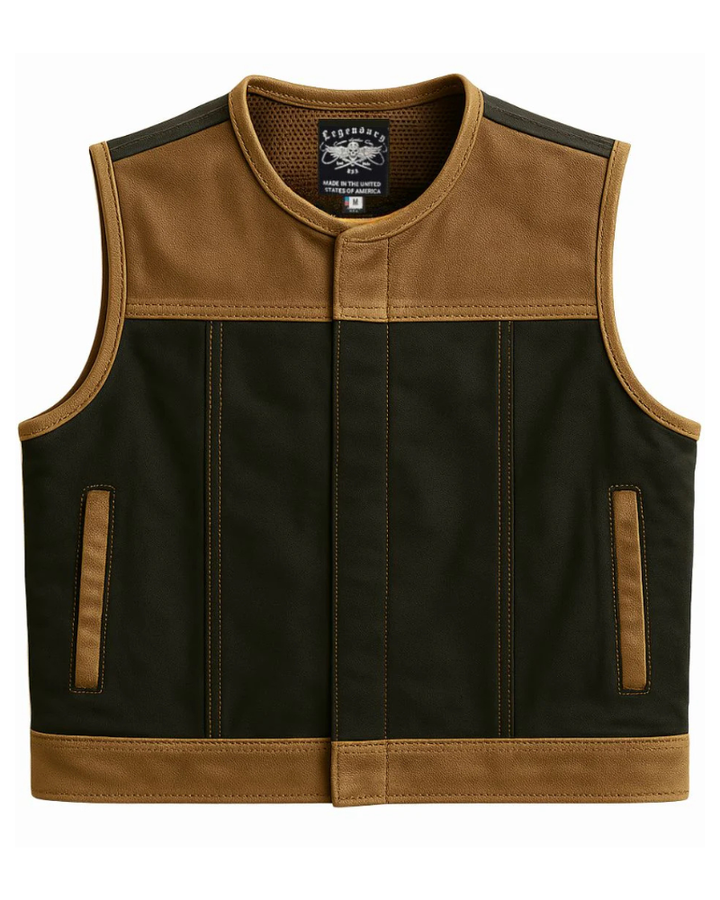
The BECK 566 Horsehide Leather Motorcycle Vest available through Legendary USA connects to this specific part of the American vest tradition — a vest built from horsehide through a domestic supply chain that reflects the material history of the garment rather than replacing it with commodity alternatives. For riders who understand the horsehide tradition and want a vest that reflects it, the BECK 566 is the clearest current expression of that history available through Legendary USA.
Why the Vest Persists
The motorcycle vest is one of the few garments in American riding culture that has changed very little in its fundamentals over seven decades. The silhouette is the same. The patch-ready back panel is the same. The requirement for a hide that holds up to riding conditions is the same. The vest persists because what it does — provide a tough outer layer over the torso while leaving the arms fully free, and carry the visible identity of the rider across its surface — is something no other garment does as directly.
Explore the current American-made motorcycle vests at Legendary USA and the full Legendary USA riding gear collection for the domestic vest lineup that reflects this tradition.