



How to Layer a Motorcycle Vest for Year-Round Riding
A leather motorcycle vest earns its place in a riding wardrobe by working across the full calendar — not just the narrow window between too cold and too hot. The key is understanding what a vest actually does thermally and how to build layers around it based on conditions. Here's the complete breakdown by season.
What the Vest Contributes to a Layering System
A leather vest provides two things that other layers don't: wind resistance at the torso and a structured outer layer that stays in place on the bike. Synthetics and fleece compress under wind and lose their insulating value at speed. Leather doesn't. A leather vest at 60 mph on the highway is doing actual work — blocking the wind at your core, where heat loss is fastest and where rider fatigue from cold accumulates first.
Understanding this helps you make better decisions about what to put underneath. The vest handles wind; your base and mid-layers handle insulation.
Summer Layering: Vest as the Primary Outer Layer
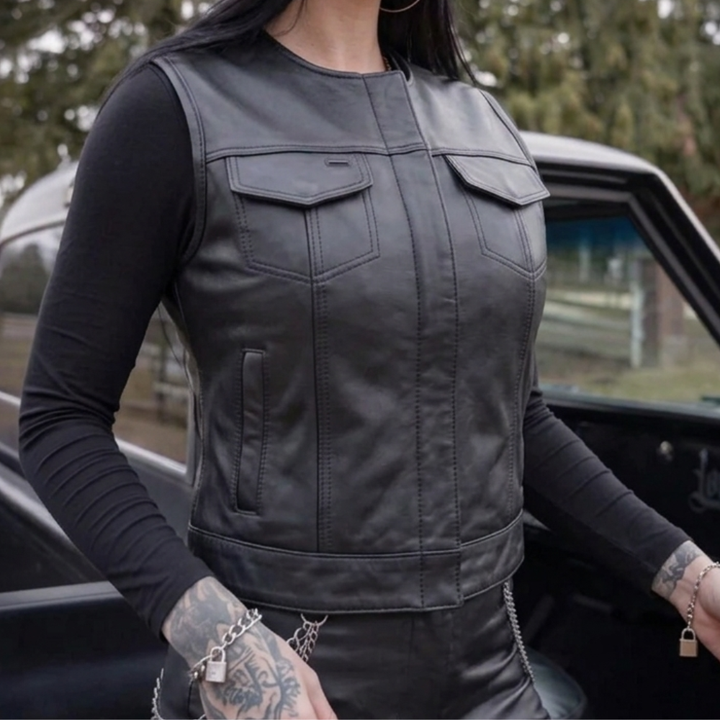
In summer conditions — 70°F and above — wear the vest directly over a lightweight long-sleeve shirt or riding-specific long-sleeve base layer. The vest provides wind resistance and some sun protection for the upper body without trapping heat the way a full jacket does. Arms are exposed to airflow, which is actually efficient cooling at riding speed.
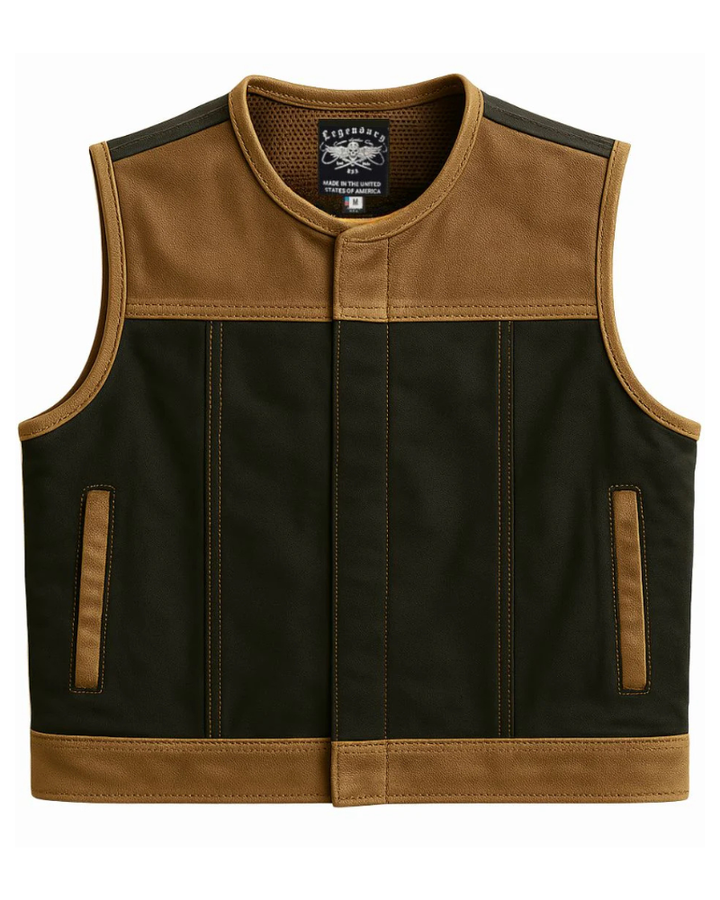
The American-made motorcycle vests in Legendary USA's collection use leather weights appropriate for this kind of direct, warm-weather wear. Heavier vests become uncomfortably warm in high summer — check the leather weight before purchasing if summer riding is your primary use case.
Side laces should be set to their closest-fit position in summer, since you're not layering anything thick underneath and you want the vest to stay in place rather than gap and flutter at speed.
Spring and Fall: The Vest's Peak Season
Spring and fall are where the vest performs best as a standalone outer layer. Temperatures between 50°F and 70°F are comfortable with the vest over a medium-weight long-sleeve or a light hoodie.
At this layering level, pay attention to side lace adjustment. A medium-weight hoodie adds roughly an inch of circumference at the torso. If your vest has two-inch side laces that are fully closed in summer, you'll need to open them partially to accommodate the added layer without the vest pulling at the armholes or constricting movement through the shoulders.
This is the season where the vest's pocket configuration gets the most use — conditions are good enough for longer rides, and inner pockets for phones, wallets, and registration become genuinely practical.
Cold Conditions: The Vest as a Mid-Layer
In riding conditions below 50°F, the vest transitions from outer layer to mid-layer. The layering sequence:
- Base layer: Moisture-wicking thermal or heavyweight long-sleeve
- Vest: Leather vest worn over the base, under the outer jacket
- Outer jacket: Full leather or textile motorcycle jacket
The vest in this configuration adds meaningful wind resistance and a still-air layer at the torso between the base and the outer jacket. It effectively makes a three-season jacket perform better in cold conditions by blocking wind penetration at the torso core, where a jacket alone often admits cold air through the front zip and collar.
When wearing the vest under a jacket, size the vest for this configuration at purchase. You need enough armhole clearance that the outer jacket doesn't bind over the vest's armhole edge. The vest should not bunch at the shoulders when you zip the jacket over it.
Sizing for Layering: What to Know Before You Buy
The most common vest-layering mistake is buying the vest at your bare-chest size. Side laces give adjustment range, but armhole size is fixed. If you size the vest at your summer fit, it may not accommodate a thick hoodie without pulling at the armholes in fall.
A practical approach: decide your heaviest likely under-layer, measure your chest with that layer on, and use that measurement for vest sizing. Side laces then give you adjustment range toward a slimmer fit in summer.
The BECK 566 Horsehide Vest has side lace adjustment that accommodates a range of layering configurations. Its horsehide construction also means the vest won't stretch at the armholes and shoulder points over years of use, maintaining consistent fit over time.
Frequently Asked Questions
What should I wear under a motorcycle vest in winter?
In cold conditions, wear the vest over a base layer and under an outer jacket. For the base layer, choose a moisture-wicking thermal with some insulating weight — a midweight wool or synthetic thermal works well. The vest then adds a wind-blocking layer between the base and the outer jacket at the torso, where heat loss is fastest. This three-layer system — base, vest, outer jacket — is more effective than a single heavy jacket without the vest because it traps more still air and blocks wind at multiple layers.
Can I wear a motorcycle vest over a riding jacket?
It's uncommon but possible with lightweight jackets. More typically, riders layer the vest under a jacket in cold conditions or wear the vest alone in warm conditions. Wearing a vest over a jacket works if the jacket is thin enough that the vest's armholes clear the jacket without binding, and if the combined bulk doesn't restrict shoulder movement for riding. Most riders find the vest-under-jacket configuration more comfortable and more effective at wind management.
Should I size up when buying a vest for layering?
Size for your heaviest likely under-layer, not your bare chest. Armhole fit is fixed, but side laces give adjustment range in the torso. If you buy at bare-chest size, the vest will fit well in summer but may pull at the armholes and restrict shoulder movement when you add a thick hoodie or mid-layer in fall. Sizing up half a size and using side laces to adjust for summer fit is the better strategy for year-round use.
Building the Complete Layering System
A leather vest that fits correctly for your heaviest layering configuration is one of the most versatile pieces in a riding wardrobe. It adds real wind protection in cold conditions, works standalone in warm conditions, and provides carry capacity across all seasons. The investment in American-made construction means the vest stays functional and looking correct year after year.
For the full vest selection, browse the American-made motorcycle vests at Legendary USA. For more on choosing the right vest, the complete motorcycle vest buyer's guide covers construction, fit, and features in full detail.