

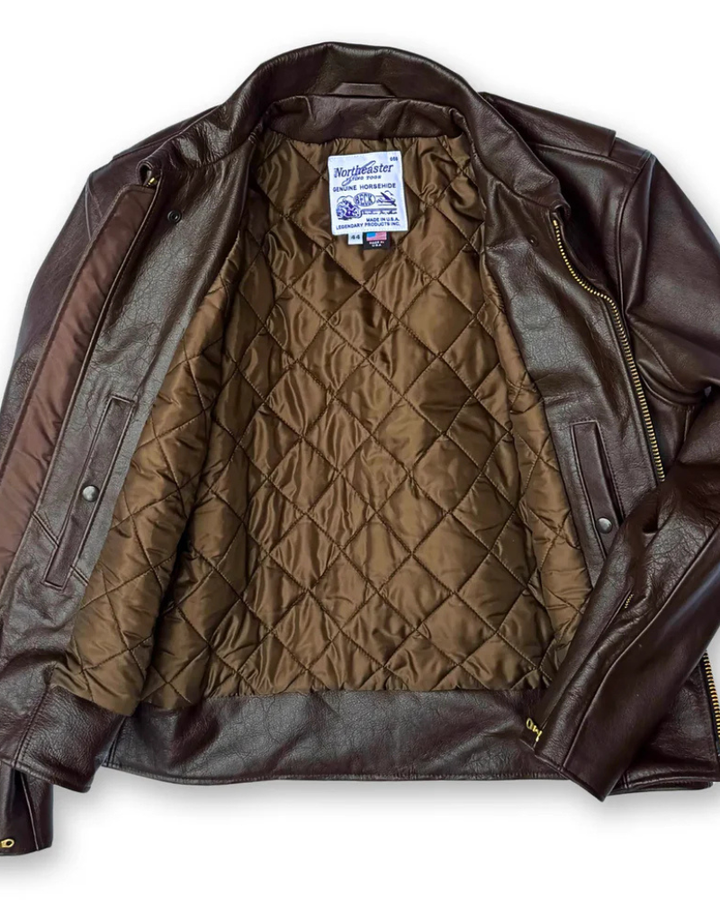
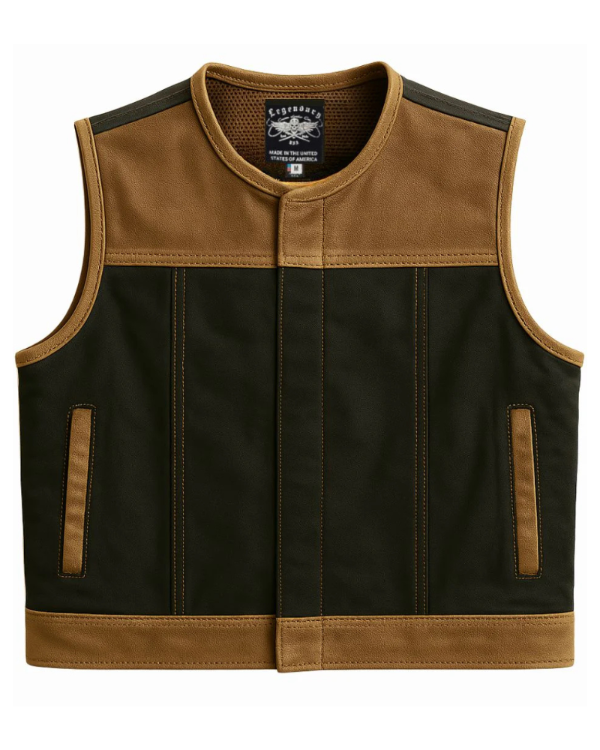
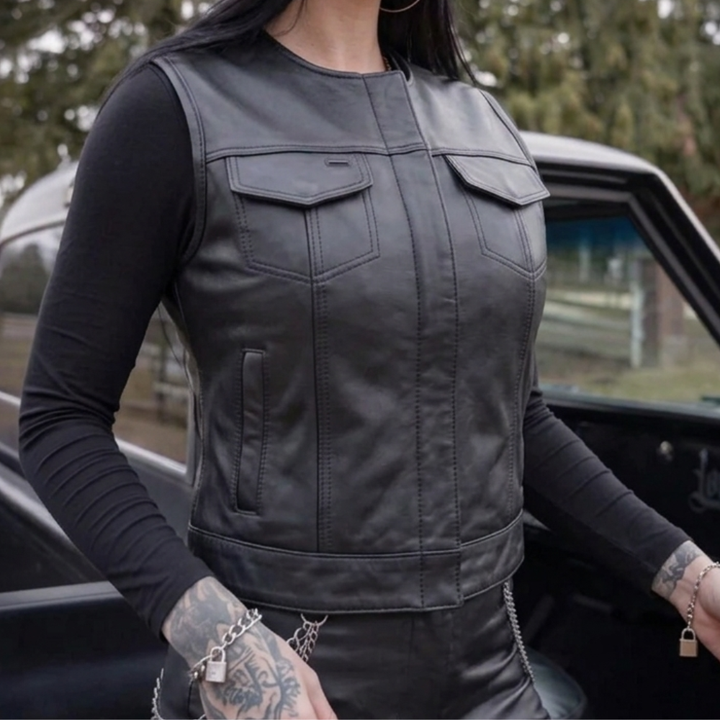


Sun and heat damage leather motorcycle gear by drying out the natural oils that keep a hide flexible, fading its dye, and stiffening it until it cracks. The fix is simple and cheap: keep gear out of stationary sun, dry it right after sweaty rides, and condition it more often in summer than you do the rest of the year. Legendary USA builds gear from full-grain American hides that last decades, but no leather is immune to a season of neglect in August heat.
What Sun and Heat Actually Do to Leather

Leather is a preserved hide, and its flexibility comes from oils and moisture held in the fiber structure. Ultraviolet light breaks those oils down while heat evaporates the moisture, and together they leave the fibers dry and brittle. Dye fades at the same time, so sun-damaged leather looks washed out before it starts to feel wrong.
The damage shows up first at flex points: knuckle creases on gloves, elbow creases on jackets, the fold lines of a vest. Dry fibers break instead of bending, and once cracking starts it cannot be reversed. Everything that follows in this guide is about stopping the drying before it reaches that point.
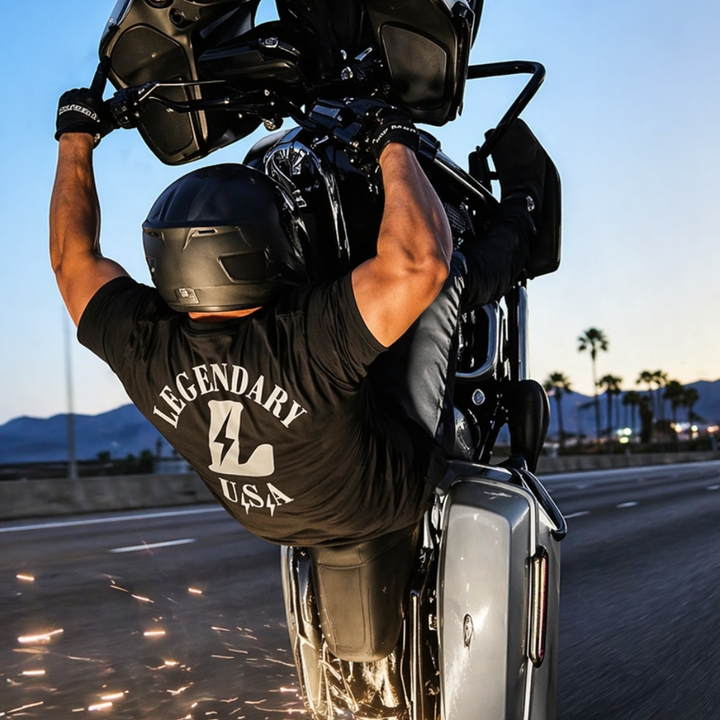
Riding in the sun is not the problem. Airflow keeps gear near air temperature, and a few hours of UV on a moving bike is trivial exposure. The damage comes from stationary heat soak — gear baking on a parked bike, in a closed trunk, or on a sunny dashboard for hours at a time.
Habits That Prevent Sun Damage
Park in shade when you have the option, and take your gear with you when you do not. Gloves left on mirrors or bars take direct UV plus heat radiating off the tank; a black glove on a black tank in full sun gets hot enough to be uncomfortable to pick up. A jacket draped over the seat fares no better.
Stow gear shaded and ventilated instead. Gloves go in a jacket pocket or helmet, the jacket goes over your arm or into a saddlebag for the short term. If gear lives in a saddlebag between rides, pull it out at home — a closed bag in summer sun runs far hotter than the air around it, and sustained heat like that is harder on leather than the ride itself.
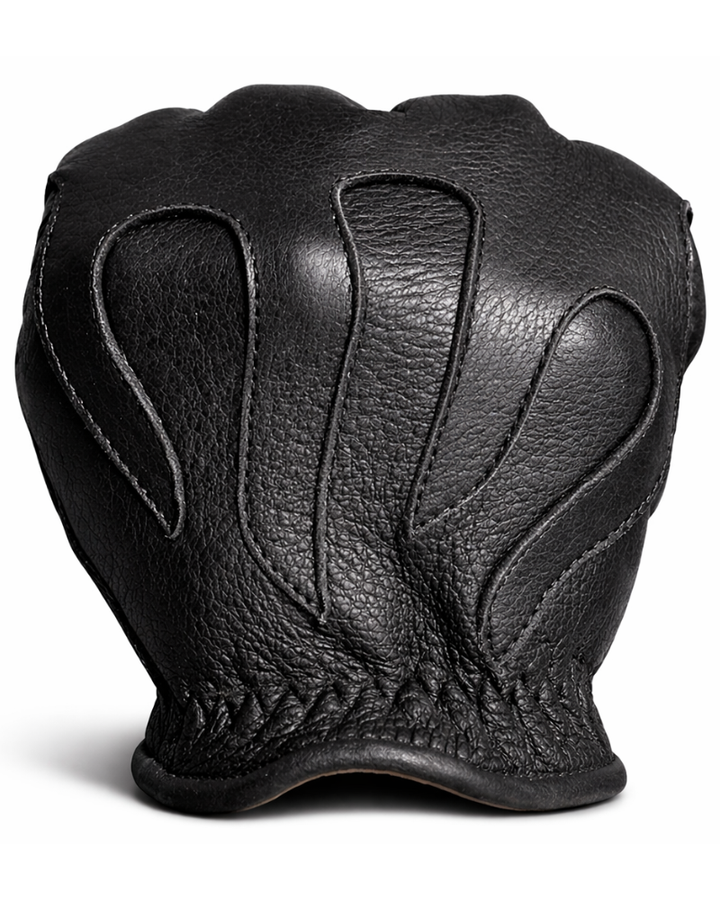
At home, leather wants a cool, dry closet and a hanger with some shoulder to it, never a windowsill or a hot garage wall. Riders who ride daily through summer, the kind who wear a ventilated deerskin short-wrist glove until it molds to their hands, keep those gloves for years by doing nothing more than storing them indoors and conditioning on schedule.
Summer Conditioning: More Often, Not More Product
Conditioning replaces the oils that sun, wind, and sweat pull out of a hide. In mild months, a few times a year covers most gear. In a hard riding summer, move to every four to six weeks for gloves that see weekly use, and judge by feel between applications: dull, dry, or papery leather is asking early.
Use a quality leather conditioner sparingly — a light coat worked in with fingers or a soft cloth, then buffed after it absorbs. Heavy applications do not condition deeper; they sit on the surface, attract dust, and can darken light-colored hides. Our full walkthrough on leather motorcycle glove care covers product choice and technique in detail.
A Note on Deerskin vs. Cowhide in the Heat
Deerskin and cowhide respond to summer differently. Deerskin is soft with open, elastic fibers; it dries out gracefully and comes back with conditioner, and it tolerates repeated sweat-and-dry cycles better than most glove leathers. Cowhide is denser and slower to show damage, but once it stiffens it takes more work to bring back. Either way the routine is the same — shade, proper drying, regular conditioning — only the warning signs arrive on different schedules.
Drying Sweat-Soaked Gear the Right Way
August rides end with wet gloves, and how you dry them matters as much as anything else in this guide. Air-dry at room temperature with the gear opened up so the lining breathes: fingers spread, zippers open, cuffs pulled wide. Full drying takes hours, and that is fine.
Never speed it up with a hair dryer, radiator, sunny dashboard, or the exhaust side of the bike. Fast heat-drying shrinks and stiffens leather — it is the same damage as sun exposure, compressed into an afternoon. Sweat also leaves salt behind, so wipe leather down with a barely damp cloth every few weeks of heavy use, let it dry, then condition. Every piece in our American-made motorcycle gear collection will outlast the bike it rides on if it gets that much respect.
Frequently Asked Questions
- Does sun exposure damage leather motorcycle gear?
- Yes. Ultraviolet light breaks down the oils that keep leather flexible and fades the dye in the hide. Heat accelerates both processes by evaporating moisture out of the leather faster than it can recover. The result over a summer of hard exposure is leather that looks washed out, feels stiff, and eventually cracks along flex points. Riding exposure is normal and manageable; the real damage comes from hours of stationary baking, like gear left on a parked bike in full sun.
- How often should I condition leather motorcycle gear in summer?
- Condition more often in summer than the rest of the year. A pair of gloves or a jacket ridden weekly through July and August benefits from conditioning every four to six weeks, versus every few months in mild seasons. Sun, wind, and sweat all pull oils out of the hide, and conditioner replaces them. Watch the leather rather than the calendar: when the surface looks dull or feels dry and papery, it is time.
- Can I leave my leather gloves on the bike in the sun?
- Avoid it whenever you can. Gloves draped over mirrors or clipped to a parked bike take direct UV plus radiated heat off the tank and bars, and black leather surfaces get hot enough to be uncomfortable to touch. An hour here and there will not ruin a glove, but a whole summer of parking-lot baking dries the hide and fades the finish noticeably. Stuff gloves in a jacket pocket, saddlebag, or helmet instead — shaded and ventilated beats sun-baked every time.
- Is it bad to store leather gear in a hot saddlebag or trunk?
- Short stints are fine; long-term hot storage is not. A closed saddlebag or car trunk in summer sun runs far hotter than the outside air, and that sustained heat drives moisture out of leather and can soften adhesives in any bonded components. If gear lives in a saddlebag between rides, pull it out at home. For any storage beyond a day or two, leather wants a cool, dry, ventilated space out of direct light.
- Does sweat damage leather motorcycle gloves?
- Over time, yes. Sweat carries salt, and salt draws moisture and oils out of the hide as it dries, leaving stiff, whitish deposits in heavy cases. Summer riding means sweat-soaked gloves are unavoidable, so the fix is routine: let gloves air-dry fully at room temperature after hot rides, never on a heat source, and wipe the leather down occasionally with a barely damp cloth before conditioning. Deerskin tolerates repeated wet-dry cycles well, but every leather lasts longer with the salt managed.
- What is the best way to dry leather gear that got hot and sweaty?
- Air-dry at room temperature, away from sun and heat sources. Open the gear up — spread glove fingers, unzip the jacket, pull cuffs open — so air reaches the lining, and give it hours, not minutes. Never use a hair dryer, radiator, dashboard, or direct sunlight to speed things up; fast heat-drying is exactly the mechanism that stiffens and shrinks leather. Once the gear is fully dry, a light pass of conditioner restores what the ride took out.
Make It Routine, Not a Project
Protecting leather from summer takes minutes, not effort: shade over sun when parked, air-drying over heat-drying after sweaty rides, and conditioner every few weeks instead of every few months. Full-grain American leather rewards that small routine by getting better with every season instead of worse. Do it through August and your gear goes into fall broken in, not broken down.