


To size motorcycle gloves for thick liners, measure your hand circumference with the liner on, then order the unlined glove size that matches that number. For most riders that is one size up from their normal deerskin glove size. If you are buying a glove that is already lined, such as the Legendary USA fleece-lined deerskin short wrist, do not size up twice. The lining is already accounted for in the one-size-up rule printed on the product page.
This guide walks through the measurement, explains why deerskin changes the math compared to cowhide, and lays out when a liner under an unlined glove beats a lined glove and when it does not.
Measure With the Liner On

Put the liner on the hand you ride with. Wrap a soft tape around the widest part of the palm, just below the knuckles, with the thumb out of the measurement. Pull the tape snug, not tight. Write the number down in inches. That is the circumference you size the outer glove to, and it will run roughly half an inch to three quarters of an inch larger than your bare hand depending on the liner weight.
A thin silk or synthetic liner adds about a quarter inch. A knit thermal liner like the Gators Skin glove liners Legendary USA carries adds closer to half an inch. A fleece liner adds three quarters of an inch or more and is usually too thick to run under a short-wrist riding glove without losing the controls. Measure rather than guess, because liner thickness varies more than glove sizing does.
If you do not already know your bare-hand size, our guide to measuring your hand for motorcycle gloves covers the full method, and the motorcycle glove fit guide explains what a correct fit feels like on the grip.
Why Deerskin Changes the Sizing Rule
American Whitetail deerskin stretches and molds to the hand over the first two to three weeks of riding. Cowhide does not stretch the same way. That matters for liners because a deerskin glove that feels snug over a liner on day one will give enough across the palm and fingers to feel right by the end of the first month. A cowhide glove that is snug over a liner stays snug.
The practical rule Legendary USA uses is this. In unlined deerskin, size up one size from your bare-hand measurement to run a thin or knit liner. Do not size up two sizes to run a fleece liner. Buy a lined glove instead. A glove sized two up has a palm seam that lands in the wrong place and fingertips that extend past yours, which costs you brake and clutch feel.
Deerskin also stays pliable in cold without stiffening, which is the reason an unlined deerskin glove over a liner still works at 40 degrees. The same glove in cowhide stiffens as the temperature drops and fights the liner instead of moving with it.
Lined Glove or Liner Under an Unlined Glove
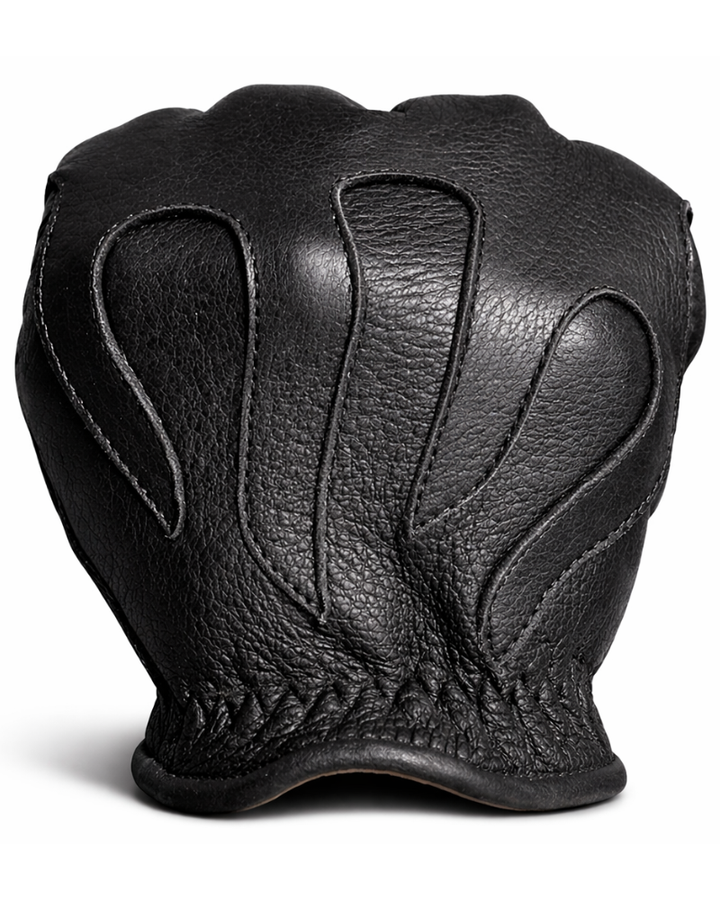
A lined glove is the better choice when you ride in the same temperature band all season. The fleece-lined deerskin short wrist glove uses a 40-gram 3M Thinsulate fleece lining sewn into the glove, so the lining never bunches, never slides and never ends up in the wrong glove in a saddlebag. Legendary USA's own sizing note on that glove is to size up one from your normal glove size, and that is the only size-up you make.
A liner under an unlined glove is the better choice when your riding day swings 30 degrees. A rider who leaves at 38 degrees and comes home at 65 can pull the liner at the first gas stop and ride home in the same unlined glove. That flexibility is why touring riders carry a liner and a pair of unlined deerskin gauntlets rather than two pairs of gloves. The gauntlet cuff also covers the liner cuff, so there is no exposed knit at the wrist catching wind.
Below about 30 degrees, neither setup is enough for fingered gloves on a long ride. That is the band where mittens win. The Legendary USA deerskin insulated mittens use a 100-gram Thinsulate lining, which is two and a half times the weight of the fleece-lined short wrist, and the product page says to order by hand circumference and size up if wearing liner gloves underneath. Same rule, heavier glove.
A quick comparison
Fleece-lined short wrist: warmest fingered option for 30 to 50 degrees, size up one, no liner needed. Unlined deerskin plus knit liner: most flexible for 40 to 65 degrees, size up one, pull the liner when it warms up. Insulated mittens plus liner: the sub-30 option, size by circumference with the liner on. In every case the sizing step is the same. Measure the hand as you will ride it, then match the glove to that number.
Signs the Glove Is Sized Wrong
If the fingertips of the outer glove extend more than a quarter inch past your fingertips with the liner on, the glove is too big and you will feel it on the front brake. If the palm seam pulls tight across the knuckles when you make a fist, the glove is too small and the liner will compress until it stops insulating. If the liner cuff shows below a short-wrist cuff, that is a cuff-length problem rather than a size problem, and a longer-cuff glove like the Legendary Deerskin Classic with its 1.5-inch elasticized cuff fixes it.
The right fit over a liner is snug across the palm, fingertips touching the end of the glove without pressing, and full movement at the knuckles when you squeeze the grip. In deerskin, expect that fit to loosen slightly over the first few hundred miles. That is the hide molding to you, and it is the reason to start snug.
Every glove named here is hand-cut and stitched in the USA, and the full cold-weather lineup is in the cold weather deerskin motorcycle glove collection. For a deeper look at the liners themselves, our glove liner buying guide for fall riding covers materials and when a liner is worth carrying.
Measure once with the liner on, size to that number, and let the deerskin do the rest. A glove sized right over a liner feels like one glove, not two.
For general guidance on protective gear and pre-ride checks, the National Highway Traffic Safety Administration publishes a motorcycle safety resource page.
Frequently Asked Questions
- Should I size up motorcycle gloves for liners?
- Yes, size up one size in unlined deerskin gloves to run a thin or knit liner. Measure your hand circumference with the liner on and order the glove that matches that number. Do not size up two sizes for a fleece liner. A glove that is two sizes big has fingertips that extend past yours and a palm seam in the wrong place, which costs brake and clutch feel. If you need fleece-level warmth, buy a lined glove instead.
- Do I need to size up fleece-lined motorcycle gloves?
- Size up one from your normal glove size for the Legendary USA fleece-lined deerskin short wrist, and that is the only size-up you make. The 40-gram 3M Thinsulate fleece lining is sewn in, so the product sizing already accounts for it. Do not add a separate liner under a fleece-lined glove and size up again. The result is a glove too loose to work the controls and a lining compressed until it stops insulating.
- How much does a glove liner add to hand size?
- A thin silk or synthetic liner adds about a quarter inch to hand circumference. A knit thermal liner adds closer to half an inch. A fleece liner adds three quarters of an inch or more, which is usually too thick to run under a short-wrist riding glove without losing throttle feel. Liner thickness varies more than glove sizing does, so measure with the liner on rather than guessing.
- Do deerskin gloves stretch to fit over a liner?
- Yes. American Whitetail deerskin stretches and molds to the hand over the first two to three weeks of riding, so a deerskin glove that is snug over a liner on day one gives across the palm and fingers by the end of the first month. Cowhide does not stretch the same way and stiffens in cold, which is why an unlined deerskin glove over a liner still works at 40 degrees while the same cowhide glove fights the liner.
- Is a lined glove or a liner under an unlined glove better for cold riding?
- A lined glove is better when you ride in one temperature band all season, because the lining never bunches or slides. A liner under an unlined glove is better when your riding day swings 30 degrees, because you can pull the liner at a gas stop and ride home in the same glove. Below about 30 degrees, insulated mittens with a 100-gram Thinsulate lining outperform either fingered setup on a long ride.
- How do I know if my motorcycle gloves are too big over a liner?
- If the fingertips of the outer glove extend more than a quarter inch past your fingertips with the liner on, the glove is too big. You will feel it as a vague front brake. If the palm seam pulls tight across the knuckles when you make a fist, the glove is too small. The right fit is snug across the palm, fingertips touching the end of the glove without pressing, and full knuckle movement on the grip.