


A 300-mile day asks more of your gloves than a 30-mile commute, and a five-day trip asks more again, because it will hand you weather you did not plan for. This page is the Legendary USA weather and care explainer: rain, cold, the two of them together, what waterproofing leather actually achieves, and how to keep a pair alive on the road. For the straight buying decision on long-ride comfort, vibration and wrist fatigue, see our companion page on gloves for touring and long rides.
Top Picks, Shop Direct
A multi-day tour is not one set of conditions, so this table is not four versions of the same glove. It is a kit. We picked one pair for each band of weather a long trip actually crosses, from a warm afternoon through a cold wet morning down to genuine winter cold, because the honest answer to touring gloves is that you carry two and you own four. The prices below make that more affordable than most riders expect, and two pairs together clear free shipping.
| Product | Which conditions it covers | From |
|---|---|---|
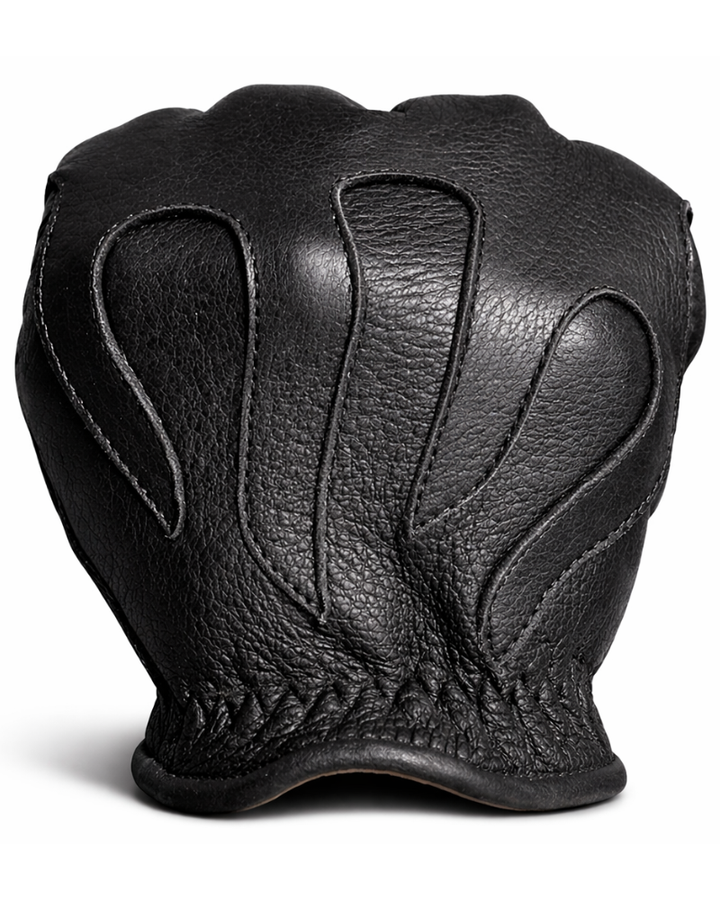
| Aramid Touchscreen Deerskin Gloves | The everyday glove of the trip, roughly 55 to 85 degrees. Full-grain deerskin with an aramid lining, an abrasion-resistant fibre, which makes it the most substantial layup we build. Touchscreen thumb and index fingertips for navigation. Rated 4.93 from 102 reviews. | $123.00 |
| Classic Deerskin Gauntlets | Wind and rain, roughly 45 to 65 degrees. The cuff wears over your jacket sleeve, so wind cannot drive up your arm and water running down the sleeve drips off the outside instead of channelling into the glove. Widest size run we make at XS through 2XL. Rated 4.88 from 112 reviews. | $129.00 |
| Fleece-Lined Deerskin Gloves | Cold mornings and cold wet, roughly 40 to 60 degrees. Fleece inside the same deerskin shell, and fleece is the right lining for damp conditions because it keeps insulating when it picks up moisture, where down would not. Rated 4.90 from 104 reviews. Runs snugger than unlined, so size up if between. | $111.00 |
| Deerskin Insulated Mittens | The genuine cold end, below about 40 degrees. A mitten keeps your fingers in one shared air space, which is meaningfully warmer than four separate tubes, and it deliberately trades finger dexterity to get there. The warmest thing we sell. Rated 4.83 from 80 reviews. | $111.00 |
For a typical multi-day tour in spring or fall, the Aramid Touchscreen and the Classic Deerskin Gauntlets together at $252.00 cover most of what you will meet and ship free. Add the Fleece-Lined pair if your trip starts before sunrise. Prices shown are current at time of writing. Orders over $150 ship free.
What are the best motorcycle gloves for riding in rain and cold at the same time?
Rain plus cold is the hardest combination in motorcycling, harder than either one alone, because wet hands lose heat roughly twenty times faster than dry hands. A glove that is comfortable at 45 degrees dry becomes genuinely painful at 45 degrees wet. Understanding that changes what you should buy.
The order of operations that actually works:
Stop the water getting in before you worry about insulation. Most water does not soak through the back of a glove. It runs down your jacket sleeve and pours in at the wrist. That is why cuff length matters more than lining thickness in the rain. A gauntlet worn over the sleeve, like the Classic Deerskin Gauntlets at $129.00, sheds that water down the outside. A short-wrist glove tucked under a sleeve funnels it straight into your palm.
Choose a lining that still works wet. If water does get in, and over enough hours it will, fleece keeps a useful amount of its insulating value when damp. That is the reason our cold-weather pair is fleece-lined rather than filled with something loftier: the Fleece-Lined Deerskin Gloves at $111.00, rated 4.90 from 104 reviews.
Carry a second pair and swap at lunch. This is the single most effective thing a touring rider does in sustained rain, and it costs nothing but packing space. A wet glove will not dry on your hand. Swapping to a dry pair at a fuel stop resets the whole problem, and the wet pair dries overnight in the room.
Use an oversized rain overmitt for real downpours. A cheap waterproof shell pulled over your riding glove is the only genuinely dry solution. It is ugly and it costs you feel, and in a four-hour downpour it is what experienced tourers reach for.
Heated grips beat any glove. If you regularly ride cold and wet, heated grips will do more for you than any glove purchase, because they put heat into your hands rather than trying to slow its escape. This is the honest advice even though we do not sell them.
Are there waterproof leather motorcycle gloves for cold wet rain?
We are going to answer this plainly rather than sell around it: we do not make a waterproof glove. None of our gloves has a waterproof membrane, and we are not going to describe treated leather as waterproof, because it is not.
What full-grain deerskin actually does in rain is worth knowing, because it is better than it sounds:
- It sheds and slows water rather than blocking it. Leather is water-resistant, not waterproof. In light rain or a passing shower, a deerskin glove will keep your hands functional. In sustained heavy rain, water will eventually wet through. Anyone who tells you otherwise about untreated leather is selling.
- It keeps working when wet. This is deerskin's real advantage over most hides. It stays soft and pliable when damp instead of going stiff and board-like, so you keep control feel even in a wet glove. Cowhide is notably worse at this. Every Legendary USA glove is built on that American whitetail deerskin, the Fleece-Lined Deerskin Gloves at $111.00 included.
- It recovers. Dried correctly, a wet deerskin glove comes back to its previous condition. It is not ruined by a soaking, which matters over a long trip.
So the honest recommendation for genuinely wet cold riding: use a gauntlet to keep water out at the wrist, carry a dry second pair, and add a waterproof overmitt if you expect hours of rain. If you want a glove with a true waterproof membrane, buy one from a maker who builds one. We would rather send you elsewhere than mis-sell you leather.
What is the best way to waterproof leather motorcycle gloves?
You can meaningfully improve leather's water resistance. You cannot make it waterproof. With that framing, here is what works.
Use a wax or cream leather waterproofing treatment. A beeswax-based leather dressing or a dedicated leather waterproofing cream is the right product. Apply a thin coat to clean, dry leather, work it in with your fingers or a soft cloth, let it sit, then buff off the excess. Two thin coats beat one thick one. Re-treat two or three times a season, or whenever water stops beading on the surface.
Expect it to change the leather. Waxing darkens the hide, sometimes considerably, and it takes some of the suppleness out of deerskin. On a black glove this is unnoticeable. On our tan or white gloves it will change the colour permanently, so test on the cuff first or simply do not treat light-coloured gloves.
Silicone sprays are a weaker option. They are quick and they do not darken the leather much, but they wear off fast and some of them seal the hide's pores, which stops the glove breathing. If you use one, reapply often.
What to avoid. Do not use mink oil or heavy neatsfoot oil on riding gloves. They over-soften the leather and reduce its abrasion resistance, which is the main reason you are wearing leather in the first place. Do not use household products, and do not spray anything into the inside of the glove.
The most important step is drying, not treating. A wet glove dried badly is a ruined glove regardless of what you put on it. Which brings us to the next question.
Why did my leather motorcycle gloves shrink after getting wet?
Because they were dried with heat, almost certainly. This is the most common way riders destroy a good pair of gloves, and it is entirely preventable.
Here is the mechanism. Leather is a network of collagen fibres held apart by natural oils and moisture. When leather gets soaked and then dries rapidly, especially with heat, water leaves faster than the fibre structure can adjust. The collagen fibres contract and bond tighter to each other, the natural oils are driven off with the water, and the hide sets hard in a smaller, denser configuration. That change is largely permanent. The glove comes out stiff, smaller, and sometimes noticeably darker.
The heat sources that do this: a radiator or heater vent, a hair dryer, direct sun on a dashboard, a clothes dryer, the top of a wood stove, and setting them on a hot engine or exhaust to dry, which riders genuinely do.
How to dry wet leather gloves correctly:
- Wipe off surface water with a towel.
- Stuff them loosely with newspaper or paper towel, which pulls moisture from the inside and holds the glove near its correct shape as it dries. Change the paper once when it gets damp.
- Dry them at room temperature, away from any heat source and out of direct sun. Somewhere with moving air is ideal. Expect this to take a day, sometimes two.
- Once they are dry but not before, work them with your hands to break up any stiffness, then apply a light leather conditioner to replace the oils the water carried off.
If they have already shrunk: you can usually recover some of it, though not all. Dampen the leather slightly with water, apply a generous coat of leather conditioner, and then wear the gloves while they dry so your hands stretch them back toward shape. Repeat over several sessions. Deerskin responds to this better than most hides because of its loose fibre structure. It will not fully undo a bad heat-drying, but it often gets a glove back to wearable.
Why Deerskin Is the Touring Rider's Material
The qualities that make deerskin good for short rides become essential on long ones. Its naturally open fibre structure prevents the heat and moisture buildup that makes stiffer gloves uncomfortable by the afternoon of a long day. Its softness does not degrade over the course of a ride, so the glove that feels good at mile 10 still feels good at mile 300. It is the leather that stays soft longest in daily use, which is why Legendary USA cuts its touring gloves from it, the Classic Deerskin Gauntlets at $129.00 among them.
Deerskin also holds dexterity in a way cowhide does not. On a long touring day, throttle and brake inputs add up to thousands of small movements, and a glove that restricts that motion even slightly creates cumulative fatigue. Deerskin stays flexible across all-day wear without the punishing break-in that new cowhide demands. Legendary USA uses American whitetail deerskin rather than cowhide for that reason, in gloves such as the Aramid Touchscreen Deerskin Gloves at $123.00. And, as covered above, it stays soft when it gets wet, which is the property that matters most on a trip where the weather changes.
Every Legendary USA glove is cut and sewn in the USA from American whitetail deerskin.
Gauntlet vs Short Wrist for Touring
Both serve touring riders and the right choice depends on conditions. The Classic Deerskin Gauntlets at $129.00 are the answer for cold, rain, and any multi-day tour with variable weather, because the wrist coverage genuinely matters when the temperature drops or the weather rolls in. Short wrist gloves such as the Classic Short Wrist Touchscreen Deerskin Gloves at $97.00 are cooler, lower profile and faster to live with in warm weather. Most serious touring riders own both and pack by the forecast. Our gauntlet shoulder-season guide goes into the trade in more detail.
Frequently Asked Questions
What are the best motorcycle gloves for riding in rain and cold at the same time?
Wet hands lose heat roughly twenty times faster than dry hands, so stop water getting in before worrying about insulation. Most water runs down your jacket sleeve and enters at the wrist, which makes cuff length matter more than lining thickness: a gauntlet worn over the sleeve like the Classic Deerskin Gauntlets at $129.00 sheds it down the outside. Choose a lining that still insulates when damp, which is why our cold pair is the Fleece-Lined Deerskin Gloves at $111.00. Carry a dry second pair and swap at a fuel stop, add a waterproof overmitt for real downpours, and note that heated grips beat any glove.
Are there waterproof leather motorcycle gloves for cold wet rain riding?
We do not make a waterproof glove and we will not describe treated leather as waterproof, because it is not. None of our gloves has a waterproof membrane. Full-grain deerskin is water-resistant: it sheds and slows water and will keep your hands functional in a passing shower, but in sustained heavy rain it will eventually wet through. What deerskin does uniquely well is stay soft and pliable when damp rather than going stiff, and it recovers fully if dried correctly. For genuinely wet riding, use a gauntlet, carry a dry second pair, and add a waterproof overmitt. If you need a true membrane, buy from a maker who builds one.
What is the best way to waterproof leather motorcycle gloves?
You can improve water resistance but not achieve waterproofing. Use a beeswax-based leather dressing or a dedicated leather waterproofing cream: apply a thin coat to clean dry leather, work it in, let it sit, buff off the excess, and use two thin coats rather than one thick one. Re-treat two or three times a season. Expect waxing to darken the hide and stiffen deerskin slightly, so avoid treating tan or white gloves. Silicone sprays are quicker but wear off fast and can block breathability. Avoid mink oil and heavy neatsfoot oil, which over-soften leather and reduce its abrasion resistance.
Why did my leather motorcycle gloves shrink after getting wet?
Almost certainly because they were dried with heat. When soaked leather dries rapidly, water leaves faster than the fibre structure can adjust, the collagen fibres contract and bond tighter, the natural oils are driven off, and the hide sets hard in a smaller, denser form. Radiators, hair dryers, direct sun, clothes dryers and hot engines all cause it. Instead: wipe off surface water, stuff the gloves loosely with newspaper, dry at room temperature away from heat for a day or two, then condition. If they have already shrunk, dampen slightly, apply conditioner generously and wear them while they dry to stretch them back.
How do I care for leather motorcycle gloves on a long trip?
Let wet gloves air dry at room temperature away from any heat source, stuffed loosely with paper to hold their shape, and never on a heater or engine. Condition them if they dry out stiff. Rotate two pairs so each has a full night to dry, since sweat left in leather overnight ages a glove faster than rain does. Full-grain deerskin recovers from moisture better than cowhide and stays soft when damp, which is why it suits variable multi-day weather and why Legendary USA builds its touring gloves, the Classic Deerskin Gauntlets at $129.00 among them, from it rather than cowhide.
Pack Two Pairs. Ride Anywhere.
Legendary USA gloves are cut and sewn in the USA from American whitetail deerskin. Orders over $150 ship free.
Shop All Motorcycle Gloves