

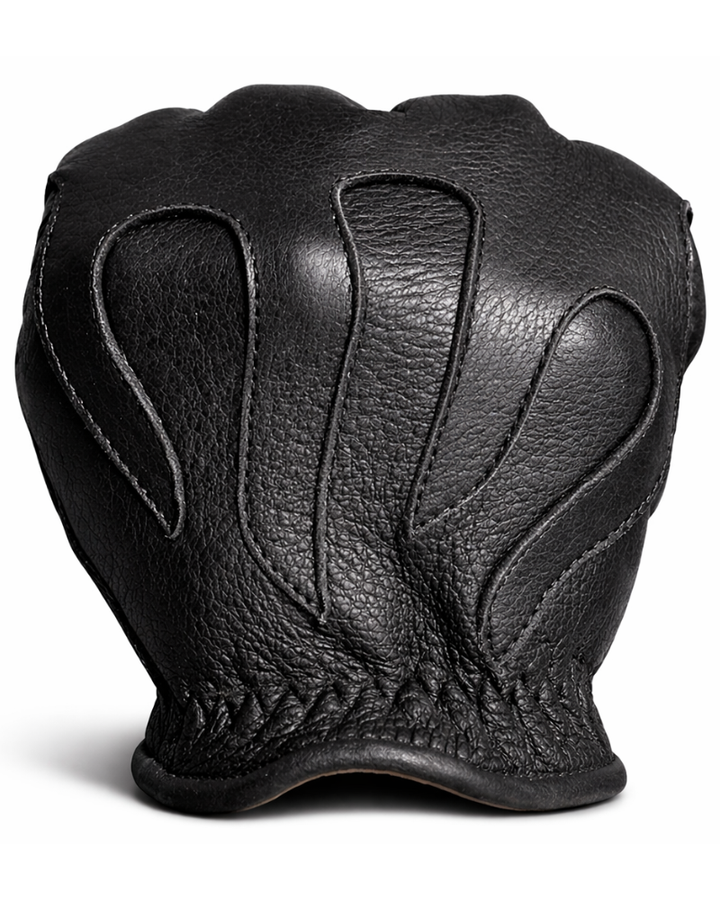

Legendary USA cuts all but two of its leather riding gloves from American deerskin, and its care routine for them comes down to four rules: wipe them clean with a barely damp cloth, dry them slowly at room temperature, condition them lightly when the knuckle crease starts to feel papery, and never put them in a washing machine or near heat. The two exceptions are the Bad Billy goatskin gloves, which follow the same routine with one small difference covered below. Done this way, the whole job takes minutes a month and a good pair of deerskin gloves stays supple for many seasons.
This page is the complete Legendary USA glove care guide. It covers cleaning, salt stains and odor, drying soaked gloves, conditioning deerskin, fleece-lined gloves, storage, and what to do about cracks.
Legendary USA's glove care routine at a glance
| Task | How | How often |
|---|---|---|
| Wipe down | Cloth wrung out in cool water, with the grain | After any ride that leaves grime or sweat |
| Deep clean | Leather cleaner on the cloth, never on the glove | Once or twice a riding season, and before storage |
| Condition | Pea-sized amount for the pair, worked in by hand | Two to three times a season, when the flex test says so |
| Dry after rain | Blot, open up, air dry at room temperature | Every soaking: 24 to 48 hours, lined gloves the full 48 |
| Store | Clean, conditioned, flat, in a breathable bag | End of season |
How to clean leather motorcycle gloves
Legendary USA's deerskin is a fine-grained, porous hide, so it cleans with a light touch rather than scrubbing.
- Knock off loose dirt by rubbing the gloves gently against each other or brushing with a dry cloth.
- Put the gloves on if you can. Wearing them holds the leather in its natural shape and shows you where the grime is.
- Wipe the whole glove with a cloth wrung out in cool water until it is barely wet. Work in small sections with the grain, and get into the seams, knuckles and palm, where road grime and grip oil build up fastest.
- For stubborn spots, put a small amount of leather cleaner on the cloth, not directly on the glove, and work it in gently. Legendary USA stocks Obenauf's Cleanit Natural Leather Cleaner ($15.99), a non-detergent linseed oil soap.
- Wipe off the residue with a second damp cloth, blot with a dry towel, and let the gloves air dry before conditioning.
Skip dish soap, household wipes, alcohol and saddle soap. Dish soap and alcohol strip the oils that keep deerskin supple, and saddle soap is built for thick harness leather, not a thin glove hide that has to stay soft enough to feel the controls. A darkened patch on the palm of a well-used glove is oil and wear, not dirt. Chasing it with more water does more harm than the mark.
Salt stains and sweat odor
Winter road salt and dried sweat both leave white marks, and salt actively dries leather, so deal with it promptly. Wipe the stain with a cloth dampened in one part white vinegar to eight parts cool water until the residue lifts, let the glove air dry, then condition. Always clean before you condition: conditioning over salt or grit drives it into the leather.
Odor comes from moisture that never fully dried. Air the gloves out after every ride with the cuffs open. For a smell that lingers, a light dusting of baking soda inside, left overnight and shaken out thoroughly, works without adding liquid. Avoid scented and disinfectant sprays, which are usually alcohol-based and mask the smell rather than removing it.
How to dry wet leather motorcycle gloves
Legendary USA gloves are water-resistant when conditioned, but no leather glove is waterproof and Legendary USA does not claim otherwise. One wet ride will not ruin a full-grain deerskin glove. What ruins it is drying it fast with heat, which pulls the oils out with the water and leaves the leather stiff, a half size smaller, and cracking at the flex points. That damage does not condition back out.
- Blot, don't wring. Press the gloves in a dry towel. Wringing twists the seams and stresses the stitching.
- Open them up. Spread the cuffs and straighten the fingers. If they are soaked through, stuff them loosely with dry paper towel or newspaper and swap it once it goes damp.
- Air dry at room temperature in a ventilated room, out of direct sun. A fan across the room is fine. A radiator, heat vent, hair dryer, oven or sunny dashboard is not.
- Shape them mid-dry. When the gloves are damp rather than wet, put them on for a minute and flex your hands so the leather dries to your hand instead of drying flat and tight.
- Wait for bone dry, 24 to 48 hours. Then condition to replace the oils the water carried off. Conditioning while the leather is still damp traps moisture.
Riders who commute through wet seasons do best with two pairs in rotation, so yesterday's soaked pair gets its full slow dry while today's pair rides.
How to condition deerskin motorcycle gloves
Legendary USA's deerskin gloves need far less conditioner than cowhide. Deerskin is a naturally oily, open-fibered hide, and the fastest way to ruin a pair is to treat it like a work boot.
What to use
Use a light conditioner that soaks in within a few minutes and leaves the leather dry to the touch. Legendary USA stocks Obenauf's Heavy Duty LP Conditioner (from $15.99), natural oils in a beeswax and propolis base, which works on deerskin when applied thinly. Other light conditioners made for soft or garment leather also work. Avoid mink oil and neatsfoot oil, which over-soften deerskin and darken it permanently, and avoid silicone products, which coat the surface, make the palm slick and can interfere with touchscreen fingertips. Test any new product on a small spot inside the cuff first.
How much
Less than you think: a pea-sized amount covers both gloves. Warm it between your fingers and work it in with your hands in small circles, concentrating on the knuckle creases and the thumb, where the leather flexes most. Wear the gloves for a few minutes afterward so body heat carries it into the fibers. If the surface still looks wet after 15 to 20 minutes, wipe off the excess and use half as much next time.
How often: the flex test
Two to three times a riding season for gloves in regular use, more in dry heat, as little as once for a pair worn a few weekends a summer. Condition when the leather asks for it rather than on a calendar. Flex the glove and look at the knuckle line: if it creases softly and springs back, leave it alone. If it feels papery, sounds faintly crisp, or holds the crease after you open your hand, it is due. New gloves need nothing for the first month or two while the fit sets, and always condition after a full soaking once the gloves are dry.
What happens if you never condition them
The oils leave slowly through wear, sun and repeated wet-dry cycles. The fibers stop sliding past each other, the leather stiffens, and surface cracks appear along the knuckle creases and around the thumb. Left long enough, those cracks go through the grain and become splits, which are structural. Unconditioned gloves last a few seasons; conditioned ones last many.
Caring for fleece-lined gloves
Legendary USA's Fleece-Lined Deerskin Gloves ($115.00) pair a deerskin shell with a fleece lining, two materials with opposite needs. Clean from the outside in: the leather shell exactly as above, then turn the cuff back and blot only the lining you can reach with a barely damp cloth. There is no way to rinse the inside without saturating the hide from behind.
Give lined gloves the full 48 hours to dry. A lined glove that feels dry outside after a few hours is almost always still damp in the fleece, which is where odor comes from. Condition the shell only and keep conditioner off the fleece. Do the full clean at the end of the season, before storage, rather than in spring.
Goatskin gloves
Legendary USA's two goatskin models, the Bad Billy gloves, clean and dry exactly like deerskin. Goatskin has a tighter grain and natural lanolin that resists water a little better, so it tolerates a slightly more thorough wipe-down. It still should never be soaked or heat-dried.
Breaking in new gloves
Legendary USA deerskin is soft enough to wear comfortably on the first ride and usually conforms to the hand within three to five rides. Wear them, flex your hands, and let body heat do the work. Never force a break-in with heat or by soaking the gloves. The full method is in the Legendary USA glove break-in guide.
How to store leather motorcycle gloves
Clean and condition before storage, and again lightly when the gloves come back out. Store them flat, or on a glove dowel, in a cool, dry place with airflow, in a breathable cotton bag rather than sealed plastic, which traps moisture and breeds mildew. Do not leave gloves crumpled in a tank bag, a hot saddlebag or on the seat in the sun. Heat, pressure and trapped damp set creases and dry the leather, and a summer of UV on the handlebars ages a glove by years.
Can cracked deerskin gloves be repaired?
Partly. Surface cracking that has not gone through the grain usually improves: clean the glove, apply a thin coat of conditioner, let it rest overnight, and repeat once. It will not look new, but it regains flexibility and stops getting worse. Cracks that have opened into splits, or seams that have pulled, are past conditioning and become a job for a leather repair shop, priced against replacement.
What actually kills leather gloves
- Washing machines. Detergent strips the oils, agitation distorts the panels, and on lined gloves the spin cycle pulls the lining away from the shell for good.
- Heat drying. Radiators, dryers, hair dryers and dashboards shrink and harden leather permanently.
- Petroleum. Fuel, chain lube and engine oil keep degrading the hide. Wipe off at once, clean, then condition.
- Sealed storage. Plastic bags and airtight bins trap moisture and grow mildew.
- The wrong products. Mink oil and neatsfoot on deerskin, silicone sprays on riding gloves, and alcohol or dish soap anywhere.
If your current pair is past saving, browse the full Legendary USA Made in USA motorcycle glove collection, or compare hides in deerskin vs cowhide motorcycle gloves. Orders over $150 ship free.
Frequently Asked Questions
How do I clean leather motorcycle gloves?
Legendary USA's method: wipe the gloves with a cloth wrung out in cool water, working with the grain into the seams and knuckles. For stubborn grime, put a small amount of leather cleaner on the cloth rather than on the glove, then wipe off the residue with a second damp cloth. Let the gloves air dry at room temperature and condition lightly once dry. Never soak them or use dish soap, alcohol or saddle soap.
Can you put leather motorcycle gloves in a washing machine?
No. A washing machine soaks the leather, the detergent strips its oils, the agitation distorts the panels, and on lined gloves the spin cycle pulls the lining away from the shell. One cycle can ruin a pair permanently. Clean leather gloves by hand with a barely damp cloth and a leather-safe cleaner instead.
How do I dry wet leather motorcycle gloves?
Blot them in a dry towel without wringing, open the cuffs, stuff them loosely with dry paper if they are soaked through, and air dry them at room temperature away from all direct heat for 24 to 48 hours. Put them on for a minute partway through so they dry to your hand. Once bone dry, apply a light coat of conditioner to replace the oils the water carried off.
Can I dry leather gloves with a hair dryer or on a radiator?
No. Direct heat forces water out of leather too fast, which takes the natural oils with it and leaves the glove stiff, shrunken and prone to cracking. That damage is permanent and cannot be conditioned back out. Room-temperature air is the only safe way to dry leather gloves.
What conditioner is best for deerskin motorcycle gloves?
A light conditioner that absorbs within a few minutes and leaves the leather dry to the touch. Legendary USA stocks Obenauf's Heavy Duty LP Conditioner, which works on deerskin when applied thinly. Avoid mink oil and neatsfoot oil, which over-soften and permanently darken deerskin, and silicone products, which make the palm slick. A pea-sized amount covers both gloves.
How often should I condition leather motorcycle gloves?
Two to three times a riding season for gloves in regular use, more often in dry heat, and after every full soaking once the gloves are dry. Judge by the leather, not the calendar: flex the knuckle line, and if it creases softly and springs back, wait. If it feels papery or holds the crease, condition. New gloves need nothing for the first month or two.
What happens if you never condition leather motorcycle gloves?
The natural oils leave through wear, sun and repeated wetting and drying. The leather stiffens, then cracks along the knuckle creases and around the thumb where it flexes hardest. Those cracks deepen into splits, which are structural damage no conditioner can reverse.
How do you remove salt stains from leather motorcycle gloves?
Wipe the stain with a cloth dampened in one part white vinegar to eight parts cool water until the white residue lifts. Let the gloves air dry at room temperature, then apply a light coat of conditioner. Clean off salt before conditioning, because conditioning over salt drives it into the leather.
How do I get the sweat smell out of leather gloves?
Odor comes from moisture that never fully dried, so air the gloves out after every ride with the cuffs open. For a lingering smell, leave a light dusting of baking soda inside overnight and shake it out thoroughly. Avoid scented or alcohol-based sprays, which mask the smell and dry the back of the leather.
How do you clean fleece-lined leather motorcycle gloves?
Clean the leather shell with a barely damp cloth, then turn the cuff back and blot only the lining you can reach. Never rinse or machine wash them. Dry them at room temperature for a full 48 hours, because the fleece holds water long after the leather feels dry, and condition the shell only.
Are leather motorcycle gloves waterproof?
No leather glove is waterproof, and Legendary USA does not claim otherwise. Conditioned leather sheds light moisture and recovers well from a soaking if it is dried slowly, but sustained rain will get through. Riders in wet climates do best with two pairs in rotation.
Can cracked deerskin motorcycle gloves be repaired?
Surface cracking that has not gone through the grain usually improves: clean the glove, apply a thin coat of conditioner, let it rest overnight and repeat once. Cracks that have opened into splits, or seams that have pulled, are past conditioning and need a leather repair shop or a replacement pair.
How should I store leather motorcycle gloves?
Clean and condition them first, then store them flat in a cool, dry place with airflow, in a breathable cotton bag rather than sealed plastic. Keep them out of hot saddlebags, tank bags and direct sun, where heat, pressure and trapped moisture set creases and dry the leather.