
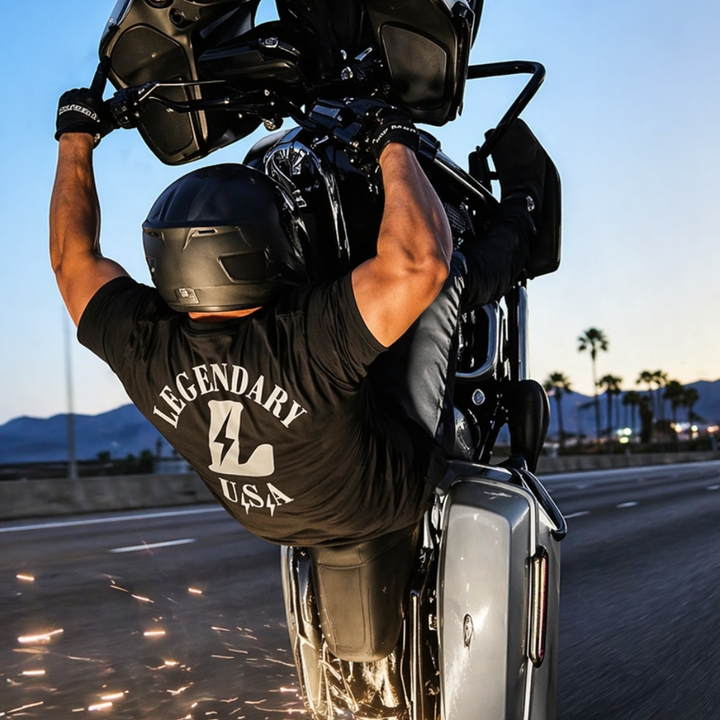


The best gear for a fall poker run is gear you can change without going back to the truck. A September or October run typically starts near 45 degrees, peaks near 75 in the afternoon, and finishes cold again after the last stop. That 30 degree swing, not the low temperature, is the actual problem, and it is why the right kit for a fall group ride looks different from the right kit for a cold commute.
What a Fall Poker Run Actually Demands

A poker run is not one ride, it is five or six short rides separated by stops. You are cold for the first leg, warming through the second, comfortable by the third, and overheating in a parking lot by noon. Gear that is optimized for any single one of those legs will be wrong for the other four.
The stops matter as much as the riding. You spend real time off the bike, standing around, walking to a bar or a shelter, drawing a card. Gear that only works at 60 miles an hour is uncomfortable for the 20 minutes you are standing still, and gear that is comfortable standing still is often not enough on the road.
Group riding adds a third constraint, which is that you cannot stop when you want to. If you are cold on a leg, you are cold until the group stops. That single fact is why fall run gear should lean warm rather than lean light, and why removable layers beat perfect layers.
Gloves: The Piece You Will Regret Getting Wrong
Bring two pairs. This is the single highest-value thing you can do for a fall run, and it costs less than most riders expect. Hands are the first thing to get cold and the hardest thing to fix mid-ride, and a glove swap at a stop takes 15 seconds.
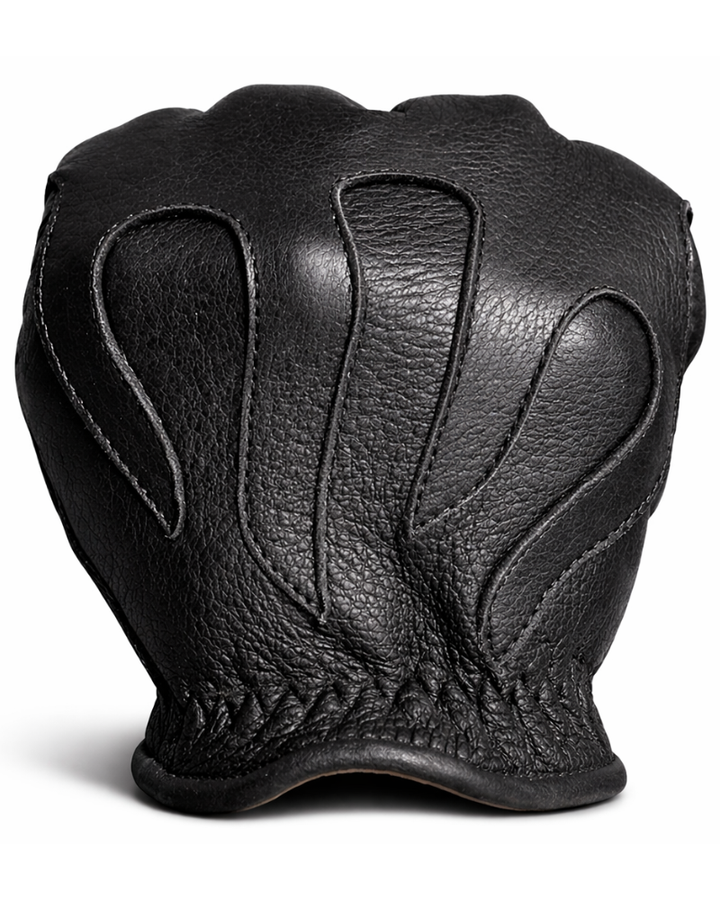
For the warm half of the day, a short-wrist deerskin glove like the Gold Short Wrist Cuff Deerskin Gloves keeps bar feel high and does not cook your hands at a stop. Deerskin conforms to the hand more than most hides, so a broken-in pair reads as an extension of your grip rather than a layer over it.
For the cold half, the Fleece-Lined Deerskin Gloves are the straightforward answer. Legendary USA builds the fleece into the glove, so the pattern accounts for the lining and the fit stays correct at temperature instead of going tight.
If your cold problem is wind coming up the sleeve rather than cold on the back of the hand, the Classic Deerskin Gauntlets solve a different half of the same complaint. Riders who already run a warm glove and still get cold fingers usually have a cuff gap, not an insulation shortfall.
Vests and the Layer Underneath
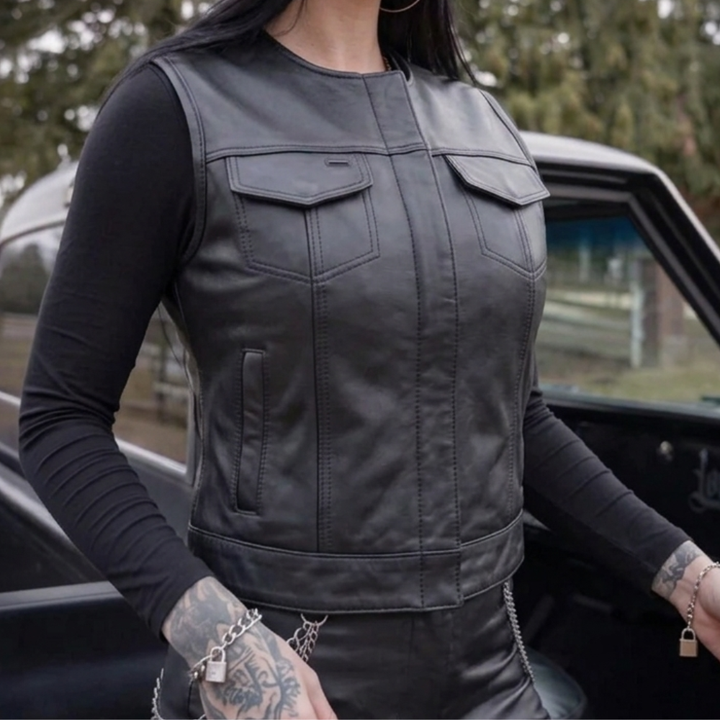
A vest is the most useful single piece for a run because it does its job over anything. Over a flannel it blocks the wind that would otherwise strip the flannel's warmth. Over a t-shirt at noon it is barely noticeable. Nothing else in the kit adapts that well across a 30 degree day.
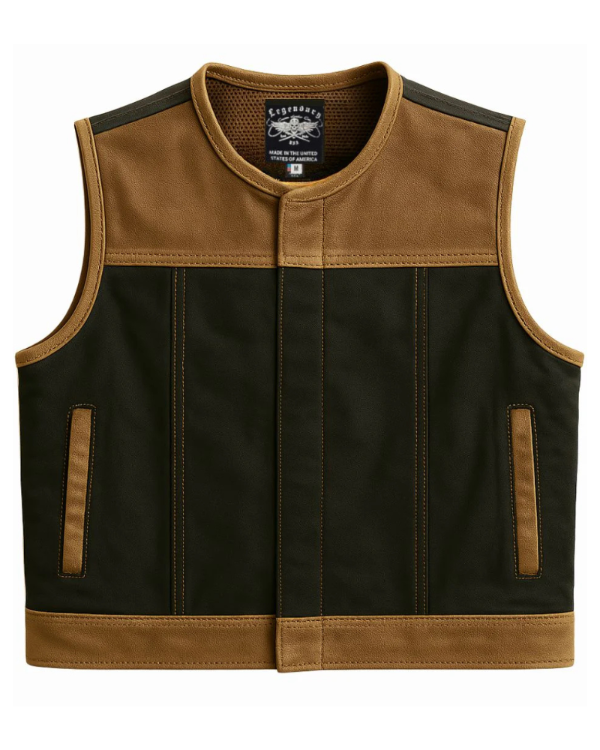
The Legendary Revolution Men's Black Denim Vest is the lighter end of that idea, and it takes patches the same way a leather vest does. Riders who want the wind blocking without the weight of a full leather panel tend to end up here.
For a heavier vest that will still be in service in twenty years, the Made in USA motorcycle vests collection covers the leather side, including club-style cuts with clean back panels for patches. Choose the cut for how you plan to wear patches, then choose the weight for how cold your run typically runs.
Underneath, a flannel or a mid-weight hoodie does more work than most riders credit. The vest is the wind wall. The layer under it is the actual insulation, and it is the piece you can swap at a stop when the afternoon turns.
What to Carry That You Will Not Wear
Pack the second glove pair, a spare base layer, and something to keep your neck covered. All three are small, all three fit in a saddlebag, and all three fix problems you cannot fix any other way once the group is rolling.
Skip the extra jacket. Most riders bring one and never take it off the bike, because by the time it is cold enough to want it they are already home. The exception is a run that finishes after dark in October, when the temperature drop after sunset is sharp enough to justify the space.
Bring a plastic bag for wet gear. Fall runs get rained on, and a wet flannel stuffed into a saddlebag against your dry spare defeats the entire point of carrying a spare.
Group Riding Details That Change Your Gear
Riding in formation puts you in other bikes' air, which is warmer and dirtier than clean air. Riders toward the back of a large group report being noticeably warmer than the lead, and they also arrive with more grit on their gloves and face. Neither is a reason to change what you own, but it is a reason to expect your gear to need a wipe-down that night.
You will also spend more time at idle than on a solo ride, waiting for the group to stage. Perforated and heavily ventilated gear that felt great in August feels cold at a standstill in October, because there is no airflow generating the warmth and plenty of holes letting it out.
Finally, plan your layers around the group's stops rather than your own comfort curve. If the run sheet says a 40 minute stop at the second location, that is your window to change gloves and shed a layer. Knowing where those windows are beats guessing at the start line.
Building the Kit
The working fall run kit is two glove pairs, a vest, a swappable mid layer, and a neck covering, with everything else optional. That set handles a 45 degree start and a 75 degree afternoon without asking you to be uncomfortable at either end. It also fits in one saddlebag with room left over.
Riders assembling this from scratch should start with the gloves, since that is where the discomfort actually begins. Our roundup of layering gear for fall riders covers the torso side in more depth, and cold-morning motorcycle gear handles the specific case of a 45 degree start. The full Made in USA motorcycle gloves collection is where the lined, unlined, and gauntlet options sit side by side.
None of this is expensive relative to what riders spend on the bike itself, and all of it is the difference between finishing a run and cutting out at the third stop. Fall runs are the best riding of the year in most of the country. Gear for the day the run actually is, not the day the forecast high suggests.
For the wind speed and temperature math behind cold-weather riding, the National Weather Service publishes a cold wind chill chart.
Frequently Asked Questions
- What should I wear on a fall poker run?
- Layers you can change at a stop, built around two pairs of gloves, a vest, and a swappable mid layer such as a flannel or hoodie. A fall run typically swings 30 degrees between the start and the afternoon, so any single configuration will be wrong for most of the day. The vest blocks wind over whatever is underneath it, and the mid layer is the piece you actually add or remove as the temperature moves.
- Should I bring two pairs of gloves on a group ride?
- Yes, and it is the highest-value thing you can pack. Hands get cold first and are the hardest thing to fix once a group is rolling, since you cannot stop on your own schedule. A lighter short-wrist glove for the warm half of the day and a lined or gauntlet glove for the cold half covers the full swing, and swapping them at a stop takes about fifteen seconds.
- Is a leather or denim vest better for fall riding?
- Both block wind, which is the vest's main job, and the choice comes down to weight and how cold your rides run. A denim vest is lighter and more comfortable during long stops and warm afternoons. A leather vest blocks more wind and holds up to more years of hard wear. Riders who ride into genuinely cold weather usually end up in leather, and riders doing shorter fall runs often prefer denim.
- Why do I get cold on group rides but not riding alone?
- Because you cannot stop when you want to. On a solo ride, you pull over and add a layer the moment you are uncomfortable. In a group, you stay cold until the group stops, which can be another 45 minutes. That is why fall group ride gear should lean slightly warm rather than slightly light, and why removable layers matter more than perfectly calibrated ones.
- Do I need a jacket for a fall poker run?
- Usually not, if you have a vest and a proper mid layer. Most riders who pack a jacket for a daytime fall run never take it off the bike, because by the time it is cold enough to want it the run is over. The exception is a run that finishes after sunset in October, when the temperature drop after dark is sharp enough to justify carrying one.
- What temperature is too cold for a poker run?
- That depends far more on wind and ride length than on the number itself, since a 45 degree morning at 60 miles an hour feels dramatically colder than 45 degrees standing still. Most riders with lined gloves, a vest, and a mid layer are comfortable down into the low 40s for a day run. Below that, the limiting factor is usually hands rather than torso, which is why glove choice drives the decision.