

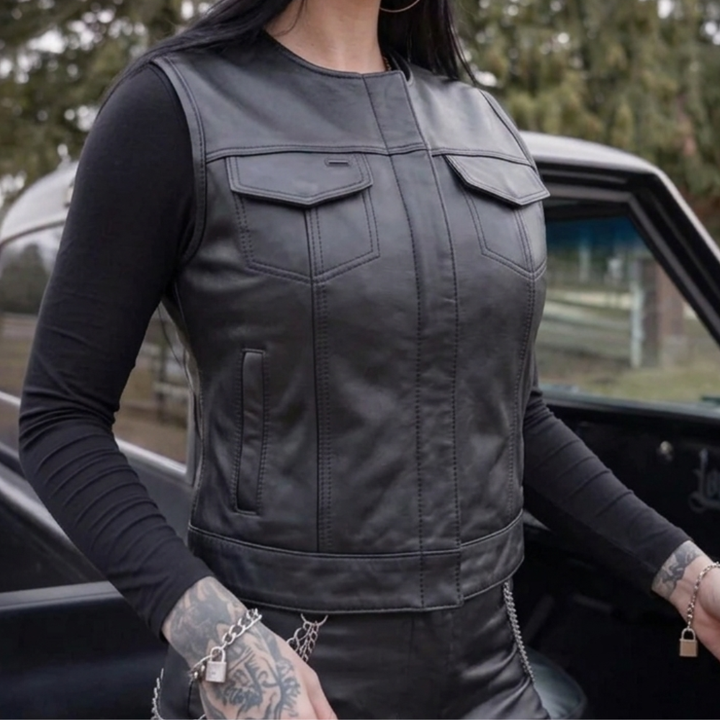


The biker wallet chain exists for a plain reason: a wallet in a back pocket sits on the seat, takes vibration for hours and gets shoved around every time you swing a leg over the bike. Sooner or later it works its way out. A chain clipped to a belt loop means that when it does, the wallet hangs at your hip instead of bouncing down the highway behind you.
The Problem the Chain Solves

Riding is hard on anything in a back pocket. You sit on the wallet for hours, the engine shakes it, and every time you lean forward to the bars or stand up at a stop the pocket opens a little. Riders who lose a wallet rarely notice until the next gas stop, and by then it could be fifty miles back.
The same problem shows up anywhere people sit, climb and bend all day, which is why chained wallets have long been common with drivers and working people as well as riders. On a motorcycle, though, the stakes are higher. There is no floorboard for the wallet to drop onto. It hits the road.
The chain is the low-tech answer. One end clips to the wallet, the other to a belt loop, and the wallet can only go as far as the chain allows.
How the Chain Became Part of the Look
What started as a practical fix became part of how riders dress. The chain wallet sits alongside the leather vest, the boots and the gloves as gear that marks someone as a rider before they say a word. A heavy chain swinging at the hip says the wallet belongs to someone who spends real time on a bike.
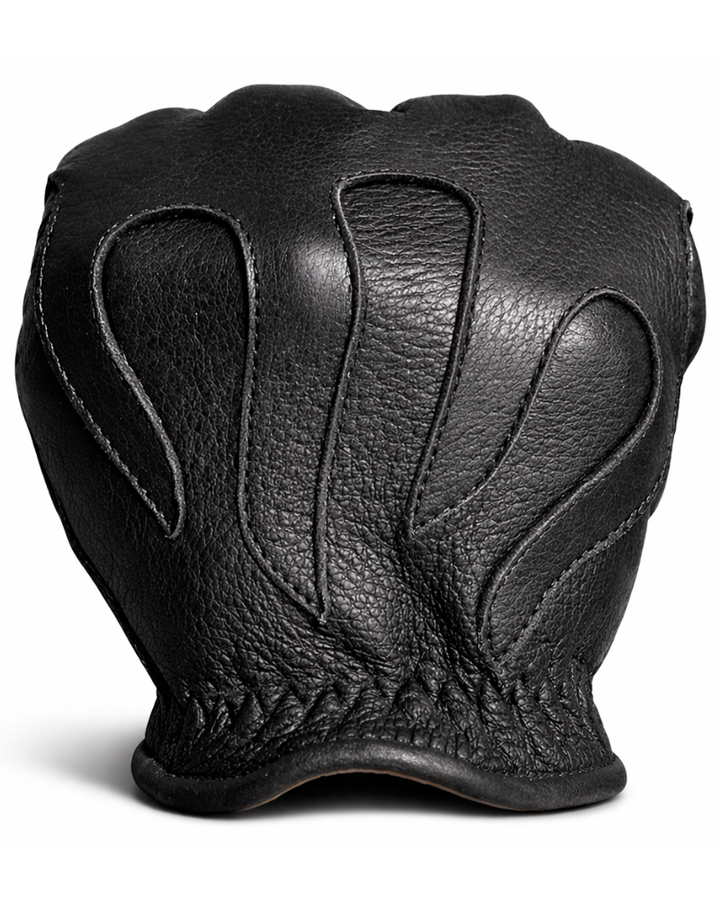
Riders also tend to keep the same wallet for years. The leather shapes to the pocket and darkens where the hand grabs it, the same way a pair of gloves takes the shape of one hand. We wrote about that habit in why riders keep their oldest leather gloves, and it applies just as well to the wallet in the back pocket.
Why Horsehide Makes Sense for a Biker Wallet
A biker wallet lives a hard life: sweat, friction against the seat and the constant bend of a back pocket. That is where horsehide earns its place. Front quarter horsehide is a dense, tight-grained leather, and it creases and darkens with use instead of wearing thin.
Our Horsehide Biker Long Wallet with Chain is handmade in the USA from 3.0 oz front quarter horsehide. It measures 7 by 4 inches, with a see-through ID compartment, a bill section along the top and a 14 inch chain. Horsehide has a long history in American riding gear, which we cover in horsehide leather and American riding heritage.
Chain Wallet vs Front-Pocket Money Clip
A chain wallet and a front-pocket money clip solve the same problem two different ways. The chain keeps a back-pocket wallet attached. The money clip moves your cash and cards to a front pocket, where nothing sits on them and they are much less likely to work loose.
- Chain long wallet: carries more, holds bills flat, and has the classic biker look. It sits on the seat and needs the chain to stay safe.
- Front-pocket money clip: the Citation Horsehide Money Clip is 4 oz front quarter horsehide with a spring clip, holding up to 14 cards and 25 bills in a 4.5 by 3 inch package. No chain needed, but it carries less and has no ID window.
The Citation is named after the eighth Triple Crown winner, the first horse to earn a million dollars in his career, which fits a horsehide piece built to last.
Still on the Belt Loop
Phones, tap-to-pay and apps have changed what people carry, but riders still carry a license, a card and some cash, and they still sit on a back pocket for hours at a time. The chain is still the simplest way to keep all of it with you. You can find the wallet alongside our riding gear in all motorcycle gear.
The biker wallet chain lasted because it solves a real problem with nothing more than leather and steel. Clip it to the belt loop, and the wallet comes home with you.
For riders and the people who ride with them, the Motorcycle Safety Foundation publishes rider training and riding practice guidance.
Frequently Asked Questions
- Why do bikers use wallet chains?
- Bikers use wallet chains to keep a wallet attached while riding. A wallet in a back pocket sits on the seat, takes constant vibration and gets pushed around every time you swing a leg over the bike. A chain clipped to a belt loop means that if the wallet works its way out of the pocket, it hangs at your hip instead of landing on the highway.
- What is a biker wallet?
- A biker wallet is a leather wallet built to be worn on a chain, usually in a back pocket. Many are long wallets that run the length of the pocket, with a snap closure and a ring or loop for the chain. The Legendary Horsehide Biker Long Wallet measures 7 by 4 inches, has a see-through ID compartment and a bill section, and comes with a 14 inch chain.
- Is horsehide good for a wallet?
- Yes. Front quarter horsehide is a dense, tight-grained leather that holds up well to daily carrying in a back pocket, and it darkens and creases with use instead of wearing thin quickly. Legendary USA uses 3.0 oz front quarter horsehide for its biker wallets and 4 oz front quarter horsehide for the Citation money clip, all made in the USA.
- How do you wear a wallet chain correctly?
- Clip the chain to a belt loop on the same side as the pocket that holds the wallet, usually the back right or back left. The chain should be long enough to pull the wallet out and open it without unclipping. With a 14 inch chain on a long wallet, most riders clip to the front belt loop on that side so the chain swings in a loop at the hip.
- What is a good alternative to a chain wallet for riding?
- A front-pocket money clip. A wallet in a front pocket does not sit on the seat and is much less likely to work loose, so it does not need a chain. The Legendary Citation Horsehide Money Clip holds up to 14 cards and 25 bills in a 4.5 by 3 inch package. Riders who carry a lot of cards or want the classic biker look usually stay with a chain wallet.